Billionaires Are Betting Big on Alternative Meat

Image result for Billionaires Are Betting Big on Alternative Meat

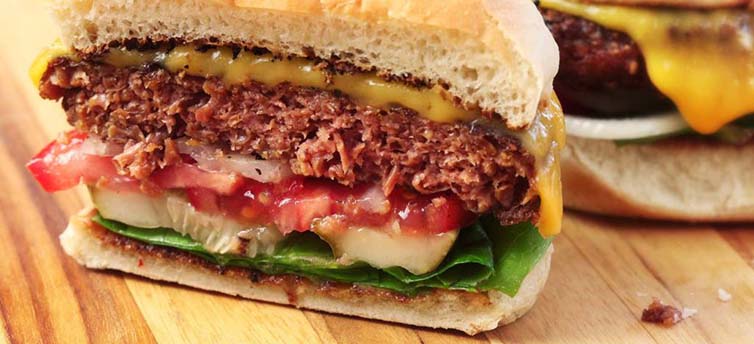
Creating designer protein that can make your veggie burger taste like the real thing is as easy as brewing beer. Or at least that’s what a new subsidiary of Boston-based bio-manufacturing startup, Ginkgo Bioworks Inc., says.

Ginkgo’s Motif Ingredients, which aims to replicate animal protein for meatless alternatives, is getting $90 million from investors including Breakthrough Energy Ventures, whose board includes tech billionaires Jeff Bezos, Bill Gates and Jack Ma. Commodity powerhouse Louis Dreyfus Co. and Fonterra Co-operative Group Ltd, New Zealand’s dairy-exporting giant, are also backing the company.

The goal at Ginkgo is to get alternative products to market faster, chief executive officer Jason Kelly said in an interview. In a statement announcing the funding, the company likened making alternative foods to the beer-brewing process, because vital ingredients such as vitamins, amino acids, enzymes, and flavors are made through fermentation with genetically engineered yeasts and bacteria. Eliminating extra time in the lab can streamline the process and make it go faster, Kelly said.

Read more here.

Conduct Research Before Giving a Sales Demo

Image result for sales demo

“During sales discovery calls, one of the best ways to move a lead further down the funnel is to ask plenty of open-ended questions, and to listen carefully to the answers. It helps build a relationship with the buyer and allows you to tailor your sales presentation to match their needs.

But when it comes to running a demo with a c-level executive, asking questions is a big no-no. The time for questions is before your demo. C-level executives expect you to be fully informed about their pain points and current solutions. They want you to arrive armed with deep knowledge about their business, and to use your demo to show them how they can solve their challenges.

They don’t want to spend their sales meeting telling you about their needs. They want you to present a personalized, relevant sales demo that shows exactly how your product meets their needs and adds extra value. That’s why you have to do your homework in advance.”

Read more here.

Hardee’s, Carl’s Jr. are bringing back Froot Loops Mini Donuts

Froot Loops Mini Donuts return to Carl's Jr. and Hardee's restaurants for a limited time.

“Hardee’s and Carl’s Jr. are bringing back their popular Froot Loops Mini Donuts.

The miniature doughnuts, inspired by the Kellogg’s cereal, will be available for a limited time starting Feb. 25 at participating Hardee’s and Feb. 27 at Carl’s Jr. restaurants, parent company CKE Restaurants announced Tuesday. They come in five colors – red, yellow, purple, green and blue – and taste like their smaller cereal counterparts. A five-pack starts at $1.99 and they will be available all day, not just for breakfast.

“Froot Loops Mini Donuts are the perfect anytime snack and will bring any consumer back to their childhood,” Owen Klein, CKE Restaurants vice president global culinary innovation, said in a statement. “We know our fans craved these nostalgic treats, and we’re thrilled to bring this fun innovation back to our menu this spring.”

Read more here.

Free webinar: Optimize Operations by Running a Data-Driven Restaurant

Free webinar: Optimize operations by running a data-driven restaurant

“(…) Now, on the afternoon of Thursday, March 7, Focus Brands Manager of Retail IT Systems Tyler Schack will join with Revel Systems Sales Engineering Manager Wajih Rahman to share how the two companies partnered to improve business at more than 1,200 brand locations that use Revel’s POS. The free hour-long webinar will give listeners a peek behind the curtain at how Focus uses data to drive profits.

Listeners will learn how Schack and others at the Focus brands first created a powerful framework for data collection and analysis and then put the findings to work to improve everything from overall on-the-job performance to more efficient operating practices, higher margins and a more impactful customer experience.”

See more here.

DoorDash Closes $400 Million Funding Round

Image result for doordash funding round

“In the last month, a pair of food delivery startups were battling complaints about their tipping policies. Customers and workers chastised the companies for unfairly using tips to subsidize worker pay. As the furor grew, one of the companies, Instacart Inc., changed its compensation policies to match some of workers’ demands.

Meanwhile, the other company, DoorDash Inc., stood firm. It still uses tips from customers to offset some of the minimum payment that a worker gets for each delivery job, in which “Dashers” travel to restaurants or stores and bring food to customers. That decision apparently hasn’t harmed DoorDash’s reputation in the eyes of investors. The company said on Thursday that it received a new round of funding that values it at $7.1 billion.

In an interview Thursday to promote the investment, DoorDash Chief Executive Officer Tony Xu defended the tipping practice, which has been in use since 2017. Xu said internal data show that under the current pay model, Dashers stay on the platform longer, are more satisfied with their jobs and make deliveries in a more timely manner. He blamed recent backlash on Instacart’s implementation of its own policy.”

See more here.

Taco Bell and Chipotle Want to Shave Time off Food Deliveries

Image result for Taco Bell and Chipotle Want to Shave Time off Food Deliveries

“When it comes to restaurant delivery, speed matters. And the burrito chains want to be faster.

Taco Bell –– which now offers delivery at roughly two-thirds of its U.S. restaurants through GrubHub Inc. with plans to continue expanding the service –– says its average delivery time is 34 minutes. The company acknowledges that’s not good enough for today’s demanding customer.

Chipotle Mexican Grill Inc., meanwhile, says it’s averaging between 28 and 32 minutes for delivery, but it thinks it can shave four minutes or so as it expands pickup shelves across the nation. It’s also introducing prepaid delivery so drivers don’t have to pay in stores. It’s all part of a digital push that is a key part of the comeback plan laid out under Chief Executive Officer Brian Niccol in his first year on the job.”

“While restaurant delivery has long been part of the culture in major cities like New York and San Francisco, pizza was often the only option in many markets. That has started to change as on-demand delivery services like DoorDash, Postmates and Uber Eats have proliferated, joining GrubHub to expand delivery options.”

Read more here.

Sweetberry CEO predicts 300% growth in sales

Image result for Sweetberry Bowls CEO Desi Saran

“Predicting a 300 percent sales increase for a 1-year-old brand is a pretty gutsy statement for any new business, but Sweetberry Bowls CEO Desi Saran is confident that he’s on to something.

The restaurant veteran and serial entrepreneur first opened the New Jersey-based brand, which serves acai, coconut and pitaya bowls, wraps, salads, smoothies, in 2017, and has since grown it to 13 locations. That was after he served as an operating partner at Playa Bowls, four years ago, helping to grow it from a beach-front smoothie stand to a national chain. He left that behind, however, to launch Sweetberry Bowls, which Saran said is on its way to becoming a global chain.”

“Q: What sets you apart from your competitors?
A
: Sweetberry Bowls is a brand new company, and we’re truly making a name for ourselves in the growing Acai bowl category, which is fairly new in the fast casual space. But, we’re not just a bowl concept or smoothie shop – we serve a full product mix of salads, sandwiches and wraps as well. As a result, our product offering isn’t just seasonal, but fully functional all year round.”

Read full interview here.


CBD-Infused Food and Drinks Have Been Banned From NYC Restaurants and Bars

“If you’ve been relying on a smidgen of CBD oil in your latte to relax after a long day at work, you might want to look into alternative methods of decompression (at least temporarily).

According to the New York Daily News, as of Tuesday, the New York City Department of Health is prohibiting restaurants and bars from selling any and all perishable products containing cannabidiol (or CBD, for short), a compound found in marijuana purported to have therapeutic effects.

This might seem dire, but the ruling was basically inevitable. When it comes to the ever-fluctuating invocations of cannabis law, state governments aren’t going to take any chances with validating CBD oil as a safe ingredient until the compound is confirmed to be harmless on a federal level. CBD oil was banned from Californian food last July, and authorities in Maine are taking steps to strip businesses of the marijuana-adjacent treats this week.”

Read more here.

Digital Ordering to Triple by 2020

Restaurant mobile app

Restaurant digital orders have grown an average of 23 percent, per year since 2013, and will triple by the end of 2020, according to a report from NPD Group.

The report, called Delivering Digital Convenience, found that 70 percent of a restaurant’s digital orders come through its mobile app or its website, with the remaining orders coming through third-party apps or websites. Customers used the restaurant’s own app most of the time because of rewards points or savings, and other brands appeal to customers because they want to create a custom order or take friction out of the ordering process.

Third-party apps like DoorDash, UberEats or Grubhub/Seamless accounted for 40 percent share of the 20 most used apps, and are used by consumers who want to look up various food items and check prices.

“Digital orders will remain an outsized source of growth for the restaurant industry over the next few years, and operators who desire to grow need to embrace a digital strategy,” said David Portalatin, NPD food industry adviser and author of Eating Patterns in America, said in the announcement. “There are clear leaders in the digital ordering space, and third-party providers who have achieved critical mass the fastest.”

See more here.

Restaurant Menu Trends: What to Expect to See on More Menus in 2019

2019 restaurant menu trends

1. CBD (Cannabidiol) — up 99%!

It was only a matter of time before cannabidiol—or CBD—made its way into the restaurant industry. The non-psychoactive derivative from the cannabis plant has helped consumers looking for relief from inflammation, pain, anxiety, insomnia, seizures, spasms, and other conditions without the negative side effects of some pharmaceutical drugs.

According to the National Restaurant Association’s (NRA) What’s Hot Culinary Survey, a barometer of U.S. food and beverage trends, 650 professional chefs—all members of the American Culinary Federation—said infusing food and drink with cannabis and CBD could create unique cuisine opportunities and potential new markets for experiential dining occasions. Of the survey’s respondents, 77 percent identified cannabis/CBD-infused drinks as the number one trend in the restaurant industry right now, and 76 percent tapped cannabis/CBD-infused food as the second most popular trend.

Data from Upserve customers revealeda 99 percent increase in CBD menu items in 2018, setting up 2019 as the year of CBD. From baked goods to CBD-infused beverages, restaurants across the country are responding to a consumer demand to chill out.

“There has been growing popularity and support around CBD, and if it makes people happier and less stressed, then why not give the public what they want?” says Nick Duckworth, owner of cafe Banter NYC. They currently only sell Dirty Lemon CBD, a packaged, CBD-infused drink, but will be expanding their CBD offerings in 2019, allowing customers “to add CBD drops to most beverages.”

View all 2019 Menu trends here.