In New York City, Restaurants Welcome Tables for One

Customers dine at Boqueria for lunch. The Spanish restaurant’s tapas, or grazing-style menu, appeals to solo patrons.

In New York City restaurants, the party-of-one is becoming a cause for celebration.

OpenTable, the online reservation platform, said that bookings by solo diners at restaurants in the city jumped by 80% from 2014 to 2018. And while OpenTable said those parties-of-one represent a very small slice of overall bookings, some restaurants said that business from solo diners can now account for up to 10% of their sales.

Even on Valentine’s Day, the most couple-oriented dining occasion of the year, New York restaurants are making room for patrons dining alone. OpenTable said that Valentine’s Day solo reservations in 2018 increased by 33% over the previous year. And perhaps for good reason: Restaurants said solo customers represent the ideal, as they are truly there for the food and experience rather than the social occasion.

“The way we approach it is that when we have a solo diner, it’s more of an honor than anyone else,” said Andrew Kuhl, the dining-room manager at Eleven Madison Park, the Michelin-starred restaurant in Manhattan’s Flatiron District.

Restaurants are doing their part to encourage such business. At such establishments as L’Artusi, an Italian restaurant in the West Village, and Odo, a Japanese spot in the Flatiron District, solo diners are given a free offering—say, a small serving of an off-menu item or a glass of sparkling wine. And on Valentine’s Day, some restaurants said they make an extra effort to welcome the solo crowd. For example, at Jones Wood Foundry, a food-driven pub on the Upper East Side, a communal table is set aside for party-of-one diners.

View more here.

DoorDash Closes $400 Million Funding Round

Image result for doordash funding round

“In the last month, a pair of food delivery startups were battling complaints about their tipping policies. Customers and workers chastised the companies for unfairly using tips to subsidize worker pay. As the furor grew, one of the companies, Instacart Inc., changed its compensation policies to match some of workers’ demands.

Meanwhile, the other company, DoorDash Inc., stood firm. It still uses tips from customers to offset some of the minimum payment that a worker gets for each delivery job, in which “Dashers” travel to restaurants or stores and bring food to customers. That decision apparently hasn’t harmed DoorDash’s reputation in the eyes of investors. The company said on Thursday that it received a new round of funding that values it at $7.1 billion.

In an interview Thursday to promote the investment, DoorDash Chief Executive Officer Tony Xu defended the tipping practice, which has been in use since 2017. Xu said internal data show that under the current pay model, Dashers stay on the platform longer, are more satisfied with their jobs and make deliveries in a more timely manner. He blamed recent backlash on Instacart’s implementation of its own policy.”

See more here.

New York City Bill Proposes Eliminating Cashless Stores and Restaurants

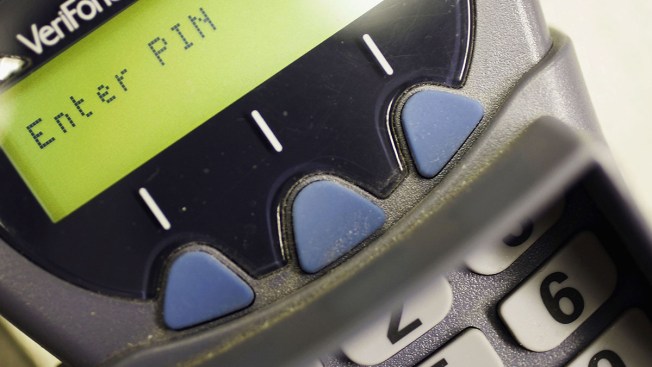
New York City Bill Proposes Eliminating Cashless Stores and Restaurants

“Supporters of a new bill want to make sure New Yorkers are able to keep paying cash at their local stores.

The New York City Council held a hearing last week on the bill that proposes to ban stores and restaurants from refusing cash. The legislation is in response to a push for cashlessness across the city and the nation. Backers of the bill argue that by refusing cash, these establishments discriminate against the poor, victims of domestic violence, homeless people and undocumented immigrants—all of whom are more likely to be unbanked.

“Given the sheer prevalence of unbanked people, I worry deeply about the cashless economy,” said New York City Councilman Ritchie Torres, who introduced the bill. “Not everyone has access to debit or credit, but everyone has access to cash.”

See more here.

How Urban Development Shaped the Way 19th-century New Yorkers Ate

“New York City is famous for its food culture, whether it’s a $500 tasting menu at a Michelin-starred restaurant or a bodega bacon, egg, and cheese. It’s possible to find food from every corner of the world, no matter how obscure. Restaurants make, and sometimes unmake, entire neighborhoods.

This is a city that eats out. But that wasn’t always the case. Rewind just over 200 years, when New York was caught between being a Dutch colony and a city, and dining out was a rarity. As the city urbanized, how its residents ate profoundly changed.

An oyster cart, circa 1885

“Food serves as a nice medium to take a step back and look at the bigger picture of New York City history,” says Victoria Flexner, the founder of Edible History, a supper club that creates dinners themed around specific historical moments. Recently Flexner and chef Jay Reifel hosted a meal at the James Beard House that told the story of New York City’s urban development in the 19th century through how its residents dined out.

As the city became rapidly industrialized in the 19th century, a new system emerged to feed these workers: the mobile food cart.

While politicians, businessmen, and other white-collar workers went to oyster cellars and restaurants for their midday meals, lunch came to the working class. Vendors would park outside of factories and docks and, for a few pennies, would sell items like gingerbread, yams, oysters, and corn.”

Read more here.

Sweetberry CEO predicts 300% growth in sales

Image result for Sweetberry Bowls CEO Desi Saran

“Predicting a 300 percent sales increase for a 1-year-old brand is a pretty gutsy statement for any new business, but Sweetberry Bowls CEO Desi Saran is confident that he’s on to something.

The restaurant veteran and serial entrepreneur first opened the New Jersey-based brand, which serves acai, coconut and pitaya bowls, wraps, salads, smoothies, in 2017, and has since grown it to 13 locations. That was after he served as an operating partner at Playa Bowls, four years ago, helping to grow it from a beach-front smoothie stand to a national chain. He left that behind, however, to launch Sweetberry Bowls, which Saran said is on its way to becoming a global chain.”

“Q: What sets you apart from your competitors?
A
: Sweetberry Bowls is a brand new company, and we’re truly making a name for ourselves in the growing Acai bowl category, which is fairly new in the fast casual space. But, we’re not just a bowl concept or smoothie shop – we serve a full product mix of salads, sandwiches and wraps as well. As a result, our product offering isn’t just seasonal, but fully functional all year round.”

Read full interview here.


Restaurant Menu Trends: What to Expect to See on More Menus in 2019

2019 restaurant menu trends

1. CBD (Cannabidiol) — up 99%!

It was only a matter of time before cannabidiol—or CBD—made its way into the restaurant industry. The non-psychoactive derivative from the cannabis plant has helped consumers looking for relief from inflammation, pain, anxiety, insomnia, seizures, spasms, and other conditions without the negative side effects of some pharmaceutical drugs.

According to the National Restaurant Association’s (NRA) What’s Hot Culinary Survey, a barometer of U.S. food and beverage trends, 650 professional chefs—all members of the American Culinary Federation—said infusing food and drink with cannabis and CBD could create unique cuisine opportunities and potential new markets for experiential dining occasions. Of the survey’s respondents, 77 percent identified cannabis/CBD-infused drinks as the number one trend in the restaurant industry right now, and 76 percent tapped cannabis/CBD-infused food as the second most popular trend.

Data from Upserve customers revealeda 99 percent increase in CBD menu items in 2018, setting up 2019 as the year of CBD. From baked goods to CBD-infused beverages, restaurants across the country are responding to a consumer demand to chill out.

“There has been growing popularity and support around CBD, and if it makes people happier and less stressed, then why not give the public what they want?” says Nick Duckworth, owner of cafe Banter NYC. They currently only sell Dirty Lemon CBD, a packaged, CBD-infused drink, but will be expanding their CBD offerings in 2019, allowing customers “to add CBD drops to most beverages.”

View all 2019 Menu trends here.

Papa John’s Accepts $200 Million Investment From Activist Hedge Fund

Image result for papa johns

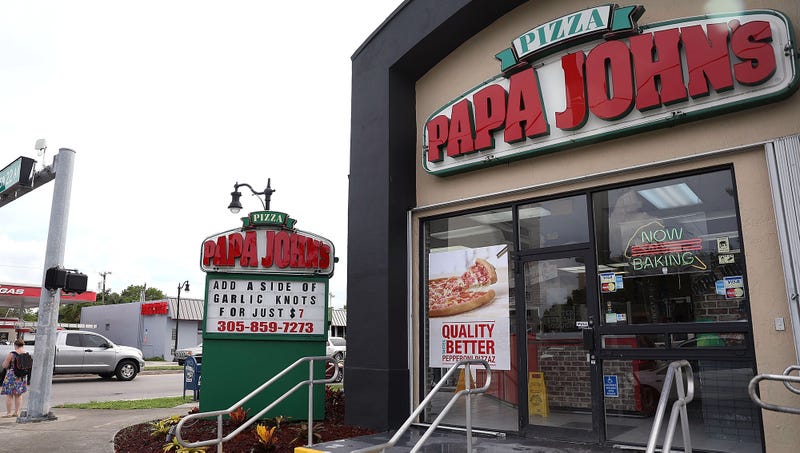
“Papa John’s International Inc. is handing over the keys to the embattled pizza chain in exchange for a $200 million investment.

Activist fund Starboard Value LP is supplying the funds and its chief executive officer, Jeffrey Smith, is becoming chairman. He steps into the role vacated last year by Papa John’s founder John Schnatter after reports emerged that he used a racial slur. Schnatter tried to make his own similar deal and said he was shot down.

The infusion comes as the pizza chain also reported preliminary results for the fourth quarter and last year that missed analysts’ estimates. The company had already been in a sales slump before the latest controversy began last summer. Papa John’s plans to use the proceeds to repay debt and invest in the business, it said in a statement. Starboard is making its investment through the purchase of new convertible preferred stock, and the deal includes the option of an additional $50 million investment.

Shares of Papa John’s gained as much as 11 percent to $42.74 in New York trading Monday, the biggest intraday jump since July.”

See more here.

Hy-Vee App Aims to Reduce Food Waste and Save Money

“Hy-Vee Inc. has begun piloting a mobile shopping app that helps grocery retailers cut back on food waste. Called Flashfood, and developed by a Toronto company of the same name, the app enables consumers to browse and buy food items nearing their “best before” date at “significantly reduced” prices, Hy-Vee said Friday.

To use Flashfood, customers download the free app (available in iOS and Android versions) and then start shopping deals on items such as meat, dairy, bread and snacks. Purchases are then made directly from their smartphone and picked up at any time from the Flashfood Zone shelves or refrigerators in the store.

The program gives consumers a way to lower their grocery bill and help the environment by reducing unnecessary food waste, according to Flashfood.”

Read more here.

Minimum Wage Hikes in New York City Cause Restaurants to Eliminate Jobs, Cut Hours, Raise Prices

Screen Shot 2019-01-25 at 2.05.48 PM.png

“New York is known for its incredible food scene, but legislators in the Big Apple may have bitten off more than they can chew with the newest minimum wage hike.

The city’s mandated increase, which took effect on December 31, requires businesses that employ 11 or more people to boost wages from $13 to $15 per hour. But most restaurants operate with the tipped wage, offering servers and bartenders a lower hourly base pay and the opportunity to rake in the rest in tips, which often yields better pay overall. If workers don’t earn enough this way, employers are required to make up the difference.

That tipped minimum just rose from $8.65 to $10 an hour. A 16 percent jump is fairly punishing, considering the industry operates on razor-thin profit margins.

A new study conducted by the New York City Hospitality Alliance lends credence to the idea that substantial increases made to the tipped wage are far costlier than they are beneficial. After surveying 574 restaurants, they found that 2019 looks bleak: 75 percent of full-service establishments plan to cut employee hours, and 47 percent will eliminate jobs entirely in response to the forced minimum wage hikes. That follows closely on the heels of a dreary 2018, when 77 percent of full-service restaurants reduced employee hours and 36 percent cut jobs, both of which were also in response to the mandated wage increases.”

See more here.

WeWork Ventures into Coffee Retail with Bluestone Lane Partnership

WeWork coffee bar

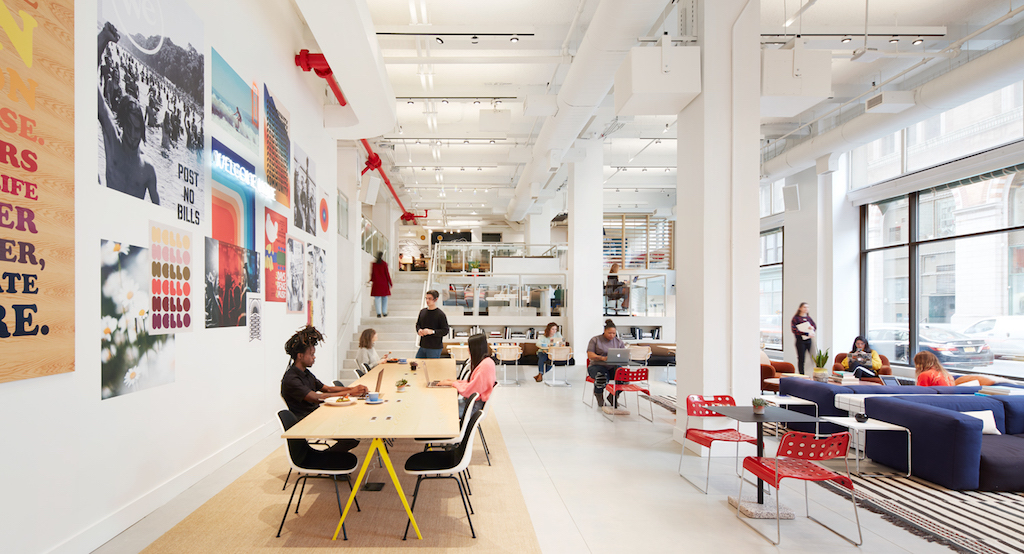
“The popular co-working and office space provider WeWork today unveiled Made by We, a public retail concept that includes a full cafe from New York-based and self-described “Australian-inspired” coffee chain Bluestone Lane.

Located at 902 Broadway in the heart of Manhattan’s Flatiron district, the Bluestone Lane bar stands at the center of the new concept from WeWork umbrella company The We Company, which signaled an intention to open more retail locations in the future.

While the Made by We location includes 100 bookable individual workspaces and meeting spaces for groups, it varies from other WeWork locations in that a subscription or booking is not required to enter.

In addition to Bluestone Lane, there are other vendors within the retail space offering items like snacks, apparel and digital accessories. Bluestone Lane said it is including its full extensive coffee and espresso drinks menu, along with its freshly prepared toasts, and grab-and-go items including gluten-free pastries from Husk Bakeshop.”

See more here.