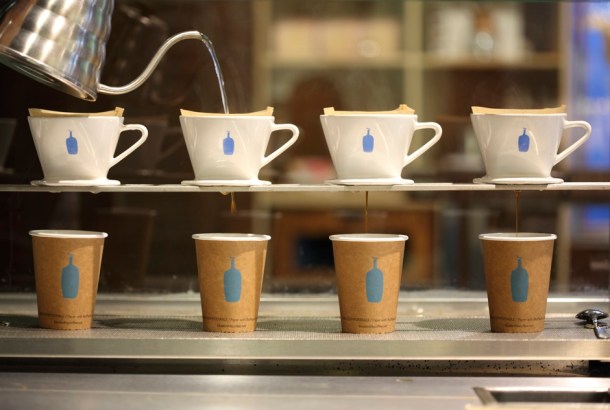
 Blue Bottle Coffee Shop is very popular in New York city. The founder James Freeman is a notorious perfectionist. The reason he created Blue Bottle shop because he said he can’t find a cup roasted the way he wanted it—which is to say, with a light touch, to set free the beans’ natural flavors.Freeman opened a tiny Blue Bottle kiosk in the city’s Hayes Valley neighborhood in 2005.It quickly found a cult following, and by 2009 Freeman had opened a larger café in Mint Plaza. Later he expanded to New York city 2010, and now he owned 13 coffee shops in north America.The coffee is roasted in Williamsburg, the chain’s unofficial New York headquarters, and the resulting beans tend to be blonder with fruity flavors accentuated. Inspired by traditional Japanese siphon bars, where baristas brew each painstaking cup by hand. All in all, I think Blue Bottle is a good coffee shop. If you interesting that, please visit their website.
New York Coffee Shop — Blue Bottle
POS System
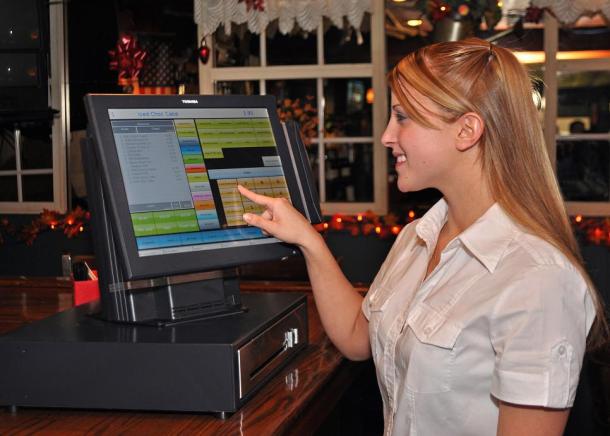 Payment system plays a key role of a restaurant. Now more and more restaurants’ owners like to choose POS (point of sale) system to operate their restaurant business. People need a POS system to accept credit and debit payments. But POS systems these days do much more than just accept payment. They also can track inventory for restaurant; text and email receipts to customers; analyze customers’ sales date; do invoices for clients and so on. POS system is used these days are made up of touchscreen display, speeding up the order-taking process, and also helping increase the efficiency of restaurant operating.
If you want to know more POS information, please click here.
Chipotle Predicts it will still Struggle in 4Q

Photo: Google.com
Chipotle announced Tuesday that it expects same-store sales to fall 4.8 percent in the fourth quarter, which is still the best results they’ve seen in five quarters. Chipotle released their preliminary fourth-quarter results ahead of its presentation Tuesday at the ICR Conference in Orlando, FL. The company will release its full fourth-quarter and fiscal 2016 results on February 2. Chipotle’s stock rose more than 4 percent in early trading Tuesday after the announcement of their 4Q same-store sales. Chipotle expects its operating margin to be 13-14 percent in the fourth quarter. The operator said it saw higher expenses in the quarter than originally forecasted. They also spent more on television advertising in the quarter, and that higher avocado costs led to higher-than-expected food costs. To read more about Chipotles same-store sales click here.
The Robotic Chef of the Future

Photo: Grubstreet
We all know incorporating technology into restaurants is a trend we need to keep up with. Whether it be ordering through an app or having an actual tablet sit at your table so you can order food and pay at your convenience. However, Moley Robotics – a U.K. based company, is taking it to the next level with their robotic chef, Moley. Moley is simply two sleek, humanoid arms that hang above a conventional stovetop. The robot can only make one dish as of right now – crab bisque. The U.K. based company hopes to bring Moley to the market by 2018; with the robot being able to offer more dishes than just crab bisque of course. Moley is projected to cost around $100k by the time it hits the market. To read more about how Moley will actually work click here.
The NBA is booming

Not that NBA (Nation Basketball Association)…the National Bison Association!
“Our main challenge now is to keep up with the production. Whereas a decade ago, I was spending 90% of my time talking to the consuming public or the general public about eating bison, I’m now spending 90% of my time talking to folks about building the herds or getting into the bison business so that we can keep up with that demand.” Dave Carter, executive director for the N.B.A. in Westminster, Colo.
Read more here
Nothing beats the human touch
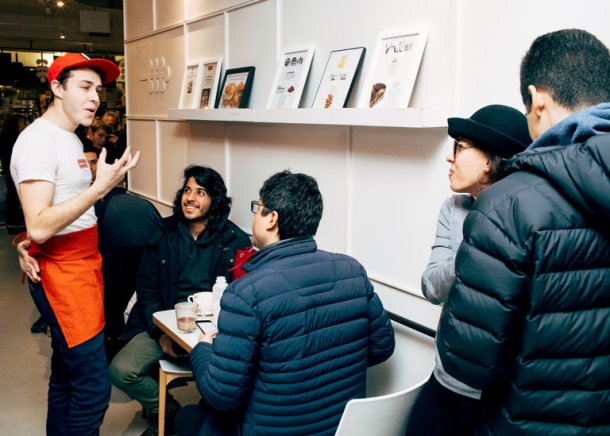
For years, so-called fast-casual restaurants have worked to lower costs by keeping the help behind the counter and adopting a cafeteria format that leaves much of the work to diners, who stand in line, order, pay and carry the food to a table or out the door.
[…] restaurants, from small ones like Breads Bakery to chains like Sweetgreen, are the quickest-growing segment of the dining business, combining speedy service with food that they claim is fresher and higher quality than traditional fast food. And as they battle rising competition from a new source — delivery services — workers like Fritz are the first line of defense.
Who’s Fritz? click here to find out
Small Spaces with Large Offerings
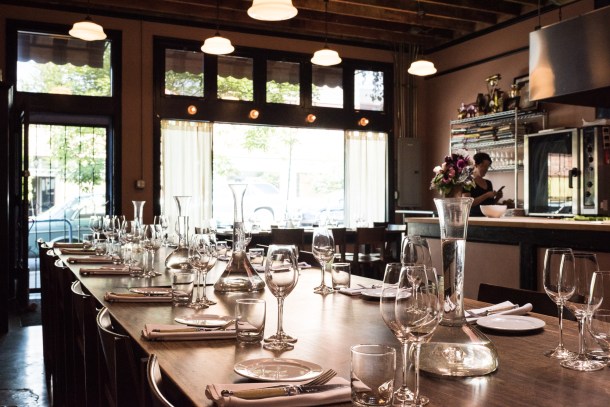
New York has its fair share of tiny restaurants. Ones where you are basically sitting on top of your neighbor, listening to their conversation, basically sharing a meal with them. Ever wonder why these places were made so tiny? Why didn’t the owner just get a bigger space or design the floor plan better? Well, maybe the owner did plan better, and smarter than everyone else. Look at Talula’s Table, a 12-person restaurant in Chester County, PA. From a practical perspective, a small restaurant is also a smart restaurant. Servers here also do clean-up, saving the owner from having to pay a busboy or busgirl. Chefs also throw the towels in the laundry in the back, saving money that could have been spent on a laundry service. If the food is good enough to charge guests a little more money, a small restaurant can make a profit with less risk than a large restaurant. The rent is cheaper, the build out is cheaper, and the return comes in a little faster. To read more about the business model of a small restaurant and how they offer just as much, if not more than a large restaurant click here.
Food Trends: An Art or Science?

Photo: New York Times
It’s a new year which means new foods trends. Every December public relation firms come out with reports that detail what new food trends to look out for this upcoming year. According to Editor in chief Dana Cowin at Food & Wine, “A good trend list requires everything from data and science to pure intuition.”
Annika Stensson, director of research communications for the National Restaurant Association believes the perfect 2017 food trend would be a fast-casual concept serving dishes with deep, heady African flavors. The dishes would be made with locally produced ingredients. Put this African dish into a bowl and you’ve got yourself another 2017 food trend. One of the top items that users post on Pinterest – which is used by 150 million people a month – are Buddha bowls. Food is bowls is pleasing to the eye and makes a great Instagram picture – and who doesn’t love a great Instagram picture? To read more about the trends of 2017 click here.
Del Posto Says Goodbye to Mark Ladner

Chef Mark Ladner of Del Posto will be leaving the Mario Batali owned Del Posto, in Chelsea next month to pursue his own project. Ladner will be heading into the world of upscale fast food with his new concept, Pasta Flyer. The first location, already under construction in Greenwich Village. Ladner wants to create a place where consumers can get a bowl of pasta — reasonably al dente, appropriately sauced, made with high-quality ingredients — in the same amount of time it takes a Chipotle to roll a burrito and for about the same price. As for Del Posto,the restaurant will introduce a menu in February from the new executive chef, Melissa Rodriguez, who was Mr. Ladner’s chef de cuisine. Rodriguez will be the first woman to head the kitchen of a New York City restaurant that has received four stars from The New York Times. To read more about Mark Ladner and Del Posto, click here.
Food-Delivery App, Maple struggles to Turn a Profit.
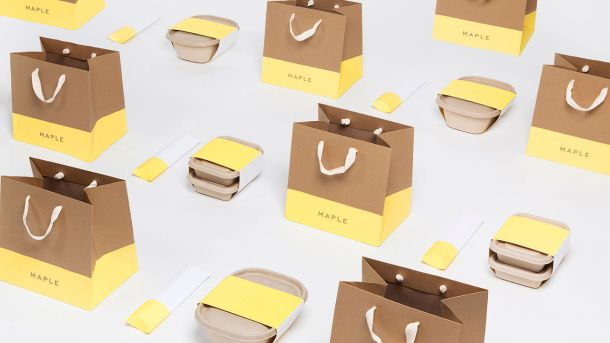
When operating a restaurant there is one guaranteed expense that will haunt you until the day you close – rent. Rising rent costs have put restaurants out of business. So, any easier way to operate is by delivery service operations. Maple, a Manhattan based food-delivery start-up allows consumers to search through their daily lunch and dinner options, order with the click of a button, and have their meals delivered to their doorstep. However, just like any food operation, food-delivery services struggle too. According to a new report in Recode the delivery app is struggling to expand and make money on the food it delivers, claiming Maple “appears to have lost money on average on every meal in 2015, resulting in an operating loss of $9 million for the year on $2.7 million in gross revenue.” Food costs at Maple were at a high of 63% of revenue in 2015, 26% food waste, and 17.5% for marketing. However, this past March, Maple managed to get their food costs down and allowing the company to turn a small profit of 30 cents for each meal it delivered. To read more about the struggles of food-delivery based operations click here. Also, to sign up for Maple or just browse their site click here.
 paigepapers.com