Starbucks New Mobile Application Allows Easy Order

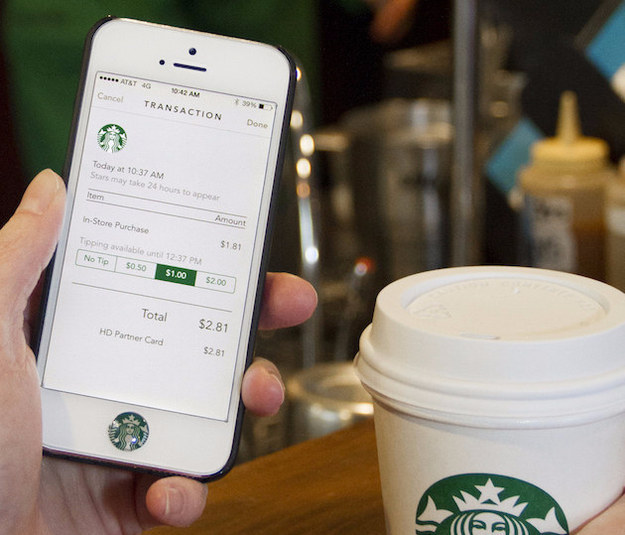
edit-32401-1442870224-2Starbucks has now implemented a new application that allows customers to pre-order their coffees. While there are over 7,400 chain company owned stores, people still find themselves waiting on line in the morning rush, and throughout the day to grab a coffee or a snack. However, Starbucks have created a new way for customers to avoid lines and for them to conveniently pick up their orders when they are ready. Consumers can place their customized orders through the application, and the app will predict a proper pick up time based on how busy the chosen location is. The application is only available at company owned stores, and is not available at locations run by licensees like Target and Barnes and Noble.

CEO Howard Schultz told investors in July that “Mobile order and pay is fueling both revenue and profit growth in every market in which it has been deployed.” Many other chain stores are implementing mobile technologies to make execution in providing services to consumers more convenient. Panera, and Taco Bell have already started implementing mobile applications, too.

To read more, click here.

Antibiotic-Free Beef Won’t be a Trendy Anytime Soon

imagesAlmost every major company is going antibiotic-free with chicken. It has become a growing necessity in the chicken supplier market. It is also indeed a symbiotic shift for the poultry industry, as there is less chance of multi-drug resistant superbugs, and supplier’s earn more profits. However, while the market for antibiotic-free chicken is trending, the beef industry doesn’t have any intentions in adapting to this shift.

The Wall Street Journal indicates the lack of intention is because cattle ranchers have no need to go antibiotic-free. The price of red meat has reached historic highs for the past year, and hit a record average of $6.16 per pound in July. Moreover, suppliers are having record years, where this year the nation just barely escaped a brisket shortage. There is no reason for cattle ranchers to invest into creating antibiotic-free beef.

Cattle also have a longer life span then chicken. They generally live a year or more before slaughter, where as chicken live till 6 weeks. Because of the longer life span of Cattle, it becomes a lot more riskier for Cattle to catch illness requiring medication. Raising livestock, also, presents more variables as suppliers buy cattle from numerous middlemen, while chicken producers get thousands from one farm. While an all-natural beef can be priced at up to 80 percent more per pound, more costs and variables are considered like greater overhead, more paperwork and expensive auditing to prove an “all-natural” beef from suppliers.

The shift in food trends worldwide is produce that are natural and organic. While the beef industry doesn’t seem to be taking alternative measures to follow the trend, there is a growing demand for the organic beef market that can potentially catch ranchers’ attentions. The antibiotic-free beef currently accounts for 5 percent of the market, but as sales of produce labeled as natural are soaring in the past year, there can be a shift in the beef industry.

To read more, click here.

McDonald’s pressured into Charity Donations

urlLast month, McDonald’s has disclosed their intentions to not collaborate with Burger King in Burger King’s proposal in a special event for Peace Day. Easterbrook claimed that McDonald’s wasn’t interested in collaborating with Burger King in creating a McWhopper, instead “something meaningful, something authentic.” McDonald’s has asked other “like-minded” organizations like MasterCard and Facebook to help raise money to help the United Nations’ World Food Program respond to migrant crisis in Europe and the Middle East. McDonald’s is making a multi-million dollar donation for a 30-second ad starring Liam Neeson.

Even though McDonald’s didn’t accept Burger King’s efforts in raising charitable funds and awareness, McDonald’s has taken their initiatives to be charitable in their own terms. While McDonald’s will be partnering with the World Food Program, it is noted that Burger King is also a partner of the organization. A representation has said “Any peace-related activity McDonald’s undertakes, whether in partnership with Burger King or on their own is great, as it will raise further awareness for Peace Day.”

To read more, click here.

The Oreo Boom

rs_560x415-131016111620-1024.oreo.cm.101613Surprisingly, in the past decade, sales of Oreos are up 60 percent, passing $2.5 billion a year. Although the two major food trends of the world is towards the healthy and unprocessed, and towards the pumped-up and Xtreme, Oreos managed to defy these two trends and create major sales.

Oreos were introduced in 1912, and had a few alterations in its product like making it kosher and trans fats. Spinoff flavors, with filling ranging from mint to birthday cake to candy corn fueled the brand’s sales growth. Oreos have also adapted flavors of countries it distributes in. In China, there are green tea flavored Oreos, and in Indonesia there are coconut flavored ones. Janda Lukin, the head of Oreo North America, says that limited-time flavors have created peaks in sales like “Red Velvet was really successful for us this year. It tapped into Valentine’s Day, and it was the first time we changed the base cake color.” Oreos continues to drive sales with their increasing variety of flavors.

Psychophysicist Howard Moskowitz explains that Oreo has a chord of flavors that leave consumers wanting more, where flavors peak. “The combination of the soft cream and the hard cookie appeals to everybody. The vanilla isn’t exactly high-quality, but it doesn’t matter- you love that middle. And it’s a fairly nondescript product, like white bread: You eat a lot and not get tired of it.” Oreos hit a “bliss-point” that scientists have yet really understood, along with products like Heinz Ketchup.

To read more, click here.

McDonald’s Franchisee says the Real Reason the Chain is Failing

McDonaldsAl Jarvis has been a franchisee for decades with two McDonald’s restaurants in Michigan. When he was on the verge of being with McDonald’s as a franchisee for 50 years, he decided to sell the restaurants. He says he just “wanted to get the hell out.” Jarvis was disenchanted by and frustrated by corporate’s mixed signals and burdensome bloating of menu items like McWraps and McCafe lattes.

Jarvis critiques McDonald’s poorly though out menu items like implementing a custom burger bar or “artisan” grilled chicken. He says since 2005 with implementing items like salads and McGriddles was when service started to slow down. He continued to criticize how corporate demanded needs that were impossible to adhere too. Corporate wanted McWraps to be served in 90 seconds, but Jarvis says 3 minutes was more realistic. More than half the stores in America have dropped McWraps on their menus because of the difficulty of making them in timely matters. Jarvis also points bad business with McDonald’s asking franchisees to open for 24 hours a day, and including a Dollar Menu. These implementations lead to losses because of rising commodity costs. Jarvis has opposed the recent introduction to next month’s rollout of all-day breakfast. Though McDonald’s fans have demanded the expansion for years, Jarvis argues that “that’s not our niche. We make burgers and fries.”

This year is the first year since 1970 that the company closed more stores than it opened. Jarvis outlines that this is because of corporate keeps creating new menu items at the expense of quality, rather than refocusing on things that people still like and making it better.

To read more, click here.

Poke Taking L.A. by Storm

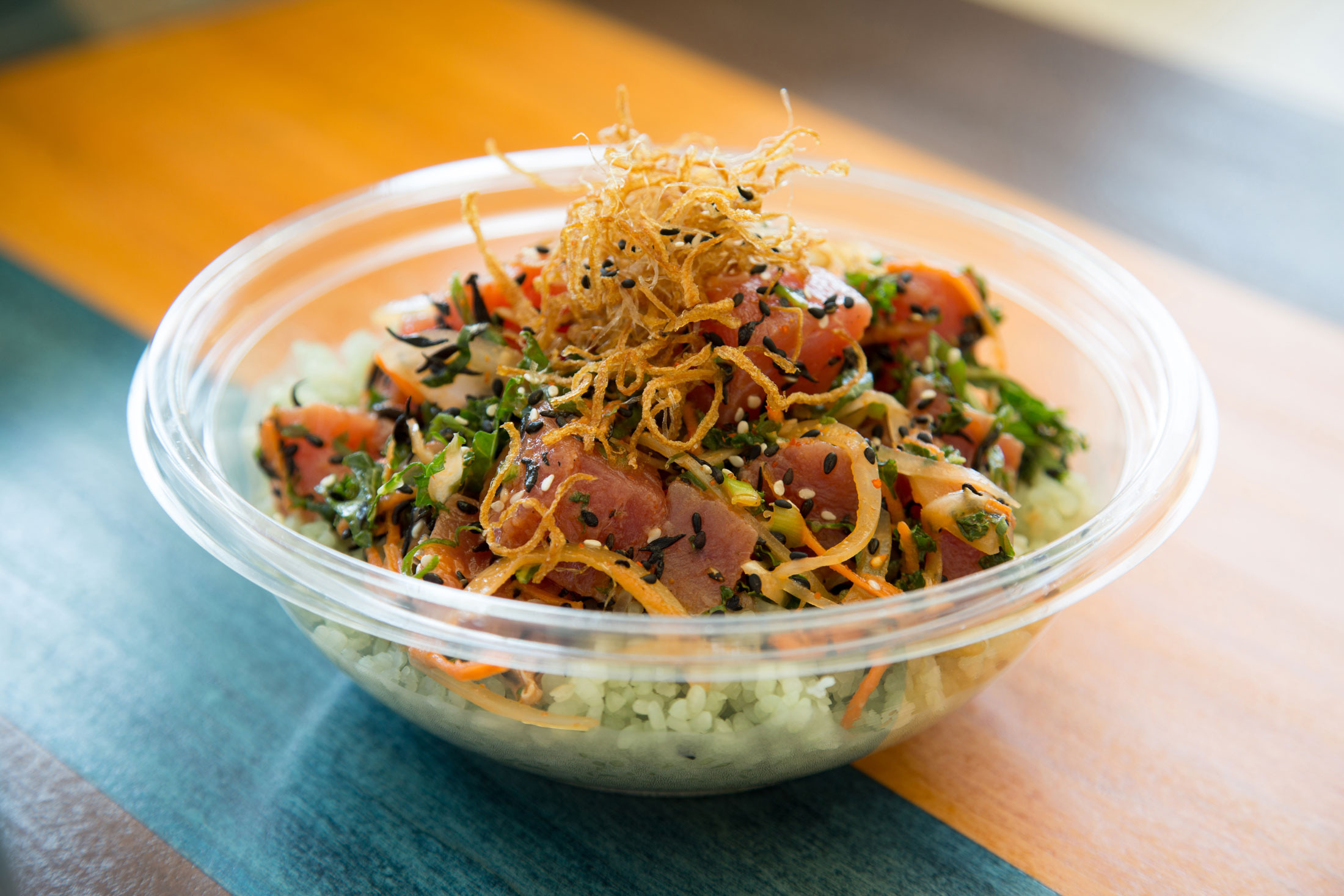
-1x-1Poke (pronounced poh-kay) is a marinated raw fish dish in Hawaii. Recently over half a dozen shops specializing in poke have popped up in L.A neighborhoods. Speciality shops have created different dishes with poke that attracts Californian consumers because of its health benefactors and its cost of being an average of $10. Bowl of rice, salads, quinoa are topped with poke and stand as alternatives to eating lunch at a sushi bar that would bring an average check of $40.

Sweetfin, a widely popular poke shop, serves a bowl of sashimi-grade tuna heaped on top of rice, or greens, such as citrus kale salad, with a wide range of accompaniments like avocado, edamame, and scallions. Marinades range from soy sauce and sesame oil to creamy togarashi sauce, Sweetfin’s specialty Japanese spicy mayo. While traditional poke in Hawaii involves onions, lime, and nuts, Nestdat and Cohen used more ingredients from Californian and Asian cuisines. Owners of Sweetfin says “Poke is the natural progression from sushi.” Seth Cohen and Brett Nestadt, owners of Sweetfin, wanted to reshape the lunch culture in America with its progression from sushi to poke. Sweetfin has doubled in the amount of fish it buys per week since opening in April, increasing from 700 pounds to 1500 pounds. Daily sales have jumped 40 percent. Cohen and Nestdat are planning to expand and open more shops in metropolitan areas.

Not only has Cohen and Nestdat seen success in poke, but several chefs including Kayson Chong and Eric Park has also seen a rise in their sales. Mainland Poke Shop, and Ohana Poke Co. are poke specialty shops, respectively, that have also contributed to the new wave of poke in California. While Mainland Poke Shop offer poke with quinoa and kale, Ohana Poke Co. offers poke with both French and Korean combinations.

Poke has been making appearances in other foodie destinations outside of L.A. Chef Jesse Sandole’s restaurant in Charleston and Nantucket have poke on their menus. Poke has been growing in Chicago, Washing, and Colorado. New York City’s East Village also has poke dishes from Per Se- one with octopus and another with big-eye tuna.

To read more, click here.

The New York Coffee Festival 2015

NewYorkCoffeeFestival_LogoThe New York Coffee Festival 2015 is set to be held on September 25th- 27th at the 69th Regiment Armory.

The New York Coffee Festival is New York’s flagship coffee event, that celebrates the specialty coffee scene in the city. The festival will feature over 70 coffee, food and equipment suppliers, where visitors will have access to endless free coffee tastings, interactive workshops, demonstrations form world-class baristas, delicious street food, coffee cocktails, live music and art. More than 10,000 visitors are expected to come from across the USA and abroad.

Many events will take place at the festival like the Lab program. The Lab program will feature interactive demonstrations, workshops, talks and tasting from industry experts. Participants will witness demonstrations on coffee art, the science of coffee, and the latest brewing techniques. Moreover, participants can discover current industry trends, gain top tips for setting up a coffee shop, and explore the history of coffee.

The festival is also the official launch event for the charitable Coffee Week NYC, which promotes the coffee industry while raising money for clean water and sanitation projects in coffee producing communities. 50% of ticket sales will be donated to Project Waterfall. Standard ticket prices are $20 online and $25 at the door.

Some exhibitors that will be present during the festival include Stumptown Coffee, Brooklyn Cold Brew, Bluestone Lane Coffee, Dough, Gregorys Coffee, Irving Farm, La Colombe, etc. The full list of exhibitors can be found here.

To read more, click here.

David Chang Launches Fuku Fingers with Danny Bowien

16-mission-chinese-kuku-fingers.w529.h352David Chang has just recently done a collaboration with Daniel Humm with their toast offered in Momofuku Ssäm Bar and the NoMad Bar. Now, David Chang has launched a new project with Danny Bowien. Bowien says “The collaboration came together seamlessly. Dave reached out and asked if we wanted to work together on a Fuku Fingers dish…It seemed like a natural fit because, at the end of the day, we both want to serve something simple- this is the type of food we both want to eat.” David Chang and Danny Bowien each combined their concepts from their respective restaurants to create two different dishes offered exclusively in each restaurant. Mission Cantina will exclusively sell Fuku Finger Crunchy Wraps and Fuku+ will offer Mission Chinese Fuku Fingers.

The Fuku Finger Crunch Wrap is made of shredded pepper-jack cheese, Russ & Daughters salmon-skin chicarrón, smoked habanero honey, lettuce, tomato, jalapeño pickles, buttermilk dressing, and crunchy corn tostadas, wrapped in a flour tortilla grilled. While the crunchy wrap will be $13, Mission Cantina has noted that $1 of every sale of the Fuku Finger Crunchy Wrap will be donated to Edible Schoolyard NYC.

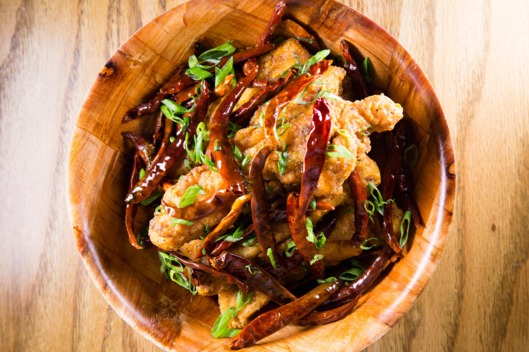
The Mission Chinese Fuku Fingers will be the first white meat offered from Fuku that is tossed with Mission Chinese’s Chongqing spice blend, chili oil, sliced scallions, and topped with fried chilies. The Fuku Fingers will be $16.

To read more, click here.

Governor Cuomo Proposes ‘All Industry’ Minimum Wage of $15

Unknown-1This past summer, legislation passed that restaurant chains in New York would need to implement yearly increases for minimum wages until 2018 for NYC and 2021 for the rest of the state to incur a $15/hr wage. However, Governor Cuomo has announced his intentions for all industries to increase minimum wages in New York State. “You cannot support a family on $18,000/ year in New York State, not to mention have a decent living,” Cuomo said. The New York State minimum right now is $8.75 and will rise to $9.00 in January, which is an annual salary of about $18,720 assuming 40 hours a week for 52 weeks. However, a $15 wage would raise yearly salaries to about $31,000.

Cuomo’s intentions to drive salaries in all industries will potentially effect the hospitality industry the most. The hospitality industry occupies some of the lowest paying jobs in the economy. Many of the employees in the hospitality industry conduct a tip based wage, where the minimum is $5.00. An average server in the greater New York Metropolitan area makes $13.21 per hour after tips, according to the U.S. Bureau of Labor statistics. In New York State, servers make an average of $12.16. NYC cooks make about $13.41 and dishwashers make about $9.66.

The tipped minimum wage will be increasing to $7.50 in January. However, for Cuomo to increase minimum wages for all workers in all industries to be $15, he will need legislative approval.

Many businesses have opposed the raise in minimum wages as it increases labor costs, and can potentially cut back on hourly staffing and reduce hiring. However, those that support “Fight for Fifteen” disagree with examples from San Francisco and Seattle, as the rising minimums in those cities did not prompt to a significant layoff or closure of hospitality industries. Moreover, believe that these measures will increase employee retention, decrease worker reliance on taxpayer subsidized public assistance programs like food stamps and stimulate consumer spending throughout the economy.

To read more, click here.

Sodium Regulations Passed in NYC

UnknownThe Board of Health unanimously voted in favor of the new bill that would require New York City chain restaurants to identify menu items with more than 2,300 milligrams of sodium. The new regulations will go into effect starting December 1st, but only for NYC restaurant with more than 15 chains nationwide. This includes McDonalds, Burger King, Panera, Subways etc. However, while these regulations will be implemented a lot will not effect these restaurant chains.

Surprisingly, many burgers and items on the menus of Burger King, McDonald’s and other fast food chains do not hold the regulated 2,300 milligrams of sodium to qualify them as marked items. Burger Business conducted research on McDonald’s cheeseburgers and concluded that one would need to eat four to reach the FDA’s daily sodium limit. Likewise, one would have to eat three Burger King’s Triple Whopper to consume the estimated FDA regulated sodium amount. Other chains like Wendy’s, Checkers, White Castle and Dairy Queen also do not use the regulated about of salt in their products to use mandatory labels. “It is possible that no fast-food chain in New York makes burgers that will get salt-shamed.” Red Robin, Chili’s and Applebee’s does have some menu items that are more than the recommended sodium amount that will need to be “salt-shamed.” Carl’s Jr. was noted to have a couple of items that were more than 2,300 milligrams in sodium, but Carl’s Jr does not have locations in New York and will not be required to label their menu’s.

To read more, click here.