NYC Food Trucks To Soon Get Letter Grades Like Restaurants

Food Carts, Trucks to Get Letter Grades Just Like NYC Restaurants

“Every cart or truck will be getting (a) newly designed decal, and when the inspector finishes the inspection, an ‘A’ looks just like the restaurant A,” says Deputy Commissioner for Environmental Health Corrine Schiff.

Beginning in December, all of the city’s 5,500 mobile food vendors will be graded on their food safety and will receive a corresponding alphabet score. A tracking device will also be attached to every unit so inspectors can keep track of each business.”

Read more here.

What Is Team Building, and Ways to Achieve It

Image result for team building activities

“Team building is important because it helps the people on a team learn more about one another, appreciate similarities and differences, understand each other’s roles better and develop skills to work together more effectively,” added Cox. “It makes working in a team more human, and less machine-like.”

Just like on a sports team, you want each member to get along well and acknowledge each other’s strengths and weakness, so they can work together accordingly. Collaboration will be more seamless if everyone is comfortable with each other.

Additionally, the company culture will feel more welcoming and supportive. Imagine walking into a room filled with silent colleagues who keep to themselves and don’t give you the time of day; now, imagine working with colleagues you also consider friends or acquaintances, who you can enjoy grabbing lunch or having a casual conversation with. it makes a major difference.”

View full article here.

Pizza Hut Says It Will Use Robots to Cook Pizza En Route

Image result for Pizza Hut Says It Will Use Robots to Cook Pizza En Route

“Pizza Hut is fusing two of America’s favorite pastimes — pizza pies and pickup trucks — in a bid to cut delivery times as fast-food competition heats up.

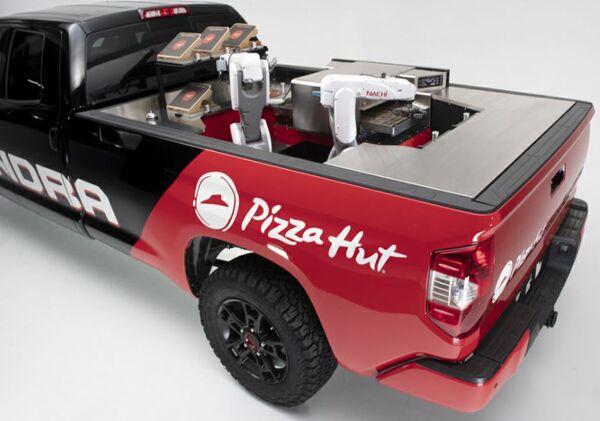
As part of the restaurant’s latest partnership with Toyota Motor Corp., Pizza Hut has unveiled a robot-operated mobile pizza factory in the bed of a modified Toyota Tundra. The prototype will use automated technology to cook pies on-the-go in six to seven minutes, letting the chain expand its delivery area without the pizzas getting cold.

“We’re bringing the oven closer to the consumer’s door; nobody is doing that,” Pizza Hut’s chief customer and operations officer in the U.S., Nicolas Burquier, said in an interview. “We are pretty obsessed with improving the customer experience. The more we can get closer to their homes or the point of delivery, the better and hotter the product will be.”

View more here.

Restaurants at New York’s Hudson Yards Have a Big Plan to Feed Office Workers

Image result for hudson yards

“More details are emerging about the dining roster at the $25 billion Hudson Yards project, and as a food editor who also happens to be a native New Yorker, I can say that it’s time to get very excited. By mid-March the megaproject’s 25 restaurants and food concepts, from José Andrés’s Mercado Little Spain food hall to the fish temple Estiatorio Milos, should be open.

Hudson Yards anticipates more than 40,000 employees arriving to work daily—a new epicenter of Manhattan supporting companies from Steve Cohen’s Point72 Asset Management to Tapestry, VaynerMedia, and Alphabet’s Sidewalk Labs.

The question of feeding all those workers, as well as the thousands of residents and tourists who will be flowing through the 1-million-square-foot space, has obsessed Kevin Stuessi, vice president at Related Companies LP, the real estate company developing the project. He’s determined that most of the restaurants will have continuous service, starting at about 11:30 a.m., with late-night menus planned.

Following an exclusive hard hat tour in early September, Stuessi and Related Urban CEO Kenneth Himmel shared some of the most exciting details of the project’s signature concepts.”

Read more here.

How Hudson Yards Chose Its 25 Restaurants

“On March 14, 2019, Hudson Yards will fully open its eastern portion. Twenty-five restaurants will fire up the stoves. More than 100 stores will fling open their doors. Marquee companies like BlackRock, Wells Fargo, and HBO will occupy office space. An entirely new neighborhood will spring into existence in what seems like an instant.

In reality, though, it’s taken mega-developer Related Companies over a decade to get to this moment. In that time, Hudson Yards — the stagnant rail yard area between 30th and 34th streets and 10th and 12th avenues — has turned into a modern adult playground of luxury retailers and restaurants, park space, and public events that have come to fruition through the vision of Related Urban CEO Kenneth Himmel.”

“Everything is designed to pull people in and up: the escalators, the open floor plan, Neiman Marcus starting on level five, the Keller and Estiatorio Milos flagships on five and six. Restaurants on higher floors are common in other countries, especially in Asia, but the format has not quite caught on in the United States — yet, if Himmel has his way.”

Read more here.

11 Recipes All Teens Need to Master Before Graduating High School

Image result for an omelette

1. Hard-Boiled Eggs

Learning to make both hard-boiled eggs and a basic omelet ensures you will always have a cheap, nutritious option for breakfast, lunch or dinner. To make hard-boiled eggs, place eggs in a pot and cover them with at least an inch of water. Bring the water to a boil and let it boil for one minute. Shut off the heat, cover the pot and let the eggs sit for 10 minutes. Remove the pot from the hot water after 10 minutes and let the eggs cool before trying to peel them.

2. An Omelet

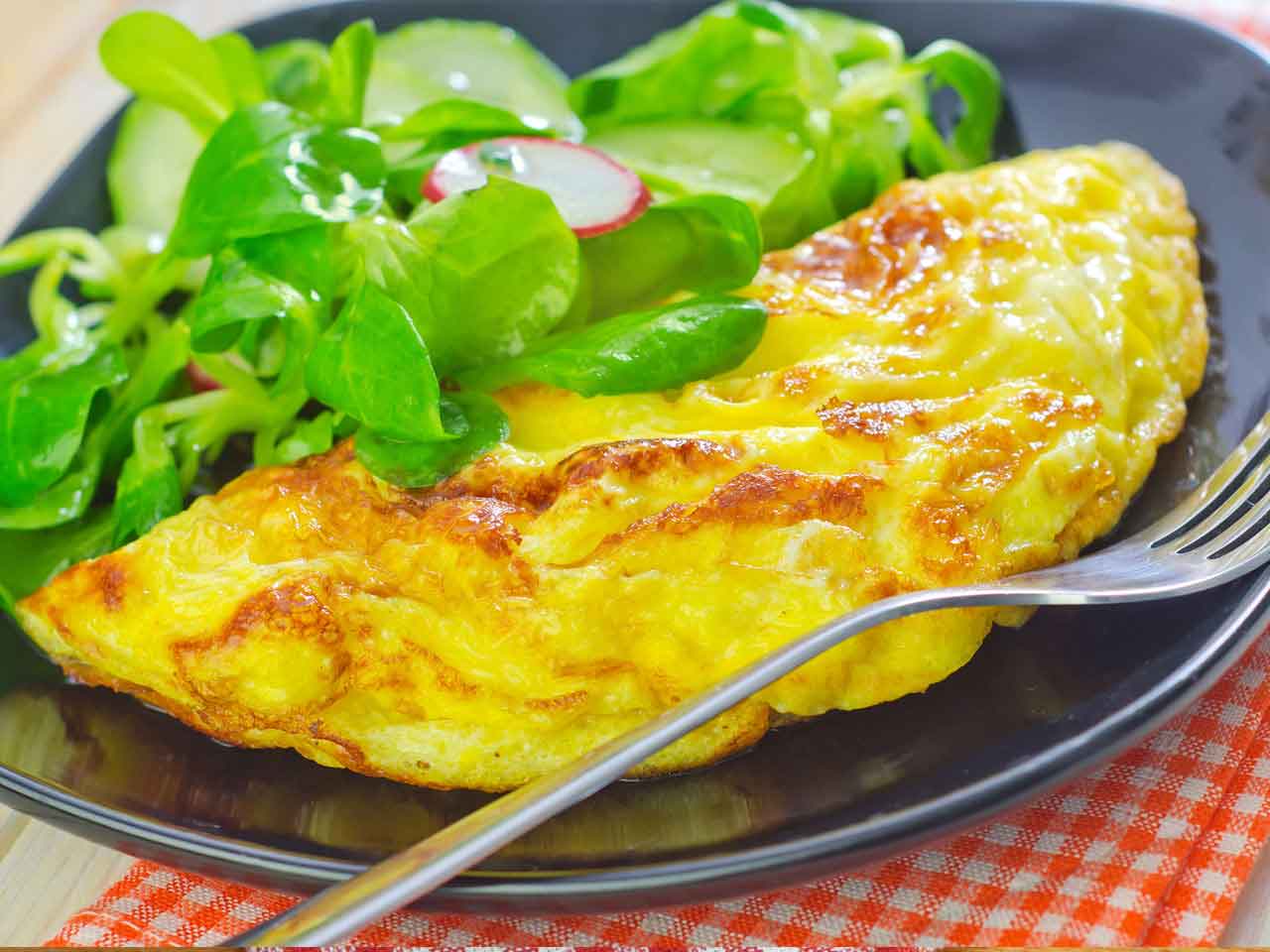
Watch chef Jamie Oliver make the perfect omelet on YouTube; he demonstrates a completely unfussy, fool-proof technique for making a basic cheese omelet. As you master the basics, try tossing some chopped fresh spinach leaves into the center before folding for added nutrition.

View more here.

Tipping is Going Extinct

Over the past week weeks, a storm of debate has surged over the news that Danny Meyer has opted to eliminate tipping in his fine dining restaurants over the course of the next year. It’s a monumental decision and the change has its advocates and skeptics. In this month’s Enterprise Insight, we’re cutting through the opinion to talk specifically about the benefits and challenges of implementing such a system.

Specifically, we will review what operators need to consider when thinking about this: why, how, and the possible pitfalls.

Why Would You Eliminate Tipping

With our clients, we’ve discussed three key reasons for implementing a more-European system: pay disparity, retention, and rising wages.

The back of house has always been under-compensated in comparison to the dining room. Due to the legal classifications of wages, back of house employees cannot be tipped. Under a tip-included system, the real cost of the meal—menu price plus tip—is built into a single number, and the revenue from that number is accessible to the owner to distribute as he or she sees fit.

This, in turn, can help with retention. Low-wage jobs are historically high-turnover jobs. However, with access to the tip ‘revenue,’ an owner can increase wages accordingly to alleviate this issue.

Lastly, rising wages are driving up labor costs and in some instances, driving away skilled labor. With the minimum wage in New York changing on a industry-by-industry basis, it will only become more difficult to find and retain great team members. Again, a tip-included system allows the operator to offer competitive wage rates.

Additionally, in the front of house, the tipped-minimum is also going up. Come January 1, NYC restaurateurs will be required to pay their servers $7.50 per hour–a 50% increase. However, if the restaurant eliminates tipping, then the team can be paid a salary, or a greater hourly wage plus a bonus drawn from the ‘tipped revenue’, thus alleviating this jump in labor costs.

How Would You Eliminate Tipping

Currently, there are only two viable options: increase prices, or apply an “administrative fee.” Be mindful with an applied “fee:” if you charge a “Service Fee” rather than “administrative,” you cannot disburse that revenue to any one not in a service position.

Neither feels good right now, but we believe that price increases will become the new normal. Here’s why: with an “administrative fee,” tipping isn’t eliminated, it’s removed from the diner’s control. With price increases, it’s truly taken off the table. The diner does not know and cannot argue with the prices because they give no allusion to the portion going to the team.

Pitfalls

Increasing pricing will always cause a certain degree of pushback from guests. Until they’re fully on board with tip-included system, the sticker shock will cause a reaction. However, as more and more of NYC s fine-dining enterprises move to this style, the less resistance operators will face. Whether your establishment plans on keeping or eliminating tipping, it’s important to understand the mechanics, because “tip-included” is bound to become the new normal for a significant portion of the dining scene.