With the recent controversy of Donald Trump’s disparaging comments about Mexican immigrants in his recent campaign post for the upcoming Presidential elections, José Andrés has backed out of a contract with Trump Hotels in Washington D.C. José Andrés says Trump’s stance makes it “impossible” for him to move forward with the restaurant on Trump property because more than half the team is Hispanic, and the chef himself is a Spanish immigrant. Donald Trump Jr. claims that José Andrés will still be held responsible for their 10-year leased contract and other fees for terminating their contract including possibilities of opening The Bazaar in another property within Washington D.C. However, José Andrés was surely able to find alternative measures to open a new restaurant, and instead of D.C his EL Bulli-style spherical olives and his Spanish restaurant The Bazaar has been rumored to be opening a SLS property in NYC. It is no surprise that José Andrés will be partnering with Hotel chain SLS as they have been longtime partners from the opening of his first location of The Bazaar at one of SLS’s properties in Beverly Hills. José Andrés is also serving as the hotel chain’s culinary director. While the rumor of José Andrés opening a restaurant in NYC still remains, some speculate that José Andrés is only advising in the development of the new Hotel SLS restaurant in NYC and has no intentions of opening in NYC. Nonetheless, many speculators are excited to see which new location José Andrés will enter.
To read more, click here
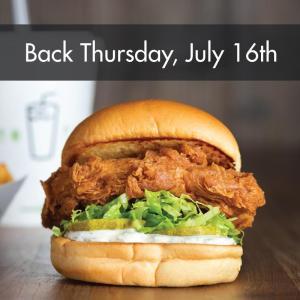 trends is fried chicken sandwiches and Shake Shack is taking their approach to this market with their ChickenShack. This fried chicken sandwich is “limited edition” and can only be found in three locations in Brooklyn. While this “limited edition” burger was available for a short span, the success of the burgers have encouraged the sandwich to be offered in a larger span. On July 16th, the ChickenShack will be available for more consumers.
 POM Wonderful, a California company, is facing legal battles on both the East and West Coasts. Both lawsuits involve claims of deceptive marketing, but POM Wonderful stands on the offensive side on the West and defensive on the East. This past January at the national’s capital, The Federal Trade Commissions has ruled that POM Wonderful made misleading health claims in its advertising between 2003 and 2010. “POM touted medical studies ostensibly showing that daily consumption of its products could treat, prevent, or reduce the risk of various ailments, including heart disease, prostate cancer, and erectile dysfunction,” Judge Sri Srinivan said. POM Wonderful is struggling to appeal the court case as judges and FTC are in comprehension of misinformed advertising.
 Mayor Bill de Blasio has proposed a bill that would require businesses to separate food waste and regular trash. Hotels, arenas and large-scale restaurants would be required to create systems and comply to this proposal regularly. The regulation applies to restaurants in hotels with more than 150 rooms, vendors in arenas and stadiums with seating capacity of at least 15,000 people, food manufacturers with a floor area of at least 25,000 square feet and wholesalers with at least 20,000 square feet. Mayor de Blasio believes “The commercial establishments in today’s proposal are already recycling plastics and metals, and by additionally recycling organic material, they will significantly contribute to reducing our city’s waste stream.” Exempt from this regulation are other food businesses like grocery stores, caterers, normal-sized restaurants and fast-food establishments. It is deemed that the sanitation department is set to publish this rule over the summer and is subjected to start after a 6-month grace period for businesses. Businesses will be given the option to arrange for collection by a private carter, transport organic waste themselves, or compost on-site, subject to compliance with the city’s sewer system. Business will be entirely liable for all costs and challenges associated with composting- space, price, arrangement.
 The beloved belgium fries shop Pomme Frites is getting ready to reopen in its new location on MacDougal St. Pomme Frites was a victim of the 2nd Avenue fire this past March. While this fry shop was a legendary fries shop in the St. Marks area, fry lovers are anticipating the shop’s return. In attempts to quickly reopen the shop, the owners Omer Shorshi and Suzanne Levinson are asking for donations to help buy fryers, fridges and appliances needed to make their famous fries and sauces. While the original location was insured, the equipment is dated from 1996 when the store first opened that claims won’t be enough to cover new appliance costs and legal claims are a slow process.
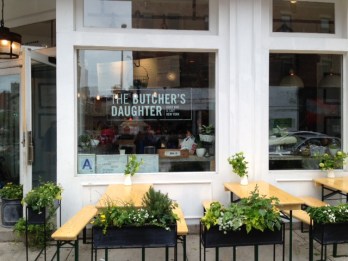 people in these past few years have changed drastically where more are searching for fresh vegetables and fruits rather than tender meats. “The Butcher’s Daughter” a trendy juice bar, and cafe is gaining a lot of spotlight on being a leader in this revolution towards greens. The Butcher’s Daughter, located on the corner of Elizabeth st. and Kenmare St., takes pride in being “the vegetable slaughter house: treat vegetables and fruits as a butcher would to meat.” Their menu is 100% vegetarian and non-dairy and is mostly vegan and gluten-free. The menu changes daily and incorporates seasonal ingredients. The crowd favorite at The Butcher’s Daughter is the avocado toast with mustard seeds but their array of sandwiches and salads still attract a large pool of consumers. The cafe also caters towards juicers with their long list of drinks- juices, smoothies, and exilir shots. While the cafe stands at 900 sq ft. with an open kitchen, a 35-seat capability indoors and 30-seat outdoors, there are enough employees to offer great service despite the cafe being busy.
 China is infamous as a leader in mass production- “they can reproduce Western manufacturing or technology overnight, but they lack prestige to replicate European artisan culinary delicacies.” China, recently, is successfully producing wine in their growing boutique wine market that has debunked its conventional stereotype. European countries like France and Italy have a long history and generations of producing wines in their vineyards while China has never been recognized for their wine. However, the Chinese have reoriented their wines to reciprocate the production methods held in Europe to produce their own wine in their vineyards and it has successfully entered the industry. The Cabernet blend Jia Bei Lan became the first Chinese wine to take the prestigious international trophy at the Decanter World Wine Awards in 2011. Chinese wine has grown in clientele across elites in China, but still face a challenge in convincing consumers to give Chinese products a chance. Because of China’s reputation of mass production elitists and wine enthusiasts label Chinese wine to be foul. Moreover, the idea of wine based from vineyards is a new concept to the Chinese culture. For 4,000 years the Chinese have preferred grain-based wine rather than grape wine. Along with productions of boutique wineries in China, China has also been influencing the shifts of the luxury ends of the market as China’s elitists are increasingly showing interest into the wine market.
 notorious for its high prices. While many consumers thought the produce was pricey because it was really healthy or organic, in actuality, after investigation from the Department of Consumer Affairs, it has been noted that Whole Foods is guilty of overpricing their produce. Whole Foods has been charged with over 800 violations during 107 separate inspections since 2010 for inaccurate consumer prices. Recently, inspectors weighed 80 different types of items at eight different locations and found that every label was inaccurate with many overcharging the consumers. Michael Sinatra, Whole Foods Spokesman, notes that the store always refunds any items found to have been incorrectly priced and likewise “never intentionally used deceptive practices to incorrectly charge customers.” Whole Foods employees remarked that corporate is held responsible for these incorrect labels because it is ordered by corporate. While just last summer Whole Foods agreed on a settlement of $800,000 in a California investigation regarding the same problems, Whole Foods, now, is potentially facing fines of more than $58,000 in New York City.
 paigepapers.com