 Amazon’s new implemented delivery service in an hour, has expanded to providing delivery of beer, wine, and liquor. Amazon wants to offer all things delivery to all their Prime membership people. While this service is only available in Seattle, Amazon has high hopes of expanding the hour delivery service to other states in America.
Instant-alcohol is an upcoming market, and Amazon has taken their fair share into the market. Like every other order on the Prime Now app, delivery costs $7.99 for delivery within and hour, and free for two hours. Not only are residents of Seattle, Bellevue, Redmond and Kirkland able to get one-hour delivery on tens of thousands of items like paper towels, Kindles, televisions, but also chilled and frozen items like milk, ice cream, wine, and beer.
Amazon’s entrance into alcohol delivery indicates the significance of the emerging markets of instant-alcohol, and of the importance of fast and efficient delivery services.
To read more, click here.
 Airports are often a dreaded destination. While many are anxious for their flights, factors of flight delays, flavorless in-flight
 Over the past five years, Starbucks has been implementing plans to sell wine, craft beer and small plates. While Starbucks is already an international hub for coffee, they are expanding into a larger scale of beverages. This week, 24 new locations will enact in the “Starbucks Evenings” program. Starbucks locations in Brooklyn, Denver, Miami, Orlando, Northern California, Washington, Oregon, Los Angeles, Chicago, Florida and Atlanta have been secured liquor licenses and are the initiatives to this new program.
 A rise in the women’s movement for equal opportunities in the job force has lead many countries and companies to enforce this movement. Recently, the government of Japan has been encouraging women to take on previously male-dominated roles in an attempt to increase the country’s workforce. Japan was
 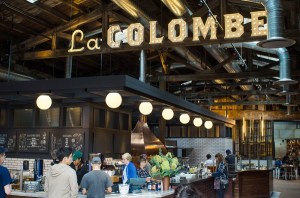 Todd Carmichael, CEO of La Colombe, has big plans for his business and with the help of a brand-new investor, Chobani founder Hamdi Ulukaya, he plans to expand his business quickly. Carmichael wants to innovate new ways of drinking coffee, like his recent success of his draft lattes (made form cold-brewed coffee and frothed milk). La Colombe is planning to expand by having food offerings, including Chobani, canned lattes in grocery stores, and opening new shops in every major U.S city.
 Cities around the country host an annual “restaurant week” or “dining month” where local establishments offer dining deals to attract and market to new customers. Genese Jamilah, founder of event blog I Don’t Do Clubs, has proposed a new type of event-Black-Owned Restaurant Month. Jamilah focuses her event on black-owned businesses, to, ultimately, build a stronger black community.
 “Mom bloggers” are essentially a network of parents who give advice on what foods you should feed your kids. Mom bloggers express desires to buy foods that are organic, locally grown and eco-friendly. “Often, when the female reader is going through the same daily parenting drama as a favorite blogger, the shared pain and joy cements a personal loyalty and unsurprisingly, advertisers are hoping to capitalize on mom bloggers’ seemingly personal connection with their readers.”According to a CBC documentary loyalty can be worth as much as $2 trillion dollars, and research shows that mom bloggers mention at least 73 brands per week, with 56% of other moms buying brands based on these blog posts.
 The majority of America’s restaurants have always been independently run. NPD Group’s last count indicated that non-chains accounted for 54 percent of U.S restaurants, but with the current trend with Restaurants chains, the majority won’t last but another year or two. Over the past year, NPD has recorded that the total number of restaurants in America shrunk by one percent despite the openings of thousands of chain restaurants like Chipotle, and Starbucks. This indicates the decrease in the number of businesses that are not chain affiliates.
 Last week, the price of Spanish olive oil has surged at a 5 percent increase to $4272 a metric ton, the highest since April 2006. A bacterial disease xylem fastidious and fruit-fly infestations have contributed to a 50 percent decline in Spanish and Italian olive oil. Spain and Italy account for 70 percent of the world’s olive oil and because of disease, extreme dry, hot weather and infestations olive oil is at “critically low levels.” “It’s quite a concerning acceleration in the price of olive oil. The supply shortages as a result of the drought, and particularly underproduction in Spain, have filtered though to the marketplace” says Lamine Lahousnia, head of packaged-food research at Euromonitor International in London. According to research on Euromonitor, consumer prices for olive oil increased about 10 percent on average in the past year, which is faster than overall inflation for packaged foods at about 3.7 percent.
 More than 80,000 food companies coexists and thousands are starting a new food business every year. Lisa Curtis, business and food tech analyst, believes 2015 will be the year that food startups will receive broader recognition. In 2014, there was a record breaking sales of $2.36 billion raised in the food and agriculture industry. The industry continues to grow as it becomes more attractive to entrepreneurs. Food is a commodity that everyone needs and is flexible to adjust towards changing consumers’ demands. The industry also holds potential fortune justified by mergers and acquisitions from major food companies that resulted in billions in sales.
 paigepapers.com