Hy-Vee App Aims to Reduce Food Waste and Save Money

“Hy-Vee Inc. has begun piloting a mobile shopping app that helps grocery retailers cut back on food waste. Called Flashfood, and developed by a Toronto company of the same name, the app enables consumers to browse and buy food items nearing their “best before” date at “significantly reduced” prices, Hy-Vee said Friday.

To use Flashfood, customers download the free app (available in iOS and Android versions) and then start shopping deals on items such as meat, dairy, bread and snacks. Purchases are then made directly from their smartphone and picked up at any time from the Flashfood Zone shelves or refrigerators in the store.

The program gives consumers a way to lower their grocery bill and help the environment by reducing unnecessary food waste, according to Flashfood.”

Read more here.

One of West Africa’s Most Accomplished Chefs Opens an NYC Restaurant Soon

“Former Le Grand Dakar chef Pierre Thiam — who strives to be an ambassador of Africa’s culinary history — will open a Pan-African restaurant in Harlem’s Africa Center next month, where he’ll showcase his native cuisine in fast-casual format.

Teranga, which translates roughly to “hospitality” in Wolof, a language spoken in Senegal, will focus on Senegalese cuisine, as well as foods from Nigeria, Mali, the Ivory Coast, and Guinea in bowl-like formats.

The menu is molded by West African ingredients like sorghum and millet paired with dried fruits for breakfast, as well as fonio, a grain that’ll be served within salads and bowls during lunch and dinner, Thiam told the Times in August.

Vegetable and protein bowls like grilled chicken and caramelized onions over Liberian red rice will also be available, plus other vegetarian options like a sweet potato and black-eyed pea stew. Drinks range from hot and cold African coffees, teas, and juices. The menu is gluten-free; see it in full below.

The location of Thiam’s new restaurant within the cultural center makes sense, as he is a vocal advocate for Africa’s culinary history and even appeared in a 2016 episode of the late Anthony Bourdain’s Parts Unknown in his native Senegal. The restaurant will take up a 2,000-square-foot space in the center, overlooking Central Park.”

Read more here.

Minimum Wage Hikes in New York City Cause Restaurants to Eliminate Jobs, Cut Hours, Raise Prices

Screen Shot 2019-01-25 at 2.05.48 PM.png

“New York is known for its incredible food scene, but legislators in the Big Apple may have bitten off more than they can chew with the newest minimum wage hike.

The city’s mandated increase, which took effect on December 31, requires businesses that employ 11 or more people to boost wages from $13 to $15 per hour. But most restaurants operate with the tipped wage, offering servers and bartenders a lower hourly base pay and the opportunity to rake in the rest in tips, which often yields better pay overall. If workers don’t earn enough this way, employers are required to make up the difference.

That tipped minimum just rose from $8.65 to $10 an hour. A 16 percent jump is fairly punishing, considering the industry operates on razor-thin profit margins.

A new study conducted by the New York City Hospitality Alliance lends credence to the idea that substantial increases made to the tipped wage are far costlier than they are beneficial. After surveying 574 restaurants, they found that 2019 looks bleak: 75 percent of full-service establishments plan to cut employee hours, and 47 percent will eliminate jobs entirely in response to the forced minimum wage hikes. That follows closely on the heels of a dreary 2018, when 77 percent of full-service restaurants reduced employee hours and 36 percent cut jobs, both of which were also in response to the mandated wage increases.”

See more here.

Why small wine lists may be ideal for restaurants

“Picture yourself in a fancy restaurant known for its wine list. The host hands you a heavy leather volume, or maybe an iPad, to peruse pages upon pages of bottle selections.

Maybe you’re in the mood for something specific, so you navigate to the category you want. From there, you focus on a country, a grape and finally, you make a selection from 10–12 bottles. But if you don’t have a predetermined wine in mind, you’re left guessing what your companions like and what will complement their meals. Sure, the floor sommelier can help, and it’s exciting to have s many options, but it can also add a layer of complication and intimidation.

Enter the small wine list. If a big tome conveys gravitas and leather-bound luxury, a small printed list speaks to elegance, simplicity and ease. Instead of flipping through numerous pages of bottles before you even look at the menu, you can order wine at a glance and focus on your date, friends or family.”

Read more here.


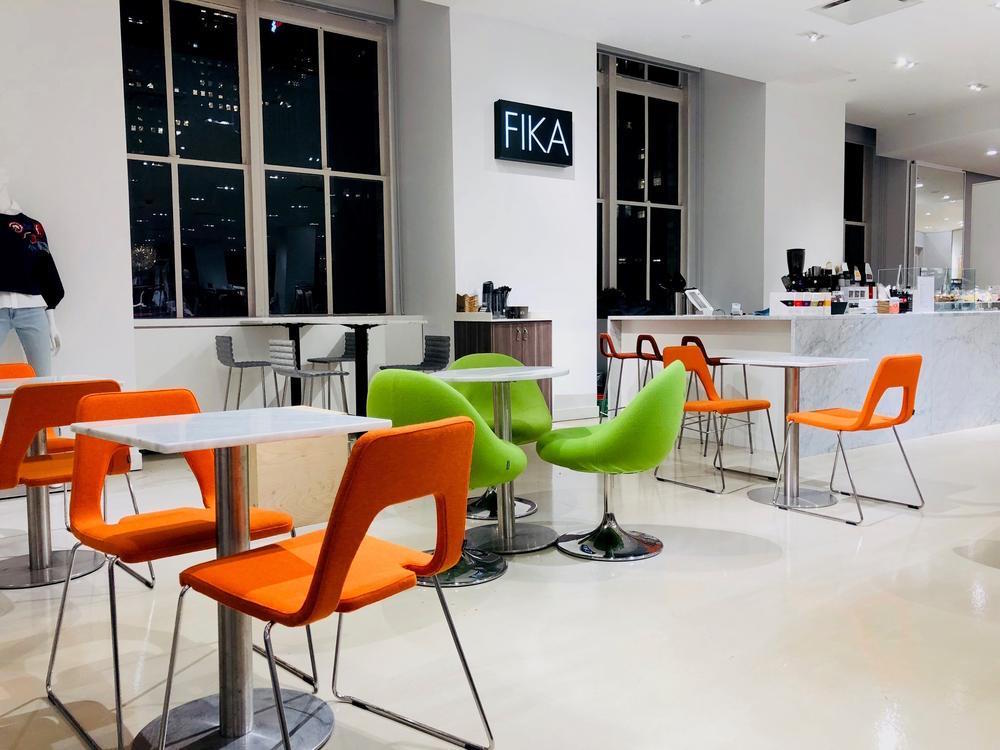
The Rise, Decline and Section 363 Sale of the New York Coffee Chain Fika

Fika coffee new york

“Though the word “fika” famously refers to the Swedish cultural practice of slowing down to relax with those around you over coffee or tea and a small bite, the New York City coffee chain Fika has been operating at a breakneck pace in recent years.

By 2016, ten years after opening Fika with a single Manhattan location, founder Lars Akerlund had led the boutique coffee chain to 17 locations while signaling the company’s intentions to expand its physical footprint into more U.S. cities and countries overseas. Two years after that, by Sept. 2018, Fika had filed for Chapter 11 bankruptcy.

Today, the company is down to six New York locations, and it has recently been acquired through an auction process under the U.S. Bankruptcy Code, section 363, according to an announcement made by Cozen O’Connor, a law firm involved with the acquisition process.

“The expansion required significant start-up costs for each of the locations before they could become profitable,” the firm said, noting the rapid addition of 12 Fika cafes that began in 2013. “FIKA was subsequently unable to secure additional investors to cover the expansion costs and its operations alone could not absorb the increased start-up expenses. The legacy costs from the aggressive expansion forced FIKA, therefore, to close a number of locations and return to a streamlined, conservative business model centered on fewer stores.”

Read more here.

New York City on sale: Deep discounts on shows, restaurants, hotels starting Jan. 21

Screen Shot 2019-01-22 at 1.05.11 PM.png

New York City is appealing to visitors for countless reasons, but price is not usually one of them.

But starting Jan. 21, the city will be at its cheapest thanks to a new initiative called NYC Winter Outing organized by the tourism marketing association, NYC & Company.

For the first time, NYC Restaurant Week, NYC Broadway Week and NYC Must-See Week will take place at the same time.

That will result in some of the lowest hotel rates of the year, shopping sales, theater, restaurant and attraction/sightseeing deals.

About 400 restaurants will participate in NYC Restaurant Week from Jan. 21 to Feb. 8. Diners will get two-course prix-fixe lunches and brunches for $26, with three-course dinners for $42.

View more here.

Bangladeshi Food Is a Rarity Around New York

““I love feeding people,” said Nur-E Gulshan, who began cooking as a 16-year-old newlywed in the Bangladeshi city of Bogra. “Since my kids’ friends come over, they always said: ‘Auntie, why don’t you open a restaurant? Your food is so good!’ Always, I thought they are just telling me as courtesy. Then they grew up, and they’re still telling me to do the same.”

“There is a long, often-unexplored history of Bangladeshi immigrants’ owning nominally Indian restaurants in the United States. But the food isn’t Bangladeshi, nor does it reflect the varied regional cuisines of India, one of the largest and most populous countries in the world.

Nur-E Farhana is steadfast in distinguishing her mother’s Bangladeshi food from the Indian food typically encountered in restaurants in America: “Chicken tikka masala, butter chicken, paneer,” she said with a sigh.”

See more here.

Restaurant Boasting New York City Flair Coming to the Castro

“When it opens this spring, Gramercy Park will serve Californian cuisine in the evenings, New York City-style sandwiches in the afternoons, and all-American brunch on the weekends. Owner Mark White hopes to open the restaurant by mid-April at 216 Church Street, formerly Crepevine in the Castro.

White is fairly secretive about his background. He says he graduated from the Culinary Institute of America 20 years ago, and went on to own four restaurants in New York. But he sold off his stakes in those restaurants — which he did not name — and now has his eyes on San Francisco. He’s starting a new restaurant group, Madison Avenue Hospitality Group, and plans to open five restaurants within five years here. Gramercy Park is the first.”

“Gramercy Park will also occupy a smaller, 480-square-foot space next door — dubbed Gramercy Park To-Go — to serve commuters in the morning with coffee and grab-and-go items. It’ll also provide a streamlined area for delivery services like Caviar and Postmates to pick up orders without clogging up the main dining room. Between the two spaces, White hopes Gramercy Park will be the sort of neighborhood spot folks visit multiple times a month.”

Read more here.

Impact of Min Wage Increase / NYCHA Survey & Results

Screen Shot 2019-01-14 at 3.10.33 PM.png

See here NYCHA Survey and Results on Minimum Wage Increase

NYC’s Most Anticipated Openings of Winter 2019

“To be sure, increased costs is having its impact. Some of the city’s most exciting restaurateurs are focusing their efforts on smaller spaces. The Franks of Italian favorite Frankies 457 are now working with one of Long Island’s most legendary pizzamakers, Umberto Corteo, but it will be for a slice shop. All-day dining — a format that, for some, is a way to help maximize sales — continues to flourish, like at Gertie, Pilar Cuban Bakery, and Bourke Street Bakery.

Money, after all, still runs things. The biggest change to the dining scene will be the debut of all the restaurants at Hudson Yards, the behemoth Manhattan far west side development from Related Companies that has cost $20 billion. Most of the chefs in it needed to have at least $2 million in upfront capital. It arguably isn’t great for the future of NYC dining.”

Read more here.