Single-Serve Coffee Pods Banned in Hamburg

_88333244_more-capsules.jpg

These days, it’s difficult to read anything about Keurig Company or the now-ubiquitous single-serve coffee pods without a reminder of the waste they produce. The pods are often made with a mixture of aluminum and plastic  which, combined with the organic matter left inside after use, makes them nearly impossible to recycle and an increasing burden to strained landfills. Still, in Western Europe the pods make up one third of the coffee market, for a total of  €18 billion.

Now the city of Hamburg has taken a stand against the pods and the machines which exclusively brew them (known as “Kaffeekapselmaschine” in German), by banning the purchase of these machine’s with taxpayer money. This means that they will no longer be found in any municipal buildings, and government employees will return to other brewing methods for the time being. This may not make a huge dent in that €18 billion market, but it is further indication of backlash against the pods, and further motivation for companies looking to find eco-friendly versions that are biodegradable or easily recyclable.

To read more, click here.


Swiss Start-Up Wants to Bring You a Greener Soda

There’s no doubt that soda has an image problem which producers would love to tackle, but most of those efforts have centered around perceptions of health (or a lack thereof). One Swiss start-up, Climeworks, has an entirely different approach that could still provide  a PR boost to big-soda. Climeworks’ main business is carbon capture; specifically, developing technology for commercially viable ways to suck CO2 out of the air and repurpose it. One of those ways is by using that CO2 to carbonate beverages without burning any additional fossil fuels.

Of course, the CO2 trapped in soda cans doesn’t stay out of the atmosphere for long, and it would be hard to see much of a dent in atmospheric parts per million from this technology alone. But such technology would at the very least give soda a greener image – which could explain why “the biggest fizzy-drinks company in the world” is already mostly on board, according to a Climeworks rep.

To read more, click here.

Danny Meyer’s War on Airplane Food

18DELTA1-master675.jpgAlthough it seems unlikely that airline food will overcome it’s reputation any time soon, the partnership between Delta and Danny Meyer’s Union Square Hospitality Group has at least shifted the conversation. In 2013, Delta began serving food from USHG’s Blue Smoke on a select few flights, and although there were a few hurdles along the way the feedback was mostly positive. Beginning March 1st, all customers on international flights in the Delta One cabin will now be able to enjoy an updated menu from Carmen Quagliata, which tosses out some of the airline food standbys like reheated, textureless pasta and instead aims to work within the limitations imposed by small spaces and packaging. This means no more chunky soups or fried garnishes, but plenty of purees and roasted vegetables.

John Harenda, the VP of operations for USGH, has set a lofty goal for this new menu. “We want passengers to say, ‘This is great food’ — not, ‘This is great food for an airline,’ ” he tells the New York Times. Of course, the real news will be when these dishes are available in coach as well – for now, economy passengers will have to settle for smelling Quagliata’s food from the Delta One cabin.

To read more, click here.

Parmesan Fraud is a Serious Problem for America

canadian-parmesan-our-top-four-quick-tipsThe FDA warns that Parmesan fraud has become a serious issue for American consumers. Tests show that products deemed as “100 percent Parmesan” have substitutes like wood pulp, and cheaper cheeses like cheddar, Swiss and mozzarella. The FDA has been prosecuting industry offenders who are guilty of this proclamation.
Castle Cheese who was once a top supplier to the big grocery chains for their “Parmesan” products are under criminal case with the FDA. Castle Cheese has been making fraud cheeses for almost 30 years and supplied the Market Pantry brand at Target and two other Associated Wholesale, the nation’s second-largest retail wholesaler. Castle is the highest profile case of Parmesan fraud, and this month the president is supposed to plead guilty of the charges that could cost a year in prison and a $100,000 fine.

Industry experts say that there are still numerous companies that are full of fraud. Cheese-makers are fighting for stricter labeling laws and they say 40 percent of cheeses in the industry aren’t even a cheese product. Dairy Farmers of America subsidiary claims its tests showed only one-third of labels are accurate.

To read more, click here.

Noma’s Chef has Big Plans in Brownsville

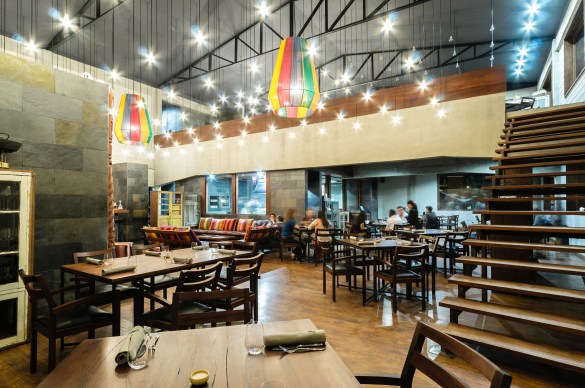
Claus Meyer, the star Danish chef and co-founder of world famous Noma, has a few big projects in the works that he hopes will be a bit more accessible than a Michelin star. Chief among them is a combined restaurant and culinary school opening later this year in a former 99 cent store in Brownsville, both of which will be geared chiefly towards residents of the neighborhood. This is the second school-restaurant combo from Meyer, the first being Gusto in La Paz, Bolivia. Both neighborhoods were chosen for their limited access to healthy food, with the goal of empowering residents and the local economy by providing affordable dining and education together.

Applications are currently open to Brownsville residents aged 18-24 for a year long culinary program at the new school. Meyer’s team also plans to offer free cooking classes to residents throughout the year, and serve food from the neighborhood at the 40 seat restaurant. Additional details have yet to be set in stone, although there are sure to be plenty of fans of Meyer who treat the spot as a destination restaurant, no matter what it looks like.

To read more, click here.

DSC5164.jpg

Gusto in La Paz, Bolivia

It Might be Time for American Olive Oil to Shine

olive-oil-968657_960_720.jpgOlive oil may be found in almost every American kitchen, but it’s long been the purview of the old world – an assumed-to-be-necessary import from Mediterranean farms that have been producing it for generations. Increasingly, however, California farms are taking a bigger stake of the market, with claims that they offer superior quality without the premium.
To some extent, this claim is supported by the research and recommendations of professionals. In Italy, a recent investigation by a special branch of the carabinieri police force found that many oils labeled “extra virgin” were in fact only “virgin” quality (the designation is based on the basic flavor profile and presence or absence of 16 potential “taste flaws). In November, Cooks Illustrated magazine released their recommendations for super market olive oils based on blind taste tests, and found that California Olive Ranch’s Everyday Extra Virgin was the tasters favorite, while most of the imported oils were tepidly reviewed.

The obvious comparison to be made here is with wine in the mid 1970s, when buyers and sommeliers began to realize that Napa Valley was actually producing high quality wines that rivaled those with an old-world pedigree. As olive oil demand grows, this could spell big trouble for the major European exporters, who already have more than $2 billion to lose in the U.S. market.

To read more, click here.

Competitors See Opportunity in Chipotle’s Troubles

The Chipotle food-safety saga has been impossible to ignore for the last few months, as everyone from hungry college students to Wall Street traders are forced to reckon with the chain’s downfall. For other fast-casual and fast food restaurants, however, the news is an opportunity to snatch some new guests. As we wrote earlier, Sweetgreen has already earned the moniker “the new Chipotle” to some, and they’ll undoubtedly benefit at least somewhat from the Mexican chain’s decrease in sales. Others are hoping that they can improve their image by highlighting food safety practices – and surreptitiously reminding everyone that they haven’t caused any norovirus outbreaks recently.

Canadian chain Freshii is twisting the knife by offering half-priced Mexican food while Chipotles everywhere are closed for an all-hands meeting and regroup. They claim that this is to “help consumers through these dark hours,” and that “the least [they] could do was look after their customers while Chipotle paused to recalibrate.”

White Castle, while not a direct competitor of Chipotle, has decided now would be a good time to launch a website devoted entirely to advertising their food safety practices. The website is unambiguously named http://www.WhiteCastleClean.com, and it showcases their commitment to “promoting food safety, cleanliness and transparency.”

Chipotle meanwhile is struggling to recover while their stocks are in free-fall. CEO Steve Ells has made repeated statements about their new food safety practices, and promised that they will release any information about the source of the outbreaks last year. This Super Bowl, they are offering $50 currency card and a limited-edition gift from the makers of Tabasco sauce to anyone who uses their catering service.

To read more, click here and here.


Sweetgreen Expects a Full Half of Sales to Come from their App this Year

The fast-casual salad chain Sweetgreen had a big year this year, opening 3 new stores in New York alone, moving their headquarters to California, and being dubbed “the next Chipotle” by CNN and others. One could argue that their success is built on many things – timing, a growing demand for healthy, sustainably sourced foods, their youthful aesthetic (one of their limited edition salads last year was named in honor of a Kendrick Lamar song) – but it would be a mistake to underestimate the role mobile has had in that success.  So far, 21% of Sweetgreen’s sales come through their custom app, and they expect that number to jump as high as 50% this year.

The appeal of mobile ordering is understandable: with lunchtime lines out the door, the Sweetgreen app allows guests to order from the office and pick up immediately, and once downloaded, a rewards system makes it more likely for them to keep visiting. Additional features like the ability to flag dietary restrictions, add favorites, and integrate with the iOS health app, add an additional layer of appeal.

Of course, for many small chains it simply isn’t feasible to build out this kind of ordering system. Sweetgreen has had the benefit of $95 million in total investments in recent years, and they’ve clearly dedicated a fair amount of that to building their mobile presence. But they do serve as a reminder of the kind of return such an investment can have.

To read more, click here.

Climate Change Has Repercussions for Coffee and Cocoa

r.jpeg

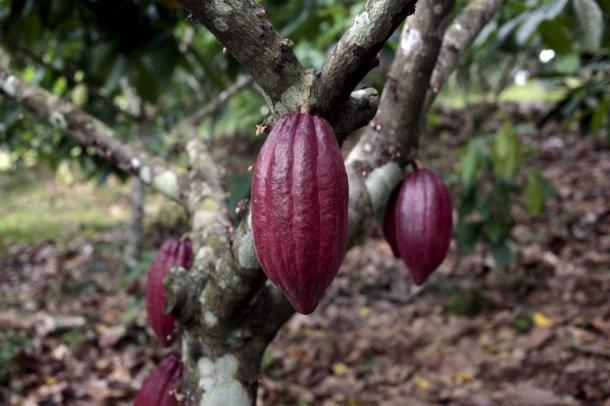
As temperatures heat up across central America, low-lying growing regions which were once ideal for coffee are quickly becoming too warm, at least to grow the kind of quality coffee that is increasingly demanded by consumers. Many farmers in the region are feeling these effects while still trying to recover from a devastating outbreak of roya over the past four years, a disease that affects coffee leaves and is likely also driven by climate change.

Some growers have decided to cut their losses rather than bearing the increased costs of production and are switching to cocoa, which thrives in warmer climates. For many, the decision is a no-brainer, since cocoa futures have increased steadily for the past four years while coffee dropped 24% in 2015. For now, this increased supply won’t do much to ease the fears of chocolate giants like Hershey and Mars, since the farmers switching are mostly aiming to produce higher quality product at lower volumes. Craft chocolate makers can get excited though – in the next few years, it looks like coffee’s loss will be cocoa’s gain.

To read more, click here.

UberEats Launches in Ten Cities

uber-eats-new-york-los-angeles-denver-spain-chicago.png

New York, along with 9 other major American cities, can soon benefit from Uber’s extensive network of drivers to satisfy their lunchtime munchies in record time. The company is finally launching UberEats, which they hope will ultimately compete with Grubhub and Seamless, although their existing ten-minute lunch delivery still has a very small user base. New York, Chicago, L.A., San Francisco, Austin, Houston, Dallas, Atlanta, and Washington, D.C. should all be able to use UberEats by March.

Drivers will be able to opt in to or out of the new program if they prefer not to mix hot foods and New York gridlock, but Uber is charging a flat delivery fee of $5 to encourage more drivers to participate. And true to the sharing-economy, there will also be an UberPool version which allows users to pay only $1 and have their food delivered with other orders in the area. With more and more food delivery companies joining the fray, each will have to work harder to stand out – the promised shorter delivery times Uber offers could go a long way towards doing that, especially with Grubhub and Seamless averaging over 45 minutes.

To read more, click here.