New Lawsuit Against Chipotle Execs

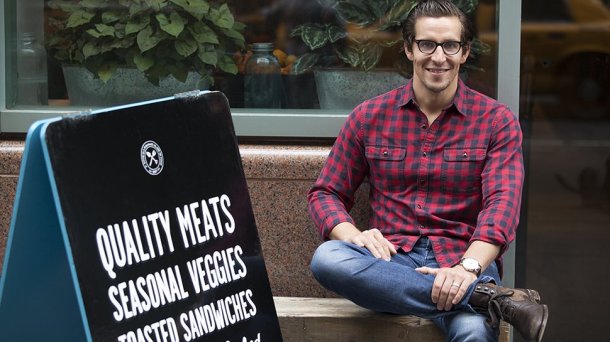
With sales and stocks still reeling, a small group of Chipotle shareholders have now filed an additional lawsuit against the company’s executives, claiming that they “abused their control of the Company, and dealt themselves excessive compensation worth hundreds of millions of dollars through a corrupt stock incentive plan.”

The suit explicitly names Co-CEOs Steve Ells and Montgomery Moran, and CFO Jack Hartung, among others. It claims that these executives, using insider knowledge about the food safety protocols that would cause Chipotle’s well-reported downfall in 2015, dumped their stocks at an artificially inflated price and raked in millions before the food poisoning scandals began. Supposedly Ells made $78 million by selling 119,057 shares, Moran raked in $107 million, and Hurtung $28 million.

Chipotle has not admitted any wrong doing, and both this suit and one from January are still pending.

To read more, click here.
The Persistent Rise Of Restaurant Takeout And Delivery

ubereats

Pizza no longer dominates the delivery and takeout business. Consumers are increasingly ordering their favorite foods to be delivered or to-go, rather than dining in-store. And, in fact, restaurant delivery traffic outside of pizza has risen 33 percent since 2012. This presents a unique opportunity for foodservice and restaurant operators to shift their strategies and operating processes to take advantage of the delivery and takeout trends, rather than have their dine-in numbers and market share cannibalized by competitors who are focused on these services.

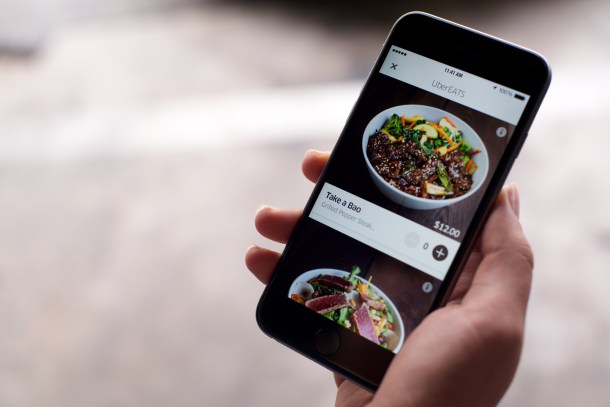
According to recent surveys, 51% of Americans use delivery services to purchase meals from casual dining restaurant and 26% order takeout or delivery at least once a week. These behaviors show little sign of slowing: digital ordering and delivery have been growing 300% faster than dine-in traffic since 2014. Third party delivery services, like DoorDash, Caviar and Grubhub are becoming major marketplace competitors, providing speed, ease of use, convenience and customized offerings based on customers’ previous orders. Furthermore, larger players such as uberEats, Amazon Prime and Google, are now entering this space and beginning to pilot their own food delivery programs.

Confidence in the future and growth trajectory of this space is strong. More than half a billion was invested in the food delivery sector in 2014 – almost 13 times the amount in 2013 – with more than a billion dollars invested in 2015. As for restaurants, partnering with third party delivery services is a seductive alternative, with research showing an increase in restaurant sales volume from 10% to 20%.

Read more here.

New Co-Working Start Up Is Partnering With Restaurants

space

New coworking start-up Spacious launched earlier this month by using DBGB Kitchen and Bar as a meeting and office space. They are now also adding L’Equipe in East Village and Public in Soho to their public work space portfolio. According to founder Preston Pesek, they plan to announce partnerships with restaurants in Williamsburg, Chelsea, Tribeca, Upper West Side, and even San Francisco and Los Angeles soon, but Pesek says they’re not targeting just any restaurant. It must be beautiful, and even though they won’t be serving food immediately, the menu must be delicious, he says. A good restaurant, he says, works perfectly as a good meeting space.

Besides being dinner-only restaurants, the restaurants involved with Spacious also need to be near public transit, be well-designed, and be big. DBGB has about 180 seats, and L’Apicio offers about 190. All of the eventual participants will have a minimum of 60 to 100 seats. Spacious members pay $95 per month to work in the spaces during the day, and restaurants are part of a profit-sharing partnership with the start-up.

Eventually, Spacious users will be able to order limited small plates at some of the restaurants through an app on their phone and pick it up themselves so as to avoid table service. “Most of the kitchens open early for prep work anyway, and it would be a way to showcase what they’re working on”, Pesek added.

Read more here.

Philly Paves the Way For Diet-Soda Taxes

In less than a week, Philadelphia will vote on a new tax on sodas which they are all but certain to pass. The tax will add 1.5 cents to every ounce of soda sold – an amount which adds up quickly on larger bottles and value-packs. The measure will make Philly the first large city to tax soda (Berkeley being the only other city in the U.S. to pass a similar law), as well as the first city to extend taxes to diet sodas. While the original proposal taxed only drinks with added sugar at 3 cents an ounce, critics argued this was too steep and disproportionately affected those with lower-incomes. The city council then amended the measure to tax all sodas at a lower rate, since upper- and middle-income consumers are more likely to reach for the diet soda.

Big Soda is already suffering from tanking sales and bad PR, so this move has understandably put them on the defensive. In the weeks leading up to the vote, soda companies have poured millions into ad campaigns against the tax, and the city has responded with some of their own. The council can also expect some litigation once they vote, since the industry is not likely to go down without a fight.

To read more, click here.

Start-Up Spacious has a Vision for New York Restaurants

As more and more businesses (particularly in the tech start-up sphere) forego traditional offices, the demand for alternative working spaces will continue to increase. The new start-up Spacious seeks to capitalize on that, by turning dinner-only restaurants into co-working space during the day. Spacious owner Preston Pesek sees it as a way to “reclaim the city for creative professionals.”

A Spacious membership costs $95 per month, and includes unlimited access to their available workspaces, as well as WiFi, coffee, water, and conference rooms. Currently their only actual space is Daniel Boulud’s DBGB Kitchen and Bar, so Spacious is offering a 20% sign-on discount for members who join now. Eventually they hope to add more options throughout the city, and possibly include lunch in the offer as well.

The benefit to the restaurant (besides exposure) is a profit-sharing agreement, but in some cases the exposure might be enough to justify the risk. According to a  DBGB manager, the partnership has already brought more dinner traffic to the restaurant from Spacious members who see the space during the day and invite back larger crowds at night.

To read more, click here.

Dig Inn CEO Takes Disruption To New Heights

Dig Inn CEO

For Adam Eskin, CEO of Dig Inn, being disruptive meant severing ties with standard supply chains and developing relationships with local farmers in order to source ingredients for his New York City-based concept. The company has even helped farmers buy land and equipment and is now looking into buying farmland.

“Broken,” is how Eskin described today’s food system, which was set up decades ago to deliver food to masses of people as quickly as possible. That goal has led to obesity and a failing agriculture system, which inspired him to launch Dig Inn, a concept serving only from-scratch and seasonal food. Menu items include: flame-grilled wild salmon, Sicilian cauliflower, roasted kale, five-spice meatballs made with chicken or pork and free-range roasted turkey from Koch’s Turkey Farm in Tamaqua, Pennslyvania.

Dig Inn’s seasonal and innovative menu means talented chefs must always be in the kitchen, and Eskin admitted that finding NYC chefs who want to work in a fast casual setting can be challenging. Eskin found a solution by developing his own in-house culinary school, where he transforms employees into chefs. In an effort to inspire and help his chefs grow, Eskin partners with some of New York’s high-end restaurants, including Danielle, to provide them with the opportunities to work in their kitchens. It’s a win, win; young chefs study under pros and then put new skills to use at Dig Inn.

Read more here.


Cold Brew In An Ice Pop!

cold brew pop

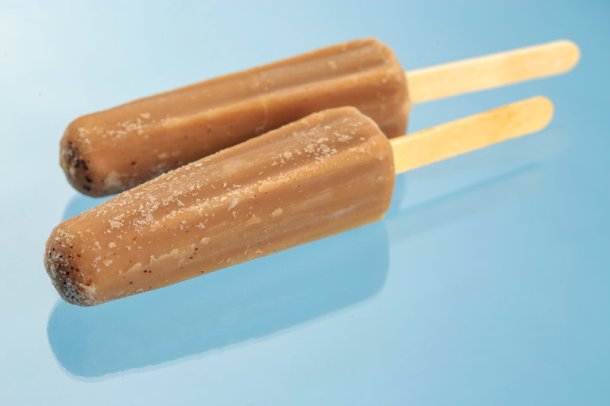
Cold-brew coffee, emphasis on the cold, is what you get in this new ice pop from Brewla, a company whose other flavors are fruit based. The bar is a lightly sweetened mixture of the coffee and organic milk.

Brewla was founded by Daniel and Rebecca Dengrove, a brother and sister team with over 15 years of experience in food science and technology. The idea for Brewla Bars was born when the budding entrepreneur Daniel noticed an untapped market at the intersection between popular high-end juices and the boom in trendy frozen yogurt. A rising star in the beverage industry, Rebecca zeroed in on teas with health boosts. Although the concept was originally for a brick-and-mortar store, the siblings’ full-time jobs and cross-country residences created roadblocks, so Rebecca rented space in the industrial kitchen at her old graduate school, decorated a rolling freezer, and Brewla Bars began.

Brewla Barista, box of five, $5.99 at Union Market stores in Manhattan and Brooklyn, brewlabars.com.

More Restaurants Planning on Eliminating Tips

According to a new survey conducted by the American Express Restaurant Trade Survey, more restaurants around the country are planning on going tip-free.

Of the 503 restaurants surveyed, nearly half have either adopted or plan to adopt a no-tipping policy. Further results were:

  • 18%: Already initiated a no-tipping policy
  • 29%: Intend to make the switch
  • 27% Pro-tipping and have no plans to change
  • 17%: Open to making a move if more of their colleagues do
  • 10%: Undecided

Read more here

Food Loves Tech: Touch The Food Chain Of Tomorrow, Today

foodlovestech

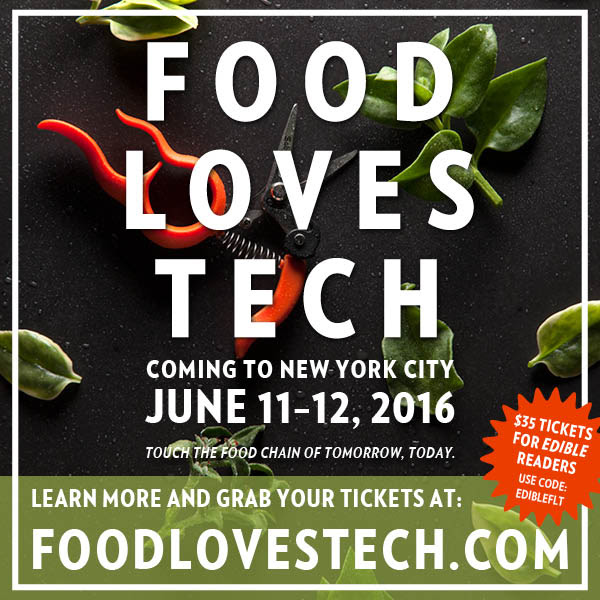
A collaboration with Vayner Media, this eats-of-tomorrow gathering in the Waterfront Tunnel in Manhattan will allow attendees to see, smell, touch and taste the food culture of the near future.

Food Loves Tech is your chance to walk up to vertical farms, taste-test crickets, review dozens of food system apps, and talk to the inventors behind juicebots and beerbots, food computers for your home, and smart kitchens that listen to your food.


Event details are as follows:

Food Loves Tech
June 11–12, 2016
The Waterfront
241 11th Ave (at 27th St), NYC

Buy Tickets Here.


The Wizard Retools His Lab

David Bouley dreams of engineering a whole different concept of a restaurant.

The famous chef’s eponymous restaurant opened at 165 Duane Street, Tribeca in 1987.  According to Bouley, the restaurant will be going “on sabbatical” and then reopening in a smaller space (planned for Tribeca) with a mission of healthful eating.  The new space will accommodate only 20-25 seats and open five days a week.  The Bouley that New Yorkers have come to know over the past thirty years will be gone in a few months.

In recent years, Mr. Bouley has become obsessed with health issues.  Towards the end of the year, he will engage in a deep study of the relationship between health and food.  He plans to take nutrition classes at New York University and consult with doctors and experts, internationally.

The new restaurant’s mission will be to optimize health.  Tasting menus will be developed to address a variety of dietary restrictions and medical concerns.  “Food should give you calories that you burn off, not calories that you store,” said Mr. Bouley.

David Bouley plans to rejuvenate his restaurants and projects (Bouley, brushstroke, Bouley Test Kitchen and Bouley Botanical) and himself.  He is quoted as saying “Gastronomy and science, meeting together.  I want to learn how to do that better”.

Please click here to read more…