B&K French Cuisine Brings Paris to Harlem

The distance from Paris to Harlem is 5,823 km or 3,618 miles.  Benjamin Baccari Kebe, a Frenchman of Malian descent, is trying to bridge that gap at a tiny Harlem counter with a few metal stools.

Mr. Kebe trained at culinary school and at Paris restaurants.  His uncle convinced him in 2009 that Americans loved French food, and that the United States presented plenty of opportunity.  Mr. Kebe moved to New York and worked at Harlem neighborhood bistros.  Then last December he opened B&K French Cuisine with plans to make crepes, bake his own focaccia and serve classics like chicken forestiere.  His attention to detail may be found in the fact that he hand-cuts potatoes for French fries every morning.

The food is simple.  The menu is written on chalkboards hung from the wall, with sketches of the Eiffel Tower and a map of France.  Bissap can be found on the menu – an item from Mr. Kebe’s Malian heritage.  It is a mix between juice and tea, made of dried hibiscus soaked in boiling water, with a crush of mint.

The desserts are rich as they should be, including chocolate mousse, Nutella tiramisu and mascarpone in whipped cream.

Recommended dishes are chicken pesto panini, Dijon braised beef panini, and Londonian fish and chips.  Prices range up to $16.

B&K French Cuisine is located at 2167 Adam Clayton Powell Jr. Boulevard in Harlem.  The restaurant is open from Tuesday to Sunday for late breakfast, lunch and dinner. Reservations are not accepted.

To read more, please click here
Elon Musk’s Brother Has a Plan to Sell Organic Fast Food for Under $5

KM

Kimbal Musk, Elon’s less famous brother who made scads of money himself in Silicon Valley before leaving for culinary school, is getting ready to open the first of (what he hopes will be) many locations of a new organic fast-food chain. He tells Tech Insider that in addition to the Kitchen and Next Door, currently the two halves of his restaurant mini-empire, he’s about to launch a new concept called the Kitchenette, where everything will be fast, healthy, and organic but cost under $5. The first location is set to debut in Memphis this August.

With this venture, Musk enters a field that’s really heating up. The idea of bringing tasty and healthy affordable food to the masses has been the culinary world’s holy grail for a while. Musk is packaging the idea as sort of a Pret A Manger–style grab-and-go spot. He says the space will be like a coffee shop, with a counter, indoor seating, and a big patio out front, and the menu will mostly consist of sandwiches, soups, and salads, all made using ingredients sourced from nearby farms. The locavore bent will ensure ingredients stay seasonal, but Musk says there’s another benefit, too:

While the Kitchenette’s pricing sounds too good to be true, Musk says he will make it work with a little help from local farmers. The same farms distribute meat and produce to all three of restaurant concepts, and knock down the price based on what’s in-season.

Read more here.

Restaurants Are Googling You!

Service

Before you go to a restaurant, you probably look it up online for some reason or another. Maybe you’re making a reservation through the website or maybe you’re checking the menu. You might look at photos to see how fancy the place is or maybe you just need to look up the address. What if a restaurant were doing this to you?

Restaurants google the names of patrons who’ve made reservations more often than you might think. In 2010 the subject surfaced to the surprise, amusement and horror of restaurant goers and chefs alike. People were understandably alarmed, but most people didn’t seem to care. In a poll conducted by CNN, almost 40 percent of people were okay with restaurants googling them if it meant special treatment, and about 4 percent hoped restaurants would research them. Sixteen percent thought it was a little strange but could live with it, and 15 percent thought it was creepy. Four years later, the practice has grown further in the name of  offering bespoke and differentiated services. Justin Roller, the maître d’ at New York restaurant Eleven Madison Park googles every single patron that visits Eleven Madison Park. He looks for anything that can help make a customer feel special and at home. “If I find out a guest is from Montana, and I know we have a server from there, we’ll put them together,” Roller told Grubstreet. He doesn’t stop at cursory information either. “If, for example, Roller discovers it’s a couple’s anniversary, he’ll then try to figure out which anniversary,” Grubstreet reports.

Restaurants also take notes on customers after they’ve dined, to track preferences and habits, like if someone is a good or bad tipper. According to the New York Times, hundreds of restaurants record traits and preferences about their customers, like allergies, favorite foods and even if a customer likes to linger at the table.

Read more here.

What Are You Printing For Dinner?

3d printed food

Peter Callahan, a celebrity caterer credited by Martha Stewart with inventing the bite-sized slider, bought his first 3-D plastics printer two years ago to wow guests at a holiday party. Today, he has his sights trained on printing the food itself. He imagined drumsticks with edible bones; could they be made of celery? Blue cheese? Hot sauce? Callahan already makes an edible cracker spoon to use with caviar, but he envisions an entire line of cutlery, plates and menus that could be printed and consumed at parties. He sees mini-milk cartons made of chocolate and Asian-style takeout boxes formed from wontons.

“People like new,” he says. But when it comes to food, most of us still cook like cavemen, over fire. Kitchens are “the most primitive thing in our house,” says Hod Lipson, an Israeli engineering professor at Columbia University, who was a pioneer in the field of 3D printing, and food printing in particular. But soon, Lipson claims, we’ll be able to download and print dinner.

Food printers use powders (mostly sugar) or pastes (cooked or uncooked pureed meat, vegetables, grains). The most advanced models have multiple syringes, like printer cartridges, each containing a different ingredient. The syringes extrude the ingredients layer by layer, allowing the printers to build elaborate, computer-generated shapes that would be difficult, if not impossible, to shape by hand or mold. Currently, the food needs to be cooked either before or after printing. But scientists, including Lipson, are working on a printer that cooks as it prints.

Read more here.

Want Tastier Coffee? Freeze Beans Before Grinding

Coffee freeze

Percolator, French press, AeroPress, espresso, pour over, vacuum pot, automatic brew, tin can: People go to great lengths for a good cup of coffee. But to achieve consistent flavor you may just need to chill your beans before grinding them. Colder beans produce smaller, more consistently sized particles when ground, yielding more flavor from less coffee, according to a study published in Scientific Reports.

In busy cafes, temperature matters. As room temperatures vary and grinders heat up with use, the consistency of the resulting grind changes. That’s a problem, because water extracts flavor from smaller coffee grounds faster than bigger ones. An inconsistent grind means sour taste from the small grains, and a bitter one from the big, all at the same time. For a more flavor-driven, sour and sweet cup, baristas adjust grinder settings for finer particles throughout the day.

But Colonna and Smalls, a specialty coffee shop in Britain, used science instead. They got together with chemists at nearby University of Bath to see how temperature affected how coffee beans break. They started at room temperature and went down to that of liquid nitrogen (-321 degrees Fahrenheit). It turned out, the colder the bean, the more uniform particles it produced, and the more even the flavor.

Read more here.

Meatless Moo-vement; Impossible Foods Readies Burger Launch

Over the past four years, a small, well-funded startup has been developing a new burger just a few miles from Stanford University.  It’s not meat, and it’s not just a veggie burger.  What Impossible Foods is trying to do is create a meat replacement that looks, tastes, feels, and cooks like regular ground beef.

Like most other Silicon Valley startups, Impossible Foods is looking to disrupt an existing industry.  For the founder, Patrick Brown, that is the inefficient, international meat supply, which relies on a huge carbon footprint to maintain.  Industrial animal farming uses a third of the planet’s land, destroys millions of trees per year, and consumes a third of the global water supply.  “We’re getting into this very scarily unstable area where we’ve never gone before in terms of pushing the boundaries of a stable planetary system,” Brown says. “We’re driving toward the cliff with our foot on the accelerator—and nobody was working on this as a solvable problem.”

Brown is working on this problem by approaching the “veggie burger” from a different angle: less quinoa and beets and more “proteins, fats, amino acids and vitamins derived from wheat, the roots of soybean plants, coconuts, potatoes and other plant sources.”

And now the chefs are talking.  Tracy Des Jardin, chef-owner of Jarindiere in San Francisco, will be the first to put the product on her menu, and she’s excited.  “I equate this to when grass-fed beef first hit the market. Initially consumers were skeptical, but now some prefer it.”  Later this summer, select New York restaurants will launch the burger, as well.  We will keep you posted when it comes to town!

To read more, click here.

The Coffee Pendulum Swings Again

Rejoice! Coffee is good for you again; as usual, the tide has shifted and your favorite morning beverage is back on the table.  The World Health Organization has concluded that coffee does not pose a cancer risk, and a regular habit of drinking coffee might even have a positive health effect.

Coffee is no stranger to the spotlight–good or bad.  In 1991, the WHO’s International Agency for Research on Cancer listed coffee as a possible carcinogen based on “limited evidence” that coffee was associated with a higher risk of bladder cancer.  However, the past 25 years have changed the evidence in a new direction.  Researchers reviewed more than 500 studies on over 20 different types of cancer and concluded that coffee might actually help prevent against uterus and liver cancers, and reduce the risk of colorectal cancer.

Consider replacing your pour-over with cold brew, though; research is also turning up some connection between consumption of very hot beverages and the risk of esophageal cancer.

To read more, click here.

Le Coucou Opens Today

16-le-coucou-007.w600.h400.jpg

Le Coucou, the first American restaurant from Chicago-born chef Daniel Rose, will open tonight for dinner service. Rose currently has two restaurants in Paris, and has made a name for himself with classic French dishes. The new restaurant promises to offer similar cuisine, but Rose has said that he is looking for American-made products that remind him of France.  On the menu are items like pigs’ feet with caviar, pike quenelles, veal tongue, fish stew bourride and poached chicken for two or four.

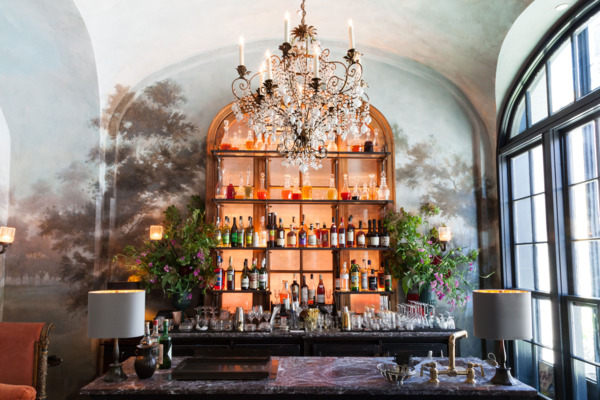
Le Coucou is the result of a partnership between Rose and Restaurateur Stephen Starr, with Daniel Skurnick as head pastry chef. So far, the restaurant has earned as much press for its interior design as for the menu. Design firm Roman and Williams is responsible for the beautiful buildout, including chandeliers, velvet banquettes, and a gorgeous mural behind the bar.

To read more, click here.


Brooklyn Winery Team Opens New Crown Heights Restaurant

brooklyn-made-wines-01.w600.h400.jpgCrown Heights now has another new restaurant to add to its list – this time, it comes from the team behind Williamsburg’s Brooklyn Winery. Owners Brian Leventhal and John Stires will open the doors to BKW on Tuesday at 747 Franklin Avenue. They’ve brought on chef Michael Gordon, formerly of Bouley, to design the pared-down menu. Some highlights include konbu-cured mackerel with whipped feta and roasted grapes, root beer glazed pork ribs, and homemade donuts with butterscotch and lavender. The wine list will of course be well curated, with flights offered for those who are feeling indecisive and full bottles available to take home.

To read more, click here.


A Pioneering Global Standard to Reduce Food Waste

Pilot-scheme-shows-promise-in-repurposing-commercial-food-wastes.jpgThe issue of food waste is something of a hot topic these days, from proposed regulations overseas  to the ugly-food movement and the startups it has already spawned. This attention is well deserved. Besides the tragedy of waste in a world where 800 million still go hungry, wasted food also produces 8% of global greenhouse gas emissions and costs $940 billion worldwide every year.

The micro-movements that have sprung up on this front are important, but they face some major hurdles, even as more governments and large organizations commit to joining the cause. Most notably, food waste is extremely difficult to track and report on. Since it occurs all along the supply chain, and often across borders, the costs associated with this waste are typically baked into other operational costs and nearly impossible to quantify. Until now, there has been no consistent reporting standard on the issue.

To address this, a partnership of international organizations convened  at the Global Green Growth Forum (3GF) 2016 Summit in Copenhagen to come up with the first-ever set of global definitions and reporting requirements for companies, countries and others to consistently measure and report their food waste. Such standards will be crucial to measure the success of all these organizations as they make commitments to improve. Many major international organizations, including the UN, Consumer Goods Forum, and World Business Council for Sustainable Development, are already behind the coalition’s Food Loss and Waste Accounting and Reporting Standard (FLW Standard). 

The new standard will have the greatest impact on large corporations and governments, but food waste is a costly issue for all retail and restaurant businesses as well. We recommend following the lead set at the 3GF Summit, and making a commitment to tackle waste on a small scale as well.

To read more, click here.