Dietary patterns of 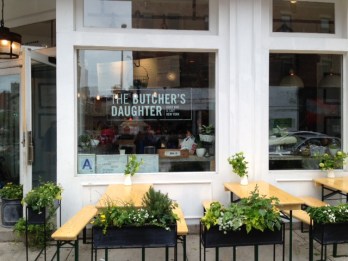 people in these past few years have changed drastically where more are searching for fresh vegetables and fruits rather than tender meats. “The Butcher’s Daughter” a trendy juice bar, and cafe is gaining a lot of spotlight on being a leader in this revolution towards greens. The Butcher’s Daughter, located on the corner of Elizabeth st. and Kenmare St., takes pride in being “the vegetable slaughter house: treat vegetables and fruits as a butcher would to meat.” Their menu is 100% vegetarian and non-dairy and is mostly vegan and gluten-free. The menu changes daily and incorporates seasonal ingredients. The crowd favorite at The Butcher’s Daughter is the avocado toast with mustard seeds but their array of sandwiches and salads still attract a large pool of consumers. The cafe also caters towards juicers with their long list of drinks- juices, smoothies, and exilir shots. While the cafe stands at 900 sq ft. with an open kitchen, a 35-seat capability indoors and 30-seat outdoors, there are enough employees to offer great service despite the cafe being busy.
The Butcher’s Daughter’s unique theme as a “butchery” continues throughout not only their menu but in the design of the cafe. While its common for restaurants to brand their name and logos across their merchandise and store to build brand recognition, The Butcher’s Daughter successfully markets their brand without overly stamping their name. Instead they reinforce their theme of being a butcher for vegetables with industrial decor, concrete floors, and meat hooks against earthy materials like wood, brick and greenery. Their sandwiches are served on wooden cutting board while their drinks are served in mason jars. The employees can be seen wearing The Butcher’s Daughter t-shirts that have different quirky messages e.g. “We Sell Designer Kale” at the front and their logo on the back of the shirt. These shirts are also available for customers after writing a review on yelp, which ultimately drives social media and brand marketing through customers and with customer satisfaction through incentives. The Butcher’s daughter continues their earthy charms with details in their light fixtures, menu boards, receipt cups, and their table setting.
The Butcher’s Daughter successfully creates a thematic cafe that revolves around their menu and that blends with its neighborhood location. The Butcher’s Daughter sits at the south east side of NoLIta. NoLIta was once part of Little Italy but since 1990s an influx of expensive retail boutiques and trendy restaurants and bars have outsourced the Italian residences. Residents in the NoLIta area are demographically younger and popular in the arts. Trendy competitors around The Butcher’s Daughter in NoLIta include Sweetgreen, and Juice Press. These attractive restaurants in NoLIta follow a common trend vegetable and fruit based products. While The Butcher’s Daughter caters towards the same market they have become a strong competitor in NoLIta because of their delivery in creating a distinct theme across their menu, service and design.
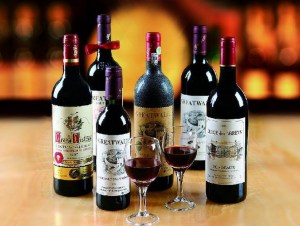 China is infamous as a leader in mass production- “they can reproduce Western manufacturing or technology overnight, but they lack prestige to replicate European artisan culinary delicacies.” China, recently, is successfully producing wine in their growing boutique wine market that has debunked its conventional stereotype. European countries like France and Italy have a long history and generations of producing wines in their vineyards while China has never been recognized for their wine. However, the Chinese have reoriented their wines to reciprocate the production methods held in Europe to produce their own wine in their vineyards and it has successfully entered the industry. The Cabernet blend Jia Bei Lan became the first Chinese wine to take the prestigious international trophy at the Decanter World Wine Awards in 2011. Chinese wine has grown in clientele across elites in China, but still face a challenge in convincing consumers to give Chinese products a chance. Because of China’s reputation of mass production elitists and wine enthusiasts label Chinese wine to be foul. Moreover, the idea of wine based from vineyards is a new concept to the Chinese culture. For 4,000 years the Chinese have preferred grain-based wine rather than grape wine. Along with productions of boutique wineries in China, China has also been influencing the shifts of the luxury ends of the market as China’s elitists are increasingly showing interest into the wine market.
 notorious for its high prices. While many consumers thought the produce was pricey because it was really healthy or organic, in actuality, after investigation from the Department of Consumer Affairs, it has been noted that Whole Foods is guilty of overpricing their produce. Whole Foods has been charged with over 800 violations during 107 separate inspections since 2010 for inaccurate consumer prices. Recently, inspectors weighed 80 different types of items at eight different locations and found that every label was inaccurate with many overcharging the consumers. Michael Sinatra, Whole Foods Spokesman, notes that the store always refunds any items found to have been incorrectly priced and likewise “never intentionally used deceptive practices to incorrectly charge customers.” Whole Foods employees remarked that corporate is held responsible for these incorrect labels because it is ordered by corporate. While just last summer Whole Foods agreed on a settlement of $800,000 in a California investigation regarding the same problems, Whole Foods, now, is potentially facing fines of more than $58,000 in New York City.
 pressure to go all-natural in their ingredients after numerous changes in menu from high profile chains like Chipotle Mexican Grill Inc. and Panera Bread Co. And now Papa John’s International inc. is eliminating ingredients used in their pizza and dips. Ten of the fourteen are being eliminated by the end of this year and the remaining four by the end of 2016. But these costs are estimated at and added expense of $100 million each year. John Schnatter, founder and chief executive officer, has been making changes with their menu since 1996 with changes like removing fillers from the meat used for toppings and improving the pizza dough. They have removed mono-sodium glutamate from its ranch dressing and pulled trans fats form its garlic sauce. The company has also pulled cellulose, an anti-caking agent, from its mozzarella cheese. Papa John’s pizza is generally more expensive than its competitors like Pizza Hut and Domino’s but boasts their “quality ingredients for a better pizza.” While prices in pizza will increase in price corresponding with the expenses in producing pizzas with higher-priced natural ingredients, Schnatter believes that their customers have shown willingness to pay a dollar or two more for their pizzas. Papa John’s has recently started posting their ingredients online and pushing on menu transparency. With the shift in ingredients, Schnatter hopes it will put the chain in a position that’s hard for competitors to match.
 in marketing, but Jordan Salcito, the Momofuku Wine Director, utilizes Instagram not only as a distribution medium but as a base in creating Momofuku’s wine list. Instagram along with other social media outlets like Twitter is essentially numerous social circles created from following friends and “liking” interesting posts. Salcito theorizes that within social media social circles are aroused through similar interests and style. Similarly winemaker friend groups on social media are indicators of actual wine styles.Through this idea Salcito creates a wine list where every bottle of wine can be suggested through the relationship between its corresponding sommelier.
 oods, it’s trademark is the Kulfi Ice Cream. New Yorkers are no stranger to Kulfi as it has already entered the market in the past through grocery vendors and other traditional Indian restaurants. However, the Kulfi at Babu Ji is unique in that Jessi Singh, the restaurant’s chef and co-owner, invests almost an entire day into making a Kulfi. Continuous stirring of the milk base and adjustments of temperature create a consistency different from an average ice cream. Kulfi has a more chewy texture that is smooth, creamy and dense and in the last bites there is cardamom and pistachio. Babu Ji offers only one flavor right now but Singh intends to bring more flavors with local fruits and in “clove-and-ginger-charged chai.”
 the world, McDonald’s, is projected to close more stores than open in the United States. Over the past two years, McDonald’s has been suffering from decreasing revenue and drops in profit from stores worldwide. Increasing numbers of competitors in the United States, economic instability in Europe and strict food safety regulations in Asia have effected the performance of McDonald’s. Already in the
 paigepapers.com