Batali and Bastianich’s La Sirena Now Open

la-sirena01.w600.h400.jpg

Mario Batali and Joe Bastianich, the team behind Babbo Ristorante and Lupa Osteria Romana in the West Village, has finally opened their latest project after a series of delays. The new restaurant is La Sirena, and it’s being billed as a modern Italian trattoria, falling somewhere between the casual Lupa and and upscale Babbo. 

La Sirena is located in the Maritime hotel in Chelsea, in a huge space with both indoor and outdoor seating. The menu features a wide selection of antipasti and main courses like spicy octopus and braised beef short rib, but Batali and Bastianich still expect pasta to be one of the biggest sellers.

For now the restaurant is only open for dinner, but lunch, brunch and breakfast are also in the works.

To read more, click here.

Uber Eats has Steep Costs for Restaurants

The food delivery market, once handled primarily by restaurants themselves, has gotten more and more crowded lately as both start-ups and established companies muscle their way into the fray. As the field grows, the importance of differentiating oneself is obvious – whether it’s by offering more options or fewer, a shorter delivery time or a cheaper surcharge. But one factor that’s largely invisible to the end user is the percentage these companies charge to the restaurant themselves.

A typical rate for standbys like GrubHub and Seamless falls in between 10 and 15 percent, while others (like Caviar), charge nothing to the restaurant and make their profit entirely from delivery fees paid by the customer. Uber Eats, on the other hand, will be rolling out services in major cities this month at a 30% rate – even worse than the current high of 25% charged by Amazon.

It’s worth noting that, unlike GrubHub and Seamless (who do not supply their own delivery people), Uber and Amazon offer a more complete service to restaurants. Beyond the interface they offer, the delivery itself is taken care of, not to mention promotional assistance and photographers. To some, these services and the exposure they provide more than justify the cost. But to others – particularly those with lower profit margins per-item to begin with – Uber Eats is simply out of reach.

To read more, click here.

Syndicated Lets You Dine and Drink with Your Favorite Flicks

BN-MB639_NYFEED_G_20160112165325.jpg

The hospitality industry is well known for creative hybrids, and snacks and beverages have a way of popping up everywhere from bookstores to art galleries to flower shops. So the movie theater/restaurant combo should seem only natural – most main stream movie theaters make their profit at the snack counter, and “Dinner & a Movie” is still the most popular date choice. With that in mind, it’s exciting to see this concept done well, with as much attention paid to the food as well as the movies.

Syndicated, a new bar/restaurant/theater in Bushwick, does just that. With a thoroughly curated list of screenings (each night features either one or two flicks, often with a theme connecting them), and an equally thoughtful menu (including house cocktails, local craft beers, and dishes like heritage porchetta), Syndicated is a sure sign that the Bushwick night life is getting even livelier. They have special programming for Oscars week, but more than a few nights in January sold out early, so buy tickets online early

How Bad was Jonas for New York Restaurants?

Storm-Jonas-deadly-blizzard-snow-storm-403909.jpg

In preparation for the blizzard this weekend, residents up and down the East Coast cleared out grocery stores and prepared to hunker down for the weekend. Many restaurateurs followed Mayor De Blasio’s urging and shut down operations on Saturday, although there were notable exceptions (including Mario Batali and Andrew Carmellini). It’s no surprise that restaurants took a financial hit; according to restaurant reservation app Resy, same-day reservations were down 88% on Saturday and 38% on Sunday, decreasing weekly reservations by 25% from the previous week.

Food delivery also suffered, and GrubHub reported to Bloomberg that they were dealing with a record number of refunds for undelivered orders. They did not offer any exact numbers, but considering they were also offering a 10% discount during the storm, it’s likely the weekend was particularly hard on their bottom line.

New York is cleaning up this week, and most restaurants are open for business once again. If you’ve burned through all the milk and bread you purchased last week, considering heading out and giving your neighborhood spot some love. Just make sure to wear your snow-boots.

To read more, click here.

Retail Spotlight – Blank Slate Coffee + Kitchen

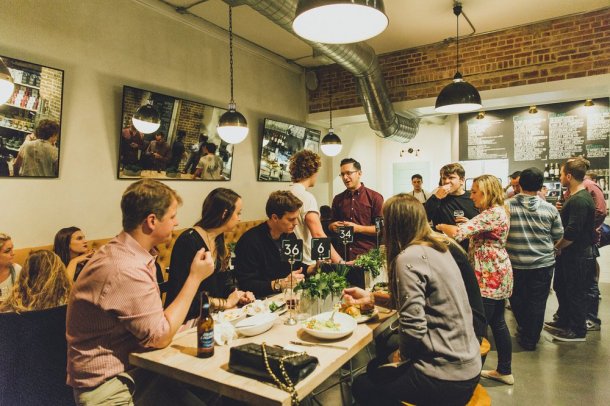
o.jpgTheir Success… In a city with sky-high rents and rising expenses, it can be hard to make ends meet on coffee alone. Blank Slate has increased its sales by bridging the gap between coffee shop and restaurant, creating a hybrid best described as a “Café-table” that is the best of both worlds. This concept works on an old premise that is becoming increasingly popular as labor and operational costs increase. In it, guests order from a single point of sale, then take a number to indicate their table as they seat themselves. When the food is ready, a runner brings it out, clears dishes, and attends to guests.
Walking into Blank Slate, guests are greeted with high ceilings and a bright, modern space. During the busiest lunch hour, this space can fill up quickly; tables are laid out to maximize seating with longer shared table spce in the middle and a banquette along the wall. The espresso machine is front and center behind the counter, promising all the caffeine fixes you would expect from a coffee shop, but the large menu on the wall behind makes it clear that Blank Slate wants to keep you fed as well as energized. This menu, which is impossible to miss as you walk up to order,  focuses entirely on prepared food; beverages are listed on a smaller side menu, and there are none of the pastries or baked goods that are usually on display in a coffee shop. Guests who come in in the morning may not be able to get a quick muffin with their coffee, but they can get sweet toast with whipped ricotta and candied bacon, or an egg sandwich with truffled goat cheese.

The breakfast menu is available late on weekends to appeal to midtown brunch-ers, but in the afternoon the selection switches over to salads, sandwiches, and small plates. These offerings are all thoughtfully curated and described on the menu – there are basics (like a rustic chicken sandwich or a Mediterranean salad), but they often have small twists to add a layer of appeal (the caesar salad is made with brussel sprouts, and the meatball sub is made with lamb, mint, and pecorino). The desserts are also in line with what you would expect from a sit down restaurant, including molten chocolate cake with vanilla gelato, and you can pair any of the food with wine or beer offered on tap.

While the menu itself would be at home in an upscale sit-down restaurant, the front of house operations are much more streamlined. Guests order from the register in a single line from which they can get coffee to go or a table number to seat themselves and wait for food. From there, staff members bring orders, fill water, and bus dishes – but ordering and payment is all taken care of.

Take Aways…Blank Slate fills all the needs of a neighborhood coffee shop in a neighborhood that needs plenty of coffee shops, but a finely tuned menu of savory foods (and a streamlined system for serving them) helps Blank Slate do double-duty as a lunch, brunch, and early dinner spot as well. This combo is the heart of the Café-table concept: fill two needs at once, and your morning regulars may just become your most satisfied lunch guests as well.


Momofuku Nishi Cements an Unexpected Trend: Annotated Menus

yours_sincerely.0.0.jpg

The Menu at Yours, Sincerely

The opening of Momofuku Nishi in Chelsea generated buzz for lots of reasons, and it remains difficult to get a seat at David Chang’s Italian-Korean-Don’t-Call-It-Fusion restaurant. If you have managed to eat there though, you might have noticed that the menu is heavily footnoted with information about the dishes, from “Notes of parmesan come from chickpea hozan” on the Cacio e Pepe, to “Kathy Pinsky’s Bundt Cake 2.0” on the Pistachio Bundt Cake.

Including these footnotes does more than just provide information about the dishes, which is useful in it’s own right; it lends the menu (and the restaurant, by extension) more personality. Granted, it is a very specific personality – quirky, irreverent, and casual – but it’s a personality that many restaurants are striving to achieve, especially as fine dining falls out of fashion. So it’s no surprise that other restaurants have followed suit with menu annotations of their own, including Bushwick cocktail bar Yours, Sincerely, where they’ve crammed the drink list with handwritten notes, and included a flowchart to help you choose a drink. It should also be noted that the speakeasy-style Pouring Ribbons went a similar route with their menu years ago, adding scores for each drink on scales from “refreshing to spiritous” and “comfortable to adventurous,” along with a graph on the first page (in case you’re a more visual orderer).

We certainly can’t recommend that every restaurant starts doodling on their menus – in the wrong context, it can be off-putting and confusing. But if the atmosphere of your enterprise is shooting for approachable and quirky, this is one way to make the menu more engaging. And when guests are engaged as soon as they see the options, they might just notice a drink or dessert they didn’t even know they wanted.

Patio Dining with Pets Under Fierce Debate

Dog owners all over New York have been celebrating the new State law which would allow them to bring their dogs onto restaurant patios while they eat. But the department of health isn’t too thrilled about this doggy dining, and they’re hoping to impose regulations that would make it almost impossible for restaurants to participate. The regulations include extensive signage specifying where dogs can and can’t be, tag checks at the door to ensure dogs are properly registered, and barriers between dining areas and sidewalks to prevent the dogs from touching any pets or people outside.

In a statement to the press, the department of health said that these regulations “explain to restaurants owners how to protect the health and safety of their patrons, and passersby.” But proponents of the original bill, including members of the restaurant industry, feel that the regulations completely neuter its intent.

The Department of Health is encouraging feedback through January 26th on their website, and will hold a public hearing on that day at their Long Island City offices.

To read more, click here.

Pete Wells’ Brutal Review of Per Se

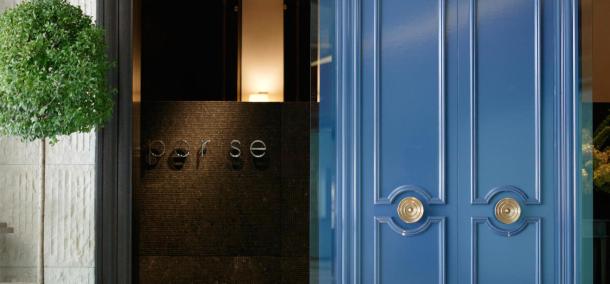
TK.com_PER.SE_homepage_1a_0.jpgPer Se, the $325-a-plate dining experience which until today ranked among the only restaurants The New York Times deemed 4-star worthy, just received a deeply critical review from Pete Wells. Wells has been a restaurant critic for the Times since 2011, and he recently gained a little internet notoriety outside the circle of dedicated Times readers by giving a generally positive review to Señor Frog’s, the loosely Mexican chain whose motto (“Unleash Your Fiesta!”) tells you probably all you need to know.

The new Per Se review, which knocked the restaurant down a full 2 stars, is further indication that Wells is taking a hard look at price tags and complete experiences, and refuses to buy-in to old standbys if they do not continue to deliver. This attitude is perhaps best summed up when he writes

With each fresh review, a restaurant has to earn its stars again. In its current form and at its current price, Per Se struggled and failed to do this, ranging from respectably dull at best to disappointingly flat-footed at worst.

Wells had plenty of specifics to critique, ranging from the food to the service to the “price-gouging” of add-ons like fois gras. For $325, Wells fairly expects that every dish would be extraordinary, and his critiques of the dishes pull no punches. Perhaps most brutal, though, are the descriptions he gives to the restaurant itself, which he calls “grand, hermetic, self-regarding, ungenerous” and one of “the worst food deals in New York.”

While there are undoubtedly those who will continue to go out of their way to visit Per Se, or regard it as an essential experience in New York fine dining, perhaps the two lost stars indicate a larger changing of the guard, and an exciting move toward greater innovation in dining in 2016.

To read the full review, click here.

The Latest Health Craze Gets Hand-Wavey About Super-“Food”

charcoal-1.jpg

Activated Charcoal Drinks from Juice Generation

While it may not be a superfood in the strictest sense of the word, charcoal is now being touted by some as the next miracle ingredient that can rid your body of those mysterious toxins you somehow still have, even after eating nothing but kale and quinoa bowls since 2015. Activated charcoal has long been found in beauty products, and it is indeed used by the medical community to treat overdoses and food poisoning. The principle is simple – charcoal is absorbent and will bond to other harmful chemicals in the digestive tract, helping to flush them out safely. But some have now taken this a step further and claim that charcoal has numerous benefits (like lowering cholesterol and treating viral infections), even for those not currently in the middle of a drug overdose.

The ingredient may not do much in the way of improving taste, but it can be found in juices and elixirs everywhere from Los Angeles-based Juice Served Here to LuliTonix to Juice Generation, not to mention gracing recipes at Morgenstern’s Finest Ice Cream and Lowlife on Stanton Street. Other restaurants are also toying with adding charcoal-laced dishes to their repertoires, including El Rey and Dimes, if they can figure out how to do so without sacrificing flavor or texture. Mission Chinese Food even uses it in a cocktail to achieve a pitch black color, although beverage director Sam Anderson is adamant that it will not prevent hangovers – or do much of anything for your health, for that matter.

As the latest health trends move outside the realm of what might fairly be called “food,” the best advice might be to take your charcoal with a grain of salt – and never trust health advice that says your food can’t be tasty too.

To read more, click here.

Restaurant Stocks Have a Rough New Year, and Chipotle Leads the Plunge

It’s no surprise that Chipotle Mexican Grill is having a rough few months, after a string of high-profile food borne illness outbreaks, a CDC investigation, and multiple lawsuits. Stocks in the company, which had been growing steadily since 2013, hit a new 52-week low last week. This means that in three rough months, Chipotle has lost three years of gains.

Although Chipotle’s losses were predictable based on recent bad press, they come with some other context as well: 2015 was a bad year for restaurant stocks across the board, and 2016 isn’t starting out any better. Many large, publicly traded chains were down 2 to 6% last week, and some hit 52-week lows, including the Cheesecake Factory, Papa John’s, and Dunkin’ Brands. As 2016 continues, this is likely to mean far fewer new concepts will go public, even as they continue to expand, and larger corporations may focus more on acquisitions. Chipotle may be the poster child for this rough year, but they should also serve as a reminder that the restaurant market has not been friendly to anyone.

To read more, click here.