Starbucks Will Finally Open in Italy

hTiiZIVq-3389-5084.jpgStressing the “humility and respect” with which they are undertaking this endeavor, Starbucks CEO Howard Schultz announced recently that in early 2017, Starbucks will finally open their first store in Italy. It may be surprising that such a store doesn’t exist already, especially since the Starbucks brand was born out of Schultz’s first trip to Milan 33 years ago, but the company is understandably cautious about bringing one of the largest chains in the world to a culture that prizes small-scale coffee operations and exquisite attention to detail.

Starbucks will be partnering with Italian brand, retail and real estate developer Percassi to bring the first Italian store to life in Milan, with plans to open more down the line. In a blog post announcing this opening, Starbucks mentions Percassi’s values and commitment to youth development as key elements of their choice. Antonio Percassi, the company’s president, states that, “We know that we are going to face a unique challenge with the opening of the first Starbucks store in Italy, the country of coffee, and we are confident that Italian people are ready to live the Starbucks experience, as already occurs in many other markets.”

To read more, click here.

The World’s First Expired-Food-Only Supermarket

We’ve written before about the ugly food movement – a growing set of entrepreneurs and activists attempting to combat food waste by getting more superficially damaged or misshapen produce into the hands of consumers, rather than into the landfill. Now a supermarket in Denmark is combatting another large piece of the food waste puzzle – expiration dates.

In many countries, expiration dates have little or no legal requirements, and it is at the discretion of food companies to choose a date they believe their product is “best before.” In many cases these dates result in edible food being discarded rather than sold or donated, because producers are motivated to choose earlier dates to either push more product or avoid the risk of selling something less than fresh.

Danish supermarket WeFood is built on the premise that most of this food is perfectly good, and can be sold at cheaper prices. WeFood sells only goods that are past their expiration date or have slightly damaged packaging – at prices up to 50% lower than standard supermarkets. Denmark has already cut their food waste by 25% in the past five years, and this supermarket (and others like it) are likely to bring that number even higher.

To read more, click here.

Neurogastronomy Comes into Its Own, in Restaurants and the Snack Aisle

Food and Science have had an intimate relationship since humans first learned that fire could make things taste better, but when molecular gastronomy entered the common lexicon that relationship became one of the hippest trends in hospitality. Neurogastronomy represents the next phase of this relationship, and the focus is not just on changing food but on changing the entire experience of eating.

Neurogastronomy is the study of the human brain the way it perceives taste. This ranges from questions like, what color plate makes my lava cake taste better? to do people with weight problems eat more because their tongues are different? Understandably, that breadth of study has implications for many, from chefs and restaurateurs to doctors and dietitians. Chef Heston Blumenthal of the three-Michelin starred Fat Duck is focused on how discoveries in this field could make healthier food more satisfying through, for example, the principle of encapsulation – using bursts of flavor rather than dispersed flavor for a greater effect. Blumenthal is even working with NASA and the UK’s space agency to bring astronauts tastier zero-gravity meals.

If neurogastronomy gains enough traction, we may see more and more mass-marketed foods using these techniques in the snack aisle as well. Consumers are becoming increasingly aware of the ingredients and nutritional content of their food, and more suspicious of labels like “Natural” or “Low Fat.” A greater understanding of taste perception could be good for everyone if it allows companies to meet that demand without sacrificing flavor.

To read more, click here.

The Yelp Underpaid-Employee Saga Continues

140245452.jpgThis weekend a (now former) Yelp employee, Talia Jane, wrote an open letter to her employers revealing the financial struggles brought on by her low paycheck, and criticizing the irony of the company spending millions on a food delivery app while employees “can’t afford to buy food.” The post was widely shared, and Jane was subsequently let go – a move which, predictably, Yelp Human Resources claims was not caused by the letter but which Jane herself says was a direct result.

Yelp CEO Jeremy Stoppelman has since taken to Twitter to acknowledge Jane’s point that the cost of living in San Francisco is much to high, but skirt around her direct attacks. Both Stoppelman and other spokespeople have mentioned expanded entry level employment in areas where the cost of living is cheaper.

It’s likely that this event will blow over without too great of an effect on Yelp’s sales or stocks. But the viral nature of the original post reveals a distrust for the large companies like Yelp and Seamless which increasingly act as middlemen between restaurants and their guests.

To read more, click here.

Single-Serve Coffee Pods Banned in Hamburg

_88333244_more-capsules.jpg

These days, it’s difficult to read anything about Keurig Company or the now-ubiquitous single-serve coffee pods without a reminder of the waste they produce. The pods are often made with a mixture of aluminum and plastic  which, combined with the organic matter left inside after use, makes them nearly impossible to recycle and an increasing burden to strained landfills. Still, in Western Europe the pods make up one third of the coffee market, for a total of  €18 billion.

Now the city of Hamburg has taken a stand against the pods and the machines which exclusively brew them (known as “Kaffeekapselmaschine” in German), by banning the purchase of these machine’s with taxpayer money. This means that they will no longer be found in any municipal buildings, and government employees will return to other brewing methods for the time being. This may not make a huge dent in that €18 billion market, but it is further indication of backlash against the pods, and further motivation for companies looking to find eco-friendly versions that are biodegradable or easily recyclable.

To read more, click here.


Swiss Start-Up Wants to Bring You a Greener Soda

There’s no doubt that soda has an image problem which producers would love to tackle, but most of those efforts have centered around perceptions of health (or a lack thereof). One Swiss start-up, Climeworks, has an entirely different approach that could still provide  a PR boost to big-soda. Climeworks’ main business is carbon capture; specifically, developing technology for commercially viable ways to suck CO2 out of the air and repurpose it. One of those ways is by using that CO2 to carbonate beverages without burning any additional fossil fuels.

Of course, the CO2 trapped in soda cans doesn’t stay out of the atmosphere for long, and it would be hard to see much of a dent in atmospheric parts per million from this technology alone. But such technology would at the very least give soda a greener image – which could explain why “the biggest fizzy-drinks company in the world” is already mostly on board, according to a Climeworks rep.

To read more, click here.

Danny Meyer’s War on Airplane Food

18DELTA1-master675.jpgAlthough it seems unlikely that airline food will overcome it’s reputation any time soon, the partnership between Delta and Danny Meyer’s Union Square Hospitality Group has at least shifted the conversation. In 2013, Delta began serving food from USHG’s Blue Smoke on a select few flights, and although there were a few hurdles along the way the feedback was mostly positive. Beginning March 1st, all customers on international flights in the Delta One cabin will now be able to enjoy an updated menu from Carmen Quagliata, which tosses out some of the airline food standbys like reheated, textureless pasta and instead aims to work within the limitations imposed by small spaces and packaging. This means no more chunky soups or fried garnishes, but plenty of purees and roasted vegetables.

John Harenda, the VP of operations for USGH, has set a lofty goal for this new menu. “We want passengers to say, ‘This is great food’ — not, ‘This is great food for an airline,’ ” he tells the New York Times. Of course, the real news will be when these dishes are available in coach as well – for now, economy passengers will have to settle for smelling Quagliata’s food from the Delta One cabin.

To read more, click here.

It Might be Time for American Olive Oil to Shine

olive-oil-968657_960_720.jpgOlive oil may be found in almost every American kitchen, but it’s long been the purview of the old world – an assumed-to-be-necessary import from Mediterranean farms that have been producing it for generations. Increasingly, however, California farms are taking a bigger stake of the market, with claims that they offer superior quality without the premium.
To some extent, this claim is supported by the research and recommendations of professionals. In Italy, a recent investigation by a special branch of the carabinieri police force found that many oils labeled “extra virgin” were in fact only “virgin” quality (the designation is based on the basic flavor profile and presence or absence of 16 potential “taste flaws). In November, Cooks Illustrated magazine released their recommendations for super market olive oils based on blind taste tests, and found that California Olive Ranch’s Everyday Extra Virgin was the tasters favorite, while most of the imported oils were tepidly reviewed.

The obvious comparison to be made here is with wine in the mid 1970s, when buyers and sommeliers began to realize that Napa Valley was actually producing high quality wines that rivaled those with an old-world pedigree. As olive oil demand grows, this could spell big trouble for the major European exporters, who already have more than $2 billion to lose in the U.S. market.

To read more, click here.

Dutch Start-up Wants to Bring You a Better Vegan Steak

3054886-inline-i-1-vegan-steak.jpg

Photo via Fast Company

Demand for meat substitutes has been growing steadily in the U.S. as more consumers become aware of the environmental and animal welfare impacts of farmed meat, and the recent report from the World Health Organization labeling processed meat as carcinogenic will likely drive that trend faster. Although there are still very few true vegetarians in the United States – only 2 to 5% of adults in the states currently eat no meat, and many of those will return to their carnivorous lifestyle at some point in the future – many more people are now making attempts to eat more meatless meals.

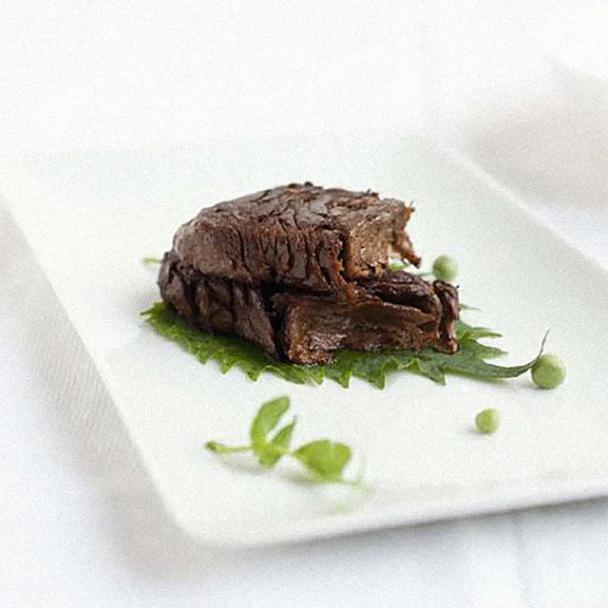
But although the demand for plant proteins is there, the supply still has a long way to go. Because of processing costs, meat substitutes still run about as much per pound as organic meat, and taste and texture turn off many would-be herbivores. In the Netherlands, where a small landmass and substantial environmental awareness makes the push toward vegetarianism even stronger, companies are using engineering to solve this problem. Most notably is Vegetarian Butcher, a Dutch company which has developed “the world’s first vegan steak.” The machine responsible for this steak is called the Couette shear cell device, and it uses rotating cylinders and temperature variation to spin liquid soy protein into a slab with the texture of steak. Besides better mimicking the taste and mouthfeel of a  good tenderloin, this process is much cheaper than current vegan meat production.

Although it’s still impossible to get this faux steak in the States, Vegetarian Butcher is currently expanding and hope to be available here soon. Although they’ll have some competition from companies cropping up here, they hope to work more in partnership than opposition. As costs come down and demand goes up, there may just be enough room in the market to me that happen.

To read more, click here.

McDonald’s First Organic Burger

24-mcdonalds-germany-organic-burger.w529.h529The worldwide shift in consumer spending to organic foods has influenced a lot of concepts at restaurants. The fast food industry was one major industry that was effected by this change in trend. McDonald’s, more notably, has suffered with many locations closing and with attracting customers. Their turnaround strategy included plans for becoming more organic and implementing new menu items, like the “Make Your Own Burgers.” Continuing their efforts, next week, McDonald’s Germany will be debuting the company’s first entirely antibiotic-free humanely raised burger.

The new burger launching next week is the McB. It will feature a patty sourced entirely from organic beef. There will be two versions and customers can vote for their favorite. The differences between the versions is Edam cheese versus Swiss-style Maasdam, Lollo Bionda lettuce versus arugula, and a sunflower-seed bun versus a darker roll. McDonald’s has released a YouTube video giving specific on their meat and where it comes from.

Germany is the first country to see a change to organic items in McDonald’s locations worldwide. Being that Germany is the second largest organic market int he world after America, it is definitely the place to start.

To read more, click here.