Move to End Tipping Gains More Momentum

yI1Ya0x8QbiTi7potxLc_022.jpgDanny Meyer’s decision to end tipping at all his restaurants has already become the sort of high profile case that’s likely to spark conversation and debate in circles reaching far beyond the industry. As two more restaurateurs move to join him, it now seems like his announcement represents a major tipping point (pun intended) in what is considered standard.

This week both Gabriel Stulman and Andrew Tarlow announced that they would eliminate tipping at some or all of their restaurants. Stulman is the owner of six casual restaurants in downtown Manhattan, including Fedora on West 4th where he plans to eliminate gratuities in January. Stulman calls this a test drive of the new system, but ultimately he hopes to implement it at more of his restaurants as well. Tarlow, who is responsible for Diner and Marlow & Sons, said he plans to completely eliminate gratuities at all of his restaurants in 2016.

Although Meyer seems to have set off a domino effect, the trend is likely also due to the $2.50 increase in New York’s tipped minimum wage, which will go into effect in January. For many restaurants, it makes more sense to eliminate tipping altogether and hope that they can communicate the change effectively and avoid sticker-shock at higher prices.

Although the anti-tipping movement cites fairness as a major motivator, with higher wages for back of house workers as well as well as front of house, some employees may balk at the change, which puts more money in the employer’s pockets (at least until it reaches the workers paychecks). Stulman in particular is preparing for this backlash by offering “guaranteed wages for the members of our dining room team to be consistent with what they were averaging before the change.” To meet this requirement he’ll be increasing prices around 25% across the board.

To read more, click here.
Retail Spotlight: Birch Coffee

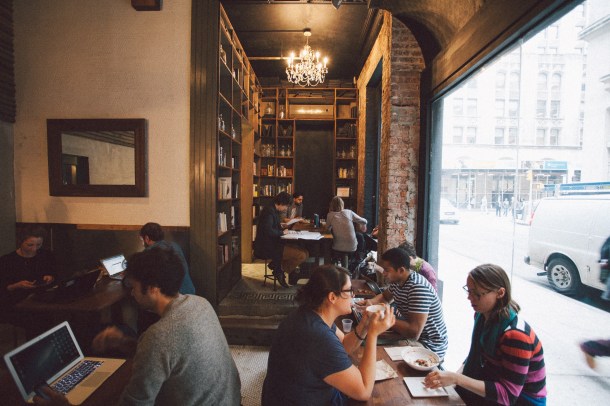
Birch-Coffee-4.jpgTheir Success…With five locations around Manhattan and a roastery in Long Island City, Birch Coffee has become synonymous with quality coffee and a knowledgeable staff, all while maintaining an unfussy and approachable vibe in their presentation. Walking into any of their shops, it’s easy to see that owners Paul Schlader and Jeremy Lyman prioritize service and community for all guests, which is not always easy when the line extends out the door. A small chalkboard sign by the register happily declares “Birch Loves You.” Conversation cards are available on the front counter to help break the ice between strangers looking to chat, and each shop has its own lending library, encouraging visitors to stay and relax with a book. Plenty of guests also bring laptops to work, and all Birch locations are open until 8PM, so it’s easy to stop by after a 9-to-5 job (or 9-to-6 or -7) without feeling rushed. Birch truly embodies the friendly public-private space that many urban residents look for in their local coffee shops.
From the menus to the interior design, Birch shops directly reflect Schlader and Lyman’s personalities and attention to detail. Besides the usual espresso and pastry options, craft beer and wine are also available for those who are attracted to that community-oriented atmosphere but don’t need the caffeine kick. In the sweltering Manhattan summer time, cold brew is a huge seller – and fortunately for any guests who don’t want to leave the comfort of air conditioning, Birch delivers 64 ounce growlers for environmentally-friendly refreshment that’s big enough to go around. Schlader and Lyman also made fair trade, single-origin coffee fundamental to their brand before it was de rigeur, and they seem more than happy to share the joys of a superior brew; guests can sign up for by-appointment lessons in home-brewing, barista skills, and coffee appreciation.

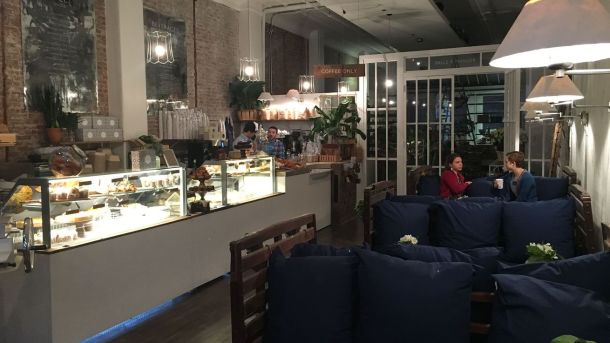
The setting for these offerings are spaces that are tend toward the industrial, with unfinished tile work, mismatched furniture, and plenty of wood details. The aesthetic is rugged and hip, and it sets Birch apart from many coffee shops where meticulous interior design is the main attraction. Here, the coffee and the people are front and center. One exception is the iconic Birch logo and font, which unify all their shops and are available on assorted “Birchandise” through their store.

Take Aways…Birch has grown steadily since their opening by maintaining a great reputation for quality and a warm, welcoming aesthetic.  By roasting their own coffee, Birch maintains a connection to the entire supply chain, which helps them guarantee the best product for all their guests. Of course, many coffee shops provide great coffee, but what sets Birch apart is their down-to-earth presentation and welcoming details. In a busy New York day, getting good coffee quickly is expected, but being able to really enjoy it is their recipe for success.


Chobani Hops on the Sriracha Train

Sriracha, the beloved chili sauce that is a standby condiment everywhere from college dorms to ramen shops, has a found an unlikely bedfellow: Chobani, the greek yogurt brand that first made regular yogurt sales shake in their boots. Chobani plans to unveil a number of new flavors next year, including Sriracha Mango and other spicy varieties, in order to maintain momentum that might finally be showing signs of flagging. Although sales trends have still been positive, and brand representatives cite 11% growth for 2015, they are looking to avoid the fate of other greek yogurt brands like Müller, which was recently discontinued by PepsiCo in the US.

The Sriracha Mango variety is one of a number of “Flips” that Chobani is introducing – to-go varieties which include a small side container of mix-in items along with the yogurt. Other flavors include Chipotle Pineapple, Peanut Butter and Jelly, and limited-edition flavors like a Peppermint Flip, Apple Cinnamon, and Maple.

To read more, click here.


Maman Opens New Location in Tribeca


image1.0.0.JPG

On Monday, the French cafe Maman opened the doors to its newest branch on 211 West Broadway in TriBeCa. The new location is broken up into two rooms with a much larger total square footage than the SoHo original. The front room is lined with comfortable couches and ample room for enjoying  lunch or pastries, and the back room opens up into a full-service restaurant seating 40. Dinner service starts this week with specialties like scallop carpaccio, braised beef cheeks, and red tuna ceviche.

Maman in SoHo was opened last year by chef Armand Arnal, baker Elisa Marshall, and restaurateur Benjamin Sormonte. Since then it’s become a popular destination for both eating and Instagramming. The new space will likely become popular as well, particularly with parents and families. Marshall told the NYTimes that Maman TriBeCa would be “very kid-friendly,” and even has a stroller valet.

To read more, click here.

Photo via Eater.com

NASA Engineer Makes Your New Robo-Barista

IMG_2267-1200x900.jpg

Most coffee shop regulars are willing to sacrifice at least some quality for speed, and the time-consuming process of  making pour-over coffee usually just isn’t feasible when there’s a line of customers out the door, even if the end product is a superior brew. In July, Cafe Grumpy introduced their solution to this problem at the Chelsea branch: a robotic pour-over machine capable of brewing 5 cups at a time. The Poursteady was engineered by Mark Sibenac and Stuart Heys, whose CVs include building parts for NASA’s Mars Rover, but who have now turned their attention towards quintupling the production of pour-over coffee.

Far from becoming our caffeinated robot overlord, the Poursteady actually puts as much control as possible in the hands of the barista, who can change the water temperature to within a degree, the water volume to within a gram, the timing to within a second, and the size of the drizzle pattern, all from a custom app. Outsourcing all those controls to an app keeps the machine itself clean and simple. So far, it seems to be working well for Cafe Grumpy, who originally installed the Poursteady for a trial run but bought it only a month later. Several more are currently in production, and you can even buy your own through their website.

To read more, click here.


Correction: an earlier version of this article listed Stephan von Muehlen, the product designer, as chief engineer.

Met Museum Adds Estela to its New Outpost

The Metropolitan Museum of Art’s new modern outpost, Met Breuer, will be opening in March of 2016 at Madison and 75th, and it’s sure to be a popular destination for art lovers all over the city. Food lovers may now have a reason to head there as well, as the Met recently announced that the outpost will include a second branch of Estela, the oft-packed bar/restaurant on East Houston run by chef Ignacio Mattos and restaurateur Thomas Carter.

Thomas P. Campbell, the director and chief executive of the Metropolitan Museum of Art, cited the restaurant’s “downtown energy,” and it’s ability to meet the needs of both formal and informal diners. Carter said that the Met’s leaders wanted something “convivial and rustic and fun.”

The new restaurant will likely not be open till Summer of 2016, and the menu is still up in the air. One thing to expect is an impressive wine list: Carter has said that the selection at the new uptown branch will “dwarf” the Houston street location, with 500 bottles to the original Estela’s 200. It never hurts to have a good glass to go with your contemporary art.

To read more, click here.


Reducing Carbon Emissions with Ugly Food

imperfect-fruit.jpg

The recent United Nations climate conference in Paris drew to a close with a historic deal, but there is still a long uphill battle ahead to reduce emissions and reach the target CO2 levels most climate scientists agree are safe. One creative solution has emerged from the farming industry, where food waste (and the decomposition of edible food in landfills) is responsible for over a billion tons of carbon emissions every year.

Nicholas Chabanne is an entrepreneur encouraging consumers to “eat ugly” through his campaign Gueules Cassées, which translates into Ugly Mugs. He is part of a growing international movement to encourage people to buy and consume more produce that would ordinarily be deemed too visually unappealing for supermarkets – and as a consequence end up in landfills. Often the fruits and vegetables which are discarded by major producers simply do not meet size criteria, or have minor superficial blemishes from the farm.

Chabanne is joined by like-minded entrepreneurs around the globe, including the San Francisco startup Imperfect Produce and the Portuguese cooperative Fruta Feia (or Ugly Fruit). With logistics in place, consumers can buy this produce at significant discounts, but most conventional grocery stores refuse to sell anything that doesn’t meet the strictest visual criteria.

So far, the movement to “eat ugly” has gained a foothold largely with home consumers, but restaurants buying directly from wholesale producers can do their part to increase demand as well. Meeting the climate goals established in Paris will take commitment and creative solutions across the board – hopefully this is one idea that diners can stomach just fine.

To read more, click here.

Tipping Lawsuit Against Danny Meyer’s Gramercy Tavern

Recently we wrote about the new trend among US restaurants – largely spearheaded by Danny Meyer himself – toward the more European style of removing tipping altogether and increasing wages across the board (paid for by corresponding price increases). Now a new lawsuit has emerged against Danny Meyer’s Union Square Hospitality Group by two former employees, who allege minimum wage and tipping violations by Gramercy Tavern during their time their.

The two plaintiffs claim that they were paid the tipped minimum wage (currently $5/hour in New York) when they should have received the full minimum of $8.75 because their tips were pooled and shared with non-service employees. The suit also claim that Gramercy unlawfully withheld all or part of a 20% service charge from special events. They are seeking class action status to recoup the lost tips for all service employees, which likely brings the number to over 100.

In an emailed statement, a spokesperson for Meyers said that “Union Square Hospitality Group has systems in place to comply with all employment regulations. We have always cared deeply about cultivating a strong employee-first culture, and we will review this matter thoroughly.” By 2016, when all USHG restaurants move to a non-tipping system, they will effectively remove the possibility of these types of lawsuits.

To read more, click here.

The Chocolate-Bone Broth No One Saw Coming

BrodoChoc.jpg

Photo via Grubstreet.com

Trends have a way of folding in on themselves – stretching their own limits and testing their customers taste buds in the process. Bone broth, the trendy hot health drink which took off last winter with Marco Canoro’s Brodo is the latest example. This year, Canoro is teaming up with Morgenstern’s Finest Ice Cream on Rivington (which also opened last year) to open a pop-up window shop with some unexpected new mashups.

In addition to the full Brodo broth menu, the shop will offer the “What Came First” (organic egg yolk, freshly grated nutmeg, organic chicken broth), a savory take on eggnog, and the “St. Nick” (bitter chocolate, beef broth, coconut milk). Canoro calls the savory-broth-cocoa “fucking outrageous,” which is a bargain at $7.75 for ten ounces. TBD on whether New Yorkers will take to this combo the way they did to the original broths, but who knows what’s possible in this post-chocolate-and-bacon-trend world. At least customers can still tout the health benefits of the broth, with the added kick of dark chocolate.

To read more, click here.

St. Nick.jpg

Photo via Grubstreet.com

Port Authority to Get an Upscale Food Court

Few people think of going to Port Authority unless they absolutely have to, let alone hosting a business lunch or out of town guests there. That may not change in the near future, but the bus terminal is trying to make your Greyhound layovers a little more swanky by adding an upscale food court with three “diverse, high-end dining options,” according to a recent press release.

The Board approved OHM Concession, which operates airport food courts all over the country, will be renting space near the ticketing entrance on a 10 year lease totaling just over $15 million. This price is a good deal higher than any existing vendors pay for the same area.They plan to start construction in February, but there is no word yet on exactly what restaurants will go into the space.

This particular lease is part of the Port Authority’s “Quality of Commute” program, which includes more general plans to improve the space over the coming years by adding more cell phone service, WiFi, and new restrooms. The program should run around $90 million overall.

To read more, click here.