La Newyorkina Set to Open This Summer

custom.jpg

We’re excited to announce that good colleague and friend Fany Gearson, the chef and co-owner of Dough and mastermind behind Mexican sweets maker La Newyorkina, will be opening an ice cream shop of the same name this summer. Although some may be craving the refreshing treats already in this Spring weather, hopefully the months will fly by until June or July, when La Newyorkina will open at 240 Sullivan Street. The shop will be a “celebration of Mexican sweets,” says Gearson, who grew up in Mexico City.

One thing is for sure – the options available will keep guests coming back well into Fall and Winter. Expect over 15 types of ice cream and slushy, at least 30 flavors of paletas, fruit flavored chamuyadas (imagine the best slushy you’ve ever had), and a brand new frozen treat for Gearson: the nieve de garrafa, a delicate frozen custard churned with a paddle.

We’d like to offer our congratulations to Fany, and look forward to visiting with joy and excitement.

To read more, click here.


Italy Cracks Down on Olive Oil Fraud

We wrote recently about the upward trend of California-grown olive oil, which still represents a small portion of US sales but has been given a boost by great reviews and press reports exposing the fraud that mars the Italian market. Fraud includes misuse of “virgin” and “extra-virgin” labels, as well as misrepresentation of olive origin.

In an effort to save the reputation of Italian-made oils, Italian lawmakers have now voted to tighten regulations around such fraud, and increase penalties for mislabeling. In the past, regulations have imposed fines of up to 9,500 euros on producers for violating these decrees, but proponents of the new harsher version point out that fraud represents a multi-million euro industry, and the low fines are unlikely to be an effective deterrent. As one Italian lawmaker, Colomba Mongiello, described it to the NY Times, “it is not the moment to lower our guard on fraud and counterfeiting. It is important to punish anyone who damages the image of Italy abroad.”

To read more, click here.

The New Meal-Kit on the Block Raises $3.7 Million

hungryroot-variety-pack.jpgIt is now nearly impossible to ignore meal-kit companies like Blue Apron and Hello Fresh, which continue to plaster subway cars with advertisements and encourage huge investments to start-up competitors. The latest is Hungryroot, a meal-kit delivery company that wants to fill several niches at once: healthy, vegetarian, and quick.

Hungryroot has raised $3.7 million in funding from Lightspeed Venture Partners, Crosslink Capital and others, justified by the success of their predecessors and their own rapid growth. Unlike Blue Apron, Hungryroot’s business model does not involve subscriptions; one-off meals are available to order on Amazon and the company plans to expand to Whole Foods soon. While some have questioned whether the meal-kit trend is a bubble waiting to burst, the success of any business is directly tied to its ability to stand out. In this sense, Hungryroot’s biggest selling point is its innovative recipes: brownies made from black beans which somehow taste like the real thing, and noodles made from sweet potato with a  “Creamy Cashew Alfredo” sauce.

While there’s no replacement for good old fashioned comfort food, there’s definitely a market for substitutes like this – especially if they’re easy to prepare. Look out for Hungryroot in your neighborhood Whole Foods soon.

To read more, click here.

Starbucks Will Finally Open in Italy

hTiiZIVq-3389-5084.jpgStressing the “humility and respect” with which they are undertaking this endeavor, Starbucks CEO Howard Schultz announced recently that in early 2017, Starbucks will finally open their first store in Italy. It may be surprising that such a store doesn’t exist already, especially since the Starbucks brand was born out of Schultz’s first trip to Milan 33 years ago, but the company is understandably cautious about bringing one of the largest chains in the world to a culture that prizes small-scale coffee operations and exquisite attention to detail.

Starbucks will be partnering with Italian brand, retail and real estate developer Percassi to bring the first Italian store to life in Milan, with plans to open more down the line. In a blog post announcing this opening, Starbucks mentions Percassi’s values and commitment to youth development as key elements of their choice. Antonio Percassi, the company’s president, states that, “We know that we are going to face a unique challenge with the opening of the first Starbucks store in Italy, the country of coffee, and we are confident that Italian people are ready to live the Starbucks experience, as already occurs in many other markets.”

To read more, click here.

Sushi Zen Closes Amid Plans to Reopen with 3 Times the Space

image.jpgMidtown staple Sushi Zen first opened its doors in 1983, when sushi was still considered an adventurous choice for Times Square dining. In the years since, more and more upscale sushi restaurants have joined the scene, and raw fish has fully entered the mainstream (arguably ushering in the next-wave poke trend). Sushi Zen, run by head chef Toshio Suzuki, nevertheless remained a favorite, earning some celebrity chef fans like Michael Anthony and training others like Masaharu Morimoto in the traditional Edomae style of sushi making.
Now, Sushi Zen has shut down operations at it’s original location at 108 West 44th. There were plans in the works to reopen three blocks north at 114 West 47th Street, a move predicted as early as March of last year, with a new space significantly larger at 6,500 square feet. It now looks like that new space will not pan out.

Although New Yorker’s may now balk at paying more than $25 for their sushi entree, Sushi Zen was a staple that consistently earned high marks from critics.

To read more, click here.

Multiple Scenarios for an L Train Shutdown, None of them Good for Business

Rumors have been stirring for awhile now about a possible shutdown of the L Train in order to make repairs, and local business owners in Williamsburg are feeling the pressure. Two possible scenarios discussed by the MTA involve either a 3-year, 24-hour-a-day shutdown, or a 7-year shutdown of night and weekend service. The MTA has yet to commit to either, and some doubt the service disruptions will be so severe, but the deadline to receive Federal relief money for damage done by Hurricane Sandy is quickly approaching.

Businesses in Williamsburg are understandably concerned, particularly Bars and Restaurants for whom nights and weekends are the worst possible shutdown times. Matthew Webber, owner of several restaurants in Bushwick and Williamsburg, says that past weekend disruptions have resulted in a 30% drop in sales for some of his restaurants. When the L train shuts down, “Williamsburg gets brutalized,” says Webber.

Some business owners, like Kevin Adey of Faro in Bushwick, don’t believe that the shutdown will happen. Since real estate developers now have a huge stake in Williamsburg, they may have the opportunity to influence the MTA’s decision and lessen the blow, possibly by expanding G train service. But without some compromise, the MTA warns that delays due to hurricane damage and increasing wear and tear could become much more commonplace.

To read more, click here.


The World’s First Expired-Food-Only Supermarket

We’ve written before about the ugly food movement – a growing set of entrepreneurs and activists attempting to combat food waste by getting more superficially damaged or misshapen produce into the hands of consumers, rather than into the landfill. Now a supermarket in Denmark is combatting another large piece of the food waste puzzle – expiration dates.

In many countries, expiration dates have little or no legal requirements, and it is at the discretion of food companies to choose a date they believe their product is “best before.” In many cases these dates result in edible food being discarded rather than sold or donated, because producers are motivated to choose earlier dates to either push more product or avoid the risk of selling something less than fresh.

Danish supermarket WeFood is built on the premise that most of this food is perfectly good, and can be sold at cheaper prices. WeFood sells only goods that are past their expiration date or have slightly damaged packaging – at prices up to 50% lower than standard supermarkets. Denmark has already cut their food waste by 25% in the past five years, and this supermarket (and others like it) are likely to bring that number even higher.

To read more, click here.

Thai Food Goes Mainstream

Thai food has long been a favorite for late-night take out and hole-in-the-wall dining, but the flavor profile of Thai cuisine (including fish paste, chili, lime, and coconut) has had trouble entering the mainstream. There are now signs that this is changing, and the winning Thai formula of sweet and spicy is propelling it onto menus and into retail in places you might not expect.

Thai chili sauces are available at more and more locations, including Cincinnati-based Buffalo Wings & Rings, and many casual chains are doing Thai versions of their standbys. Pie Five Pizza Company in Texas released a limited edition Thai-rrific pie, with sweet chili sauce, chicken and cilantro, and Boston based burrito company Boloco offers a “Bangkok Thai Burrito” with peanut sauce and asian slaw. Some beverage companies, like Los Angeles’ The Coffee Bean & Tea Leaf, have even been getting in on the action – experimenting with condensed milk and black tea to make Thai iced lattes.

To read more, click here.

Neurogastronomy Comes into Its Own, in Restaurants and the Snack Aisle

Food and Science have had an intimate relationship since humans first learned that fire could make things taste better, but when molecular gastronomy entered the common lexicon that relationship became one of the hippest trends in hospitality. Neurogastronomy represents the next phase of this relationship, and the focus is not just on changing food but on changing the entire experience of eating.

Neurogastronomy is the study of the human brain the way it perceives taste. This ranges from questions like, what color plate makes my lava cake taste better? to do people with weight problems eat more because their tongues are different? Understandably, that breadth of study has implications for many, from chefs and restaurateurs to doctors and dietitians. Chef Heston Blumenthal of the three-Michelin starred Fat Duck is focused on how discoveries in this field could make healthier food more satisfying through, for example, the principle of encapsulation – using bursts of flavor rather than dispersed flavor for a greater effect. Blumenthal is even working with NASA and the UK’s space agency to bring astronauts tastier zero-gravity meals.

If neurogastronomy gains enough traction, we may see more and more mass-marketed foods using these techniques in the snack aisle as well. Consumers are becoming increasingly aware of the ingredients and nutritional content of their food, and more suspicious of labels like “Natural” or “Low Fat.” A greater understanding of taste perception could be good for everyone if it allows companies to meet that demand without sacrificing flavor.

To read more, click here.

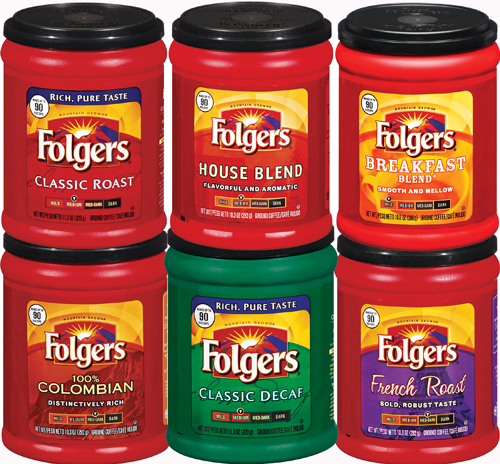
Folgers Coffee Surpasses all Expectations

Ground Coffee copy.jpg

Current trend-watchers would be hard pressed to say that instant coffee is making a comeback. If anything, coffee these days is getting more and more upscale, and words like “single origin” are now almost expected in both coffee shops and pantries. All this makes it even more surprising that Folgers, the coffee brand largely known for its instant coffee and ear-worm of a jingle, is seeing an impressive increase in profits beyond what any investors expected. In the last quarter of 2015, those profits jumped 15%, causing parent company J.M. Sucker to sharply increase their earnings guidance for the year.

Folgers attributes its success to “on-trend” products like K-cups, although many would argue that that trend is doomed by its own wastefulness. The partnership with Dunkin’ Donuts to produce the K-cups, however, is undoubtedly a boon to their business. It’s possible that this profit spike is just the crest of that coffee pod wave, but Folgers is still betting that consumers will always have a place in their hearts for easy, and instantaneous, caffeination.

To read more, click here.