The Pennsy Now Open for all Your Upscale Food Court Needs

pennsy-ny0116.jpg

Photo via travelandliesure.com

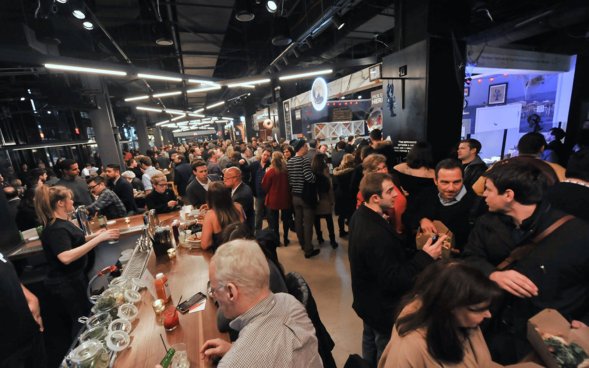
The Pennsy, the new upscale food court with celebrity chef credentials, is now open in the space formerly occupied by Borders Penn Station. Along with a full service bar, 8,000 square feet, and additional outdoor space, The Pennsy boasts stalls from Marc Forgone, Franklin Becker, Pat LaFrieda and Mario Batali (the latter in collaboration with Mary Giuliani through Mario By Mary). There you can get everything from lobster rolls to tempeh sandwiches, and Italian panini to  gluten-free bowls at The Little Beet.

So far The Pennsy has a 4-star review on Yelp, indicating it’s already getting a lot more love than its eponymous railway station. Hopefully this carefully curated food hall can lighten the burden of wading through crowds to catch the LIRR

To read more, click here.
Starbucks to Donate Millions to Help Employees in China Pay Rent

3020859-slide-s-1-how-chinas-one-child-policy-forced-starbucks-to-rethink-its-beijing.jpg

Photo via fastcompany.com

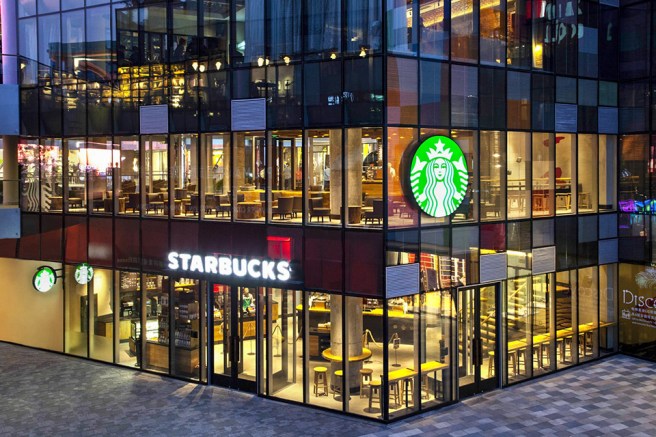
Starbucks recently made two big announcements about their presence in China, a country where economic troubles have been causing global shockwaves for months and other American chains (including KFC and Pizza Hut) are struggling. The first announcement is that they plan to open 500 more locations in China this year alone, and create 10,000 new jobs in the country every year through 2019. The second announcement is that all those new employees may get handed a very big perk with their green aprons – the coffee giant will soon begin offering vouchers to full time baristas and managers to help them pay their rent. They predict that 7,000 Chinese workers will be eligible for the vouchers immediately, and another 3,000 will be in the near future. Although Starbucks hasn’t given an exact number for the total cost of this program, they say it is a “multimillion dollar” investment and that they expect to pay around 50% of the rent for qualifying workers.

In China, the practice of offering subsidized living to employees is more common, although these living situations usually amount to crowded dorms. With rents rising across the country, it is unsurprising that workers have been requesting a subsidy from Starbucks for awhile.

To read more, click here.


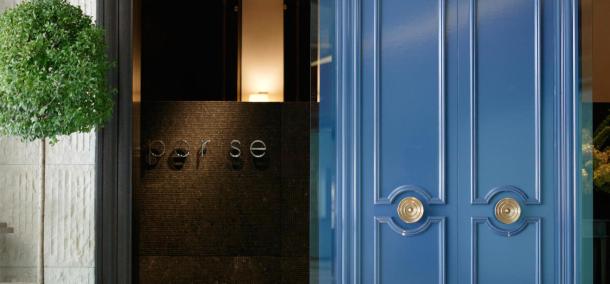
Pete Wells’ Brutal Review of Per Se

TK.com_PER.SE_homepage_1a_0.jpgPer Se, the $325-a-plate dining experience which until today ranked among the only restaurants The New York Times deemed 4-star worthy, just received a deeply critical review from Pete Wells. Wells has been a restaurant critic for the Times since 2011, and he recently gained a little internet notoriety outside the circle of dedicated Times readers by giving a generally positive review to Señor Frog’s, the loosely Mexican chain whose motto (“Unleash Your Fiesta!”) tells you probably all you need to know.

The new Per Se review, which knocked the restaurant down a full 2 stars, is further indication that Wells is taking a hard look at price tags and complete experiences, and refuses to buy-in to old standbys if they do not continue to deliver. This attitude is perhaps best summed up when he writes

With each fresh review, a restaurant has to earn its stars again. In its current form and at its current price, Per Se struggled and failed to do this, ranging from respectably dull at best to disappointingly flat-footed at worst.

Wells had plenty of specifics to critique, ranging from the food to the service to the “price-gouging” of add-ons like fois gras. For $325, Wells fairly expects that every dish would be extraordinary, and his critiques of the dishes pull no punches. Perhaps most brutal, though, are the descriptions he gives to the restaurant itself, which he calls “grand, hermetic, self-regarding, ungenerous” and one of “the worst food deals in New York.”

While there are undoubtedly those who will continue to go out of their way to visit Per Se, or regard it as an essential experience in New York fine dining, perhaps the two lost stars indicate a larger changing of the guard, and an exciting move toward greater innovation in dining in 2016.

To read the full review, click here.

‘Shark Tank’ Throws Its Weight Behind Ugly Food

sharktank_wide-0b24a0142869dfb629141dd024d95289b32c473f-s800-c85.jpg

Photo via NPR.org

We wrote recently about the movement, now gaining traction around the world, to reduce food waste by selling and promoting ugly produce – the kind of fruits and vegetables that are still perfectly edible, but because of minor blemishes or abnormalities will often bypass the grocery store and head straight for the landfill. Besides the troubling statistics on food waste in a country where 48 million Americans struggle to get enough to eat, this discarded produce is also a major source of methane, a potent greenhouse gas.

The ugly food movement is the sort of appealing initiative that can combat social ills (like hunger and climate change) while still providing a clear path to profitability. Both those factors seem to be paying off with some major momentum: on Friday night’s episode of the reality show Shark Tank (the ABC hit that has entrepreneurs pitch their start-ups to a ruthless panel of investors), investor Robert Herjavec plunked down $100,000 for a 10% stake in Hungry Harvest, an ugly food delivery service. This number was twice what CEO Evan Lutz had originally asked for.

Hungry Harvest operates by “rescuing” food which would otherwise be discarded from farmers and grocery stores, and selling it at a 20 to 30% discount. For each bag of produce delivered, the company also donates a meal to the hungry. As of the show’s taping, Lutz said Hungry Harvest had 600 subscribers, but expected that number to double from Shark Tank publicity alone. The investment and press combined put Lutz in a good position to expand quickly and become a household name, but expect competitors to crop up as well. Whichever company ultimately takes the lion’s share of the market, ugly food is good news for everyone.

To read more, click here.

NYC Parks Department Puts Out Request for 6 Mobile Food Vendors

Unknown.png

The New York City Department of Parks and Recreation sent out the following request for bids (RFB) today. They are looking for 6 mobile food concessions within the Battery in Manhattan.

In accordance with Section 1-12 of the Concession Rules of the City of New York, the New York City Department of Parks and Recreation (“NYCDPR”) is issuing, as of the date of this notice, a Request for Bids (RFB) for the operation of six (6) mobile food concessions within the Battery, Manhattan.

Hard copies of the RFB can be obtained, at no cost, commencing Monday, January 11, 2016, through Tuesday, February 9, 2016 between the hours of 9:00 a.m. and 5:00 p.m., excluding weekends and Holidays, at the Revenue Division of NYCDPR, which is located at 830 Fifth Avenue, Room 407, New York, NY 10065.   All bids submitted in response to this RFB must be submitted by no later than Tuesday, February 9, 2016 at 11:00 a.m.

The RFB is also available for download, commencing on Monday, January 11, 2016 through Tuesday, February 9, 2016on Parks’ website.  To download the RFB, visit www.nyc.gov/parks/businessopportunities, click on the link for “Concessions Opportunities at Parks” and, after logging in, click on the “download” link that appears adjacent to the RFB’s description.

For more information, contact Glenn Kaalund at (212) 360-1397or via email at Glenn.Kaalund@parks.nyc.gov.

The Latest Health Craze Gets Hand-Wavey About Super-“Food”

charcoal-1.jpg

Activated Charcoal Drinks from Juice Generation

While it may not be a superfood in the strictest sense of the word, charcoal is now being touted by some as the next miracle ingredient that can rid your body of those mysterious toxins you somehow still have, even after eating nothing but kale and quinoa bowls since 2015. Activated charcoal has long been found in beauty products, and it is indeed used by the medical community to treat overdoses and food poisoning. The principle is simple – charcoal is absorbent and will bond to other harmful chemicals in the digestive tract, helping to flush them out safely. But some have now taken this a step further and claim that charcoal has numerous benefits (like lowering cholesterol and treating viral infections), even for those not currently in the middle of a drug overdose.

The ingredient may not do much in the way of improving taste, but it can be found in juices and elixirs everywhere from Los Angeles-based Juice Served Here to LuliTonix to Juice Generation, not to mention gracing recipes at Morgenstern’s Finest Ice Cream and Lowlife on Stanton Street. Other restaurants are also toying with adding charcoal-laced dishes to their repertoires, including El Rey and Dimes, if they can figure out how to do so without sacrificing flavor or texture. Mission Chinese Food even uses it in a cocktail to achieve a pitch black color, although beverage director Sam Anderson is adamant that it will not prevent hangovers – or do much of anything for your health, for that matter.

As the latest health trends move outside the realm of what might fairly be called “food,” the best advice might be to take your charcoal with a grain of salt – and never trust health advice that says your food can’t be tasty too.

To read more, click here.

Restaurant Stocks Have a Rough New Year, and Chipotle Leads the Plunge

It’s no surprise that Chipotle Mexican Grill is having a rough few months, after a string of high-profile food borne illness outbreaks, a CDC investigation, and multiple lawsuits. Stocks in the company, which had been growing steadily since 2013, hit a new 52-week low last week. This means that in three rough months, Chipotle has lost three years of gains.

Although Chipotle’s losses were predictable based on recent bad press, they come with some other context as well: 2015 was a bad year for restaurant stocks across the board, and 2016 isn’t starting out any better. Many large, publicly traded chains were down 2 to 6% last week, and some hit 52-week lows, including the Cheesecake Factory, Papa John’s, and Dunkin’ Brands. As 2016 continues, this is likely to mean far fewer new concepts will go public, even as they continue to expand, and larger corporations may focus more on acquisitions. Chipotle may be the poster child for this rough year, but they should also serve as a reminder that the restaurant market has not been friendly to anyone.

To read more, click here.

David Chang Gets Feisty With Momofuku Nishi

Momofuku Nishi – David Chang’s latest project in Chelsea – has finally opened, and Chang made the announcement today through his magazine Lucky Peach along with an interview. The restaurant was rumored to be an Italian-Korean fusion, but Chang balks at that description. Instead, he asks “what food isn’t fusion?” and says,

“There are Italian words on the menu but we’re not trying to make Italian food. We’re not trying to make a Korean restaurant. We’re trying to do something that we’ve never done at Momofuku. We’re inspired by Italy but we’re not using any Italian ingredients. Things are moving at light speed here.”

Momofuku Nishi will also add to the list of major New York restaurants operating with a no-tipping policy. Chang cited the greater parity between front of house and back of house wages as the primary factor in this decision, and made no apologies for charging more.

The real cost of selling food is not accurately reflecting the labor that’s going into it. In 2000, I got paid maybe $10 an hour. Inflation has definitely risen, but cooks’ wages haven’t. That’s one of our biggest issues. We want to be able to grow as a company so we can provide for more people. This is a way we might be able to do that. And if it doesn’t work, we can always go back to the old way.

The menu is not yet available online, but Nishi is now open Tuesday – Saturday from 6:00pm-11:00pm.

To read the full interview, click here.

The Government Wants You to Have Your Coffee and Drink it Too

The federal government just released their dietary guidelines for 2015-2019, and most of them should come as no surprise. The guidelines are updated every five years to reflect current research and recommendations in the interest of promoting public health. For the most part, they tend to remain much the same: eat more vegetables and whole grains, avoid sugars and trans fats. The updates this year include changes to the recommended sugar intake (which should now be only 10% of daily calorie intake),  increases in allowable salt intake for certain demographic groups (now up to 2,300 mg a day), and the removal of a daily cholesterol recommendation. There was no recommendation to avoid red meat, despite the studies from the World Health Organization earlier this year indicating that it has carcinogenic properties on par with tobacco. All this is great news for anyone looking to replace their sugary pancakes and waffles with an extra helping of sausage and eggs.

Even better is the news that the department of health has finally gotten on board with “moderate” (up to 5 cups a day) coffee consumption. Citing a growing body of research indicating that coffee can help prevent everything from diabetes to cancer, the new guidelines say that coffee can be part of a “healthy lifestyle.” Although research indicates that, unsurprisingly, genetics play a strong role in the effects of coffee on the body, the report still acknowledges the many benefits available from your morning cup of joe. Just remember to hold the sugar with that.

To read more, click here.

Starbucks Passport App is the Untappd of Coffee

Starbucks_Digital_Coffee_Passport_.JPG

Photo via starbucks.com

Coffee connoisseurship has almost certainly gone mainstream, and the latest indication is the release of Starbuck’s “Coffee Passport” app to the general public. The app allows users to collect digital stickers in their coffee passport each time they try a new coffee (or a single-origin coffee from a new country), while recording tasting-notes and comments about the experience. The app also includes plenty of study materials to shrink the gap between coffee shop guest and trained barista, including a glossary, primer on cuppings, and tips on various brew methods.

Starbucks baristas have had a paper version of this idea since the mid 90s, and the app was pre-released to Starbucks staff a month ago. The idea of ‘collecting’ rare beverages on your phone pokemon-style has precedent with apps like Untappd (for craft beer) and Delectable (for wine). In general, these apps encourage users to expand their selection and provide an incentive to go for the “new” over the “tried-and-true.” This could ultimately hurt Starbucks, who have had a hard time breaking in to the niche coffee market, although they’ve indicated a plan to focus even more on rare, high end coffee in the future.

To read more, click here.