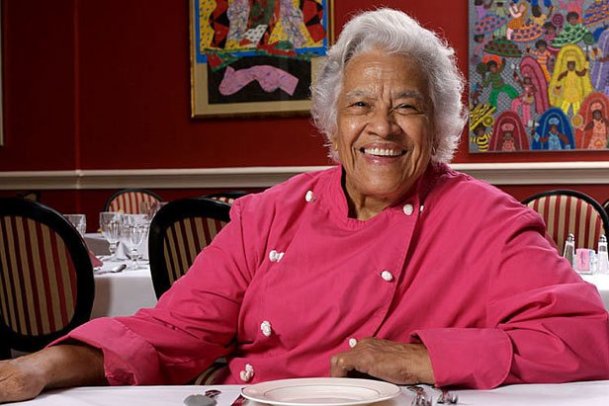
The James Beard Foundation announced on Thursday that Leah Chase would receive their Lifetime achievement award this year, an honor she shares with chefs like Wolfgang Puck and Richard Melman. Chase, now 93, is known as the “queen of Creole cooking,” and has been a mastermind at Dooky Chase’s Restaurant in New Orleans since the 1940s. The restaurant, which she runs with her husband, has transformed over the years from sandwich shop to fine dining to Southern comfort and Creole, and despite massive flooding from Hurricane Katrina which shuttered them temporarily, they reopened and remain a destination for both tourists and locals alike. As recently as 2014, the Times-Picayune named her “damn-near perfect” fried chicken the best in the city.
More than just a chef, Leah Chase has been an advocate for civil rights for decades, flouting segregation laws at her restaurant in the 50s and 60s and hosting NAACP and other activist meetings there “over gumbo and fried chicken.” (Dooky Chase’s Restaurant even gets a mention in Ray Charles’ Early in the Morning.) Chase and her husband also founded the Dooky Chase Foundation to support cultural arts, education, culinary arts and social justice in New Orleans and Louisiana.
While this is not Chase’s first lifetime achievement award (she was previously honored by the Southern Foodways Alliance), it is well deserved and an excellent choice for the James Beard Foundation, which strives to honor not only culinary genius but the integral connections between food and culture, politics, economics and community.
To read more, click here.
 Olive oil may be found in almost every American kitchen, but it’s long been the purview of the old world – an assumed-to-be-necessary import from Mediterranean farms that have been producing it for generations. Increasingly, however, California farms are taking a bigger stake of the market, with claims that they offer superior quality without the premium.

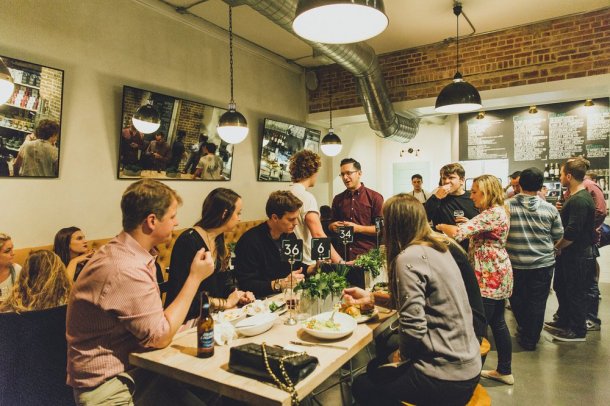 Their Success… In a city with sky-high rents and rising expenses, it can be hard to make ends meet on coffee alone. Blank Slate has increased its sales by bridging the gap between coffee shop and restaurant, creating a hybrid best described as a “Café-table” that is the best of both worlds. This concept works on an old premise that is becoming increasingly popular as labor and operational costs increase. In it, guests order from a single point of sale, then take a number to indicate their table as they seat themselves. When the food is ready, a runner brings it out, clears dishes, and attends to guests.
 paigepapers.com