Per Se, the Second Most Expensive Restaurant in NYC, will Raise Prices in 2016

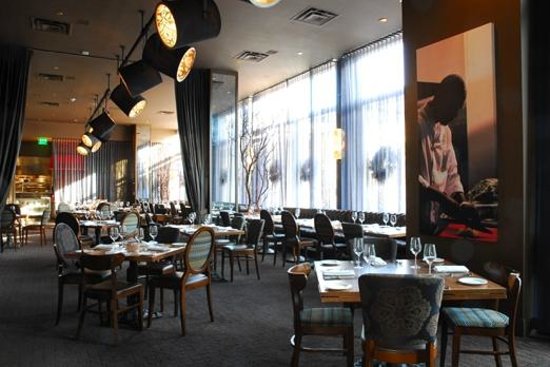
per-seThe second most expensive restaurant in NYC, after Masa, is ranked to be Per Se. Thomas Keller’s Per Se is already priced at $310 including service and the dinner menu. However, in 2016 there will be a raise in its prices to $325. This increase will clear the way for other restaurants to follow suit as restaurants across the city prepare to grapple the cost of minimum wage increases and increasing food costs.

The three Michelin-starred venue hiked its prices, typically does every two to three years, was in early 2014 after the state’s minimum wage went up by 75 cents to $8. The upcoming hike concedes with the increase in the restaurants prices with the minimum wage increasing by a quarter to $9, and the tipped-minimum by 50 percent to $7.50.

Per Se will unlikely have a direct impact from the changes in regulation as tipped minimums don’t apply because service is included already in Per Se’s system. But the minimum wage change can influence the overall composition of hte labor force, and cause those that are already making more than minimum to seek corresponding raises to avoid salary compression with those receiving government-mandated increases. Per Se’s increase in $15 is deemed to be valid considering new federal overtime regulations, rising food costs, the ned to give merit-based raises to retain staffer.

With the increase in labor force in New York City, many restaurant owners have diverged in ways to cope with and strategically arouse the new regulation. Danny Meyer has eliminated tipping and instead raised menu prices, while Per Se is raising prices by $15 with already menu included tips. Overall, restauranteurs are finding alternative solutions to earn revenue to cover increasing costs. Dining out will become, even more, expensive in the following years with Cuomo’s integration of the $15 minimum wage campaign.

To read more, click here.

Food Protection Course

The NYC Health Code requires supervisors to be certified in order to be onsite of food preparation and operations. The more the employees are certified, the fewer the fines paid and the easier it is to acquire a grade A. The New York City Hospitality Alliance is sponsoring a Food Protection Course that will earn the certification in only 2 1/2 days.

General Member rate is $145, and Non-member Rate is $170.

The courses will be broken down into 3 days. Day 1, Tuesday, November 17th, 2015 will be from 8 AM- 4 PM. Day 2, Wednesday, November 18th, 2015 will be from 8 AM-4 PM. Day 3, Thursday, November 19th will be the day of the exam at 1 PM. Day 1 and Day 2 will be at The Stumble Inn, 1454 2nd Ave, while Day 3, the testing center will be at Health Academy, 160 West 100th St, 3rd Fl.

The Alliance instructor is a highly qualified, respected and knowledgeable in food safety, the health code, the letter grade system and the operations of NYC food service establishments.

To read more, click here.

Webinar: CohnReznick–Mastering the Business of Running a Restaurant Series

On November 17, Cohn Reznick will host the next installation in the MBA series titled “Mastering the Business of Running a Restaurant.”  This month, they will be discussing food allergens, with an emphasis on gluten, and managing menus accordingly.  The speakers will be Betsy Craig, CEO and Co-Founder of MenuTrinfo, and Greg Remeikis, of CohnReznick.

To register for the webinar, sign up here.

2015 Restaurant Finance & Development Conference

TaraPaige Group will be attending the Restaurant Finance & Development Conference for the third consecutive year! The annual financial and development conference for growing restaurant company owners and executives is happening November 9-11 at the Wynn in Las Vegas, Nevada.  A large array of finance companies, real estate developers, investment banks, merger and acquisition specialists, bank representatives, business brokers and other financial intermediaries will be available to meet with the conference attendees.

The Finance & Development Mall is known as the industry’s ‘dealmaker event’ as it is where restaurant finance and investment sources will unveil their financing programs; it also has the best networking in the industry. This conference is perfectly suited for restaurant company owners and executives who focus on growing their business. Many high quality educational programs are also offered at the conference which offer practical operational and financial topics presented by the top experts in the industry. “Attendees will find accurate financial, economic and operating information and hear from the most innovative restaurant operators and finance experts in the industry.”

To read more about the restaurant industry’s must attend event and to register in order to gain new financial contacts, locate new business opportunities and attend relevant workshops, click here.

Luxury Burgers at McDonald’s

04-mcdonalds-classic.w529.h529-1The release of an Angus Third Pound burger at McDonald’s was deemed to be a “fine-dining” shift to their menu. However, McDonald’s is no longer content with just an Angus Third Pounder but is now testing a “Signature Collection” in England. The new collection boasts the thickest patties on their already existing menu. The “Premium range” line will incorporate 100 percent locally sourced beef and ingredients like beechwood-smoked bacon and whole-grain mustard. Moreover, this new premium collection will be sourced and made from “chefs from Michelin-starred restaurants.”

With the release of the new collection, many are speculating the shift in similarity to burgers at Shake Shack or Five Guys. This is one new strategy that McDonald’s is approaching in order to revamp and reposition their burgers. McDonald’s hopes with the success of the new burger line, it will be implemented not only in England but all over the world. The premium collection is also encouraging consumers to opt for table service and to eat in.

To read more, click here.

Whole Foods Shares Dropped Nearly 50 Percent

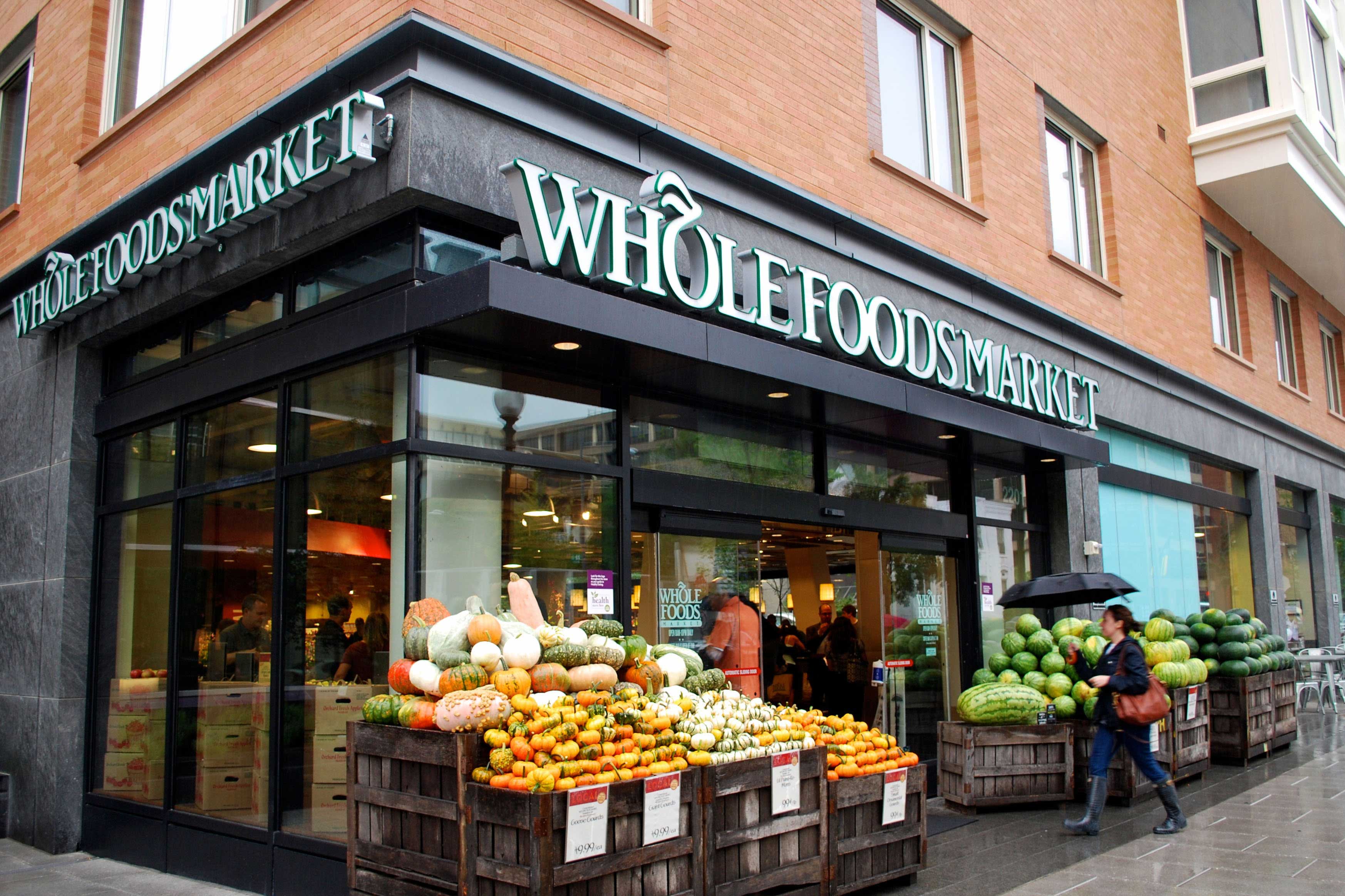
whole-foods11Despite the rise in organic foods, Whole Foods shares are down almost 50 percent. Investors are “uniformly negative on the company” because they don’t see an increase in performance in the future because of increasing competitors like Costco that are selling organic products at lower prices. Mark Retzloff, an industry pioneer, says “If one of those stores is just down the street from a Whole Foods, there’s a big segment of their customer base that isn’t going to shop at Whole Foods anymore.”

Whole Foods has always been deemed as being overpriced, being named “Whole Paycheck.” However, Whole Foods used to fight this “price image” problem by promoting their quality and selection to shoppers. More shoppers and activists are realizing that Whole Foods have “routinely” overcharged customers, even with their latest scandal. After coming clean of “mistakenly” overpricing products at Whole Foods, sales fell immediately. Growth tumbled to just 0.4 percent, after being 2.5 for weeks. Whole Foods says “it actually hurt worse outside New York City,” even though the price disparities scandal was at New York City.

While many analysts believe that cutting prices will increase performance and brand equity, co-CEOs John Mackey and Walter Robb believe that changes in products to cater at a lower cost does not correlate with their values. “Sure we could sell cheaper farmed salmon- but it’s terrible for the environment. Our products are not the same as what other grocers are selling,” says Mr. Robb. Whole Foods co-CEOs disclosed that they have no intentions to alter their products to cheaper products.

To read more, click here.

Request for Expressions of Interest for an Ice Skating Rink

The New York City Department of Parks and Recreation is issuing a request for expressions of interest (RFEI) for an ice skating rink and/or winter activities at McCarren Park Pool, Brooklyn.

All proposals submitted in response to the RFEI must be submitted no later than Friday, December 18 2015 at 3 PM. There will be a site visit and meeting on Monday, November 16 2015 at 11 AM. They will be meeting in front of the entrance to the pool on Lorimer Street between Driggs Avenue and Bayard Street in McCarren Park, Brooklyn.

Hard copies of the RFEI can be obtained from Friday October 30, 2015 to Friday, December 18, 2015 between 9 AM to 5 PM excluding weekends and holidays at the Revenue Division of the New York City Department of Parks and Recreation, located at 830 Fifth Avenue, Room 407, NY, NY, 10065.

For more information, contact Zoe Piccolo, Project Manager, at (212)360-3495 or at zoe.piccoo@parks.nyc.gov.

To read more, click here.

Structure for Success!

Structuring your restaurant ownership is a balance of needs, wants, sweat, and cold hard cash. There is no one right formula, and rarely is the formula the same from restaurant to restaurant. In this month’s Enterprise Insight, we discuss some common options, and how to balance your narrative and numbers. Specifically, we will review entities, equity vs. profit distribution, management fees, and valuations.

Entities
Restaurants are most commonly set up as a Limited Liability Corporation. More importantly, though, is to actually set up two: one for the physical location, and one for the intangibles, such as intellectual property. The purpose of this is to balance the equity and access to the brand that an investor group has. For example, if you publish a cookbook with only one LLC—then your investors, who have equity in that LLC, are entitled to a share of those profits. This leads to our second point, equity and profit distribution.

Equity vs. Profit Distribution
The first thing to determine is the ownership interest of the involved parties and how that differs from the profit distribution. As an LLC, which most foodservices enterprises should be, the business can distribute profits differently than the equity is split. This allows an owner to retain a majority stake but pay out his or her investors with an accelerated distribution.

Accelerated returns are common, but they can handicap the enterprise if the operator is left with nothing to help fuel growth. This is part of the reason why we advise owners take a management fee.

Management Fees
As the creators and operators of a concept, owners should consider pulling a management fee from the top line, especially if the concept is or will be multi-unit. This allows owners to accomplish two things: fund the centralized back-office operations and lower his or her risk by not relying on profits for compensation.

This is particularly important for operators with a pre-existing brand or background in the space. These management fees get directed to the holding corporation that we previously discussed. Think of this as protecting the intellectual property and creating a salary for the developer.  Generally, the more an investor wants in equity and distribution, the more important a management fee is.

Valuation
Determining the mix of management fees, equity, distribution, and ownership locations is always murky. Some operators say the idea is worth 33%, the work is worth 33%, and so their sweat equity is worth two thirds. Some operators base the valuation on a multiplier—usually five to six times—of the third year’s EBITDA, usually the year the restaurant hits its stride.

Ultimately, we advise that operators ask two questions: what must prove true, and what happens when? The right formula is based on your needs—what you need to see happen with the business—and your comfort with balancing risk and reward—what you do when the good and bad happen.