 Not only can Google maps help you avoid traffic and find the fastest routes to destinations, but now Google maps can help you avoid long lines at your local coffee shop. With a new update, Google maps will show potential wait times at coffee shops and restaurants, helping consumers avoid lengthy lines.
Google Maps has already implemented location information including hours of operations, contact details and even menus. Listed establishments with these already location cards will now have a timeline charting their busiest hours. While some data can be easily predicted, such as Starbucks being busiest in the morning rush, it is featured to be more useful with utilizing it alongside other Google maps tools. Google maps will now be able to re-route around delays and plan out routes to avoid long lines.
The new feature is available to Google Maps users in Android apps and on both Chrome and Safari apps for iOS.
To read more, click here.
 Last week, the price of Spanish olive oil has surged at a 5 percent increase to $4272 a metric ton, the highest since April 2006. A bacterial disease xylem fastidious and fruit-fly infestations have contributed to a 50 percent decline in Spanish and Italian olive oil. Spain and Italy account for 70 percent of the world’s olive oil and because of disease, extreme dry, hot weather and infestations olive oil is at “critically low levels.” “It’s quite a concerning acceleration in the price of olive oil. The supply shortages as a result of the drought, and particularly underproduction in Spain, have filtered though to the marketplace” says Lamine Lahousnia, head of packaged-food research at Euromonitor International in London. According to research on Euromonitor, consumer prices for olive oil increased about 10 percent on average in the past year, which is faster than overall inflation for packaged foods at about 3.7 percent.
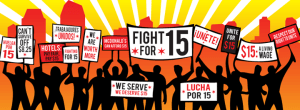 City’s fast food worker minimum will rise to $15 by 2018 and the rest of the state by 2021. The increase in wages is in efforts to improve the lives of chain restaurant employees whose wages can keep them reliant on taxpayer-subsidized welfare programs. This policy will apply to not only company-owned restaurants with thirty or more nationwide locations but to franchise locations as well. As wages increases, labor costs increases resulting in price hikes for consumer goods. In a recent survey of 924 fast food businesses in New York, 70 percent were “very likely” to raise prices in response to the increase in minimum wages, and 83 percent of respondents claimed they were very likely or “somewhat likely” to reduce hours of staffing levels. This increase in higher wages could potentially prompt competitive salary increases throughout the hospitality and retail industries to avoid drama of workers who’ll suddenly find fast food jobs more attractive.
 More than 80,000 food companies coexists and thousands are starting a new food business every year. Lisa Curtis, business and food tech analyst, believes 2015 will be the year that food startups will receive broader recognition. In 2014, there was a record breaking sales of $2.36 billion raised in the food and agriculture industry. The industry continues to grow as it becomes more attractive to entrepreneurs. Food is a commodity that everyone needs and is flexible to adjust towards changing consumers’ demands. The industry also holds potential fortune justified by mergers and acquisitions from major food companies that resulted in billions in sales.
 controversy is genetically modified organisms, GMOs, and whether foods with GMO ingredients should be labeled. However, the House just passed a bill that would prevent states from enacting laws mandating labelings. Many argue that consumers have the right to know what is in their food. Representative Rick Nolan of Minnesota said “The issue isn’t whether GMO foods are healthy or safe, it’s about the right to know what’s in the food we buy for ourselves and our families. This is a serious problem begging for a solution. As yet, we haven’t’ seen a good one.” However, others in the food industry rebutted that individual state standards would lead to confusion and costly compliance, and that labeling suggests that GMOs are not as safe or healthy of an ingredient which has yet to be a proven scientific matter.
 Coffee is a liquid that drives “productivity and civilization” and because of the importance of coffee in generations right now concerns about the Coffee Berry Borer is growing. The Coffee Berry Borer is a beetle that is endemic to Central Africa but can also be found in other countries that produce coffee beans. This beetle can live and withstand a massive amount of caffeine, a usual insecticide. It is estimated to withstand 500 shots of espresso for a 150- pound human. These beetles capability to withstand high caffeine levels and their addiction to coffee beans is potentially cutting crops of coffee beans by 80%.
 Sushi restaurants have lured gourmands by boasting of the freshest fish. But with new regulations, published by the New York City Department of Health and Mental Hygiene, restaurants are required that fish served raw, undercooked or marinated raw are to be frozen first to guard against parasites. This regulations has been approved by the Board of Health and will be set to take effect in August. The Health Department regulation is that fish will be required a minimum freezer storage time of anywhere from 15 hours to a week depending not eh temperatures and storage process.
 paigepapers.com