
“The summer is coming to a close, but a new slew of bars and restaurants are just starting to open. As the temperature starts to cool down, make your way to one of these new spots for great food, drinks, and atmosphere. Whether it is an expansion of an old favorite or a brand new take on the New York restaurant scene, here are 18 bars and restaurants to keep your eye on when they open their doors this fall.”
“Recreation is a new bar from nightlife hitmaker Jon Neidich, whose Happiest Hour and Tijuana Picnic are popular party spots in the city. It’s set to open in the upcoming Moxy NYC Downtown hotel, located at 26 Ann Street, in September.
As with Neidich’s Slowly Shirley, a 1940s-themed basement bar, Recreation has a very deliberate throwback concept. The 5,000-square-foot space is meant to look and feel like a 1980s house party, equipped with skee-ball and an arcade machine with classics like Ms. Pacman, Centipede, and Donkey Kong. There’s also Twister, with a twist: Instead of a mat, the colored dots for this truly nonsensical but enduring game are painted on the floor.”
View more openings here.
 At Tara Paige, we love summer in the city – the patio dining, food festivals and street fairs (not to mention the reduced lines at some of our favorite spots). But we still need to hit the road occasionally, and check out the concepts that have people buzzing all over the country. Which brings us to this special travel edition of our retail spotlight, on
  Crown Heights now has another new restaurant to add to its list – this time, it comes from the team behind Williamsburg’s Brooklyn Winery. Owners Brian Leventhal and John Stires will open the doors to BKW on Tuesday at 747 Franklin Avenue. They’ve brought on chef Michael Gordon, formerly of Bouley, to design the pared-down menu. Some highlights include konbu-cured mackerel with whipped feta and roasted grapes, root beer glazed pork ribs, and homemade donuts with butterscotch and lavender. The wine list will of course be well curated, with flights offered for those who are feeling indecisive and full bottles available to take home.
 Over the past five years, Starbucks has been implementing plans to sell wine, craft beer and small plates. While Starbucks is already an international hub for coffee, they are expanding into a larger scale of beverages. This week, 24 new locations will enact in the “Starbucks Evenings” program. Starbucks locations in Brooklyn, Denver, Miami, Orlando, Northern California, Washington, Oregon, Los Angeles, Chicago, Florida and Atlanta have been secured liquor licenses and are the initiatives to this new program.
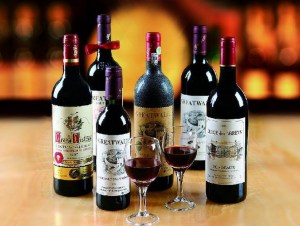 China is infamous as a leader in mass production- “they can reproduce Western manufacturing or technology overnight, but they lack prestige to replicate European artisan culinary delicacies.” China, recently, is successfully producing wine in their growing boutique wine market that has debunked its conventional stereotype. European countries like France and Italy have a long history and generations of producing wines in their vineyards while China has never been recognized for their wine. However, the Chinese have reoriented their wines to reciprocate the production methods held in Europe to produce their own wine in their vineyards and it has successfully entered the industry. The Cabernet blend Jia Bei Lan became the first Chinese wine to take the prestigious international trophy at the Decanter World Wine Awards in 2011. Chinese wine has grown in clientele across elites in China, but still face a challenge in convincing consumers to give Chinese products a chance. Because of China’s reputation of mass production elitists and wine enthusiasts label Chinese wine to be foul. Moreover, the idea of wine based from vineyards is a new concept to the Chinese culture. For 4,000 years the Chinese have preferred grain-based wine rather than grape wine. Along with productions of boutique wineries in China, China has also been influencing the shifts of the luxury ends of the market as China’s elitists are increasingly showing interest into the wine market.
 in marketing, but Jordan Salcito, the Momofuku Wine Director, utilizes Instagram not only as a distribution medium but as a base in creating Momofuku’s wine list. Instagram along with other social media outlets like Twitter is essentially numerous social circles created from following friends and “liking” interesting posts. Salcito theorizes that within social media social circles are aroused through similar interests and style. Similarly winemaker friend groups on social media are indicators of actual wine styles.Through this idea Salcito creates a wine list where every bottle of wine can be suggested through the relationship between its corresponding sommelier.
 paigepapers.com