Instant Tortillas Are Worth $100,000, According to Kickstarter

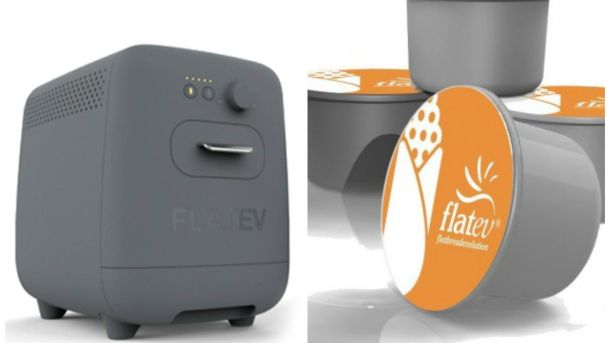
flatev.0.0.jpgDubbed by many as “The Keurig of Tortillas,” the Flatev calls itself an “artisan tortilla maker,” and the people of Kickstarter want in.

The Flatev is a machine that makes one thing and one thing only – fresh corn tortillas from small pods of dough (all in under 90 seconds). It’s not the first oddly specific cooking device, and it definitely won’t be the last, but with Kickstarter funding of more than $100,000, they’ve already surpassed their own goals. As Eater points out, there is a certain precedent for Kickstarter projects like this to go awry, bringing in huge amounts of money without ever delivering. The “Coolest Cooler” was one of the best funded products on the site, but has yet to deliver to any backers. Hopefully fresh tortillas are easier to deliver than a cooler/blender/bluetooth speaker combo.

To read more, click here.

What’s Next for Retail?

Retail Customer Experience, the online publisher of current retail news and research, just released their latest Whitepaper on what’s next for retail (and how to navigate your business there). It includes research and advice on mobile POS, inventory management, and omnichannel brand representation, including warnings about some of the pitfalls retailers face navigating new technologies.

To download a copy, click here.

The New Tech Changing the Guest Experience

In 2015, the foodservice industry saw some major technological changes—the introduction of EMV processing, Apple Pay and NFC adoption, and the continued rise of mobile POS terminals. But how can operators use this new tech to improve the guest experience? That’s what we will be discussing in this month’s Enterprise Insight.

Applying what’s new and hot in tech to your enterprise operations can be a double-edged sword. Thus, we advise our partners to focus on using new systems for the following key experiences: Loyalty, Mobile Ordering, and the Point of Sale.


Loyalty

 Tech-based loyalty programs are the best to engage repeat guests for two reasons: they provide insight and opportunity.

Systems like Square and LevelUp provide guest-specific metrics that a traditional punch card cannot. With these tech-based programs, operators can monitor, when your repeat guests are coming, what they’re purchasing, and how often.

This, then, allows you to more-personally and uniquely reward your best guests. Rather just the tenth cup free, you can reward birthdays, new guests, or stalled guests. This information and opportunity need to be handled appropriately, though; be wary of spending too much or not delivering.

It’s important to be mindful of perception, as well. Starbucks has been in hot water recently for the changes to their loyalty program. Originally, the coffee chain had been rewarding repeat guests with points, which were then redeemed for a product of the guests’ choice. However, when Starbucks changed the system to be based on dollar values rather than visits, guests were outraged. With a close look, though, the economics of the program actually benefit the most frequent guests—but the message wasn’t received as such.

Lastly, be mindful of your costs as you consider your strategy. We always run the numbers at different adoption rates to determine the good and potentially bad impact any program will have on your bottom line.


Mobile Ordering and Delivery

While Americans are dining out more than ever, at lunch they’re bringing that lunch in—or never even leaving. Mobile Ordering is imperative for your operation because it allows guests to place orders with security and comfort; they know that the order was received without anything lost in translation and, with the right technology in place, without even opening their wallets.

Seamless and Grub Hub are the industry titans, but newer start-ups like ChowNow, Brandibble, Olo, and OpenDining are bridging the gap between guest and enterprise: these services integrate directly with restaurants’ websites and apps to create a truly ‘seamless’ experience.

Within high-density areas, the rise of food delivery has evolved a segment of the restaurant industry to new extremes. Mobile Ordering connects diners and operators with a collection of middle-men: the IT team and the delivery team. Now, though, operators are developing their own ordering and delivery platforms with kitchens for a virtual restaurant—no seats, no servers, just delivery drivers and a website. In New York, Maple has seen huge growth and spawned a growing list of similar concepts.


Point of Sale

EMV, Apple Pay and NFC payments are important changes in the industry because they massively change the point-of-sale experience. While EMV actually increases friction—guests are using new equipment that increases the processing time—Apple Pay and NFC actually eliminate this, as well as traditional card swipes. And as with mobile ordering, these systems keep the credit card on file—guests never have to take out their wallet.

Similarly, start-ups like CheckMate are eliminating final step in the service cycle: dropping the bill. CheckMate is designed to make life for the service staff easier by allowing guests to pay for their bill from their phone. Via integrations with the existing POS, CheckMate allows restaurants to drop a “virtual bill,” which guests split, tip, and pay.

As with any new system you implement, you should carefully research, plan, and forecast the necessary components and implications. While these systems are all great individually, they don’t always communicate; for example, LevelUp and Square will not work together. Seamless won’t integrate directly with your point of sale. There are some systems, though, like Toast POS that offer a full suite of add-ons to create a complete ecosystem. And again, at TaraPaige, we ensure that the options we proceed with are the right fit financially, operationally, and experientially.

Waitlisting App Nowait Introduces Bill Pay Feature

The App Nowait, which allows guests to add their name to digital waitlists at restaurants that do not take traditional reservations, is now leveraging those partnerships to introduce a mobile payment option as well. Nowait has been steadily growing for the past few years to incorporate a suite of software for restaurants and guests, including tools to manage seating and server rotation as well as reservations and waitlists. They already have  close to 4,000 restaurants on the platform, running the gamut from Chili’s to the Clinton St. Baking Company here in New York. Nowait has been downloaded by diners over 3 million times.

With the new mobile payment option (currently being tested in the company’s hometown of Pittsburg), guests can quickly pay their check at the end of the meal without flagging down a server. The app works with three of the largest POS systems (Micros, NCR, POSitouch), which covers around 85% of their targeted fast-casual market. Nowait claims that there are benefits all around – restaurants are seeing faster turnaround, and servers have seen higher tips. The latter may be due to the apps customizable suggested tip amount, which is now standard in POS systems like Square.

As more aspects of the dining experience go digital (and mobile), this market will get more crowded. Nowait has partnerships on it’s side, but they’ll have to make the experience seamless as well.

To read more, click here.

Swiss Start-Up Wants to Bring You a Greener Soda

There’s no doubt that soda has an image problem which producers would love to tackle, but most of those efforts have centered around perceptions of health (or a lack thereof). One Swiss start-up, Climeworks, has an entirely different approach that could still provide  a PR boost to big-soda. Climeworks’ main business is carbon capture; specifically, developing technology for commercially viable ways to suck CO2 out of the air and repurpose it. One of those ways is by using that CO2 to carbonate beverages without burning any additional fossil fuels.

Of course, the CO2 trapped in soda cans doesn’t stay out of the atmosphere for long, and it would be hard to see much of a dent in atmospheric parts per million from this technology alone. But such technology would at the very least give soda a greener image – which could explain why “the biggest fizzy-drinks company in the world” is already mostly on board, according to a Climeworks rep.

To read more, click here.

Stay on the Cutting Edge with the Food and Tech Meetup

600_445724392.jpeg

Next Wednesday, February 17th, the Food and Tech Meetup group will be hosting an event featuring speakers from ChowNow, SALIDO, Venga and Toast, who are all leading the charge to improve the hospitality world for both guests and owners through he power of technology. Speakers will be sharing their challenges and lessons learned, and the event will be a great opportunity to meet and greet with all the individuals thinking deeply about the intersection of food and technology. Snacks and drinks will also be provided, so reserve your spot today!

To read more about the event and reserve a spot, click here

Sweetgreen Expects a Full Half of Sales to Come from their App this Year

The fast-casual salad chain Sweetgreen had a big year this year, opening 3 new stores in New York alone, moving their headquarters to California, and being dubbed “the next Chipotle” by CNN and others. One could argue that their success is built on many things – timing, a growing demand for healthy, sustainably sourced foods, their youthful aesthetic (one of their limited edition salads last year was named in honor of a Kendrick Lamar song) – but it would be a mistake to underestimate the role mobile has had in that success.  So far, 21% of Sweetgreen’s sales come through their custom app, and they expect that number to jump as high as 50% this year.

The appeal of mobile ordering is understandable: with lunchtime lines out the door, the Sweetgreen app allows guests to order from the office and pick up immediately, and once downloaded, a rewards system makes it more likely for them to keep visiting. Additional features like the ability to flag dietary restrictions, add favorites, and integrate with the iOS health app, add an additional layer of appeal.

Of course, for many small chains it simply isn’t feasible to build out this kind of ordering system. Sweetgreen has had the benefit of $95 million in total investments in recent years, and they’ve clearly dedicated a fair amount of that to building their mobile presence. But they do serve as a reminder of the kind of return such an investment can have.

To read more, click here.

UberEats Launches in Ten Cities

uber-eats-new-york-los-angeles-denver-spain-chicago.png

New York, along with 9 other major American cities, can soon benefit from Uber’s extensive network of drivers to satisfy their lunchtime munchies in record time. The company is finally launching UberEats, which they hope will ultimately compete with Grubhub and Seamless, although their existing ten-minute lunch delivery still has a very small user base. New York, Chicago, L.A., San Francisco, Austin, Houston, Dallas, Atlanta, and Washington, D.C. should all be able to use UberEats by March.

Drivers will be able to opt in to or out of the new program if they prefer not to mix hot foods and New York gridlock, but Uber is charging a flat delivery fee of $5 to encourage more drivers to participate. And true to the sharing-economy, there will also be an UberPool version which allows users to pay only $1 and have their food delivered with other orders in the area. With more and more food delivery companies joining the fray, each will have to work harder to stand out – the promised shorter delivery times Uber offers could go a long way towards doing that, especially with Grubhub and Seamless averaging over 45 minutes.

To read more, click here.

Starbucks Passport App is the Untappd of Coffee

Starbucks_Digital_Coffee_Passport_.JPG

Photo via starbucks.com

Coffee connoisseurship has almost certainly gone mainstream, and the latest indication is the release of Starbuck’s “Coffee Passport” app to the general public. The app allows users to collect digital stickers in their coffee passport each time they try a new coffee (or a single-origin coffee from a new country), while recording tasting-notes and comments about the experience. The app also includes plenty of study materials to shrink the gap between coffee shop guest and trained barista, including a glossary, primer on cuppings, and tips on various brew methods.

Starbucks baristas have had a paper version of this idea since the mid 90s, and the app was pre-released to Starbucks staff a month ago. The idea of ‘collecting’ rare beverages on your phone pokemon-style has precedent with apps like Untappd (for craft beer) and Delectable (for wine). In general, these apps encourage users to expand their selection and provide an incentive to go for the “new” over the “tried-and-true.” This could ultimately hurt Starbucks, who have had a hard time breaking in to the niche coffee market, although they’ve indicated a plan to focus even more on rare, high end coffee in the future.

To read more, click here.

Farm-to-Table, Even in Alaska

OLYMPUS DIGITAL CAMERA

Photo via verticalharvesthydroponics.com

The expression “farm-to-table” (and it’s variants in the retail world like “bean-to-bar,” which recently got the Mast Brothers in hot water) has been around for some time; with sustainability and health on everyone’s minds in 2016, it shows no signs of going away. Even in Alaska, a state where chefs of all kinds lament the flavorlessness and cost of produce picked before its time and shipped thousands of miles, a farm-fresh movement is starting to take root.

Two new startups, Alaska Natural Organics and Vertical Harvest Hydroponics, are attempting to bring sustainable farming closer to the residents of Alaska using (relatively) new agricultural technology. The two companies rely on different solutions to the problem of climate – the former operates a small farm out of an old warehouse in downtown Anchorage, with LED lights set up to allow hydroponic vegetables to grow year round, and the latter makes portable growing pods out of repurposed cargo containers. These containers are designed to be climate-proof and easily installed as close to the consumer as possible – in the basement of restaurants or grocery stores, for example.

If successful, more start-ups could follow suit in Alaska and other harsh climates. The benefits are easy to see, as produce grown nearby saves on shipping costs, reduces emissions, keeps money in the local economy, and can be picked when ripe for better taste and nutrition.

To read more, click here.