New York Approves $15 Minimum Wage

New York Governor Andrew Cuomo followed closely on the heels of California yesterday, announcing an agreement with Albany lawmakers to raise the NY State minimum wage to $15 per hour over the next few years. The increase will begin with for workers in New York City employed by large businesses (those with at least 11 employees), who will have a minimum wage of $11 at the end of 2016, and an additional $2 each year after, reaching $15 on 12/31/2018.

The national labor rights movement has been fighting for $15 since 2012, and roughly half of the 50 states have increased their minimums somewhat (although the Federal minimum is still set at $7.25 due to congressional opposition). The final legislation in NY has not been approved, so it’s unclear how it will affect tipped workers. The tipped minimum in New York increased recently to $7.50, precipitating some of the gratuity-free movement. Additional increases would almost certainly prompt more NYC restaurants to raise prices and eliminate tipping altogether.

To read more, click here.

4/18: Submit Your Bids for a Mobile Food Stand in the Battery

The NYC Parks Department has put out a request for bids for the operation of six mobile food concessions in the Battery in Manhattan. Details are below!

In accordance with Section 1-12 of the Concession Rules of the City of New York, the New York City Department of Parks and Recreation (“NYCDPR”) is issuing, as of the date of this notice, a Request for Bids (RFB) for the operation of six (6) mobile food concessions within the Battery, Manhattan.
Hard copies of the RFB can be obtained, at no cost, commencing Monday, March 28, 2016 through Monday, April 18, 2016 between the hours of 9:00 a.m. and 5:00 p.m., excluding weekends and Holidays, at the Revenue Division of NYCDPR, which is located at 830 Fifth Avenue, Room 407, New York, NY 10065.   All bids submitted in response to this RFB must be submitted by no later than Monday, April 18, 2016 at 11:00 a.m.
The RFB is also available for download, commencing on Monday, March 28, 2016 through Monday, April 18, 2016 on Parks’ website.  To download the RFB, visit www.nyc.gov/parks/businessopportunities, click on the link for “Concessions Opportunities at Parks” and, after logging in, click on the “download” link that appears adjacent to the RFB’s description.
For more information, contact Glenn Kaalund at (212) 360-1397or VIA email at Glenn.Kaalund@parks.nyc.gov. Thank you.
TELECOMMUNICATION DEVICE FOR THE DEAF (TDD) 212-504-4115

Russ and Daughters at Brooklyn Navy Yard

Gantry_corridor_R_D.0.JPG2016 is already shaping up to be the year of exciting food halls, with The Pennsy opening to fanfare and Brooklyn Navy Yard expected later this year. Now, we have another exciting announcement regarding the latter: the New York icon Russ & Daughters will be opening a location in the 60,000-square-foot Navy Yard space. The team says this location will be focused on fast casual breakfast and lunch, and they plan to increase bakery production with classic New York and Jewish baked goods like bialys, babka, challah and knishes.

The Russ & Daughters company recently turned 100 years old, and they’ve been celebrating by making big moves to expand, from opening the Orchard Street Cafe in 2014 to their planned location in the Jewish Museum to their baked goods facility in Bushwick. With new businesses constantly opening, it’s always nice to see a beloved standby keep things fresh.

To read more, click here.

NYC Parks Department Puts Out Request for 6 Mobile Food Vendors

Unknown.png

The New York City Department of Parks and Recreation sent out the following request for bids (RFB) today. They are looking for 6 mobile food concessions within the Battery in Manhattan.

In accordance with Section 1-12 of the Concession Rules of the City of New York, the New York City Department of Parks and Recreation (“NYCDPR”) is issuing, as of the date of this notice, a Request for Bids (RFB) for the operation of six (6) mobile food concessions within the Battery, Manhattan.

Hard copies of the RFB can be obtained, at no cost, commencing Monday, January 11, 2016, through Tuesday, February 9, 2016 between the hours of 9:00 a.m. and 5:00 p.m., excluding weekends and Holidays, at the Revenue Division of NYCDPR, which is located at 830 Fifth Avenue, Room 407, New York, NY 10065.   All bids submitted in response to this RFB must be submitted by no later than Tuesday, February 9, 2016 at 11:00 a.m.

The RFB is also available for download, commencing on Monday, January 11, 2016 through Tuesday, February 9, 2016on Parks’ website.  To download the RFB, visit www.nyc.gov/parks/businessopportunities, click on the link for “Concessions Opportunities at Parks” and, after logging in, click on the “download” link that appears adjacent to the RFB’s description.

For more information, contact Glenn Kaalund at (212) 360-1397or via email at Glenn.Kaalund@parks.nyc.gov.

To Pre Fixe or Not to Pre Fixe

Whether your New Year’s Eve plans are already set in stone or a little more last minute, if you’re planning on dinner out on the last night of 2015, chances are good you will be at one of the hundreds of restaurants offering a special New Year’s pre fixe menu instead of their regular options. Some of these spots even go so far as to hold limited seatings – two or three set times when guests will come in and all enjoy their appetizers, entrees and desserts at the same time. Many include an optional drink pairing list and a complimentary glass of champagne (or, more likely, sparkling wine) at midnight.

There are some obvious benefits to the restaurant in offering pre fixe menus and designated seatings on busy holidays (most often New Year’s and Valentine’s day). Since most guests will be making reservations, they can easily determine exactly how much they will make that evening, and eliminate much of the guesswork of preparing. Making 50 of the same dish is always simpler than plating orders as they come in, so an otherwise chaotic night can go as smoothly as possible. Chefs often have some license to exercise creativity and get exposure for new dishes. With set seatings, hosts and service staff can worry less about guests who might be tempted to linger until the ball drops. Finally, guests are often more comfortable paying a premium for having some stress relieved and knowing their entire experience will be taken care of – including the final glass of champagne.

In many ways, those benefits spill over to guests as well, as long as they choose their restaurant carefully and make reservations early. A quick Google search reveals plenty of lists of the best pre fixe  dinners in the city, but check menus in advance and keep in mind that everything is more expensive on New Year’s. For those not willing to pay the premium or worried about feeling rushed by the seating system, it may be more useful to check out a list of the best restaurants that are serving their regular menu (Eater also has a good one). That way you can pick and choose your favorites and go all in on an open bar later in the night instead. Ultimately, the perfect New Year’s Eve looks different for everyone. Happy New Year, and happy eating!

Danji-Interior-3-630x420.jpg

Dani on E. 60th – one option for those looking to avoid pre fixe pitfalls


Minibar, Drizly, and Amazon Want to Keep your Champagne Popping

minibar-delivery-app.png

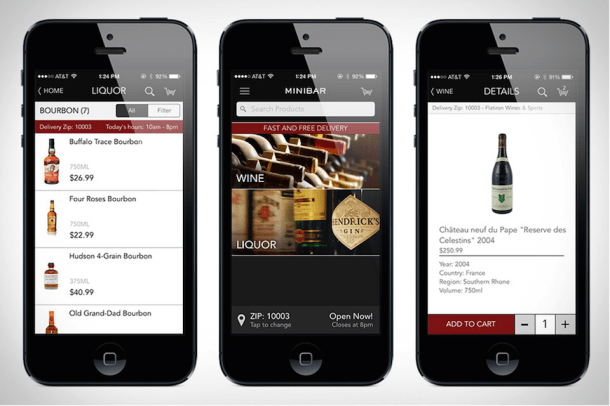
If you’ve taken the New York subway recently, you may have noticed the seasonal ads for Minibar, the alcohol delivery service that has been expanding rapidly the past few months, first by acquiring competitor Booze Carriage in March, and then by launching a subscription service for recurring orders in October. Minibar claims to have the largest share of the New York market, but that’s difficult to confirm. They certainly have plenty of competitors out there who are looking for a piece of the alcohol-delivery pie.

Most notably, and perhaps most threateningly to Minibar, is Amazon. Until early this month, Amazon only offered 1-hour booze delivery in Seattle, but as of December 9th New Yorkers with a Prime subscription can take advantage of the service as well.  Amazon is billing it as part of their Prime Pantry, so you can stock your party with other necessities like paper towels and Swiffers as well.

A third option is Drizly, which has a larger share of the Boston market, but is also available in parts of Manhattan, Brooklyn and Queens. Both Drizly and Minibar work by partnering with local liquor stores, listing their offerings via their app and website by zipcode, and taking a percentage of sales. Which service emerges as the market leader in New York may come down to who snatches up those local partners the fastest, but Minibar is also bolstering their business by providing other services – their website includes a party-planning feature to make sure you’re well stocked for any event, and if you feel intimidated by all those bottles you can even rent a bartender through their site.

To read more, click here.


Retail Spotlight: Birch Coffee

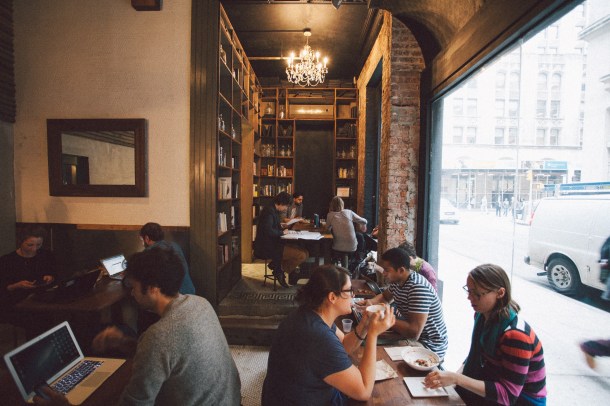
Birch-Coffee-4.jpgTheir Success…With five locations around Manhattan and a roastery in Long Island City, Birch Coffee has become synonymous with quality coffee and a knowledgeable staff, all while maintaining an unfussy and approachable vibe in their presentation. Walking into any of their shops, it’s easy to see that owners Paul Schlader and Jeremy Lyman prioritize service and community for all guests, which is not always easy when the line extends out the door. A small chalkboard sign by the register happily declares “Birch Loves You.” Conversation cards are available on the front counter to help break the ice between strangers looking to chat, and each shop has its own lending library, encouraging visitors to stay and relax with a book. Plenty of guests also bring laptops to work, and all Birch locations are open until 8PM, so it’s easy to stop by after a 9-to-5 job (or 9-to-6 or -7) without feeling rushed. Birch truly embodies the friendly public-private space that many urban residents look for in their local coffee shops.

From the menus to the interior design, Birch shops directly reflect Schlader and Lyman’s personalities and attention to detail. Besides the usual espresso and pastry options, craft beer and wine are also available for those who are attracted to that community-oriented atmosphere but don’t need the caffeine kick. In the sweltering Manhattan summer time, cold brew is a huge seller – and fortunately for any guests who don’t want to leave the comfort of air conditioning, Birch delivers 64 ounce growlers for environmentally-friendly refreshment that’s big enough to go around. Schlader and Lyman also made fair trade, single-origin coffee fundamental to their brand before it was de rigeur, and they seem more than happy to share the joys of a superior brew; guests can sign up for by-appointment lessons in home-brewing, barista skills, and coffee appreciation.

The setting for these offerings are spaces that are tend toward the industrial, with unfinished tile work, mismatched furniture, and plenty of wood details. The aesthetic is rugged and hip, and it sets Birch apart from many coffee shops where meticulous interior design is the main attraction. Here, the coffee and the people are front and center. One exception is the iconic Birch logo and font, which unify all their shops and are available on assorted “Birchandise” through their store.

Take Aways…Birch has grown steadily since their opening by maintaining a great reputation for quality and a warm, welcoming aesthetic.  By roasting their own coffee, Birch maintains a connection to the entire supply chain, which helps them guarantee the best product for all their guests. Of course, many coffee shops provide great coffee, but what sets Birch apart is their down-to-earth presentation and welcoming details. In a busy New York day, getting good coffee quickly is expected, but being able to really enjoy it is their recipe for success.


NASA Engineer Makes Your New Robo-Barista

IMG_2267-1200x900.jpg

Most coffee shop regulars are willing to sacrifice at least some quality for speed, and the time-consuming process of  making pour-over coffee usually just isn’t feasible when there’s a line of customers out the door, even if the end product is a superior brew. In July, Cafe Grumpy introduced their solution to this problem at the Chelsea branch: a robotic pour-over machine capable of brewing 5 cups at a time. The Poursteady was engineered by Mark Sibenac and Stuart Heys, whose CVs include building parts for NASA’s Mars Rover, but who have now turned their attention towards quintupling the production of pour-over coffee.

Far from becoming our caffeinated robot overlord, the Poursteady actually puts as much control as possible in the hands of the barista, who can change the water temperature to within a degree, the water volume to within a gram, the timing to within a second, and the size of the drizzle pattern, all from a custom app. Outsourcing all those controls to an app keeps the machine itself clean and simple. So far, it seems to be working well for Cafe Grumpy, who originally installed the Poursteady for a trial run but bought it only a month later. Several more are currently in production, and you can even buy your own through their website.

To read more, click here.


Correction: an earlier version of this article listed Stephan von Muehlen, the product designer, as chief engineer.

The Chocolate-Bone Broth No One Saw Coming

BrodoChoc.jpg

Photo via Grubstreet.com

Trends have a way of folding in on themselves – stretching their own limits and testing their customers taste buds in the process. Bone broth, the trendy hot health drink which took off last winter with Marco Canoro’s Brodo is the latest example. This year, Canoro is teaming up with Morgenstern’s Finest Ice Cream on Rivington (which also opened last year) to open a pop-up window shop with some unexpected new mashups.

In addition to the full Brodo broth menu, the shop will offer the “What Came First” (organic egg yolk, freshly grated nutmeg, organic chicken broth), a savory take on eggnog, and the “St. Nick” (bitter chocolate, beef broth, coconut milk). Canoro calls the savory-broth-cocoa “fucking outrageous,” which is a bargain at $7.75 for ten ounces. TBD on whether New Yorkers will take to this combo the way they did to the original broths, but who knows what’s possible in this post-chocolate-and-bacon-trend world. At least customers can still tout the health benefits of the broth, with the added kick of dark chocolate.

To read more, click here.

St. Nick.jpg

Photo via Grubstreet.com

Tipping is Going Extinct

Over the past week weeks, a storm of debate has surged over the news that Danny Meyer has opted to eliminate tipping in his fine dining restaurants over the course of the next year. It’s a monumental decision and the change has its advocates and skeptics. In this month’s Enterprise Insight, we’re cutting through the opinion to talk specifically about the benefits and challenges of implementing such a system.

Specifically, we will review what operators need to consider when thinking about this: why, how, and the possible pitfalls.

Why Would You Eliminate Tipping

With our clients, we’ve discussed three key reasons for implementing a more-European system: pay disparity, retention, and rising wages.

The back of house has always been under-compensated in comparison to the dining room. Due to the legal classifications of wages, back of house employees cannot be tipped. Under a tip-included system, the real cost of the meal—menu price plus tip—is built into a single number, and the revenue from that number is accessible to the owner to distribute as he or she sees fit.

This, in turn, can help with retention. Low-wage jobs are historically high-turnover jobs. However, with access to the tip ‘revenue,’ an owner can increase wages accordingly to alleviate this issue.

Lastly, rising wages are driving up labor costs and in some instances, driving away skilled labor. With the minimum wage in New York changing on a industry-by-industry basis, it will only become more difficult to find and retain great team members. Again, a tip-included system allows the operator to offer competitive wage rates.

Additionally, in the front of house, the tipped-minimum is also going up. Come January 1, NYC restaurateurs will be required to pay their servers $7.50 per hour–a 50% increase. However, if the restaurant eliminates tipping, then the team can be paid a salary, or a greater hourly wage plus a bonus drawn from the ‘tipped revenue’, thus alleviating this jump in labor costs.

How Would You Eliminate Tipping

Currently, there are only two viable options: increase prices, or apply an “administrative fee.” Be mindful with an applied “fee:” if you charge a “Service Fee” rather than “administrative,” you cannot disburse that revenue to any one not in a service position.

Neither feels good right now, but we believe that price increases will become the new normal. Here’s why: with an “administrative fee,” tipping isn’t eliminated, it’s removed from the diner’s control. With price increases, it’s truly taken off the table. The diner does not know and cannot argue with the prices because they give no allusion to the portion going to the team.

Pitfalls

Increasing pricing will always cause a certain degree of pushback from guests. Until they’re fully on board with tip-included system, the sticker shock will cause a reaction. However, as more and more of NYC s fine-dining enterprises move to this style, the less resistance operators will face. Whether your establishment plans on keeping or eliminating tipping, it’s important to understand the mechanics, because “tip-included” is bound to become the new normal for a significant portion of the dining scene.