Retail Spotlight – Blank Slate Coffee + Kitchen

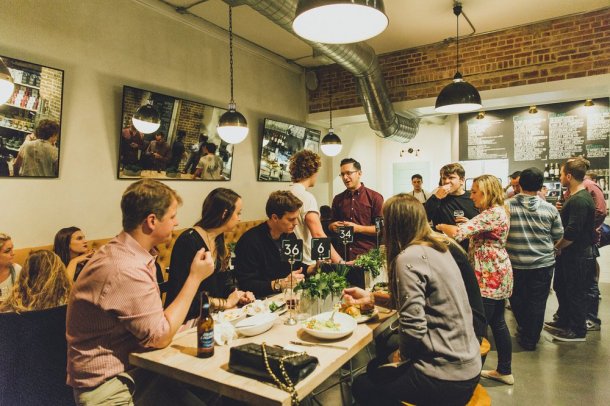
o.jpgTheir Success… In a city with sky-high rents and rising expenses, it can be hard to make ends meet on coffee alone. Blank Slate has increased its sales by bridging the gap between coffee shop and restaurant, creating a hybrid best described as a “Café-table” that is the best of both worlds. This concept works on an old premise that is becoming increasingly popular as labor and operational costs increase. In it, guests order from a single point of sale, then take a number to indicate their table as they seat themselves. When the food is ready, a runner brings it out, clears dishes, and attends to guests.

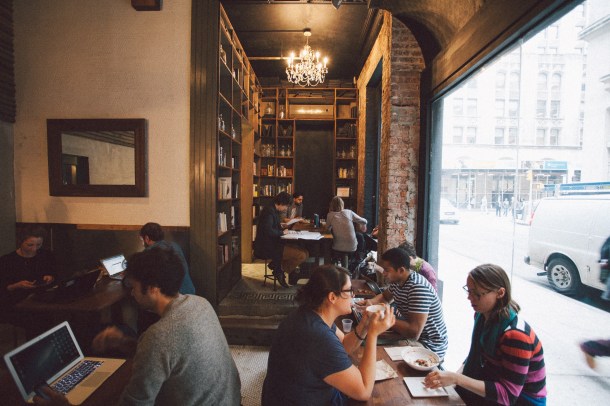
Walking into Blank Slate, guests are greeted with high ceilings and a bright, modern space. During the busiest lunch hour, this space can fill up quickly; tables are laid out to maximize seating with longer shared table spce in the middle and a banquette along the wall. The espresso machine is front and center behind the counter, promising all the caffeine fixes you would expect from a coffee shop, but the large menu on the wall behind makes it clear that Blank Slate wants to keep you fed as well as energized. This menu, which is impossible to miss as you walk up to order,  focuses entirely on prepared food; beverages are listed on a smaller side menu, and there are none of the pastries or baked goods that are usually on display in a coffee shop. Guests who come in in the morning may not be able to get a quick muffin with their coffee, but they can get sweet toast with whipped ricotta and candied bacon, or an egg sandwich with truffled goat cheese.

The breakfast menu is available late on weekends to appeal to midtown brunch-ers, but in the afternoon the selection switches over to salads, sandwiches, and small plates. These offerings are all thoughtfully curated and described on the menu – there are basics (like a rustic chicken sandwich or a Mediterranean salad), but they often have small twists to add a layer of appeal (the caesar salad is made with brussel sprouts, and the meatball sub is made with lamb, mint, and pecorino). The desserts are also in line with what you would expect from a sit down restaurant, including molten chocolate cake with vanilla gelato, and you can pair any of the food with wine or beer offered on tap.

While the menu itself would be at home in an upscale sit-down restaurant, the front of house operations are much more streamlined. Guests order from the register in a single line from which they can get coffee to go or a table number to seat themselves and wait for food. From there, staff members bring orders, fill water, and bus dishes – but ordering and payment is all taken care of.

Take Aways…Blank Slate fills all the needs of a neighborhood coffee shop in a neighborhood that needs plenty of coffee shops, but a finely tuned menu of savory foods (and a streamlined system for serving them) helps Blank Slate do double-duty as a lunch, brunch, and early dinner spot as well. This combo is the heart of the Café-table concept: fill two needs at once, and your morning regulars may just become your most satisfied lunch guests as well.
 

Climate Change Has Repercussions for Coffee and Cocoa

r.jpeg

As temperatures heat up across central America, low-lying growing regions which were once ideal for coffee are quickly becoming too warm, at least to grow the kind of quality coffee that is increasingly demanded by consumers. Many farmers in the region are feeling these effects while still trying to recover from a devastating outbreak of roya over the past four years, a disease that affects coffee leaves and is likely also driven by climate change.

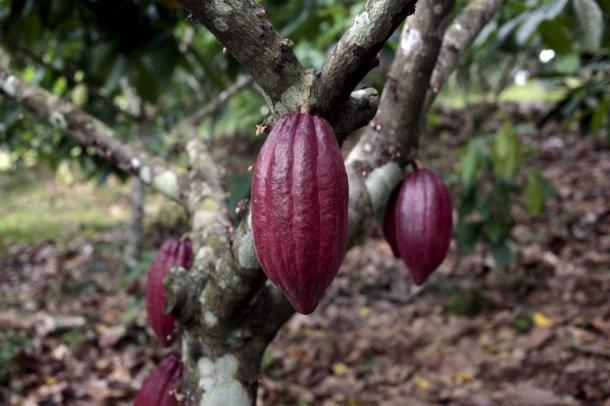
Some growers have decided to cut their losses rather than bearing the increased costs of production and are switching to cocoa, which thrives in warmer climates. For many, the decision is a no-brainer, since cocoa futures have increased steadily for the past four years while coffee dropped 24% in 2015. For now, this increased supply won’t do much to ease the fears of chocolate giants like Hershey and Mars, since the farmers switching are mostly aiming to produce higher quality product at lower volumes. Craft chocolate makers can get excited though – in the next few years, it looks like coffee’s loss will be cocoa’s gain.

To read more, click here.

Donut Fest NYC

donut-day-facts-ftr.jpgOn January 23rd, you can fight the winter doldrums with the best donuts and coffee from all over New York at the 2016 Donut Fest at Verboten in Greenpoint. Tickets range from $35 to $50 for VIP tickets (which include early entry and goodies to take home). All proceeds benefit the Food Bank For New York City, so you can break your New Year’s resolutions knowing it’s for a good cause.
For more information, click here.

Starbucks to Donate Millions to Help Employees in China Pay Rent

3020859-slide-s-1-how-chinas-one-child-policy-forced-starbucks-to-rethink-its-beijing.jpg

Photo via fastcompany.com

Starbucks recently made two big announcements about their presence in China, a country where economic troubles have been causing global shockwaves for months and other American chains (including KFC and Pizza Hut) are struggling. The first announcement is that they plan to open 500 more locations in China this year alone, and create 10,000 new jobs in the country every year through 2019. The second announcement is that all those new employees may get handed a very big perk with their green aprons – the coffee giant will soon begin offering vouchers to full time baristas and managers to help them pay their rent. They predict that 7,000 Chinese workers will be eligible for the vouchers immediately, and another 3,000 will be in the near future. Although Starbucks hasn’t given an exact number for the total cost of this program, they say it is a “multimillion dollar” investment and that they expect to pay around 50% of the rent for qualifying workers.

In China, the practice of offering subsidized living to employees is more common, although these living situations usually amount to crowded dorms. With rents rising across the country, it is unsurprising that workers have been requesting a subsidy from Starbucks for awhile.

To read more, click here.


The Government Wants You to Have Your Coffee and Drink it Too

The federal government just released their dietary guidelines for 2015-2019, and most of them should come as no surprise. The guidelines are updated every five years to reflect current research and recommendations in the interest of promoting public health. For the most part, they tend to remain much the same: eat more vegetables and whole grains, avoid sugars and trans fats. The updates this year include changes to the recommended sugar intake (which should now be only 10% of daily calorie intake),  increases in allowable salt intake for certain demographic groups (now up to 2,300 mg a day), and the removal of a daily cholesterol recommendation. There was no recommendation to avoid red meat, despite the studies from the World Health Organization earlier this year indicating that it has carcinogenic properties on par with tobacco. All this is great news for anyone looking to replace their sugary pancakes and waffles with an extra helping of sausage and eggs.

Even better is the news that the department of health has finally gotten on board with “moderate” (up to 5 cups a day) coffee consumption. Citing a growing body of research indicating that coffee can help prevent everything from diabetes to cancer, the new guidelines say that coffee can be part of a “healthy lifestyle.” Although research indicates that, unsurprisingly, genetics play a strong role in the effects of coffee on the body, the report still acknowledges the many benefits available from your morning cup of joe. Just remember to hold the sugar with that.

To read more, click here.

Starbucks Passport App is the Untappd of Coffee

Starbucks_Digital_Coffee_Passport_.JPG

Photo via starbucks.com

Coffee connoisseurship has almost certainly gone mainstream, and the latest indication is the release of Starbuck’s “Coffee Passport” app to the general public. The app allows users to collect digital stickers in their coffee passport each time they try a new coffee (or a single-origin coffee from a new country), while recording tasting-notes and comments about the experience. The app also includes plenty of study materials to shrink the gap between coffee shop guest and trained barista, including a glossary, primer on cuppings, and tips on various brew methods.

Starbucks baristas have had a paper version of this idea since the mid 90s, and the app was pre-released to Starbucks staff a month ago. The idea of ‘collecting’ rare beverages on your phone pokemon-style has precedent with apps like Untappd (for craft beer) and Delectable (for wine). In general, these apps encourage users to expand their selection and provide an incentive to go for the “new” over the “tried-and-true.” This could ultimately hurt Starbucks, who have had a hard time breaking in to the niche coffee market, although they’ve indicated a plan to focus even more on rare, high end coffee in the future.

To read more, click here.

Retail Spotlight: Birch Coffee

Birch-Coffee-4.jpgTheir Success…With five locations around Manhattan and a roastery in Long Island City, Birch Coffee has become synonymous with quality coffee and a knowledgeable staff, all while maintaining an unfussy and approachable vibe in their presentation. Walking into any of their shops, it’s easy to see that owners Paul Schlader and Jeremy Lyman prioritize service and community for all guests, which is not always easy when the line extends out the door. A small chalkboard sign by the register happily declares “Birch Loves You.” Conversation cards are available on the front counter to help break the ice between strangers looking to chat, and each shop has its own lending library, encouraging visitors to stay and relax with a book. Plenty of guests also bring laptops to work, and all Birch locations are open until 8PM, so it’s easy to stop by after a 9-to-5 job (or 9-to-6 or -7) without feeling rushed. Birch truly embodies the friendly public-private space that many urban residents look for in their local coffee shops.

From the menus to the interior design, Birch shops directly reflect Schlader and Lyman’s personalities and attention to detail. Besides the usual espresso and pastry options, craft beer and wine are also available for those who are attracted to that community-oriented atmosphere but don’t need the caffeine kick. In the sweltering Manhattan summer time, cold brew is a huge seller – and fortunately for any guests who don’t want to leave the comfort of air conditioning, Birch delivers 64 ounce growlers for environmentally-friendly refreshment that’s big enough to go around. Schlader and Lyman also made fair trade, single-origin coffee fundamental to their brand before it was de rigeur, and they seem more than happy to share the joys of a superior brew; guests can sign up for by-appointment lessons in home-brewing, barista skills, and coffee appreciation.

The setting for these offerings are spaces that are tend toward the industrial, with unfinished tile work, mismatched furniture, and plenty of wood details. The aesthetic is rugged and hip, and it sets Birch apart from many coffee shops where meticulous interior design is the main attraction. Here, the coffee and the people are front and center. One exception is the iconic Birch logo and font, which unify all their shops and are available on assorted “Birchandise” through their store.

Take Aways…Birch has grown steadily since their opening by maintaining a great reputation for quality and a warm, welcoming aesthetic.  By roasting their own coffee, Birch maintains a connection to the entire supply chain, which helps them guarantee the best product for all their guests. Of course, many coffee shops provide great coffee, but what sets Birch apart is their down-to-earth presentation and welcoming details. In a busy New York day, getting good coffee quickly is expected, but being able to really enjoy it is their recipe for success.


NASA Engineer Makes Your New Robo-Barista

IMG_2267-1200x900.jpg

Most coffee shop regulars are willing to sacrifice at least some quality for speed, and the time-consuming process of  making pour-over coffee usually just isn’t feasible when there’s a line of customers out the door, even if the end product is a superior brew. In July, Cafe Grumpy introduced their solution to this problem at the Chelsea branch: a robotic pour-over machine capable of brewing 5 cups at a time. The Poursteady was engineered by Mark Sibenac and Stuart Heys, whose CVs include building parts for NASA’s Mars Rover, but who have now turned their attention towards quintupling the production of pour-over coffee.

Far from becoming our caffeinated robot overlord, the Poursteady actually puts as much control as possible in the hands of the barista, who can change the water temperature to within a degree, the water volume to within a gram, the timing to within a second, and the size of the drizzle pattern, all from a custom app. Outsourcing all those controls to an app keeps the machine itself clean and simple. So far, it seems to be working well for Cafe Grumpy, who originally installed the Poursteady for a trial run but bought it only a month later. Several more are currently in production, and you can even buy your own through their website.

To read more, click here.


Correction: an earlier version of this article listed Stephan von Muehlen, the product designer, as chief engineer.

Coffee Giant, Starbucks, Serves Alcohol

UnknownOver the past five years, Starbucks has been implementing plans to sell wine, craft beer and small plates. While Starbucks is already an international hub for coffee, they are expanding into a larger scale of beverages. This week, 24 new locations will enact in the “Starbucks Evenings” program. Starbucks locations in Brooklyn, Denver, Miami, Orlando, Northern California, Washington, Oregon, Los Angeles, Chicago, Florida and Atlanta have been secured liquor licenses and are the initiatives to this new program.
“Starbucks Evenings” offers a small-plate menu like truffle macaroni and cheese, bacon-wrapped dates, and includes ten wine options. Starbucks executives are hoping to appeal to women as a safer and more comfortable place to drink than a bar. With the pilot stores, Starbucks found serving wine helped the stores attract book clubs, knitting circles, Bible study groups, and a number of online daters meeting for the first time. Starbucks is hoping to utilize their convenient and familiar brand name as a comfort place to not only grab coffee, but to also grab a beer.

To read more, click here.

La Colombe Wants to Be the Next Major Coffee Chain

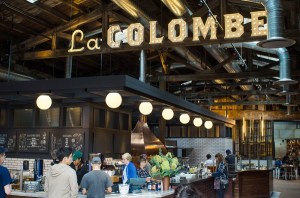
LaColombe_Fishtown-600x397Todd Carmichael, CEO of La Colombe, has big plans for his business and with the help of a brand-new investor, Chobani founder Hamdi Ulukaya, he plans to expand his business quickly. Carmichael wants to innovate new ways of drinking coffee, like his recent success of his draft lattes (made form cold-brewed coffee and frothed milk). La Colombe is planning to expand by having food offerings, including Chobani, canned lattes in grocery stores, and opening new shops in every major U.S city.

Carmichael wants to improve and evolve America’s retail shelves “the packaging is off, the logistics are off, and the bags of coffee are old.” With his distributions of coffee expanding through cafes, though wholesale, and directly to customer through e-commerce and grocery stores, Carmichael is confident that him, his investors, and his company can better a café experience, and quality in America.

One of his newest products he is expecting to immerse into grocery markets are canned lattes. While Frappuccinos were already a past favorite, with the shift in health focused eating habits and the high amount of sugar levels in a Frappuccino, Carmichael wants a new innovative bottled drink that will be natural, and without tons of sugar. Along with recreating bottled coffee, La Colombe is challenging the idea of draft lattes on tap.

La Colombe is also expanding their food offerings into two categories-savory pastries and a full lunch. While there is no plan to make a café into a lunch place, Carmichael has created a new development that can receive the response from foodies and make people happy all while keeping their café image.

To read more, click here.