Want Tastier Coffee? Freeze Beans Before Grinding

Coffee freeze

Percolator, French press, AeroPress, espresso, pour over, vacuum pot, automatic brew, tin can: People go to great lengths for a good cup of coffee. But to achieve consistent flavor you may just need to chill your beans before grinding them. Colder beans produce smaller, more consistently sized particles when ground, yielding more flavor from less coffee, according to a study published in Scientific Reports.

In busy cafes, temperature matters. As room temperatures vary and grinders heat up with use, the consistency of the resulting grind changes. That’s a problem, because water extracts flavor from smaller coffee grounds faster than bigger ones. An inconsistent grind means sour taste from the small grains, and a bitter one from the big, all at the same time. For a more flavor-driven, sour and sweet cup, baristas adjust grinder settings for finer particles throughout the day.

But Colonna and Smalls, a specialty coffee shop in Britain, used science instead. They got together with chemists at nearby University of Bath to see how temperature affected how coffee beans break. They started at room temperature and went down to that of liquid nitrogen (-321 degrees Fahrenheit). It turned out, the colder the bean, the more uniform particles it produced, and the more even the flavor.

Read more here.
The Coffee Pendulum Swings Again

Rejoice! Coffee is good for you again; as usual, the tide has shifted and your favorite morning beverage is back on the table.  The World Health Organization has concluded that coffee does not pose a cancer risk, and a regular habit of drinking coffee might even have a positive health effect.

Coffee is no stranger to the spotlight–good or bad.  In 1991, the WHO’s International Agency for Research on Cancer listed coffee as a possible carcinogen based on “limited evidence” that coffee was associated with a higher risk of bladder cancer.  However, the past 25 years have changed the evidence in a new direction.  Researchers reviewed more than 500 studies on over 20 different types of cancer and concluded that coffee might actually help prevent against uterus and liver cancers, and reduce the risk of colorectal cancer.

Consider replacing your pour-over with cold brew, though; research is also turning up some connection between consumption of very hot beverages and the risk of esophageal cancer.

To read more, click here.

Cold Brew In An Ice Pop!

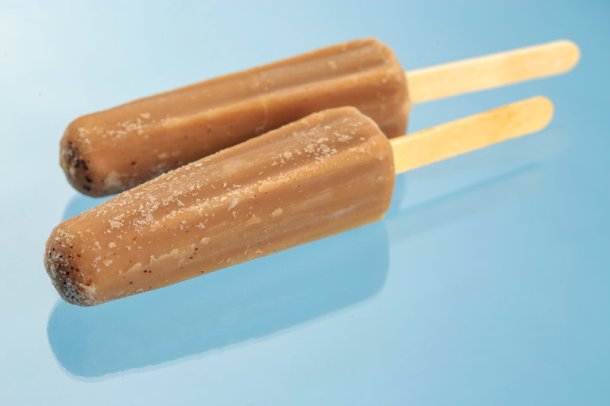
cold brew pop

Cold-brew coffee, emphasis on the cold, is what you get in this new ice pop from Brewla, a company whose other flavors are fruit based. The bar is a lightly sweetened mixture of the coffee and organic milk.

Brewla was founded by Daniel and Rebecca Dengrove, a brother and sister team with over 15 years of experience in food science and technology. The idea for Brewla Bars was born when the budding entrepreneur Daniel noticed an untapped market at the intersection between popular high-end juices and the boom in trendy frozen yogurt. A rising star in the beverage industry, Rebecca zeroed in on teas with health boosts. Although the concept was originally for a brick-and-mortar store, the siblings’ full-time jobs and cross-country residences created roadblocks, so Rebecca rented space in the industrial kitchen at her old graduate school, decorated a rolling freezer, and Brewla Bars began.

Brewla Barista, box of five, $5.99 at Union Market stores in Manhattan and Brooklyn, brewlabars.com.

Starbucks and Anheuser-Busch Team Up

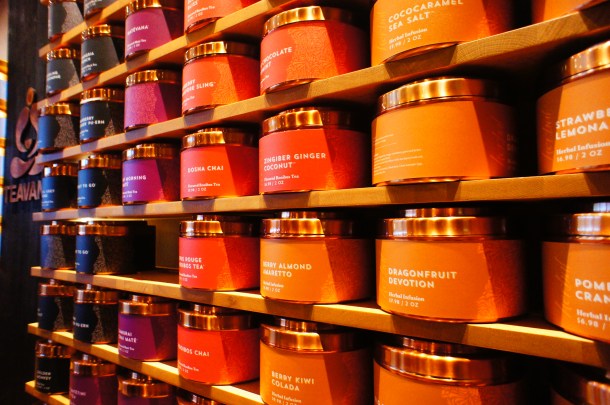
Tea Wall detail.JPGIn the beverage world, there are few names bigger than Starbucks and Anheuser-Busch. The two dominate any discussion of coffee or beer respectively, but they’re now partnering up to help capture the market of a third beverage – tea. Specifically, Starbucks is looking to begin selling their Teavana line of teas as ready-to-drink specialty bottles in grocery stores around the world. They decided to partner with Anheuser Busch to handle the bottling aspect of the operation, and if spokespeople for both companies are to be believed, there is plenty of revenue to go around.

Tea is currently a billion-dollar market in the US, and Teavana was Starbucks’ biggest acquisition ever when they bought it for $630 million in 2012. The original retail strategy for the brand, which involved revamping the Teavana tea bars around the country, didn’t live up to the “$90 billion global market opportunity” that Starbucks CEO Howard Schultz originally predicted.

Starbucks’ new partnership and strategy represent a significant pivot to the ready-to-drink market. They expect to release the new line in over 300,000 US supermarkets and convenience stores by next year. The move is also a possible save for Anheuser-Busch, who have seen sales and production suffer in the wake of the craft beer movement.

To read more, click here.

Fancy Coffee Has the South Bronx Talking

Formerly a deteriorating, poverty-stricken area, the South Bronx is now known for its hip-hop culture and its graffiti.  Last week, Birch Coffee opened shop on Hunts Point Avenue, a street characterized by auto shops, bodegas and cheap, variety stores.  It’s hard for Majora Carter to remember the last time Hunts Point had a spot that could serve both the community and its need for creativity.  She is a force of change in this part of New York City.

Ms. Carter collaborated on the café with entrepreneurs Jeremy Lyman and Paul Schlader, who have opened seven Birch shops in New York City.  And they are not the only ones.  Another coffee shop named Filtered Coffee opened a few months ago in Mott Haven, a neighborhood a few stops away on the No. 6 subway.  One of the business partners in Filtered is quoted as saying “Certain businesses come to fill a void in the community”.

Young people priced out of Manhattan and Brooklyn are now moving to the Bronx, regarded by some as an up-and-coming neighborhood.  Developer Keith Rubenstein is quoted as saying of Filtered partners Karen Paul and Aaron Baird, “They brought life to a place that was probably a little bit lifeless.”  New York restaurateurs may want to keep the South Bronx on their radars.

Please click here to read more…

Is Canned Cold Brew Coffee’s Fourth Wave?

Stumptown-Nitro-Cold-Brew-Canned-Coffee.jpgAccording to Todd Carmichael, founder of coffee chain and industry leader La Colombe, we’re about to witness the fourth wave of coffee consumption in America – and it will be bigger than any of the waves that came before. What are those waves, exactly, and what could possibly dwarf them?

Think of coffee’s first wave as the everyman brew – the reason people get nostalgic for diner drip and Folgers still has enough momentum to surpass all sales expectations. The second wave coincided with the growing popularity of espresso drinks, and the expansion of Starbucks. The third wave (and, we admit, our favorite so far) represented the growing popularity of small roasters treating coffee beans as real ingredients instead of a commodity. Many of the small roasters that represented this trend, like Intelligentsia and Blue Bottle, have since been bought out by larger players, but there are still newcomers who continue to expand coffee horizons with superior quality and innovative ideas. Enter the fourth wave, as Carmichael calls it – bottled (or canned) cold brew.

If your mind goes immediately to the current industry standard in ready to drink coffee – Starbucks bottled frappuccinos – you’re not alone. But Carmichael believes there is a huge opportunity gap between current levels of consumption and the possible market. “They’ve been working for 20 years to get it to $2 billion. Then you look to Mexico, which isn’t really a coffee-drinking country, and their [ready-to-drink] coffee is at $4.7 billion.” Carmichael is working on bridging that gap, with a variety of flavors introduced through channels ranging from local convenience stores to whole foods. One thing is for sure – he’s excited, and who can blame him? Great coffee in a can sounds like a win-win.

To read more, click here.

In France, the Magic Word Could Get You a Cheaper Coffee

While we all know that “please” is helpful for getting mom to pass the spaghetti at family dinner, the magic word (or it’s French equivalent) now has an added power – it can lower the price of your coffee. French cafes are increasingly turning on to the trend of charging their rude guests more. In many cafes, this practice is kept discrete, although at least two spots have become open about the tiered pricing. At L’Hamburgé in Grenoble, France, coffees range from €1.50 for the most demanding guests, down to €1 for those who ask nicely. At La Petite Syrah in Nice, the divide is even more extreme: a full “Hello, coffee please” costs only €1.40, but saying only “Coffee” is a full €7. There is a middle tier of €4.25 for adding a s’il vous plaît but no bonjour. It’s also unclear if tourists who are still struggling to be polite in a new language get any special dispensation – or added penalty.

While it would be nice if we could all be a little kinder to each other before the morning coffee, we don’t think a trend like this would (or should) catch on here. Hospitality and human connection are the x-factor you just can’t put a price on. Even if a guest forgets the magic word, chances are they won’t forget your great service; next time, just hope they come in with mom to remind them.

To read more, click here.

Starbucks Will Finally Open in Italy

hTiiZIVq-3389-5084.jpgStressing the “humility and respect” with which they are undertaking this endeavor, Starbucks CEO Howard Schultz announced recently that in early 2017, Starbucks will finally open their first store in Italy. It may be surprising that such a store doesn’t exist already, especially since the Starbucks brand was born out of Schultz’s first trip to Milan 33 years ago, but the company is understandably cautious about bringing one of the largest chains in the world to a culture that prizes small-scale coffee operations and exquisite attention to detail.
Starbucks will be partnering with Italian brand, retail and real estate developer Percassi to bring the first Italian store to life in Milan, with plans to open more down the line. In a blog post announcing this opening, Starbucks mentions Percassi’s values and commitment to youth development as key elements of their choice. Antonio Percassi, the company’s president, states that, “We know that we are going to face a unique challenge with the opening of the first Starbucks store in Italy, the country of coffee, and we are confident that Italian people are ready to live the Starbucks experience, as already occurs in many other markets.”

To read more, click here.

Folgers Coffee Surpasses all Expectations

Ground Coffee copy.jpg

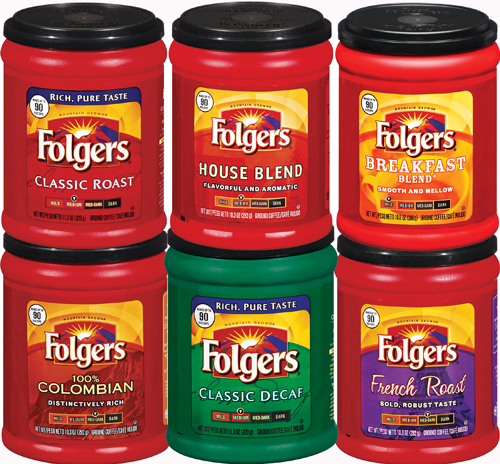
Current trend-watchers would be hard pressed to say that instant coffee is making a comeback. If anything, coffee these days is getting more and more upscale, and words like “single origin” are now almost expected in both coffee shops and pantries. All this makes it even more surprising that Folgers, the coffee brand largely known for its instant coffee and ear-worm of a jingle, is seeing an impressive increase in profits beyond what any investors expected. In the last quarter of 2015, those profits jumped 15%, causing parent company J.M. Sucker to sharply increase their earnings guidance for the year.

Folgers attributes its success to “on-trend” products like K-cups, although many would argue that that trend is doomed by its own wastefulness. The partnership with Dunkin’ Donuts to produce the K-cups, however, is undoubtedly a boon to their business. It’s possible that this profit spike is just the crest of that coffee pod wave, but Folgers is still betting that consumers will always have a place in their hearts for easy, and instantaneous, caffeination.

To read more, click here.

Single-Serve Coffee Pods Banned in Hamburg

_88333244_more-capsules.jpg

These days, it’s difficult to read anything about Keurig Company or the now-ubiquitous single-serve coffee pods without a reminder of the waste they produce. The pods are often made with a mixture of aluminum and plastic  which, combined with the organic matter left inside after use, makes them nearly impossible to recycle and an increasing burden to strained landfills. Still, in Western Europe the pods make up one third of the coffee market, for a total of  €18 billion.

Now the city of Hamburg has taken a stand against the pods and the machines which exclusively brew them (known as “Kaffeekapselmaschine” in German), by banning the purchase of these machine’s with taxpayer money. This means that they will no longer be found in any municipal buildings, and government employees will return to other brewing methods for the time being. This may not make a huge dent in that €18 billion market, but it is further indication of backlash against the pods, and further motivation for companies looking to find eco-friendly versions that are biodegradable or easily recyclable.

To read more, click here.