Chinese Noodles From a Chile-Haunted Region

“The rise of Sichuan food in New York has made the past decade or two a glorious era for prowlers of Chinese restaurants. Chongqing chicken and mung-bean jelly proliferated as skilled chefs flocked to the city. But while the miles of dan dan noodles and mountains of Sichuan peppercorns have been exhilarating, they have tended to overshadow the cuisine of another great chile-haunted region, Hunan.”

“When people in Hunan get hungry for a bowl of noodles, what they have in mind are mifen: long, white strands made from pounded rice, so smooth they may slither right out of the chopsticks of inexperienced slurpers. Chances for New Yorkers to practice their antiskid chopstick techniques have been limited, generally speaking, to the rice noodles of other parts of Asia. When you could find Hunanese noodles around town, they tended to be tucked away on larger menus with so many other Hunanese opportunities that they were rarely given a chance to slither.”

Read more here.
Behind Chick-fil-A’s Success

cow-8.png

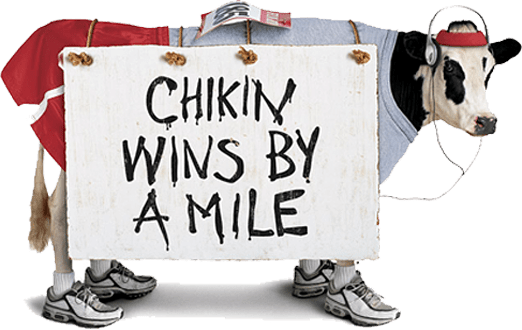
Political controversy aside, Chick-fil-A’s success is undeniable. In 2015, they averaged $3.2 million in per-store sales, which is 25% higher than McDonald’s, and double Burger King or Wendy’s. In 2014 they overtook KFC as America’s biggest Chicken chain. Analysts now predict that they are on track to become the 4th largest chain in America in terms of revenue by 2020, calling them the largest and least appreciated threat to McDonald’s. And if you think that this is largely irrelevant in New York, where Bill De Blasio has come out officially against the company for the CEO’s homophobic remarks, you might want to think again. 8 blocks from their first NYC location in midtown they are currently construction a second, and there are additional plans in the works to open a dozen more around the outer boroughs – bringing them close to the number of Panera breads in the city.

Needless to say, controversy does not seem to be slowing them down too much. Analysts credit their tight operations, and perhaps a certain amount of exclusivity: apparently only 0.7% of the 20,000 applicants who applied for franchises last year were given a spot – an acceptance rate lower than Harvard.

To read more, click here.

Retail Spotlight: Fuku NYC

163 1st Ave. New York, NY, 10003.

Their Success…This summer a rising trend fukuwebof Chicken sandwiches are evident. David Chang,
Founder of Momofuku Inc., is named a leader in this trend with his opening of Fuku NYC,home to an $8 spicy-fried-chicken sandwich. Since its opening on June 10th, Fuku has been on headlines and trending throughout social media because of its chicken sandwich. There is an obvious inspiration by Chick-fil-A which Chang grew up eating in suburban Virginia, and he also claims to be a fan of In-N-Out for its unique corporate culture as much as for its burger. Chang describes Fuku as “our attempt to sort of honor the great fried-chicken places and fast-food concepts out here, to do our version of that, and hopefully, to make it better.” With never-ending lines around the corner of the restaurant , one can say Chang has successfully started a fried-chicken culture and redefined “fast-food.”

Fuku NYC is located on 10th St. and 1st Ave. This location is also the original location of the Momofuku Noodle bar. After six months of intensive renovations and development, Fuku now boasts a very chic urban atmosphere. Utilizing their space to its full potential, an open kitchen, and bar side tables are available for those who are eating-in. Although no chairs or stool are available for consumers, customers are fully accommodated as a fast-casual restaurant.  After ordering, customers are given a number where then Fuku employees will bring their orders to customers whether it was to eat-in or take-away. Likewise, employees are constantly walking around the restaurant to take away trays.

Employees are also seen refilling their ketchup and ssam sauce bottles throughout the restaurant. The Ssam Sauce is Fuku’s’specialty’ sauce that adds more spice to the chicken burger. Ssam sauce is Fuku’s rendition of an already existing Korean chili sauce and is sold to customers separately. While most customers order a spicy chickenburger, Fuku does serve salads and fries. Fuku also offers a lunch special where customers can easily get a spicy chicken burger, fries and a drink for $12, potentially saving themselves $1 when buying them separately.

Take Aways…Fuku NYC does a great job with creating traffic and retaining customers. With Fuku only at 600 square feet and an open kitchen and bar, there is limited space for people to stand in line so customers are forced to wait on line outside. However, Fuku makes ordering very quick and easy. While one stationed register takes orders, another employee is seen walking down the lines to take orders through their iPads. This potentially retains customers on line by binding orders. Moreover, consumers feel well accommodated and less annoyed from waiting. Fuku only accepts credit cards which speeds up the ordering process.

Their chicken sandwich is simply a fried chicken, pickles and a buttered bun but consumers are attracted to Fuku’s Spicy Chicken Sandwich because of its large fried chicken at an affordable price of $8.

To read more about their grand opening, click here.

The Environmental Revolution: Sugar Cane Plates

The New York Times reported that the Urban School Food Alliance, a committee made up of six big-city school systems nationwide, has initiated a sustainability pilot program. The preliminary initiative is switching from plastic trays to plates made from sugar cane. These recyclable plates cost 11 cents more per plate to manufacture and take slightly longer, but there’s no denying the positive message it reinforces to children about the importance of being environmentally conscious amongst other eco-friendly benefits. A few schools in Miami have already made the switch to sugar cane plates. The next project will be switching over to antibiotic-free chicken. Completely revamping school systems’ food programs nationwide sets the precedent for other institutions including hospitals and universities. Perhaps it won’t be too long after all before all restaurants nationwide enforce sustainable practices.

Poultry and Pork Prices Expected to Fall in 2014

Poultry and pork prices are expected to fall 5-9% and 4-13% next year, respectively. The decrease in chicken breast meat prices could result in cheaper menus at fast casual and fast food retailers including McDonald’s, who recently abolished the Dollar Menu. The price of pork reached a record high this year, so the dramatic price cut will come as a relief. Bloomberg News attributes the price decrease of poultry to the 20% decrease in the price of corn, a dietary staple for chickens. On the contrary, beef costs will most likely not decrease until mid-2015 at the earliest, according to a report by purchasing co-op SpenDifference LLC.

Here are some tips for controlling costs:

  • Because of the predicted drop in wheat prices, look at breads and identify savings.
  • Both canola and soy oil are forecast to increase in 2014. If possible, take coverage at today’s levels to add price protection.
  • Take coverage in the front half of 2014 to protect from seasonal increases in the back half of the year for cheese.
  • Draft a food-cost purchasing forecast to identify areas of savings and potential cost increases.

Sticky’s Finger Joint is now open in Greenwich Village

This chicken finger spot serves it up baked, grilled or fried. They also have a tofu version for
non-meat eaters with a choice of purple sweet potato or quinoa-crusted green bean fries on the side.
Sticky’s is located on 31 W. 8th Street at MacDougal Street