Sweetgreen’s Health & Wellness Program for Children

A number of fast-casual brands have been developing in-school and in-store programs dedicated to cultivating a new generation of eco-conscious children aware of the link between food and health. Children are introduced to topics such as the environment, nutrition and sustainability through these programs. Sweetgreen is a fast-casual concept brand that began offering educational sessions to the public in their home base of Washington D.C. Sweetgreen representatives were then  invited to D.C. schools and saw an opportunity to create the schools program.

Laura Rankin, director of Sweetgreen in Schools and Sweetgreen’s Sweetlife Festival says the brand is hoping to inspire children to become “defenders of wellness.” The program has now expanded to New York and will soon be offered in 15 of Sweetgreen’s 27 outposts. Rankin states that the program, “evolved over the years to become a complete series of interactive education and nutritional classes where students learn the importance of sustainability, fitness, and eating right…the classes are also designed to introduce the benefits of healthy eating to the children.”

Sweetgreen also partnered with a team of AmeriCorps leaders, FoodCorps that focus on creating a more accessible connection of kids to healthy, sustainable food. FoodCorps founder Debra Eschmeyer stated that the partnership between Sweetgreen and Foodcorps felt very natural as both organizations share similar ideologies; “It grew from our mutual passion for connecting kids to real food…what’s remarkable and humbling about working in the healthy food space are the visionary leaders working together to create a larger lasting impact.”

To read more about the partnership between fast casual concepts and organizations that promote children’s education on nutrition, health and sustainability, click here. 
Chobani Launching Food Incubator

Next Spring, Chobani founder and CEO Hamdi Ulukaya will be launching the brand’s first food incubator in New York City. The company has been doing very well with sales increasing from $3 million in revenues in 2007 to over $1 billion by 2012. The newly launched six-month program will be offering up office space and contacts with potential clients. Chobani will also be allocating up to $2 million in early-stage investment for the first group of about 10 companies. Ulakaya has had the idea to launch a food incubator for some time now, expressing that they, “have learned a lot about the space, about the food, and we’ve proved our model works. The founding mission we had was better food for more people–why does yogurt have to be exclusive?”

The program will be putting emphasis on branding, positioning and pricing. Chobani knows that these factors are crucial to food startups as they too have made important strategic decisions to get them to where they are now. Ulakaya will ensure that the startup’s products are tasty and affordable so as to appeal to mainstream consumers in the same way  Chobani’s products have. According to Ulakaya, “Some of the [issues with obtaining this food] is that it’s a lifestyle, but a majority of it is also availability, and if it is available, it’s not affordable. We can start from a better position and make it better as we go.”

There is a webpage where Chobani urges new entrepreneurs to apply and the class will be announced in the next few weeks. The entrepreneurs will have access to a host of resources such as marketing and distribution, and will be mentored directly by Ulakaya. To read more about the launch of Chobani’s first food incubator in New York City, click here

Managing Food Costs

According to the Bureau of Statistics, the cost to guests dining in full-service restaurants was 2.2 percent higher than the year prior. The increases in cost of meats (beef and veal in particular), fish, eggs, and produce were 10.7 percent higher than in 2013. The founder of TheRestaurantExpert.com, David Scott Peters, refers to the factors that threaten food costs as ‘locusts,’ expressing that “it’s all kinds of things completely out of an operator’s control. I tell operators they always have to prepare, because every quarter there’s something.”

Because food costs have been at a steady high and expected to increase in the new year, it is crucial for operators to take a good look at how they are managing their expenses. It is recommended to implement methods of tracking food waste and create a risk management system. Although a price hike is usually what comes hand in hand with rising food costs, Robert Maynard, co-founder and CEO of Toast Café, urges operators to use this tactic as a last resort and to try and negotiate with suppliers first, “If your food is going up 1 percent, you really should try to find that 1 percent somewhere else…there are other ways to fight against the rising prices.”

Some suppliers will offer reduced-price items acquired on behalf of chain restaurants which can be incredibly beneficial for independent operators. Once operators gain a good understanding of their food costs they are better prepared to deal with supply chain fluctuations. To read more about ways to manage rising food prices and food costs, click here


New Shake Shack in Midtown East

Shake Shack opened yet another outpost yesterday in eastern midtown on the corner of 40th St and 3rd Ave, just a short walk from Grand Central Station. This location will be the seventh outpost opened by Danny Meyer and his team in New York city. This location was in the works for about a year, and it seems the next outpost will be Herald Square to open soon after this. The popular burger chain is known for adding some location-specific concretes to the custard menus at their different outposts.

The concretes featured at this new Midtown East Shake Shack include the ‘Murray Hill Malt’, consisting of chocolate custard, marshmallow sauce, malt powder, chocolate truffle cookie dough and Mast Brothers cocoa nibs, the ‘East Slide,” a custard with strawberry, banana and cheesecake blondies, the ‘Jitney’ with Tate’s Bake Shop chocolate chip cookies and peanut butter sauce (5% of sales on this custard benefits an animal welfare organization). The crinkle cut fries and Brooklyn Brewery ShackMeister are also served here along with all the Shake Shack classics, just in case there was the slightest doubt.

To read more about the opening of Danny Meyer’s seventh Shake Shack in Manhattan, click here

Maman: Vegetable-centric Café & Bakery in SoHo

239 Centre St, SoHo       Tel. 7212.226.0770

maman-featured-728x387

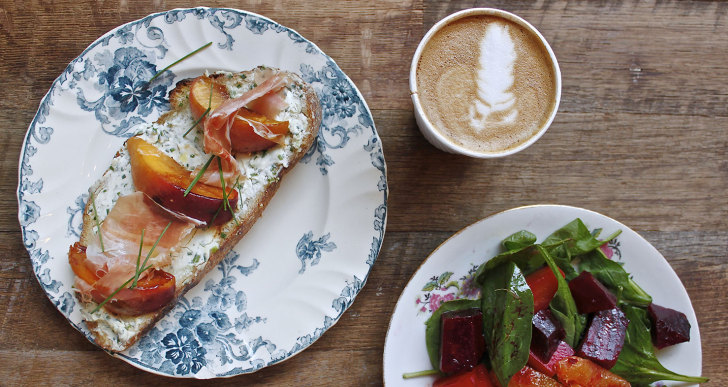
Their Success…A charming vegetable-centric café and bakery named Maman opened this Fall on Centre Street in SoHo. The trend of vegetable-focused menu offerings seems to be taking New York City by storm. The vegetable-focused menu is not to be confused with vegan or vegetarian menus, as it strives to highlight delicious vegetables, not preach a healthier vegetarian lifestyle. Proteins are still welcome, vegetables just happen to be the stars of the show at this charming new French bakery and café.

French Michelin-starred chef Armand Arnal collaborated with Benjamin Sormonte (childhood friend) and baker/designer Elisa Marshall on the provençal-inspired menu including vibrant soups, salads, tartinettes and of course delicious home-baked goods. Together the team created a beautiful French farmhouse-inspired space with an intimate back dining room, complete open kitchen and natural wood floors. The daily changing menu was inspired by authentic recipes from the teams’ mothers and grandmothers, hence the name Maman, the French word for mother.

Vegetable-focused savory options have included dishes such as a beetroot-hummus tartinette, red rice with ratatouille, herbed goat cheese with butternut squash tartinette, fresh leek quiche and a sweet potato and carrot soup. It is exciting to watch as more and more chefs are celebrating produce and turning ingredients that used to be reserved soley for side dishes into the main event. Different vegetable and plant varieties certainly have a larger range in flavors than for example, different varieties of a same protein such as beef or chicken. Again, proteins are not left off the menu at Maman as they also serve a delicious quiche with Parisian ham, a hearty ‘croque-Maman’, roasted brussel sprout and ham salad and smoked salmon with dill yogurt tartinette.

The baked goods at Maman make the trip to SoHo worth the while; the lemon-thyme madeleines, apple tarts, specialty chocolates, and sea salt macadamia/almond/walnut packed chocolate chip cookie showcase the ideal combination of French and American baking technique and flavors.

Take Aways…Maman offers a cozy atmosphere in which to enjoy the authentically Provençal menu offerings that highlight the versatility of vegetables and a fantastic array of home-baked goods. Maman serves breakfast, lunch and take-out from 7AM-7PM as well as selling a small selection of artisanal goods that would fit perfectly in a French family’s pantry. To check out the daily changing menu offerings, check out Maman NYC’s Facebook page here.

143469-10414552_1627897280770243_3108777404280557104_n


Dinner Menu Innovation at Dunkin’ & Starbucks

Beginning in 2015 Starbucks and Dunkin’ Donuts will plan to sell more dinner-friendly offerings. Starbucks and Dunkin’ will be attempting to compete with fast food dinner destinations such as Chipotle or McDonald’s by offering more savory dinner options which will in turn keep profits and sales at a steady flow during the entire day. John Costello, president of Dunkin’ Donuts global marketing and innovation mentioned in an interview that although breakfast would remain their core, “..today people are seeking all-day dining, and they want to eat what they want, when they want it and where they want it — that’s why we are so committed to menu innovation and giving our guests even more options that they can enjoy any time of day.”

This Fall Dunkin’ has already added a steak sandwich and a wrap with eggs as a permanent menu addition. Introducing dinner staples will help sales continue past the breakfast rush. As it stands now, only 40% of sales come after 11 a.m. This leaves a lot of room for growth for the chain which stays open until 10 p.m, and especially for the outposts that are open 24 hours a day. Costello hinted at drawing some inspiration for the new dinner offerings from their locations abroad, “We have a variety of products and flavors that are tailored to the regional preferences of our guests around the world such as donuts stuffed, topped and glazed with everything from rice pudding to saffron to crushed pistachios in India.”

While Dunkin’ will try to compete with getting guests who want food on the go, Starbucks in turn is attempting to get customers to stay by introducing small plates to share along with wine and beer sales. The new evening menu offerings are currently being tested and include dishes such as truffle mac and cheese, double chocolate brownie bites, and five choices of red wine, three white, prosecco and a sparkling rosé. According to Starbucks CEO Howard Schultz, “More details around the new food and beverage innovations, reimagined store designs and new store formats, mobile order and pay, and the expansion of our evening programs” will be available Dec. 4th at the annual investor meeting.

To read more about the dinner menu innovations at Dunkin’ and Starbucks, click here

Successfully Promoting Restaurant Events

Brian Casel, found of Restaurant Engine, has compiled a list of five tips to promote upcoming events at your restaurant. It isn’t always easy to draw a crowd and spread the word once you have planned a great event. The key to publicizing the event is to advertise it in a series or succession using a combination of different channels. Firstly, it is crucial to create an online event page and create a link to make it accessible from your various other pages. Here are some tips on how to make this event page as compelling as possible:

  • Use a graphic description of special activities and menu items served at the event. Include references to special attendees along with their photos and descriptions – (live music, a chef’s demonstration, etc. )
  • Include a start time, end time and who should attend.
  • Include a prominent call to action, such as an RSVP button is needed.
  • Write about the event on your blog and make sure to always provide the link back to your event page.
  • Create a hashtag (#event) and include it in blog posts about your event.
  • Use social share buttons to encourage visitors to share the event with their friends and family.
  • Target keywords for your event to optimize for search engines; use a title tag and headers that use your event keywords.

Secondly, a few weeks before the event, send an email to your customers. Continue to publicize in a series by sending an email a week before, and yet send another reminder a day or two before your event for the final pitch. Ensure that the subject line of the email is creative and draws attention and that the body of the email has a large call to action that directs the readers to the event page. Social media is of course an appropriate outlet for social events, and a great promotional tool. Buzz about the event will be created by coming up with an event hashtag and using it in every social media post, blog or tweet. Create a social media schedule beginning with a Facebook event that has detailed event information, followed by a custom tweet for the event. Continue to tweet often and trace your statistics. Other social media channels that can be leveraged include Instagram, LinkedIn, Pinterest and Google +. Traditional media should not go overlooked though, flyers have always been a proven successful for promoting events along with magazines, local newspapers, news releases and radio stations.

To read more about Casel’s tips for successfully promoting a restaurant event, click here


Organic Food Boom in Retail

According to the Organic Trade Association, the growth in sales of organic products in the U.S. has rebounded compared to the slow to 4.6% in 2009. In 2013 sales rose 11.5 percent to $35 billion. Organic food (and nonfood) products used to be sold primarily in specialty natural shops until Whole Foods Market essentially took over the market. Mainstream consumers discovered natural food products and chains such as Costco, Kroger and Safeway jumped on board. The sales of organic products at Costco doubled in two years to roughly $3 billion.

The organic/natural food industry is now preparing for the U.S.’s largest grocer to expand its organic food selection. Yes, Wal-Mart will be promising not only to expand the selection of organic products but to sell them at the same prices as nonorganic food. Typically organic food costs at least 25% more than regular food products, so Wal-Mart’s plan is to use Wild Oats as it’s main supplier. Wild Oats was bought from Whole Foods by Anthony Zolezzi and Tim Luberski. Soles states that his goal was “to democratize organic to the masses,” and now Wal-Mart accounts for more than 90 percent of Wild Oats’ business.

To read more about the boom in organic foods in retail in the U.S., click here

Starbucks Brings Back Seasonal Favorite

Starbucks guests took to social media, wrote letter and made phone calls demanding to get their seasonal eggnog latte back on the menu. The eggnog latte had been on the menu since 1986, and in a move to simplify the ever expanding menu, Starbucks dropped it from their seasonal offerings. After the customer outcry, Starbucks spokeswoman Linda Mills stated, “We made a mistake, we are very sorry.” According to Mills, Starbucks is aiming to have the eggnog latte back in stores by November 17th. The holiday season is Starbuck’s most profitable time of the year, so it is no wonder they are rapidly tending to the customer complaints.

The eggnog latte had already been re-introduced November 1st in the Pacific Northwest because it has always been a regional favorite, the problem now according to Mills, will come if Starbucks can’t get enough eggnog from suppliers in time. What is impressive in this situation is Starbuck’s rapid response and solution to customer complaints. This was also the case in Spring last year when the company began to sell lemon cake and pumpkin bread in miniature loaf form rather than the usual slices; customers complained and it was switched back. The importance of pleasing the guest for operators in the era of social media is absolutely critical.

To read more about Starbuck’s rapid response to their customers, click here


New Amsterdam Market Returns

TaraPaige Group was sad to post a few months ago that the New Amsterdam Market at the old Fulton Fish Market would be closing due to the redevelopment of the area by Howard Hughes Corporation. Good news! Although not in the same location, the market will be returning next year. Robert LaValva is not yet ready to reveal the new home of the New Amsterdam Market, but is eager to reopen a space where butchers, cheesemongers, seafood dealers and other vendors are able to showcase their fare.

The real estate developers are planning to demolish the old New Market building to construct a high rise waterfront tower. This decision was of course met with a strong opposition. After a solid seven years of events being hosted at the South Street Seaport location, the official next event will take place in late February of 2015. April Bloomfield, chef of the Spotted Pig was on the market’s board of directors and will be appearing on a panel to discuss the future of the Seaport next Monday, November 10th. For more information on this panel discussion, click here.

To read more about the future of the New Amsterdam Market in the upcoming year, click here