Minibar, Drizly, and Amazon Want to Keep your Champagne Popping

minibar-delivery-app.png

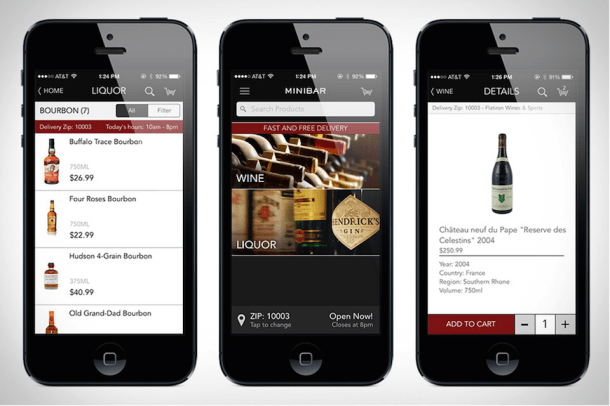
If you’ve taken the New York subway recently, you may have noticed the seasonal ads for Minibar, the alcohol delivery service that has been expanding rapidly the past few months, first by acquiring competitor Booze Carriage in March, and then by launching a subscription service for recurring orders in October. Minibar claims to have the largest share of the New York market, but that’s difficult to confirm. They certainly have plenty of competitors out there who are looking for a piece of the alcohol-delivery pie.

Most notably, and perhaps most threateningly to Minibar, is Amazon. Until early this month, Amazon only offered 1-hour booze delivery in Seattle, but as of December 9th New Yorkers with a Prime subscription can take advantage of the service as well.  Amazon is billing it as part of their Prime Pantry, so you can stock your party with other necessities like paper towels and Swiffers as well.

A third option is Drizly, which has a larger share of the Boston market, but is also available in parts of Manhattan, Brooklyn and Queens. Both Drizly and Minibar work by partnering with local liquor stores, listing their offerings via their app and website by zipcode, and taking a percentage of sales. Which service emerges as the market leader in New York may come down to who snatches up those local partners the fastest, but Minibar is also bolstering their business by providing other services – their website includes a party-planning feature to make sure you’re well stocked for any event, and if you feel intimidated by all those bottles you can even rent a bartender through their site.

To read more, click here.
 

Move to End Tipping Gains More Momentum

yI1Ya0x8QbiTi7potxLc_022.jpgDanny Meyer’s decision to end tipping at all his restaurants has already become the sort of high profile case that’s likely to spark conversation and debate in circles reaching far beyond the industry. As two more restaurateurs move to join him, it now seems like his announcement represents a major tipping point (pun intended) in what is considered standard.
This week both Gabriel Stulman and Andrew Tarlow announced that they would eliminate tipping at some or all of their restaurants. Stulman is the owner of six casual restaurants in downtown Manhattan, including Fedora on West 4th where he plans to eliminate gratuities in January. Stulman calls this a test drive of the new system, but ultimately he hopes to implement it at more of his restaurants as well. Tarlow, who is responsible for Diner and Marlow & Sons, said he plans to completely eliminate gratuities at all of his restaurants in 2016.

Although Meyer seems to have set off a domino effect, the trend is likely also due to the $2.50 increase in New York’s tipped minimum wage, which will go into effect in January. For many restaurants, it makes more sense to eliminate tipping altogether and hope that they can communicate the change effectively and avoid sticker-shock at higher prices.

Although the anti-tipping movement cites fairness as a major motivator, with higher wages for back of house workers as well as well as front of house, some employees may balk at the change, which puts more money in the employer’s pockets (at least until it reaches the workers paychecks). Stulman in particular is preparing for this backlash by offering “guaranteed wages for the members of our dining room team to be consistent with what they were averaging before the change.” To meet this requirement he’ll be increasing prices around 25% across the board.

To read more, click here.

Chobani Hops on the Sriracha Train

Sriracha, the beloved chili sauce that is a standby condiment everywhere from college dorms to ramen shops, has a found an unlikely bedfellow: Chobani, the greek yogurt brand that first made regular yogurt sales shake in their boots. Chobani plans to unveil a number of new flavors next year, including Sriracha Mango and other spicy varieties, in order to maintain momentum that might finally be showing signs of flagging. Although sales trends have still been positive, and brand representatives cite 11% growth for 2015, they are looking to avoid the fate of other greek yogurt brands like Müller, which was recently discontinued by PepsiCo in the US.

The Sriracha Mango variety is one of a number of “Flips” that Chobani is introducing – to-go varieties which include a small side container of mix-in items along with the yogurt. Other flavors include Chipotle Pineapple, Peanut Butter and Jelly, and limited-edition flavors like a Peppermint Flip, Apple Cinnamon, and Maple.

To read more, click here.


NASA Engineer Makes Your New Robo-Barista

IMG_2267-1200x900.jpg

Most coffee shop regulars are willing to sacrifice at least some quality for speed, and the time-consuming process of  making pour-over coffee usually just isn’t feasible when there’s a line of customers out the door, even if the end product is a superior brew. In July, Cafe Grumpy introduced their solution to this problem at the Chelsea branch: a robotic pour-over machine capable of brewing 5 cups at a time. The Poursteady was engineered by Mark Sibenac and Stuart Heys, whose CVs include building parts for NASA’s Mars Rover, but who have now turned their attention towards quintupling the production of pour-over coffee.

Far from becoming our caffeinated robot overlord, the Poursteady actually puts as much control as possible in the hands of the barista, who can change the water temperature to within a degree, the water volume to within a gram, the timing to within a second, and the size of the drizzle pattern, all from a custom app. Outsourcing all those controls to an app keeps the machine itself clean and simple. So far, it seems to be working well for Cafe Grumpy, who originally installed the Poursteady for a trial run but bought it only a month later. Several more are currently in production, and you can even buy your own through their website.

To read more, click here.


Correction: an earlier version of this article listed Stephan von Muehlen, the product designer, as chief engineer.

Poke Taking L.A. by Storm

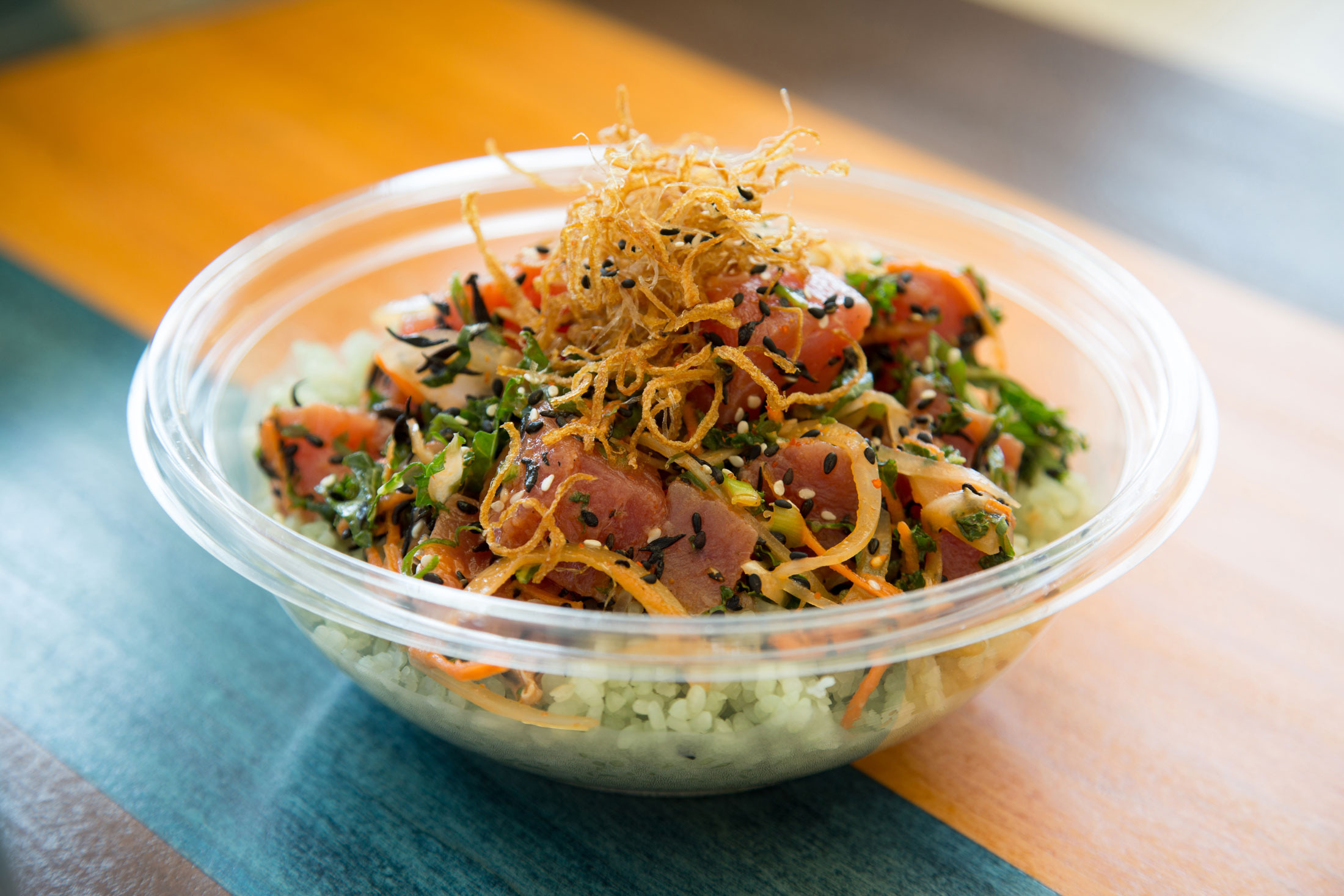
-1x-1Poke (pronounced poh-kay) is a marinated raw fish dish in Hawaii. Recently over half a dozen shops specializing in poke have popped up in L.A neighborhoods. Speciality shops have created different dishes with poke that attracts Californian consumers because of its health benefactors and its cost of being an average of $10. Bowl of rice, salads, quinoa are topped with poke and stand as alternatives to eating lunch at a sushi bar that would bring an average check of $40.

Sweetfin, a widely popular poke shop, serves a bowl of sashimi-grade tuna heaped on top of rice, or greens, such as citrus kale salad, with a wide range of accompaniments like avocado, edamame, and scallions. Marinades range from soy sauce and sesame oil to creamy togarashi sauce, Sweetfin’s specialty Japanese spicy mayo. While traditional poke in Hawaii involves onions, lime, and nuts, Nestdat and Cohen used more ingredients from Californian and Asian cuisines. Owners of Sweetfin says “Poke is the natural progression from sushi.” Seth Cohen and Brett Nestadt, owners of Sweetfin, wanted to reshape the lunch culture in America with its progression from sushi to poke. Sweetfin has doubled in the amount of fish it buys per week since opening in April, increasing from 700 pounds to 1500 pounds. Daily sales have jumped 40 percent. Cohen and Nestdat are planning to expand and open more shops in metropolitan areas.

Not only has Cohen and Nestdat seen success in poke, but several chefs including Kayson Chong and Eric Park has also seen a rise in their sales. Mainland Poke Shop, and Ohana Poke Co. are poke specialty shops, respectively, that have also contributed to the new wave of poke in California. While Mainland Poke Shop offer poke with quinoa and kale, Ohana Poke Co. offers poke with both French and Korean combinations.

Poke has been making appearances in other foodie destinations outside of L.A. Chef Jesse Sandole’s restaurant in Charleston and Nantucket have poke on their menus. Poke has been growing in Chicago, Washing, and Colorado. New York City’s East Village also has poke dishes from Per Se- one with octopus and another with big-eye tuna.

To read more, click here.

Websites will never completely replace stores

imgresOver the past several decades, much has changed in retail businesses. With constant revolutions in technology, E-commerce has become a major factor in business sales. Consumers now have capability to research stores, products, reviews, ratings, prices, inventory and specs online. This data allows consumers to access a wider range of options for “where” to buy from, just from searching the web. However, with all the choice and consumer empowerment that E-commerce enhances, physical stores are predicted to remain as the most important aspect of retail businesses.

In a 2014 Capgemini study consumers were surveyed on their preferences of shopping methods. The majority of consumers’ first choice was traditional in-store experiences, and was followed by retailers’ websites. E-commerce only accounts for 7 percent of U.S. retail sales. Study shows that human desire to see, and touch things while shopping is evident. There is also distinctive connection between the consumer and the brand that can be experienced only through in-store interactions. E-Commerce only businesses, like Amazon, eBay, Google, are aware of the limited experience and connection that comes from only distributing through the internet, and have taken efforts to reach customers through pop-up stores, and trucks. Companies like Amazon, and Warby Parker embrace that in-store and online experiences don’t have to be mutually exclusive. Instead, a symbiosis relationship can exist, where consumers invite online experiences into the physical store.

Popular online experiences that consumers want extended in stores include inventory visibility, in-store pickup, drop/ship home delivery, app and loyalty integration, and online/in-store community building. E-commerce has revolutionized inventory visibility for consumers. And now, consumers expect and like to ‘see” if a local store has a desired item in-stock before visiting the store. Home Depot is a primary example that allows consumers to search, on their e-commerce web, the availability of certain items at their local store. In-store pickup is also a major sales driven potential extending e-commerce to retail stores. In-store pickup potentially reduces shipping costs, increases foot traffic and encourages add-on sales. And for consumers gives them opportunity to recognize items as wanted or unwanted items after purchase, giving them access to potentially “return” items directly after shipment. Drop/Home Delivery allows for more convenience for consumers, and can potentially drive check averages. Consumers can conveniently shop without having to worry about transporting in-store purchases home through methods of “pick up later” or “home delivery.” App and loyalty integration is an aspect of business that is becoming trendier, and expected by consumers. In both online, in-store purchases customers should receive loyalty points, have personalized product recommendations, and promotional information. This integration can retain customers, and build traffic.

Retail Owners and companies have now shifted their focus on how they can combine the best of online and in-store distribution methods to deliver the best possible customer experience.

To read more, click here.

Dominique Ansel Hosts its First “Pie Night”

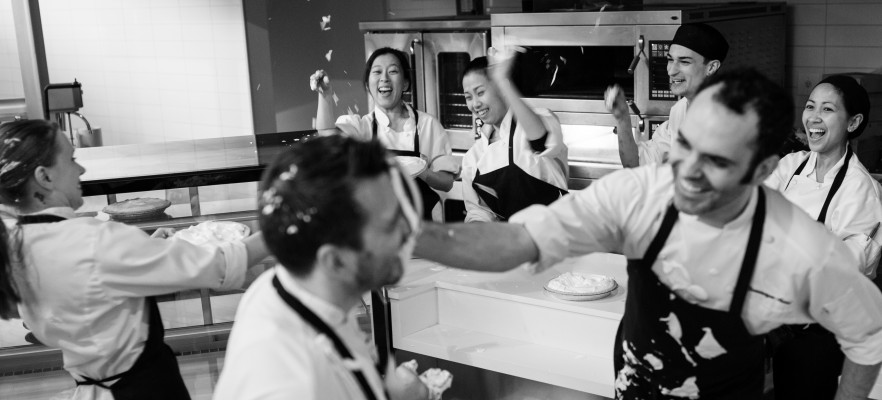
FoodFightBlackWhite_cropped-e1441319093825On October 1st, Dominique Ansel will host their first ever Pie Night. Dominique Ansel has gained a lot of attention and popularity because of its mashup phenomenons like the Cronut, the Cookie shots, etc. And now, Dominique Ansel Kitchen will feature nine different varieties of confection for their ‘Pie Night’ event. The Salted-caramel apple pie, blueberry pie with buttermilk-oat crumble, flaméed banana-cream pie, bourbon-pecan pie, 66 percent dark-chocolate cream pie, whiskey-kissed sweet-potato pie with torched marshmallow, lemon-cream pie with thyme and brown-sugar meringue, dark-meat chicken and fall-vegetable potpie, and lastly the roasted heirloom-tomato tart will be be featured on Pie Night.

Tickets are priced at $35 and includes unlimited slices of pie, a glass of Champagne, and Ansel’s homemade ice creams. Tickets started to go on sale at 12 PM, September 10th. There are three one-hour time slots from 7PM-10PM. Many are anticipating Ansel’s first after-hours event, hoping that there will be many more to come. Ticket sales are on a first come first serve basis. Participants must email events@domiqueanselkitchen.com with their Full Name, Phone Number, the Number of people in your party (max 2), Time slot, and Credit Card Information.

To read more, click here.

Restaurants required to be More Transparent

saltThe Board of Health will vote today on whether chains will be required to add saltshaker symbols next to menu items with at least a day’s worth of sodium, which FDA defines as 2,300 milligrams. Mayor de Blasio’s administration has already expressed their support for this regulation, and want more transparency for customers in restaurants. “It’s quite difficult for consumers to understand which products might have too much sodium in them” a Health Department official expressed.

The New York State Restaurant Association has opposed implementing symbols identifying sodium levels, as it is a step toward food-warning fatigue, and seeing it as a warning label than food products for consumers. The New York State Restaurant Association lawyer said “The concern, at some point, is that warning labels and the confluence of warnings on menus will lead to a collective shrug by consumers…as every item on a menu will be flagged as inappropriate in one way or another.”

If this regulation is passed by the Health Department, New York will be the first in America to put transparency and regulations to salt levels.

To read more, click here.

Amazon Prime Delivers Notable Foods

amazon-prime-nowAmazon is already a major hub for vendors to sell their merchandise and for consumers to easily search for an array of products through one site. While buying electronics, and other material goods are what Amazon users associate the market for, Amazon has now launched deliver of groceries and prepared meals.
Other services like FreshDirect have already been a popular feed to order and get home delivered groceries, and now Amazon has joined in this on-demand delivery services market. Customers can utilize the Amazon Prime Now App to order groceries and prepared meals from D’agostina, Gourmet Garage, Eataly and Billy’s Bakery. While free delivery can take up to two hours, those who are more urgent can pay $7.99 for delivery in an hour.

Amazon plans to expand their services to Brooklyn and to other cities like baltimore, Miami, Austin and Atlanta abut as of now these services are only offered at certain parts of Manhattan.

To read more, click here.

July 16th

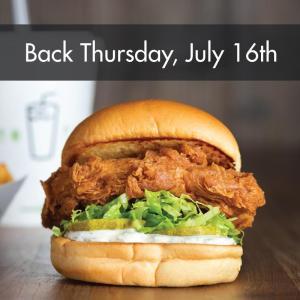
One of the biggest summer food CJbAFC2UEAA5N1Ktrends is fried chicken sandwiches and Shake Shack is taking their approach to this market with their ChickenShack. This fried chicken sandwich is “limited edition” and can only be found in three locations in Brooklyn. While this “limited edition” burger was available for a short span, the success of the burgers have encouraged the sandwich to be offered in a larger span. On July 16th, the ChickenShack will be available for more consumers.

While a fried chicken sandwich is only recently a trending food buzz with openings of Fuku Chicken sandwiches, Shake Shack claims to have already been investing in creating the perfect fried chicken sandwich from almost two years ago. The sandwich has been tested a number of techniques including marinating, grilling and even sous of the chicken breast before deep frying. Mark Rosati, Shake Shack culinary director, uses a slow cooking method similar to sous vide cooking, using buttermilk for their chicken. They’ve tried whole wheat, pretzel and other substitutes to the Martin’s potato bun, the buns on their burgers, but claim that the Martin’s bun was the best combination for best displaying the flavors of the chicken itself. The ChickenShack was inspired by Southern buttermilk fried chicken where breast meat is used.

As much as a lot of time and effort was invested into creating a ChickenShack, a lot of social media, and consumers are buzzing about the “limited edition” sandwiches and are enthusiastic about its return on July 16th.

To read more about the ChickenShack, click here.