Farm-to-Table, Even in Alaska

OLYMPUS DIGITAL CAMERA

Photo via verticalharvesthydroponics.com

The expression “farm-to-table” (and it’s variants in the retail world like “bean-to-bar,” which recently got the Mast Brothers in hot water) has been around for some time; with sustainability and health on everyone’s minds in 2016, it shows no signs of going away. Even in Alaska, a state where chefs of all kinds lament the flavorlessness and cost of produce picked before its time and shipped thousands of miles, a farm-fresh movement is starting to take root.

Two new startups, Alaska Natural Organics and Vertical Harvest Hydroponics, are attempting to bring sustainable farming closer to the residents of Alaska using (relatively) new agricultural technology. The two companies rely on different solutions to the problem of climate – the former operates a small farm out of an old warehouse in downtown Anchorage, with LED lights set up to allow hydroponic vegetables to grow year round, and the latter makes portable growing pods out of repurposed cargo containers. These containers are designed to be climate-proof and easily installed as close to the consumer as possible – in the basement of restaurants or grocery stores, for example.

If successful, more start-ups could follow suit in Alaska and other harsh climates. The benefits are easy to see, as produce grown nearby saves on shipping costs, reduces emissions, keeps money in the local economy, and can be picked when ripe for better taste and nutrition.

To read more, click here.
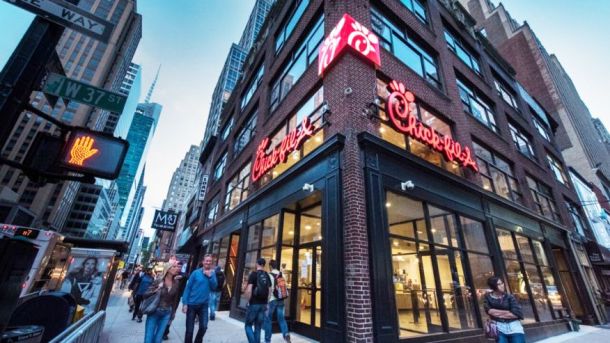
Chick-Fil-A Rings in New Year by Getting Shut Down

wrewr435345fdssdfsd.jpgAfter a December Health Inspection that earned the fried chicken chain a damning C grade, the midtown Manhattan Chick-Fil-A has closed for five days in order to make improvements to operations and hopefully earn a higher grade on re-inspection. “Grade Pending” currently hangs in their window until the update is complete.

This New York branch of the controversy-ridden chain earned a total of 59 violation points on their December 24th inspection, and 39 on an earlier December inspection. Those include a number of “critical” violations for things like the presence of filth flies and improper food storage. They are allowed to leave the “Grade Pending” sign up until their appeal is heard at an Office of Administrative Trials and Hearing Health Tribunal.

To read more, click here.

Bottle & Bine Opens in Midtown

Atlantic Halibut 2-1.jpgThe much-anticipated New American restaurant Bottle & Bine opened last week on second avenue, and so far the reviews have been positive – lauding the female trio responsible for their original menu and strong craft beer and wine lists.
That trio includes chef Angie Berry, formerly of Asiate at The Mandarin Oriental, sommelier Gina Goyette (The Mark Restaurant by Jean Georges) and beer director Carolyn Pincus (Stag’s Head). Berry’s menu ranges from traditional French to southern, with dishes like Game Bird Terrine with foie gras and quince and Wagyu steak with sunchoke, coffee and mushrooms. Goyette’s wine list emphasizes local wine producers over traditional European selections, and there is a rotating selection of craft beers on 16 taps selected by Pincus. As indicated by the restaurant’s name (bine refers to a creeping plant like hops), both Goyette and Pincus get equal billing next to Berry’s dishes, and both bars in the multi-level space are sure to get plenty of use.

To read more, click here.

Eat Less “Healthy” Food in 2016

As the last days of December wind to a close, many people will be finalizing their lists of new year’s resolutions. And while it is always a good idea to renew your commitment to your health, family, friends and environment, you might want to rethink any resolutions to “eat healthy.”

Researchers from he University of Texas recently published an article in the Journal of the Association for Consumer Affairs asserting that when foods are labeled “healthy,” people tend to perceive them as less filling, and eat more as a result. Of course, eating a large volume of kale and quinoa salad is certainly better than eating a large volume of sugary treats, and the researchers don’t recommend ignoring nutritional information. The danger is that many foods can be marketed as healthy in ways that fool the brain into thinking we should eat more than necessary. Labeling like “all natural” and “low fat” are common examples. So this new year, remember to take health claims with a grain of salt – especially when you’re browsing the “low sodium” section.

To read more, click here.

New Year’s in Times Square Can Cost You $1,700

1024px-1_times_square_night_2013.jpg

All over the city, “open bar” is the name of the game on New Year’s Eve. It makes sense: on the biggest party night of the year, bars and restaurants want you to commit to staying there. And since many people will overestimate their alcohol tolerance and underestimate the lines (or forget that tips are not included), an open bar can feel like a great deal.

There are certainly some reasonably priced covers scattered around the city, but you would be hard pressed to find them near Times Square this year. There, major chains are getting in on the action by charging triple figure covers for an all inclusive night with dinner, drinks and a (usually obscured) view of the ball drop. Olive Garden’s New Year’s dinner buffet and bar will cost you $400 a head, Bubba Gump Shrimp is $799, and Ruby Tuesday goes up to $1699 for the exclusive “couple’s table.” Maybe people got word that the recession is over – Bubba Gump Shrimp has sold out at least, according to their website.

To read more, click here.

Partying like it’s Against the Law

870caadf-f320-45a2-aac5-271f967f629d-1377282740.jpg

We may have finally hit peak-trend with ’20s era speakeasy bars and secret watering holes, now that the relatively well known (if still ostensibly “secret”) bar Angel’s Share has it’s own secret offshoot. But the fun of places like these, which reward a little internet research or in-crowd know-how with great drinks and exclusivity, is undeniable. We may not see as many pop up in 2016, but it doesn’t seem like they’ll be disappearing too quickly either.

The question is, with all these prohibition era bars around offering nightlife Gatsby would approve of, what do you do for the biggest party night of the year? Many of these bars simply do what they do best on New Years Eve: offer great cocktails and an opulent setting, and wait for those in-the-know to show up (and avoid the $100+ cover at many other places). Some offer even grander celebrations, like the Manderley Bar at the McKittrick Hotel (which you may know of as the setting of the nightlife experience that is Sleep No More). They’ll be hosting a Winter Masquerade this year with a  number of ticket options for those looking to go all in. Sleep No More‘s sister performance, the incredibly opulent Queen of the Night, likewise has a special New Year’s party which promises to (somehow) be even bigger than their usual performances. Excess is what these options offer, and they aren’t for the faint of heart. But is there any better holiday to really gild the lily?

For a list of more ’20s-themed New Years celebrations, click here.

To Pre Fixe or Not to Pre Fixe

Whether your New Year’s Eve plans are already set in stone or a little more last minute, if you’re planning on dinner out on the last night of 2015, chances are good you will be at one of the hundreds of restaurants offering a special New Year’s pre fixe menu instead of their regular options. Some of these spots even go so far as to hold limited seatings – two or three set times when guests will come in and all enjoy their appetizers, entrees and desserts at the same time. Many include an optional drink pairing list and a complimentary glass of champagne (or, more likely, sparkling wine) at midnight.

There are some obvious benefits to the restaurant in offering pre fixe menus and designated seatings on busy holidays (most often New Year’s and Valentine’s day). Since most guests will be making reservations, they can easily determine exactly how much they will make that evening, and eliminate much of the guesswork of preparing. Making 50 of the same dish is always simpler than plating orders as they come in, so an otherwise chaotic night can go as smoothly as possible. Chefs often have some license to exercise creativity and get exposure for new dishes. With set seatings, hosts and service staff can worry less about guests who might be tempted to linger until the ball drops. Finally, guests are often more comfortable paying a premium for having some stress relieved and knowing their entire experience will be taken care of – including the final glass of champagne.

In many ways, those benefits spill over to guests as well, as long as they choose their restaurant carefully and make reservations early. A quick Google search reveals plenty of lists of the best pre fixe  dinners in the city, but check menus in advance and keep in mind that everything is more expensive on New Year’s. For those not willing to pay the premium or worried about feeling rushed by the seating system, it may be more useful to check out a list of the best restaurants that are serving their regular menu (Eater also has a good one). That way you can pick and choose your favorites and go all in on an open bar later in the night instead. Ultimately, the perfect New Year’s Eve looks different for everyone. Happy New Year, and happy eating!

Danji-Interior-3-630x420.jpg

Dani on E. 60th – one option for those looking to avoid pre fixe pitfalls


Raising Restaurant Wages is Good for Everyone, According to Cornell

As fast food workers fight for $15 an hour and New York restaurateurs experiment with new pay models (mostly by eliminating tipping), there is more and more focus on the way we pay the people who feed us every day. The National Restaurant Association has consistently fought back against minimum wage increases, arguing that they will lead to price hikes and fewer new jobs in an industry with small profit margins for new comers. But a new study out of the Center for Hospitality Research at Cornell’s School of Hotel Administration argues otherwise.

The study looked at federal and state minimum wage increases from the past two decades to see if there was any connection with job loss or the number of new restaurants opening. As far as they could tell, the increases had no such effect, although they did improve employee retention and productivity. While one study may not be enough to predict the future of restaurant industry salaries, it is good news for owners, employees and patrons in the 20 states which will be raising their minimum wages in 2016.

To read more, click here.

What does 2016 Hold for Meal Kits?

f482d9a047cffbed4fc45904bffc824992dcbc63_christmas-4.jpgMeal kits and recipe delivery services exploded in 2015, with promises of convenience and easy access to all the joys of cooking. Services like Blue Apron, Plated and Hello Fresh (all available nationally), along with a number of more local startups, offer customers customizable subscription services to bring pre-portioned ingredients to your door, along with a (hopefully) easy to follow recipe selected from the frequently updated options on their sites. Many of these companies tailor their recipes to focus on specific health concerns or responsible ingredient sourcing, with the goal of providing subscribers with all the pride of a fully home-cooked meal. One plant-based version of the model even attracted the legendary Mark Bittman to their team.

Understandably, these companies have already seen some blowback from their surge in popularity, on both the environmental side (the extra packaging used to deliver a single meal’s worth of 5 spices may not be the best thing for mother earth) to the cultural (is some part of the joy of cooking lost for the sake of convenience?) But that hasn’t stopped the venture funding from flowing in. Even if the bubble doesn’t burst, some meal kit companies may face growing pains in the coming year, as competition increases and newcomers try to expand quickly. Good Eggs, a grocery delivery service with over $50 million in funding, recently laid off nearly half their employees and closed operations in all cities but San Francisco.

One important test will be how these companies take advantage of the holiday season, and increase their reach through either gift subscriptions or holiday offerings. Most sites already sell gift cards, and some offer holiday meal kits to make party-hosting easy. Blue Apron, for example, wants you to “Host a Blue Apron Christmas!” and Atlanta-based PeachDish sold out of their Christmas dinner for four, but are offering it for New Years as well. According to their website, “You provide the champagne and we’ll provide everything else for your New Year’s Eve party!” Of course, you could always get the champagne delivered too and call it a night.

To read more, click here.

Williamsburg’s Biblio Closes

11265032_774110906043616_2887455412953284140_n.0.0.jpg

In a statement posted to Facebook this week, the owners of Biblio at 149 North 6th St. in Williamsburg announced that they would be closing the doors to their book-themed bar and restaurant. Biblio opened in 2013 with a cozy, library atmosphere and a number of literary touches, including a menu divided into sections like “Forward” and “Preface” which they simplified in eventually pared down to gastropub classics and lighter takes on comfort food.

In their statement on Facebook, the restaurant’s owners thanked their patrons from the past two years, but explained that business has not been strong enough to sustain them, particularly in 2015. They did not give a specific date for their final day.

To read more, click here.