Angel’s Share Alums Open New Cocktail and Ramen Bar

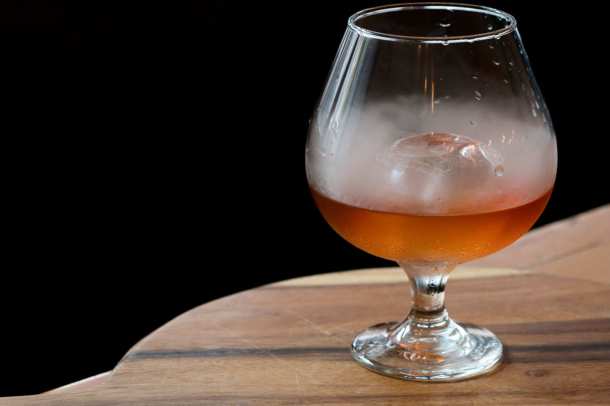
11-rokc-009.w710.h473.2x.jpgShigefumi Kabashima and Tetsuo Hasegawa, both formerly of the popular speakeasy-esque bar Angel’s Share, have just unveiled the full cocktail menu at their new spot in Hamilton Heights. The bar is called ROKC (short for Ramen, Oysters, Kitchen and Cocktails), and the menu is a playful American twist on the high quality Japanese drinks at Angel’s Share. Examples include a Thai tea spiked with absinthe and cachaça, a matcha latte with Japanese whiskey, and a fruity cocktail called “Flower” with shochu, lavender, elderflower, and cranberry, served in a lightbulb and presented over ice in a trapezoidal pot.

These cocktails are all newly unveiled, but the ramen and limited raw bar have been available for a few weeks during he restaurant’s soft-open. Ex–Maison Premiere sous-chef Jeff Srole has been heading the seafood menu, and Isao Yoneda (formerly of Totto and Hide-Chan) is responsible for the three types of ramen bowls.

To read more, click here.

Ice Cream gets Honored With Its Own Museum

MUSEUM OF ICE CREAM .jpgBeginning in August, the meatpacking district will be home to a new museum dedicated to the wonderful world of ice cream, where guests can play in an ice cream-themed playground, learn about the history of the cold treat, and of course try samples. Co-founders Maryellis Bunn and Manish Vora originally embarked on the project last year in order to fulfill Bunn’s childhood dream of being able to swim in a pool of sprinkles. That specific fantasy will be available to all visitors at the museum, where the pair have filled a life-size pool with sprinkles that may not be edible, but are designed to look and feel exactly like the kind usually seen on sundaes.
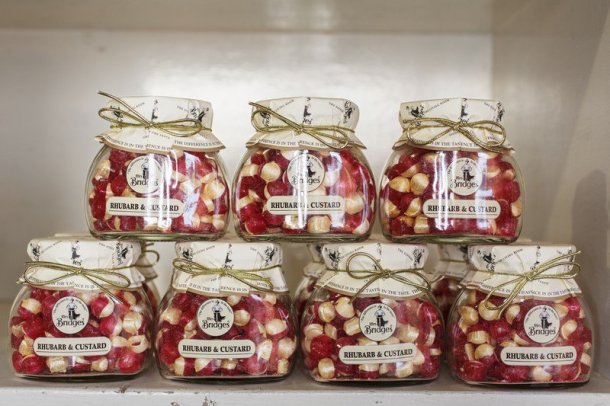
The rest of the exhibit, which is sponsored in part by Tinder, features a playground with equipment like an ice cream scoop seesaw and ice cream sandwich swing, a tasting lab with weekly rotating flavors from New York ice cream shops, plus sculptures, paintings and murals throughout the maze-like space. Black Tap and Oddfellows have already been announced as partners.

Tickets are $18 for single admission or $30 for a couple. To read more, click here.

The Spritz: It’s All Built on Bubbles

Spritz culture is rooted in the cities and towns of Northern Italy.  The drink can be found at restaurants, cafes and even at the airport.

The Spritz is a wine-based cocktail commonly served as an aperitif (an alcoholic beverage served before the meal to stimulate appetite) in Northeast Italy. The drink is prepared with prosecco (Italian white) wine, a dash of some bitter liqueur such as Aperol, CampariCynar, or, especially in Venice, with Select. The glass is then topped off with sparkling mineral water. It is usually served over ice in a lowball glass and garnished with a slice of orange, or sometimes an olive, depending on the liqueur.

Thanks to the recent publication of a light-hearted book named “Spritz”, these drinks have become popular and American bars will serve them this summer.

American bartenders have taken the liberty of creating their own spritz concoctions.

At the Llama Inn in Williamsburg, Brooklyn, the bartender mixes gin, fino sherry, strawberry shrub, St. Germain elderflower liqueur, Peychaud’s bitters, Spanish sparkling wine and Perrier for the Señorita Spritz, a pretty pink concoction.

At Montana’s Trail House in Bushwick, Brooklyn, the owner piles Aperol, grapefruit juice and sparkling white wine atop a base of Mezcal with agave syrup.

Summertime is the perfect time for something light, refreshing and bubbly.  One bartender on the Lower East Side is quoted as saying, “Who doesn’t like something that feels like its dancing on your tongue?”

Please click here to read more…

Brexit’s Impact on the Specialty Food Market

ba5403b65e43df0297aeba68d6c0ca1fc082559f.jpegThis weekend’s news was understandably dominated by Brexit, and the far-reaching implications of the vote. One unexpected result of Britain’s decision to leave the European Union falls on the English specialty food market, which has so far benefited from the EU’s Protected Designation of Origin status on many of it’s products.

This status, applied throughout the EU to products ranging from wines to olive oils to cheese and meat, allows specific regions to claim sole use of specific brand designations. Most famously, “champagne” is not champagne unless it is produced in the eponymous French province, using the méthode champenoise. Gorgonzola can only be gorgonzola if it comes from Italy. And in England, products like Cumberland sausage and Yorkshire-forced rhubarb are all protected by designated status.

England actually has more than 60 foods and beverages with protected designations. After the vote late last week to leave the EU, this status will disappear, and producers around the world can begin making products like Rutland bitter beer, Stilton cheese and pork from Gloucestershire Old Spot Pigs. While none of these have quite the cache of champagne, they still represent the food culture of the country – and the loss of PDO status could have a real impact on the farmers, brewers and craftsmen who make them.

To read more, click here.

Ikea Gets into the Hyper-Local Game

635925890195816807-242942337_Header.jpgAt first glance, it might seem like an affordable furniture company has very little to do with the farm-to-table movement. But where others might see apples and oranges (or apples and bookshelves, as the case may be), Ikea sees opportunity.
The brand recently partnered with Space 10, a “future-living lab” and exhibition space in Copenhagen, to produce an environmentally sustainable hydroponic gardening system (called “The Farm”) made primarily using Ikea products like LED lights, shelving, and plastic bins. All told, 80% of the materials in The Farm come from Ikea’s product lines.

Ikea plans to roll out the new hydroponic system in their in-store cafes. Those cafes have historically been known more for Swedish meatballs, lingonberry jam and baked goods than for fresh produce, but that may change in the near future. Although food sales represent a very small portion of Ikea’s overall revenue, they ultimately plan to market The Farm to restaurants and home gardening enthusiasts interested in producing more of their own vegetables. If the hyper-local movement is any indication, this market will continue to grow in the coming months – and Ikea may just be on to something.

To read more, click here.

Elon Musk’s Brother Has a Plan to Sell Organic Fast Food for Under $5

KM

Kimbal Musk, Elon’s less famous brother who made scads of money himself in Silicon Valley before leaving for culinary school, is getting ready to open the first of (what he hopes will be) many locations of a new organic fast-food chain. He tells Tech Insider that in addition to the Kitchen and Next Door, currently the two halves of his restaurant mini-empire, he’s about to launch a new concept called the Kitchenette, where everything will be fast, healthy, and organic but cost under $5. The first location is set to debut in Memphis this August.

With this venture, Musk enters a field that’s really heating up. The idea of bringing tasty and healthy affordable food to the masses has been the culinary world’s holy grail for a while. Musk is packaging the idea as sort of a Pret A Manger–style grab-and-go spot. He says the space will be like a coffee shop, with a counter, indoor seating, and a big patio out front, and the menu will mostly consist of sandwiches, soups, and salads, all made using ingredients sourced from nearby farms. The locavore bent will ensure ingredients stay seasonal, but Musk says there’s another benefit, too:

While the Kitchenette’s pricing sounds too good to be true, Musk says he will make it work with a little help from local farmers. The same farms distribute meat and produce to all three of restaurant concepts, and knock down the price based on what’s in-season.

Read more here.

Le Coucou Opens Today

16-le-coucou-007.w600.h400.jpg

Le Coucou, the first American restaurant from Chicago-born chef Daniel Rose, will open tonight for dinner service. Rose currently has two restaurants in Paris, and has made a name for himself with classic French dishes. The new restaurant promises to offer similar cuisine, but Rose has said that he is looking for American-made products that remind him of France.  On the menu are items like pigs’ feet with caviar, pike quenelles, veal tongue, fish stew bourride and poached chicken for two or four.

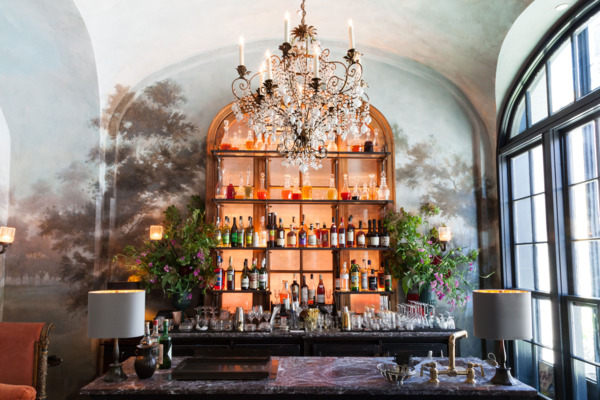
Le Coucou is the result of a partnership between Rose and Restaurateur Stephen Starr, with Daniel Skurnick as head pastry chef. So far, the restaurant has earned as much press for its interior design as for the menu. Design firm Roman and Williams is responsible for the beautiful buildout, including chandeliers, velvet banquettes, and a gorgeous mural behind the bar.

To read more, click here.


Brooklyn Winery Team Opens New Crown Heights Restaurant

brooklyn-made-wines-01.w600.h400.jpgCrown Heights now has another new restaurant to add to its list – this time, it comes from the team behind Williamsburg’s Brooklyn Winery. Owners Brian Leventhal and John Stires will open the doors to BKW on Tuesday at 747 Franklin Avenue. They’ve brought on chef Michael Gordon, formerly of Bouley, to design the pared-down menu. Some highlights include konbu-cured mackerel with whipped feta and roasted grapes, root beer glazed pork ribs, and homemade donuts with butterscotch and lavender. The wine list will of course be well curated, with flights offered for those who are feeling indecisive and full bottles available to take home.

To read more, click here.


A Pioneering Global Standard to Reduce Food Waste

Pilot-scheme-shows-promise-in-repurposing-commercial-food-wastes.jpgThe issue of food waste is something of a hot topic these days, from proposed regulations overseas  to the ugly-food movement and the startups it has already spawned. This attention is well deserved. Besides the tragedy of waste in a world where 800 million still go hungry, wasted food also produces 8% of global greenhouse gas emissions and costs $940 billion worldwide every year.
The micro-movements that have sprung up on this front are important, but they face some major hurdles, even as more governments and large organizations commit to joining the cause. Most notably, food waste is extremely difficult to track and report on. Since it occurs all along the supply chain, and often across borders, the costs associated with this waste are typically baked into other operational costs and nearly impossible to quantify. Until now, there has been no consistent reporting standard on the issue.

To address this, a partnership of international organizations convened  at the Global Green Growth Forum (3GF) 2016 Summit in Copenhagen to come up with the first-ever set of global definitions and reporting requirements for companies, countries and others to consistently measure and report their food waste. Such standards will be crucial to measure the success of all these organizations as they make commitments to improve. Many major international organizations, including the UN, Consumer Goods Forum, and World Business Council for Sustainable Development, are already behind the coalition’s Food Loss and Waste Accounting and Reporting Standard (FLW Standard). 

The new standard will have the greatest impact on large corporations and governments, but food waste is a costly issue for all retail and restaurant businesses as well. We recommend following the lead set at the 3GF Summit, and making a commitment to tackle waste on a small scale as well.

To read more, click here.

The Persistent Rise Of Restaurant Takeout And Delivery

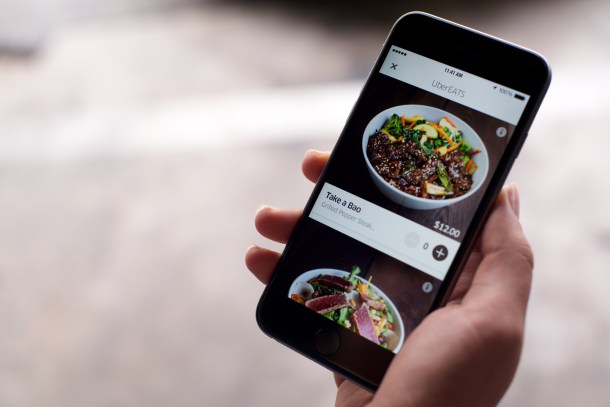
ubereats

Pizza no longer dominates the delivery and takeout business. Consumers are increasingly ordering their favorite foods to be delivered or to-go, rather than dining in-store. And, in fact, restaurant delivery traffic outside of pizza has risen 33 percent since 2012. This presents a unique opportunity for foodservice and restaurant operators to shift their strategies and operating processes to take advantage of the delivery and takeout trends, rather than have their dine-in numbers and market share cannibalized by competitors who are focused on these services.

According to recent surveys, 51% of Americans use delivery services to purchase meals from casual dining restaurant and 26% order takeout or delivery at least once a week. These behaviors show little sign of slowing: digital ordering and delivery have been growing 300% faster than dine-in traffic since 2014. Third party delivery services, like DoorDash, Caviar and Grubhub are becoming major marketplace competitors, providing speed, ease of use, convenience and customized offerings based on customers’ previous orders. Furthermore, larger players such as uberEats, Amazon Prime and Google, are now entering this space and beginning to pilot their own food delivery programs.

Confidence in the future and growth trajectory of this space is strong. More than half a billion was invested in the food delivery sector in 2014 – almost 13 times the amount in 2013 – with more than a billion dollars invested in 2015. As for restaurants, partnering with third party delivery services is a seductive alternative, with research showing an increase in restaurant sales volume from 10% to 20%.

Read more here.