The Spritz: It’s All Built on Bubbles

Spritz culture is rooted in the cities and towns of Northern Italy.  The drink can be found at restaurants, cafes and even at the airport.

The Spritz is a wine-based cocktail commonly served as an aperitif (an alcoholic beverage served before the meal to stimulate appetite) in Northeast Italy. The drink is prepared with prosecco (Italian white) wine, a dash of some bitter liqueur such as Aperol, CampariCynar, or, especially in Venice, with Select. The glass is then topped off with sparkling mineral water. It is usually served over ice in a lowball glass and garnished with a slice of orange, or sometimes an olive, depending on the liqueur.

Thanks to the recent publication of a light-hearted book named “Spritz”, these drinks have become popular and American bars will serve them this summer.

American bartenders have taken the liberty of creating their own spritz concoctions.

At the Llama Inn in Williamsburg, Brooklyn, the bartender mixes gin, fino sherry, strawberry shrub, St. Germain elderflower liqueur, Peychaud’s bitters, Spanish sparkling wine and Perrier for the Señorita Spritz, a pretty pink concoction.

At Montana’s Trail House in Bushwick, Brooklyn, the owner piles Aperol, grapefruit juice and sparkling white wine atop a base of Mezcal with agave syrup.

Summertime is the perfect time for something light, refreshing and bubbly.  One bartender on the Lower East Side is quoted as saying, “Who doesn’t like something that feels like its dancing on your tongue?”

Please click here to read more…

Why You Should Buy Produce in Chinatown?

28-chinatown-produce.w710.h473.2x

As anyone who’s spent an afternoon nibbling on roast pork while perusing the markets of Chinatown can attest, the neighborhood’s streets are home to an astounding variety of produce and vendors. In terms of fruits and vegetables, it’s an unparalleled shopping destination for the home cook in New York. This is in large part thanks to the remarkably cheap prices, but also the fact that you can consistently find new things to cook. The Wall Street Journal toured the neighborhood with economic botanist and From Farm to Canal Street author Valerie Imbruce, who filled the paper in on how the Chinatown produce economy works.

“You really can’t exaggerate this kind of variety”, says Imbruce. She counted 200 different fruits and vegetables, ranging from lots and lots of cherries to multiple varieties of choy and jackfruit, but also celtuce, long beans, bitter melon, dragon fruit, and all of the durian you would ever want. As far as their low pricing is concerned, Chinatown’s produce markets aren’t cheap because they’re peddling second-rate products, but because they’re actually kind of farm to vendor. Operators are linked to a network of small family farms, like home gardens in south Florida, and minor wholesalers that function independently of those that supply most supermarkets.

Furthermore, with low overheads — no credit cards, minimal staffing, and makeshift sidewalk stands — and collaboration among vendors to get bulk discounts means you’re paying as close to wholesale prices as you ever will. Chinatown’s markups typically run as low as 10 to 12 percent and don’t just beat Whole Foods (a.k.a Whole Paycheck), but also affordable chains like Key Foods.

Read more here.


Manhattan Food and Bar Leasing Up Double Digits

Across the city, landlords want a seat at the table.  More specifically, they want the seats, and they want the tables inside their buildings.  Fast-casual restaurants, coffee shops, and juice bars are expanding across Manhattan, driven in part by a large millennial workforce and dense, wealthy demographic.

Also, though, as consumers behaviors have changed, opportunity has opened up for foodservice operators.  More and more retail and apparel is being purchased online, which has caused these companies to trim store sizes.  Now, with new inventory available, restaurants are building new locations even faster.  In 2015, the fast-casual segment grew to $44 billion nationwide–an 11.5% increase from 2014, according to Technomic.

Similarly, Manhattan lease transactions in the food and bar category increased 22% in 2015 over 2014, Cushman & Wakefield reports.  Meanwhile, drugstore leases were down 64% and apparel and accessories retails were down 22%.

Where banks and retailers once occupied large-footprint spaces, some landlords are building out food halls or dividing spaces into smaller units.  “You’re getting more [rent] than what a single tenant would pay,” said Brett Herschenfeld, SL Green Managing Director.

To read more, click here.


Pastrami Is the Priority at These Old-School New Jersey Delis

For all the talk of authentic Jewish delis going extinct, a few still take great pride in their pastrami.  A pastrami sandwich at Harold’s New York Deli Restaurant in Edison, New Jersey weighs 20 ounces.  The triple-decker at Harold’s weighs in at 3.5 pounds!  Sharing is thankfully encouraged with no fee.

The owner Harold Jaffe says that the deli sells 8,000 pounds of pastrami a week (all of which is made at the restaurant).  Mr. Jaffe learned the business by working at the Carnegie Deli in Manhattan for ten years.

Customers enjoy bar that offers slices of rye bread, half-sours, spicy pickle chips and health salad (cabbage mixed with oil and vinegar).

The Kosher Nosh is another deli located in Glen Rock, New Jersey, and has been in business for 40 years.  The store is run by Avi Friede and Haim Peer, both originally from Israel.  Mr, Friede says that by selling pastrami, lox, corned beef and other traditional deli foods, he is getting back to his Eastern European food roots.

Hobby’s Delicatessen and Restaurant in Newark, New Jersey was purchased by Sam Brummer in 1962 and passed on to his sons Marc and Michael.  The sons were taught to buy quality goods, prepare the goods well, provide excellent service and be a mensch (a person of integrity and honor).  The pastrami sandwich is the restaurant’s best seller, even with a 12-page menu.  According to Michael Brummer, there is one thing as important as properly steaming and slicing meat: schmoozing.

Please click here to read more…

B&K French Cuisine Brings Paris to Harlem

The distance from Paris to Harlem is 5,823 km or 3,618 miles.  Benjamin Baccari Kebe, a Frenchman of Malian descent, is trying to bridge that gap at a tiny Harlem counter with a few metal stools.

Mr. Kebe trained at culinary school and at Paris restaurants.  His uncle convinced him in 2009 that Americans loved French food, and that the United States presented plenty of opportunity.  Mr. Kebe moved to New York and worked at Harlem neighborhood bistros.  Then last December he opened B&K French Cuisine with plans to make crepes, bake his own focaccia and serve classics like chicken forestiere.  His attention to detail may be found in the fact that he hand-cuts potatoes for French fries every morning.

The food is simple.  The menu is written on chalkboards hung from the wall, with sketches of the Eiffel Tower and a map of France.  Bissap can be found on the menu – an item from Mr. Kebe’s Malian heritage.  It is a mix between juice and tea, made of dried hibiscus soaked in boiling water, with a crush of mint.

The desserts are rich as they should be, including chocolate mousse, Nutella tiramisu and mascarpone in whipped cream.

Recommended dishes are chicken pesto panini, Dijon braised beef panini, and Londonian fish and chips.  Prices range up to $16.

B&K French Cuisine is located at 2167 Adam Clayton Powell Jr. Boulevard in Harlem.  The restaurant is open from Tuesday to Sunday for late breakfast, lunch and dinner. Reservations are not accepted.

To read more, please click here

Want Tastier Coffee? Freeze Beans Before Grinding

Coffee freeze

Percolator, French press, AeroPress, espresso, pour over, vacuum pot, automatic brew, tin can: People go to great lengths for a good cup of coffee. But to achieve consistent flavor you may just need to chill your beans before grinding them. Colder beans produce smaller, more consistently sized particles when ground, yielding more flavor from less coffee, according to a study published in Scientific Reports.

In busy cafes, temperature matters. As room temperatures vary and grinders heat up with use, the consistency of the resulting grind changes. That’s a problem, because water extracts flavor from smaller coffee grounds faster than bigger ones. An inconsistent grind means sour taste from the small grains, and a bitter one from the big, all at the same time. For a more flavor-driven, sour and sweet cup, baristas adjust grinder settings for finer particles throughout the day.

But Colonna and Smalls, a specialty coffee shop in Britain, used science instead. They got together with chemists at nearby University of Bath to see how temperature affected how coffee beans break. They started at room temperature and went down to that of liquid nitrogen (-321 degrees Fahrenheit). It turned out, the colder the bean, the more uniform particles it produced, and the more even the flavor.

Read more here.

Le Coucou Opens Today

16-le-coucou-007.w600.h400.jpg

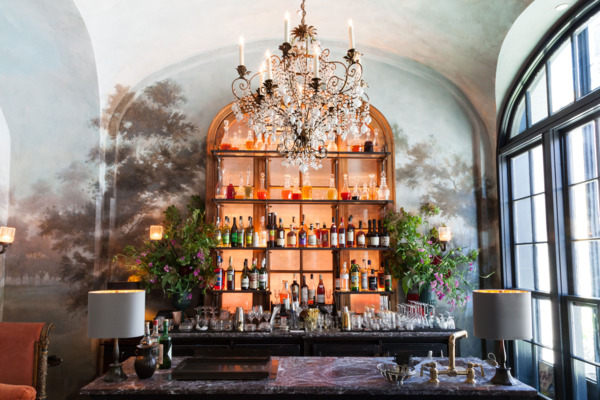
Le Coucou, the first American restaurant from Chicago-born chef Daniel Rose, will open tonight for dinner service. Rose currently has two restaurants in Paris, and has made a name for himself with classic French dishes. The new restaurant promises to offer similar cuisine, but Rose has said that he is looking for American-made products that remind him of France.  On the menu are items like pigs’ feet with caviar, pike quenelles, veal tongue, fish stew bourride and poached chicken for two or four.

Le Coucou is the result of a partnership between Rose and Restaurateur Stephen Starr, with Daniel Skurnick as head pastry chef. So far, the restaurant has earned as much press for its interior design as for the menu. Design firm Roman and Williams is responsible for the beautiful buildout, including chandeliers, velvet banquettes, and a gorgeous mural behind the bar.

To read more, click here.


Brooklyn Winery Team Opens New Crown Heights Restaurant

brooklyn-made-wines-01.w600.h400.jpgCrown Heights now has another new restaurant to add to its list – this time, it comes from the team behind Williamsburg’s Brooklyn Winery. Owners Brian Leventhal and John Stires will open the doors to BKW on Tuesday at 747 Franklin Avenue. They’ve brought on chef Michael Gordon, formerly of Bouley, to design the pared-down menu. Some highlights include konbu-cured mackerel with whipped feta and roasted grapes, root beer glazed pork ribs, and homemade donuts with butterscotch and lavender. The wine list will of course be well curated, with flights offered for those who are feeling indecisive and full bottles available to take home.
To read more, click here.


Start-Up Spacious has a Vision for New York Restaurants

As more and more businesses (particularly in the tech start-up sphere) forego traditional offices, the demand for alternative working spaces will continue to increase. The new start-up Spacious seeks to capitalize on that, by turning dinner-only restaurants into co-working space during the day. Spacious owner Preston Pesek sees it as a way to “reclaim the city for creative professionals.”

A Spacious membership costs $95 per month, and includes unlimited access to their available workspaces, as well as WiFi, coffee, water, and conference rooms. Currently their only actual space is Daniel Boulud’s DBGB Kitchen and Bar, so Spacious is offering a 20% sign-on discount for members who join now. Eventually they hope to add more options throughout the city, and possibly include lunch in the offer as well.

The benefit to the restaurant (besides exposure) is a profit-sharing agreement, but in some cases the exposure might be enough to justify the risk. According to a  DBGB manager, the partnership has already brought more dinner traffic to the restaurant from Spacious members who see the space during the day and invite back larger crowds at night.

To read more, click here.

Dig Inn CEO Takes Disruption To New Heights

Dig Inn CEO

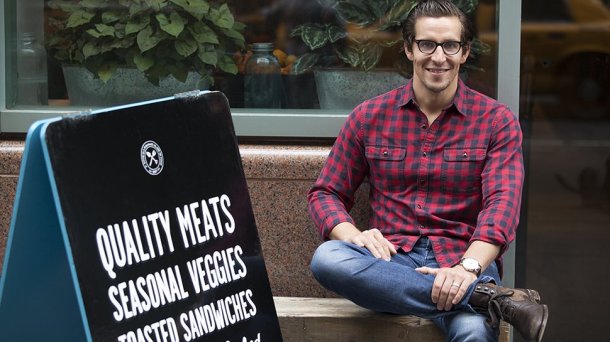
For Adam Eskin, CEO of Dig Inn, being disruptive meant severing ties with standard supply chains and developing relationships with local farmers in order to source ingredients for his New York City-based concept. The company has even helped farmers buy land and equipment and is now looking into buying farmland.

“Broken,” is how Eskin described today’s food system, which was set up decades ago to deliver food to masses of people as quickly as possible. That goal has led to obesity and a failing agriculture system, which inspired him to launch Dig Inn, a concept serving only from-scratch and seasonal food. Menu items include: flame-grilled wild salmon, Sicilian cauliflower, roasted kale, five-spice meatballs made with chicken or pork and free-range roasted turkey from Koch’s Turkey Farm in Tamaqua, Pennslyvania.

Dig Inn’s seasonal and innovative menu means talented chefs must always be in the kitchen, and Eskin admitted that finding NYC chefs who want to work in a fast casual setting can be challenging. Eskin found a solution by developing his own in-house culinary school, where he transforms employees into chefs. In an effort to inspire and help his chefs grow, Eskin partners with some of New York’s high-end restaurants, including Danielle, to provide them with the opportunities to work in their kitchens. It’s a win, win; young chefs study under pros and then put new skills to use at Dig Inn.

Read more here.