Whole Foods Agrees to Pay $500,000 Settlement

Whole Foods recently agreed to pay $500,000 to settle allegations that they have been routinely overcharging customers by mislabeling the weight of food sold. The suit, brought by the city of New York, originally sought $1.5 million in damages, but Whole Foods refused this amount outright. According to spokesman Michael Silverman, they eventually agreed to pay 1/3 of that in order to “put this issue behind us.”

Whole Foods’ CEOs John Mackey and Walter Robb claim that their weighing system is no different from any other super markets, and that the mislabeled foods represent a tiny fraction of overall sales. But the New York City Department of Consumer Affairs called it one of the “worst cases they have seen,” and some of the products sampled were overpriced by as much as $15.

The final price tag for the settlement might seem expensive, but the standard fine for falsely labeling a package is as much as $950 for the first violation and up to $1,700 for a subsequent violation. Given that their violations seem to number in the thousands, it appears Whole Foods got off lightly.

To read more, click here.

Raising Restaurant Wages is Good for Everyone, According to Cornell

As fast food workers fight for $15 an hour and New York restaurateurs experiment with new pay models (mostly by eliminating tipping), there is more and more focus on the way we pay the people who feed us every day. The National Restaurant Association has consistently fought back against minimum wage increases, arguing that they will lead to price hikes and fewer new jobs in an industry with small profit margins for new comers. But a new study out of the Center for Hospitality Research at Cornell’s School of Hotel Administration argues otherwise.

The study looked at federal and state minimum wage increases from the past two decades to see if there was any connection with job loss or the number of new restaurants opening. As far as they could tell, the increases had no such effect, although they did improve employee retention and productivity. While one study may not be enough to predict the future of restaurant industry salaries, it is good news for owners, employees and patrons in the 20 states which will be raising their minimum wages in 2016.

To read more, click here.

What does 2016 Hold for Meal Kits?

f482d9a047cffbed4fc45904bffc824992dcbc63_christmas-4.jpgMeal kits and recipe delivery services exploded in 2015, with promises of convenience and easy access to all the joys of cooking. Services like Blue Apron, Plated and Hello Fresh (all available nationally), along with a number of more local startups, offer customers customizable subscription services to bring pre-portioned ingredients to your door, along with a (hopefully) easy to follow recipe selected from the frequently updated options on their sites. Many of these companies tailor their recipes to focus on specific health concerns or responsible ingredient sourcing, with the goal of providing subscribers with all the pride of a fully home-cooked meal. One plant-based version of the model even attracted the legendary Mark Bittman to their team.
Understandably, these companies have already seen some blowback from their surge in popularity, on both the environmental side (the extra packaging used to deliver a single meal’s worth of 5 spices may not be the best thing for mother earth) to the cultural (is some part of the joy of cooking lost for the sake of convenience?) But that hasn’t stopped the venture funding from flowing in. Even if the bubble doesn’t burst, some meal kit companies may face growing pains in the coming year, as competition increases and newcomers try to expand quickly. Good Eggs, a grocery delivery service with over $50 million in funding, recently laid off nearly half their employees and closed operations in all cities but San Francisco.

One important test will be how these companies take advantage of the holiday season, and increase their reach through either gift subscriptions or holiday offerings. Most sites already sell gift cards, and some offer holiday meal kits to make party-hosting easy. Blue Apron, for example, wants you to “Host a Blue Apron Christmas!” and Atlanta-based PeachDish sold out of their Christmas dinner for four, but are offering it for New Years as well. According to their website, “You provide the champagne and we’ll provide everything else for your New Year’s Eve party!” Of course, you could always get the champagne delivered too and call it a night.

To read more, click here.

Antibiotic Use in Livestock Linked to Obesity

According to an article published by The Atlantic this week, conscientious carnivores may have a new reason to opt for antibiotic-free meat in grocery stores and restaurants. The ubiquitous use of antibiotics on livestock, which has long been linked to poor animal health, questionable farming practices, and the rise of resistant superbugs, now seems to be responsible for at least some of the obesity epidemic as well.

The Atlantic cites a growing body of scientific research pointing to the importance of intestinal flora (the “good bacteria”) in maintaining a healthy weight. These studies suggest a two-way street: obese individuals can improve their insulin resistance and overall health by receiving a balanced dose of gut bacteria, but individuals with a lower BMI may be at risk of “contracting” obesity if their intestinal biome is disrupted. And the greatest threat to that biome, especially among those who do not take antibiotics frequently themselves, is the ever-increasing use of such drugs in our farm animals.

70% of antibiotics used in the U.S. go to farm animals, and the vast majority of those are intended either to prevent infection (rather than treat it) or increase body weight. It now looks like that increase in weight could be passed along to the consumer – unless the connection becomes common knowledge, and demand pushes more and more farmers toward antibiotic-free practices.

To read more, click here.

Minibar, Drizly, and Amazon Want to Keep your Champagne Popping

minibar-delivery-app.png

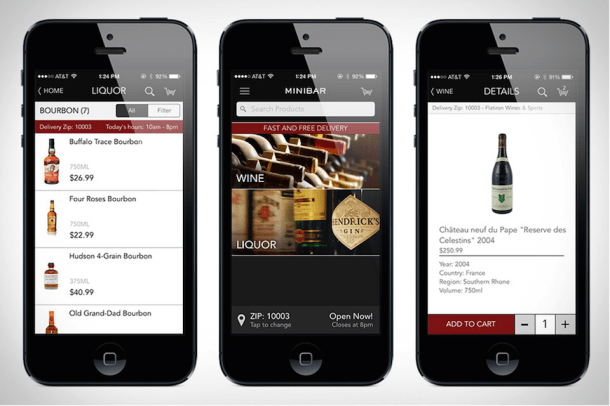
If you’ve taken the New York subway recently, you may have noticed the seasonal ads for Minibar, the alcohol delivery service that has been expanding rapidly the past few months, first by acquiring competitor Booze Carriage in March, and then by launching a subscription service for recurring orders in October. Minibar claims to have the largest share of the New York market, but that’s difficult to confirm. They certainly have plenty of competitors out there who are looking for a piece of the alcohol-delivery pie.

Most notably, and perhaps most threateningly to Minibar, is Amazon. Until early this month, Amazon only offered 1-hour booze delivery in Seattle, but as of December 9th New Yorkers with a Prime subscription can take advantage of the service as well.  Amazon is billing it as part of their Prime Pantry, so you can stock your party with other necessities like paper towels and Swiffers as well.

A third option is Drizly, which has a larger share of the Boston market, but is also available in parts of Manhattan, Brooklyn and Queens. Both Drizly and Minibar work by partnering with local liquor stores, listing their offerings via their app and website by zipcode, and taking a percentage of sales. Which service emerges as the market leader in New York may come down to who snatches up those local partners the fastest, but Minibar is also bolstering their business by providing other services – their website includes a party-planning feature to make sure you’re well stocked for any event, and if you feel intimidated by all those bottles you can even rent a bartender through their site.

To read more, click here.


Le Cordon Bleu Shuts Down U.S. Operations

x_lcb_vegas.jpg

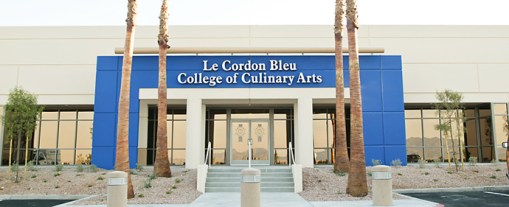
The Le Cordon Bleu Campus, Las Vegas

This January, the last class of students will enter Le Cordon Bleu, the popular culinary school with 16 locations around the United States. The for-profit school falls under the purview of the Obama Administration’s gainful employment rule, which cuts off federal funding from any school where graduates borrow money at high rates to pay for school but earn little after graduation. Many such institutions have recently come under fire for their predatory enrollment practices and misleading promises about job placement. Le Cordon Bleu in particular was the subject of a 2013 class action lawsuit alleging that the school oversold the benefits of their degree. They settled out of court for $40 million dollars.

Le Cordon Bleu is best known for it’s flagship location in Paris and famous alumna Julia Child, but branches in the U.S. are run by the Career Education Corporation and act largely independently from the original. The Career Education Corp. had previously announced that they would sell off the culinary school, but eventually decided it would be more cost effective to shut them down entirely and focus entirely on online schools instead.

To read more, click here.

Chobani Hops on the Sriracha Train

Sriracha, the beloved chili sauce that is a standby condiment everywhere from college dorms to ramen shops, has a found an unlikely bedfellow: Chobani, the greek yogurt brand that first made regular yogurt sales shake in their boots. Chobani plans to unveil a number of new flavors next year, including Sriracha Mango and other spicy varieties, in order to maintain momentum that might finally be showing signs of flagging. Although sales trends have still been positive, and brand representatives cite 11% growth for 2015, they are looking to avoid the fate of other greek yogurt brands like Müller, which was recently discontinued by PepsiCo in the US.

The Sriracha Mango variety is one of a number of “Flips” that Chobani is introducing – to-go varieties which include a small side container of mix-in items along with the yogurt. Other flavors include Chipotle Pineapple, Peanut Butter and Jelly, and limited-edition flavors like a Peppermint Flip, Apple Cinnamon, and Maple.

To read more, click here.


Reducing Carbon Emissions with Ugly Food

imperfect-fruit.jpg

The recent United Nations climate conference in Paris drew to a close with a historic deal, but there is still a long uphill battle ahead to reduce emissions and reach the target CO2 levels most climate scientists agree are safe. One creative solution has emerged from the farming industry, where food waste (and the decomposition of edible food in landfills) is responsible for over a billion tons of carbon emissions every year.

Nicholas Chabanne is an entrepreneur encouraging consumers to “eat ugly” through his campaign Gueules Cassées, which translates into Ugly Mugs. He is part of a growing international movement to encourage people to buy and consume more produce that would ordinarily be deemed too visually unappealing for supermarkets – and as a consequence end up in landfills. Often the fruits and vegetables which are discarded by major producers simply do not meet size criteria, or have minor superficial blemishes from the farm.

Chabanne is joined by like-minded entrepreneurs around the globe, including the San Francisco startup Imperfect Produce and the Portuguese cooperative Fruta Feia (or Ugly Fruit). With logistics in place, consumers can buy this produce at significant discounts, but most conventional grocery stores refuse to sell anything that doesn’t meet the strictest visual criteria.

So far, the movement to “eat ugly” has gained a foothold largely with home consumers, but restaurants buying directly from wholesale producers can do their part to increase demand as well. Meeting the climate goals established in Paris will take commitment and creative solutions across the board – hopefully this is one idea that diners can stomach just fine.

To read more, click here.

Keurig sold for $14 Billion

keurig-logoKeurig Green Mountain has shown recent decrease in their sales, because of consumer demands of variety in the K-Cups, their high prices, and their lack of adaptability for other branded K-Cups. Their Kold soda-maker had disappointing results despite long term investment. However, the maker of single-serving coffee pod machines has been sold to an investment group for $13.9 billion.

The purchasing group, led by private-equity firm JAB Holdings, also owns Oreo-maker Mondelez. The sale of Keurig has shot up stocks 76 percent. The deal has become a crucial step for the group’s “global coffee platform.”

To read more, click here.

Tipping is Going Extinct

Over the past week weeks, a storm of debate has surged over the news that Danny Meyer has opted to eliminate tipping in his fine dining restaurants over the course of the next year. It’s a monumental decision and the change has its advocates and skeptics. In this month’s Enterprise Insight, we’re cutting through the opinion to talk specifically about the benefits and challenges of implementing such a system.

Specifically, we will review what operators need to consider when thinking about this: why, how, and the possible pitfalls.

Why Would You Eliminate Tipping

With our clients, we’ve discussed three key reasons for implementing a more-European system: pay disparity, retention, and rising wages.

The back of house has always been under-compensated in comparison to the dining room. Due to the legal classifications of wages, back of house employees cannot be tipped. Under a tip-included system, the real cost of the meal—menu price plus tip—is built into a single number, and the revenue from that number is accessible to the owner to distribute as he or she sees fit.

This, in turn, can help with retention. Low-wage jobs are historically high-turnover jobs. However, with access to the tip ‘revenue,’ an owner can increase wages accordingly to alleviate this issue.

Lastly, rising wages are driving up labor costs and in some instances, driving away skilled labor. With the minimum wage in New York changing on a industry-by-industry basis, it will only become more difficult to find and retain great team members. Again, a tip-included system allows the operator to offer competitive wage rates.

Additionally, in the front of house, the tipped-minimum is also going up. Come January 1, NYC restaurateurs will be required to pay their servers $7.50 per hour–a 50% increase. However, if the restaurant eliminates tipping, then the team can be paid a salary, or a greater hourly wage plus a bonus drawn from the ‘tipped revenue’, thus alleviating this jump in labor costs.

How Would You Eliminate Tipping

Currently, there are only two viable options: increase prices, or apply an “administrative fee.” Be mindful with an applied “fee:” if you charge a “Service Fee” rather than “administrative,” you cannot disburse that revenue to any one not in a service position.

Neither feels good right now, but we believe that price increases will become the new normal. Here’s why: with an “administrative fee,” tipping isn’t eliminated, it’s removed from the diner’s control. With price increases, it’s truly taken off the table. The diner does not know and cannot argue with the prices because they give no allusion to the portion going to the team.

Pitfalls

Increasing pricing will always cause a certain degree of pushback from guests. Until they’re fully on board with tip-included system, the sticker shock will cause a reaction. However, as more and more of NYC s fine-dining enterprises move to this style, the less resistance operators will face. Whether your establishment plans on keeping or eliminating tipping, it’s important to understand the mechanics, because “tip-included” is bound to become the new normal for a significant portion of the dining scene.