McDonald’s Franchisee says the Real Reason the Chain is Failing

McDonaldsAl Jarvis has been a franchisee for decades with two McDonald’s restaurants in Michigan. When he was on the verge of being with McDonald’s as a franchisee for 50 years, he decided to sell the restaurants. He says he just “wanted to get the hell out.” Jarvis was disenchanted by and frustrated by corporate’s mixed signals and burdensome bloating of menu items like McWraps and McCafe lattes.

Jarvis critiques McDonald’s poorly though out menu items like implementing a custom burger bar or “artisan” grilled chicken. He says since 2005 with implementing items like salads and McGriddles was when service started to slow down. He continued to criticize how corporate demanded needs that were impossible to adhere too. Corporate wanted McWraps to be served in 90 seconds, but Jarvis says 3 minutes was more realistic. More than half the stores in America have dropped McWraps on their menus because of the difficulty of making them in timely matters. Jarvis also points bad business with McDonald’s asking franchisees to open for 24 hours a day, and including a Dollar Menu. These implementations lead to losses because of rising commodity costs. Jarvis has opposed the recent introduction to next month’s rollout of all-day breakfast. Though McDonald’s fans have demanded the expansion for years, Jarvis argues that “that’s not our niche. We make burgers and fries.”

This year is the first year since 1970 that the company closed more stores than it opened. Jarvis outlines that this is because of corporate keeps creating new menu items at the expense of quality, rather than refocusing on things that people still like and making it better.

To read more, click here.
Poke Taking L.A. by Storm

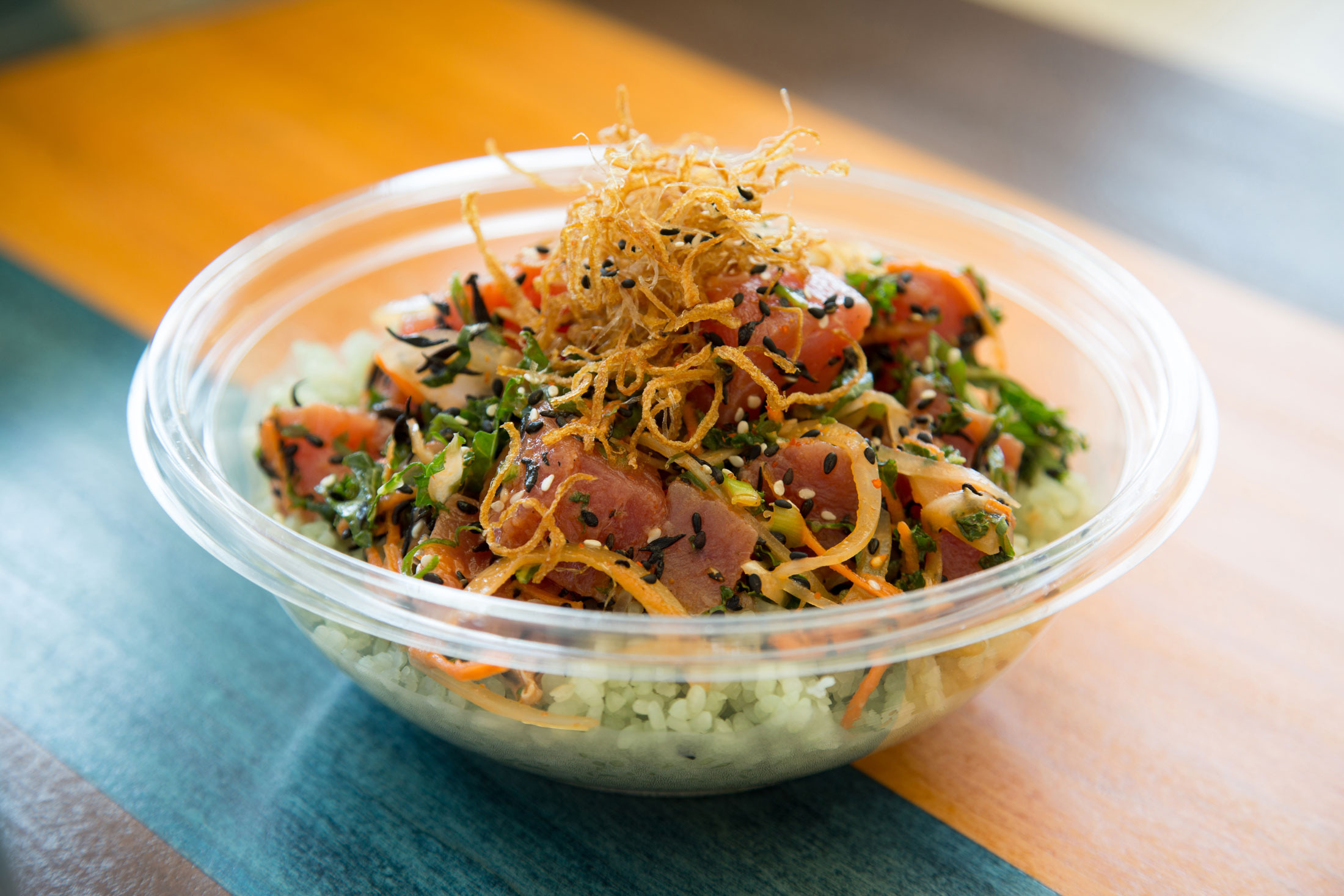
-1x-1Poke (pronounced poh-kay) is a marinated raw fish dish in Hawaii. Recently over half a dozen shops specializing in poke have popped up in L.A neighborhoods. Speciality shops have created different dishes with poke that attracts Californian consumers because of its health benefactors and its cost of being an average of $10. Bowl of rice, salads, quinoa are topped with poke and stand as alternatives to eating lunch at a sushi bar that would bring an average check of $40.

Sweetfin, a widely popular poke shop, serves a bowl of sashimi-grade tuna heaped on top of rice, or greens, such as citrus kale salad, with a wide range of accompaniments like avocado, edamame, and scallions. Marinades range from soy sauce and sesame oil to creamy togarashi sauce, Sweetfin’s specialty Japanese spicy mayo. While traditional poke in Hawaii involves onions, lime, and nuts, Nestdat and Cohen used more ingredients from Californian and Asian cuisines. Owners of Sweetfin says “Poke is the natural progression from sushi.” Seth Cohen and Brett Nestadt, owners of Sweetfin, wanted to reshape the lunch culture in America with its progression from sushi to poke. Sweetfin has doubled in the amount of fish it buys per week since opening in April, increasing from 700 pounds to 1500 pounds. Daily sales have jumped 40 percent. Cohen and Nestdat are planning to expand and open more shops in metropolitan areas.

Not only has Cohen and Nestdat seen success in poke, but several chefs including Kayson Chong and Eric Park has also seen a rise in their sales. Mainland Poke Shop, and Ohana Poke Co. are poke specialty shops, respectively, that have also contributed to the new wave of poke in California. While Mainland Poke Shop offer poke with quinoa and kale, Ohana Poke Co. offers poke with both French and Korean combinations.

Poke has been making appearances in other foodie destinations outside of L.A. Chef Jesse Sandole’s restaurant in Charleston and Nantucket have poke on their menus. Poke has been growing in Chicago, Washing, and Colorado. New York City’s East Village also has poke dishes from Per Se- one with octopus and another with big-eye tuna.

To read more, click here.

The New York Coffee Festival 2015

NewYorkCoffeeFestival_LogoThe New York Coffee Festival 2015 is set to be held on September 25th- 27th at the 69th Regiment Armory.

The New York Coffee Festival is New York’s flagship coffee event, that celebrates the specialty coffee scene in the city. The festival will feature over 70 coffee, food and equipment suppliers, where visitors will have access to endless free coffee tastings, interactive workshops, demonstrations form world-class baristas, delicious street food, coffee cocktails, live music and art. More than 10,000 visitors are expected to come from across the USA and abroad.

Many events will take place at the festival like the Lab program. The Lab program will feature interactive demonstrations, workshops, talks and tasting from industry experts. Participants will witness demonstrations on coffee art, the science of coffee, and the latest brewing techniques. Moreover, participants can discover current industry trends, gain top tips for setting up a coffee shop, and explore the history of coffee.

The festival is also the official launch event for the charitable Coffee Week NYC, which promotes the coffee industry while raising money for clean water and sanitation projects in coffee producing communities. 50% of ticket sales will be donated to Project Waterfall. Standard ticket prices are $20 online and $25 at the door.

Some exhibitors that will be present during the festival include Stumptown Coffee, Brooklyn Cold Brew, Bluestone Lane Coffee, Dough, Gregorys Coffee, Irving Farm, La Colombe, etc. The full list of exhibitors can be found here.

To read more, click here.

David Chang Launches Fuku Fingers with Danny Bowien

16-mission-chinese-kuku-fingers.w529.h352David Chang has just recently done a collaboration with Daniel Humm with their toast offered in Momofuku Ssäm Bar and the NoMad Bar. Now, David Chang has launched a new project with Danny Bowien. Bowien says “The collaboration came together seamlessly. Dave reached out and asked if we wanted to work together on a Fuku Fingers dish…It seemed like a natural fit because, at the end of the day, we both want to serve something simple- this is the type of food we both want to eat.” David Chang and Danny Bowien each combined their concepts from their respective restaurants to create two different dishes offered exclusively in each restaurant. Mission Cantina will exclusively sell Fuku Finger Crunchy Wraps and Fuku+ will offer Mission Chinese Fuku Fingers.

The Fuku Finger Crunch Wrap is made of shredded pepper-jack cheese, Russ & Daughters salmon-skin chicarrón, smoked habanero honey, lettuce, tomato, jalapeño pickles, buttermilk dressing, and crunchy corn tostadas, wrapped in a flour tortilla grilled. While the crunchy wrap will be $13, Mission Cantina has noted that $1 of every sale of the Fuku Finger Crunchy Wrap will be donated to Edible Schoolyard NYC.

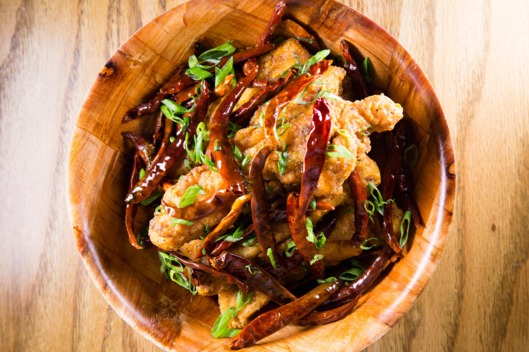
The Mission Chinese Fuku Fingers will be the first white meat offered from Fuku that is tossed with Mission Chinese’s Chongqing spice blend, chili oil, sliced scallions, and topped with fried chilies. The Fuku Fingers will be $16.

To read more, click here.

Governor Cuomo Proposes ‘All Industry’ Minimum Wage of $15

Unknown-1This past summer, legislation passed that restaurant chains in New York would need to implement yearly increases for minimum wages until 2018 for NYC and 2021 for the rest of the state to incur a $15/hr wage. However, Governor Cuomo has announced his intentions for all industries to increase minimum wages in New York State. “You cannot support a family on $18,000/ year in New York State, not to mention have a decent living,” Cuomo said. The New York State minimum right now is $8.75 and will rise to $9.00 in January, which is an annual salary of about $18,720 assuming 40 hours a week for 52 weeks. However, a $15 wage would raise yearly salaries to about $31,000.

Cuomo’s intentions to drive salaries in all industries will potentially effect the hospitality industry the most. The hospitality industry occupies some of the lowest paying jobs in the economy. Many of the employees in the hospitality industry conduct a tip based wage, where the minimum is $5.00. An average server in the greater New York Metropolitan area makes $13.21 per hour after tips, according to the U.S. Bureau of Labor statistics. In New York State, servers make an average of $12.16. NYC cooks make about $13.41 and dishwashers make about $9.66.

The tipped minimum wage will be increasing to $7.50 in January. However, for Cuomo to increase minimum wages for all workers in all industries to be $15, he will need legislative approval.

Many businesses have opposed the raise in minimum wages as it increases labor costs, and can potentially cut back on hourly staffing and reduce hiring. However, those that support “Fight for Fifteen” disagree with examples from San Francisco and Seattle, as the rising minimums in those cities did not prompt to a significant layoff or closure of hospitality industries. Moreover, believe that these measures will increase employee retention, decrease worker reliance on taxpayer subsidized public assistance programs like food stamps and stimulate consumer spending throughout the economy.

To read more, click here.

Sodium Regulations Passed in NYC

UnknownThe Board of Health unanimously voted in favor of the new bill that would require New York City chain restaurants to identify menu items with more than 2,300 milligrams of sodium. The new regulations will go into effect starting December 1st, but only for NYC restaurant with more than 15 chains nationwide. This includes McDonalds, Burger King, Panera, Subways etc. However, while these regulations will be implemented a lot will not effect these restaurant chains.

Surprisingly, many burgers and items on the menus of Burger King, McDonald’s and other fast food chains do not hold the regulated 2,300 milligrams of sodium to qualify them as marked items. Burger Business conducted research on McDonald’s cheeseburgers and concluded that one would need to eat four to reach the FDA’s daily sodium limit. Likewise, one would have to eat three Burger King’s Triple Whopper to consume the estimated FDA regulated sodium amount. Other chains like Wendy’s, Checkers, White Castle and Dairy Queen also do not use the regulated about of salt in their products to use mandatory labels. “It is possible that no fast-food chain in New York makes burgers that will get salt-shamed.” Red Robin, Chili’s and Applebee’s does have some menu items that are more than the recommended sodium amount that will need to be “salt-shamed.” Carl’s Jr. was noted to have a couple of items that were more than 2,300 milligrams in sodium, but Carl’s Jr does not have locations in New York and will not be required to label their menu’s.

To read more, click here.

Chipotle Linked to Another Salmonella Outbreak

imgres-1After an outbreak in California where customers came down with fevers and stomach problems, Minnesota has also been reported to have an outbreak of 45 people with the same symptoms. While the source of the outbreak hasn’t been officially named, the second food poisoning outbreak has been linked to 17 Chipotle locations. The 32 of 34 infected that were interviewed have confirmed that they ate at a Chipotle.

Investigators have announced that they have “strong suspicion” about which ingredient is to blame and that all Mexican restaurants across the state has been notified to take precautionary measures. Chipotle has reported that they have got rid of “this ingredient” ensuring that “It’s safe to eat at Chipotle.”

To read more, click here.

Websites will never completely replace stores

imgresOver the past several decades, much has changed in retail businesses. With constant revolutions in technology, E-commerce has become a major factor in business sales. Consumers now have capability to research stores, products, reviews, ratings, prices, inventory and specs online. This data allows consumers to access a wider range of options for “where” to buy from, just from searching the web. However, with all the choice and consumer empowerment that E-commerce enhances, physical stores are predicted to remain as the most important aspect of retail businesses.

In a 2014 Capgemini study consumers were surveyed on their preferences of shopping methods. The majority of consumers’ first choice was traditional in-store experiences, and was followed by retailers’ websites. E-commerce only accounts for 7 percent of U.S. retail sales. Study shows that human desire to see, and touch things while shopping is evident. There is also distinctive connection between the consumer and the brand that can be experienced only through in-store interactions. E-Commerce only businesses, like Amazon, eBay, Google, are aware of the limited experience and connection that comes from only distributing through the internet, and have taken efforts to reach customers through pop-up stores, and trucks. Companies like Amazon, and Warby Parker embrace that in-store and online experiences don’t have to be mutually exclusive. Instead, a symbiosis relationship can exist, where consumers invite online experiences into the physical store.

Popular online experiences that consumers want extended in stores include inventory visibility, in-store pickup, drop/ship home delivery, app and loyalty integration, and online/in-store community building. E-commerce has revolutionized inventory visibility for consumers. And now, consumers expect and like to ‘see” if a local store has a desired item in-stock before visiting the store. Home Depot is a primary example that allows consumers to search, on their e-commerce web, the availability of certain items at their local store. In-store pickup is also a major sales driven potential extending e-commerce to retail stores. In-store pickup potentially reduces shipping costs, increases foot traffic and encourages add-on sales. And for consumers gives them opportunity to recognize items as wanted or unwanted items after purchase, giving them access to potentially “return” items directly after shipment. Drop/Home Delivery allows for more convenience for consumers, and can potentially drive check averages. Consumers can conveniently shop without having to worry about transporting in-store purchases home through methods of “pick up later” or “home delivery.” App and loyalty integration is an aspect of business that is becoming trendier, and expected by consumers. In both online, in-store purchases customers should receive loyalty points, have personalized product recommendations, and promotional information. This integration can retain customers, and build traffic.

Retail Owners and companies have now shifted their focus on how they can combine the best of online and in-store distribution methods to deliver the best possible customer experience.

To read more, click here.

Institute of Culinary Education hosts an Open House

logoThe Institute of Culinary Education will be hosting their Open House on Saturday September 19th. ICE (Institute of Culinary Education) is a renowned program that introduces and develops skills for those interested in culinary fields. Attendees will have the chance to learn more about career programs in Culinary Arts, Pastry & Baking Arts, Culinary management and Hospitality Management. Moreover there will be a tour of the new Brookfield place ICE facility, and can experience cooking demonstrations with chef instructors.

Past students, like Christen Clinkscales, boasts about how ICE has helped her cultivate her dreams of becoming a chef. “My first two months of culinary school have been full of lessons…But the biggest lesson I’ve learned is the importance of following your passion.” She was a past attendee of the open house and it has aided her in career development, and her place in the culinary arts.

To register, click here.

Dominique Ansel Hosts its First “Pie Night”

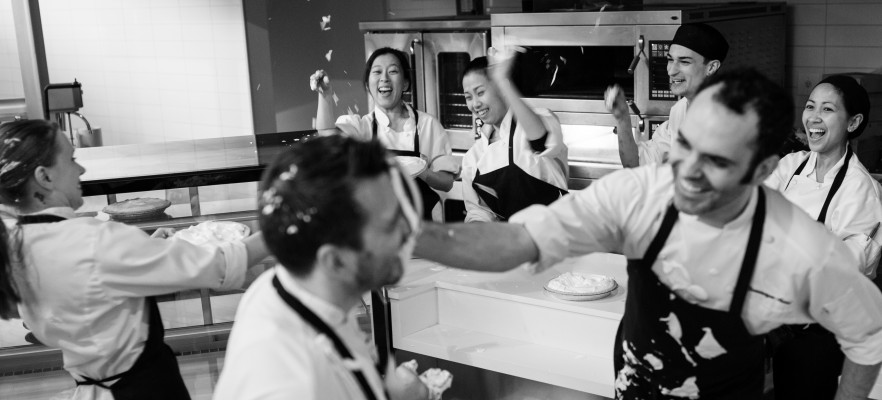
FoodFightBlackWhite_cropped-e1441319093825On October 1st, Dominique Ansel will host their first ever Pie Night. Dominique Ansel has gained a lot of attention and popularity because of its mashup phenomenons like the Cronut, the Cookie shots, etc. And now, Dominique Ansel Kitchen will feature nine different varieties of confection for their ‘Pie Night’ event. The Salted-caramel apple pie, blueberry pie with buttermilk-oat crumble, flaméed banana-cream pie, bourbon-pecan pie, 66 percent dark-chocolate cream pie, whiskey-kissed sweet-potato pie with torched marshmallow, lemon-cream pie with thyme and brown-sugar meringue, dark-meat chicken and fall-vegetable potpie, and lastly the roasted heirloom-tomato tart will be be featured on Pie Night.

Tickets are priced at $35 and includes unlimited slices of pie, a glass of Champagne, and Ansel’s homemade ice creams. Tickets started to go on sale at 12 PM, September 10th. There are three one-hour time slots from 7PM-10PM. Many are anticipating Ansel’s first after-hours event, hoping that there will be many more to come. Ticket sales are on a first come first serve basis. Participants must email events@domiqueanselkitchen.com with their Full Name, Phone Number, the Number of people in your party (max 2), Time slot, and Credit Card Information.

To read more, click here.