 The food delivery market is a crowded one, with new competitors emerging every day. Grubhub, which owns Seamless, may control a large portion of that market, but all that competition took a toll last year. In 2015, the company’s growth slowed significantly and their stock value followed suit. In response, Grubhub declared that they would move from handling logistics only to actually delivering the food.
Currently, Grubhub handles the physical delivery of about 8% of their orders. The other 92% are delivered by the restaurants themselves, which use the Grubhub equipment and software to take the orders. Taking over delivery gives the company greater control, and may make them more appealing to the restaurants themselves – but the strategy is not without its pitfalls. Hiring contracted companies to handle the food can be very expensive, and consumers are reticent to pay much for the convenience. In the fourth quarter of 2015, Grubhub lost $5.5 Million on delivery.
CFO Adam DeWitt claims that that loss was still a significant improvement over the third Quarter, so the momentum may be in Grubhub’s favor. That’s good news, since Uber and Amazon are no insignificant threat. Whatever their strategy this year, Grubhub’s biggest advantage may be simply that they got there first.
To read more, click here.
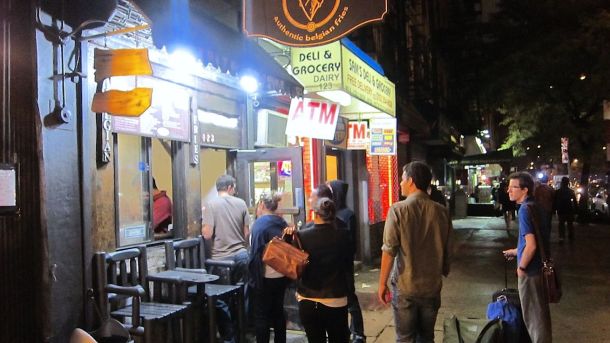 The beloved East Village spot Pommes Frites, which was destroyed last March in the massive Second Avenue explosion, has announced plans to reopen this April in their new storefront at 128 MacDougal. The french fry spot, known for their dozens of homemade sauces, faced some hurdles getting up and running again – including delays from the Department of Buildings and opposition from the local community board to their liquor license.
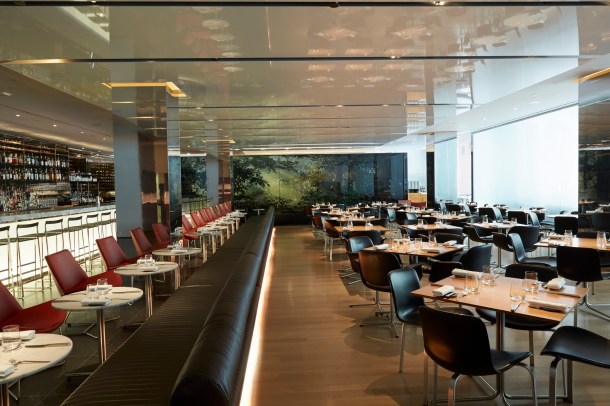 Nearly four months after eliminating tipping at the Modern, trendsetter Danny Meyer says that the first full month without tips was the restaurant’s most profitable ever. On a recent podcast of Freakonomics, Meyer declared his surprise that the two-Michelin starred restaurant had benefited so quickly. He expected that, while they would ultimately see the benefits through lower turnover and more equitable pay, the process would be slow and have initial hurdles. Instead, back of house applications have increased nearly 270%, server application shave increased 25 to 215% over three months, and there are more guests walking through the door than ever.
 It is now nearly impossible to ignore meal-kit companies like Blue Apron and Hello Fresh, which continue to plaster subway cars with advertisements and encourage huge investments to start-up competitors. The latest is Hungryroot, a meal-kit delivery company that wants to fill several niches at once: healthy, vegetarian, and quick.
 Stressing the “humility and respect” with which they are undertaking this endeavor, Starbucks CEO Howard Schultz announced recently that in early 2017, Starbucks will finally open their first store in Italy. It may be surprising that such a store doesn’t exist already, especially since the Starbucks brand was born out of Schultz’s first trip to Milan 33 years ago, but the company is understandably cautious about bringing one of the largest chains in the world to a culture that prizes small-scale coffee operations and exquisite attention to detail.
 paigepapers.com