Bartender, There’s a Logo in My Drink

The goal of bars these days is to make sure that guests recall the name of the place, no matter how strong the drink.  Cocktail napkins, matchbooks and cardboard coasters have been replaced by new, glittery branding techniques.

At Dante, a bar in Greenwich Village, the name of the place is stamped into the ice cubes.  The owners had a copper ice stamp custom made in Hong Kong.  The guests take pictures of the cubes, and one of the owners is quoted “In an age of Instagram, it’s hard to ignore free publicity.”

A bar in Seattle named Canon makes it easy to remember its name by branding citrus peels.  One of the owners says that his team is trying to provide guests with a “Wow” moment, or a sensory experience that takes them out of their day.

The Aviary in Chicago sears its name onto wooden coasters.  When the guests order a rum drink called “Brand New to the Game”, a pine coaster will be branded at their table with the name of the bar.  The fire created by the brand will be used to fill the inside of the glass with smoke before it is filled.  And the guest may take the coaster home.

Bar Leather Apron in Honolulu revived the bar token (special coins that can be exchanged for drinks).  A complimentary cocktail coin was created as a way to promote events or give away to visitors.

The San Francisco gin bar Whitechapel uses picks (perfect for spearing olives) to remind drinkers where they are.

To read more, please click here

For the Forager or Francophile, a Dandelion Salad

Dandelions’ sawtooth leaves bring a pleasant bitterness to the table, and make for a great salad. They’re best picked when tender, before the plant blooms, and they can be served raw or cooked.  Larger leaves may be sautéed, stir-fried or stewed with olive oil.  However, the dandelion is usually overshadowed by spring foods such as green garlic, asparagus, sorrel and rhubarb.

Dandelions grow everywhere so that foragers (searchers for wild food resources) are in luck.  The dandelions should be picked before they begin to flower.  Also, the forager should make sure that the leaves have not been treated with toxic chemicals.

Cultivated and wild, fresh-picked dandelion greens are being sold at farmers’ markets.  A long-leaved variety is also sold at supermarkets; these need to be trimmed as the top eight inches are best for salad.

A dandelion salad takes only 20 minutes to prepare and may include ingredients such as garlic cloves, grated ginger, lime juice, sherry vinegar, Dijon mustard, salt, black pepper, olive oil, beets, baguette slices, goat cheese, dandelion greens and eggs (the beets can be cooked and peeled up to two days ahead).  One version of the salad is modeled after a classic French recipe.

Nutritionists and science have shown that the dandelion is a green that’s good for you, and high in vitamins A and C.  Interestingly, the leaf was well known as a folk medicine cure-all, in the past.  Maybe dandelions could become the new kale?

To read more, please click here

It’s Dinner: But Is It Cooking?

What is a meal kit?  A meal kit includes all of the ingredients and recipes to make delicious meals at home.  More than one hundred companies now offer to do the planning, shopping, and prepping, leaving the joy of cooking, and eating, to you.  The United States meal market could grow by as much as five billion dollars over the next decade.

Meal kits are regarded by some as a positive development in cooking culture.  The kits provide ideas and eliminate the need to decide “what’s for dinner?”.  Feedback from customers, especially millennials, is that these kits are teaching them how to cook, so they can feel involved in the kitchen,

Blue Apron is one of the leaders in this category, and the company offers a subscription service with: original recipes weekly (500-800 calories per serving), fresh ingredients (pre-measured to avoid waste) and convenient delivery across the nation (arriving in a refrigerated box).  As a pricing example, Blue Apron offers a 2-Person Plan including 3 recipes per week for a total of $59.94 ($9.99 per serving) or a Family Plan for 4 including 2 recipes per week for a total of $69.92 ($8.74 per serving).

A price point of $9-$10 per meal is a lot of money for most people.  However, some believe the kits are worth the time saved driving/walking to the store and shopping.

The meal kit market gets very specialized at a point.  Fans of Northern California cuisine and chefs can join Sun Basket, and enthusiasts of Georgia farmers and Southern chefs may subscribe to PeachDish.

Meal kits might help to cut down on food waste through pre-portioned ingredients.  According to an estimate by the U.S. Department of Agriculture, up to thirty-one percent of America’s post-harvest food supply is thrown away.

One complaint about the kits is that too much packaging is used, and besides current recycling methods, there is a hope that one day the insulation will be compostable.

As far as home-cooking trends are concerned, meal kits are at the forefront.  How much staying power will they have?  Time will tell…

To read more, please click here

A Better Chocolate Babka

If you are looking to nosh on something, with your coffee, tea or seltzer, might I suggest a slice of babka?

Babka is a sweet loaf, similar to a light textured coffee cake.  Babka is made from a doubled and twisted length of yeast dough and is typically baked in a high loaf pan.  It starts with a rich, slow-rise dough made with lots of butter, real vanilla, fresh egg yolks, lemon zest, sugar and sea salt.  The dough is rolled around an almond frangipane (made from almonds, almond flour, more vanilla, butter, sugar and eggs), then brushed with dark chocolate and cinnamon sugar.  You can fill a babka with almost anything sweet: chocolate, jam, dulce de leche, homemade ganache, and Nutella to name a few.  The babka is usually scattered with brown sugar streusel.

This pastry is associated with Eastern European Jewish tradition.  The word “babka” is both Polish and Yiddish, deriving from “baba,” meaning grandmother.

Baking a babka requires commitment.  Babkas can take a day or more to make, which includes three and a half hours to bake, and six to twenty-four hours to rise.  Refrigerating the dough in between steps makes it easier to work with, and a longer proofing period gives the loaf a more complex flavor.  Proofing is the final rise of shaped bread dough before baking.

New York bakeries have joined the babka movement.  Bklyn Larder fills its babka with ganache, Sadelle’s creates a chocolate-cookie version and Breads Bakery presents a Nutella loaf.  Baz Bagel even bakes its babka into bread pudding.

Babka freezes very well, making for second servings, and another delicious snack or dessert.

To read more, please click here


A Return Trip to the Caribbean

Guyana, a country on South America’s North Atlantic coast, is defined by its dense rainforest. The country is English-speaking, with strong traditions of cricket and calypso music, and culturally it’s connected to the Caribbean region.  Angela Pellew-Whyte is a native of Guyana and the chef at Angela’s in Bedford –Stuyvesant, Brooklyn.

Interestingly, Ms. Pellew-White ran the original Angela’s on the same corner from 1997 to 2004, and after training in the culinary program at the Art Institute of New York City, she returned to the same space to pick up where she had left off.  Ms. Pellew-White draws inspiration from growing up in a household of nine children, where her father prepared feasts for a large, extended family.  While her sisters played with dolls, she cooked.

Caribbean food has been described as bold, full-flavored, aromatic and textured food.  Caribbean food is a fusion of influences that may include plantains, okra and rice from African slaves, stir-fries and soy sauce from Chinese migrant workers, pork in all forms from Spanish colonists, puff pastry from the French and curries delivered with indentured servants from India.

One of Chef Pellew-White’s featured dishes is Guyanese saltfish and bake.  Bake is a type of fried bread that can be eaten with almost anything: jams, jellies, corned beef/mutton, saltfish, even vegetable dishes such as sautéed okra or tomato choka.  Recommended dishes includes codfish sliders, oxtail (the meat is braised and complemented by gravy), curry goat (with scents of cumin and curry), jerk chicken (in a strong marinade), okra (beautifully tender), plantains (soft and warm), rice and peas, and corn with house dressing.  Pricing is moderate.

Angela’s can be found on the corner of Nostrand and Jefferson Avenues, and serves moderately-priced, pan-Caribbean dishes.

To read more, click here:


One Sommelier’s Streamlined Vision

Only the well-financed restaurants have the resources to present the best wines.  Most wine-conscious restaurants narrow their visions and choose a style or region in which to concentrate.  The selection complements the cooking and conveys something about the restaurant’s identity.

Freek’s Mill is a new casual restaurant in Gowanus, Brooklyn, and features one of the most narrowly concentrated selections of wine.  However, if you want Beaujolais or a chenin blanc, this restaurant is the place to be; these wines make up about 70% of the bottle inventory.  The wine list was constructed by Alex Alan, the sommelier and a partner in the restaurant.  Mr. Alan said his choices grew out of a draft of the restaurant’s opening menu, which emphasized seasonal vegetables, small plates and a wood-burning oven.

Beaujolais is a French wine generally made of the Gamay grape which has a thin skin and is low in tannins.  Beaujolais tends to be a very light-bodied red wine, with relatively high amounts of acidity.  The wine takes its name from the historical Province of Beaujolais, a wine producing region.  Chenin blanc is a white wine grape variety from the Loire valley of France. Its high acidity means it can be used to make everything from sparkling wines to well-balanced dessert wines,

Mr. Alan is quoted, “In a perfect world, I want to give customers what they want.  But I also want to teach them something without it feeling like I’m teaching them something.” The author of this article, Eric Asimov, applauds Mr. Alan for choosing wonderful wines that will reward customers who put themselves in his hands.

Here lies the age-old debate: Is a restaurant obligated to give customers what they want by offering something for everybody?  Or can it stay true to a vision?

To read more, click here:


6/17: Request for Proposals due for Snack Bar in Columbus Park

The NYC Parks Department has issued the following request for proposals (RFP) for a snack bar in Columbus park, due Friday June 17th.

In accordance with Section 1-13 of the Concession Rules of the City of New York, the New York City Department of Parks and Recreation (“Parks”) is issuing, as of the date of this notice, a significant Request for Proposals (“RFP”) for the renovation, operation, and maintenance of a snack bar at Columbus Park, Brooklyn.

All proposals submitted in response to this RFP must be submitted no later than Friday, June 17, 2016 at 2:00 PM. There will be a recommended site visit on Monday, May 23, 2016 at 11:00 AM.  We will be meeting in front of the snack bar on Joralemon Street, between Court Street and Adams Street, Brooklyn.  If you are considering responding to this RFP, please make every effort to attend this recommended site visit.

Hard copies of the RFP can be obtained, at no cost, commencing on May 6, 2016 through June 17, 2016, between the hours of 9:00 a.m. and 5:00 p.m., excluding weekends and holidays, at the Revenue Division of the New York City Department of Parks and Recreation, which is located at 830 Fifth Avenue, Room 407, New York, NY 10065.

The RFP is also available for download, commencing on May 6, 2016 through June 17, 2016, on Parks’ website.  To download the RFP, visit www.nyc.gov/parks/businessopportunities, click on the link for “Concessions Opportunities at Parks” and, after logging in, click on the “download” link that appears adjacent to the RFP’s description.

For more information or to request to receive a copy of the RFP by mail, prospective proposers may contact Zoe Piccolo, Project Manager, at (212) 360-3495 or at zoe.piccolo@parks.nyc.gov.

TELECOMMUNICATION DEVICE FOR THE DEAF (TDD) 212-504-4115


Street Vendors Protest Limited Number of Permits

13087313_10153582577593519_8831297411753637903_n.0.jpgThere are few things more closely associated with New York City than the smell of roasted peanuts and the ubiquitous carts selling shwarma, hot dogs, or decidedly-not-cold-brew iced coffee. There are around 20,000 street vendors in NYC, but the city only hands out 5,000 permits a year for a cost of $300 each – meaning many sellers are operating illegally or renting permits at much higher rates. On Tuesday, hundreds of vendors gathered at city hall to protest the cap on permits, originally issued in the 80’s in an effort to clean up the city streets. According to the protestors, that cap is no longer necessary, and puts a huge hurdle in the way of those who just want to legally work.
Some argue that the cap is still necessary, as the health department already struggles to keep up with monitoring the number of vendors with permits. Others view the vendors as “unsanitary and unsightly,” and worry that more permits will create dangerous street congestion and sanitation issues. Arguably, the increased revenue from adding more permits could help offset the added costs of inspections and enforcement, but the problem is a sticky one.

To read more, click here.

Fairway Owners Fight Collapse with Bankruptcy Deal

After rapid and apparently misguided expansion, the New York grocery store Fairway may finally be reaching the end of its lifelines. Stocks in the store, which went public in 2013, have been falling since CEO Jack Murphy came on in 2014; they now rest at 30-40 cents a share. Nasdaq has twice warned the company that they may be delisted, and over the past 5 years they have accumulated $267 million in debt.

The chains owners have made attempts to sell, but have not been able to come up with buyers. Now, in a last-ditch effort to keep at least the most successful stores open, they are attempting to enter Chapter 11 bankruptcy protection by the end of May and restructure their debt. If the deal goes through, creditors will take over the company temporarily until they (hopefully) reach more solid footing.

To read more, click here.

What’s happening in Stadiums, the Unexpected Food Frontier

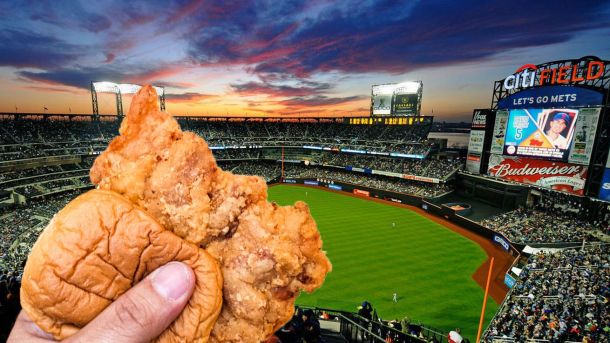
citi_field_fuku1.0.jpgAs baseball season gets underway, more and more attention is being drawn to an often overlooked part of the stadium experience: the food. It may take awhile to overcome associations with dry pretzels, standard-issue hot dogs and over-priced beer, but at least a few stadiums are trying to bring fans a better dining experience.

The clearest example is Citi Field, where (beginning April 8th), you can get David Chang’s Fuku fried chicken sandwich. The Fuku stand with have the spicy sandwich, as well as fries, Fuku fingers, and Milk Bar cookies. Yankee’s fan? Not to worry, Yankee stadium has new treats in store as well, including egg creams from Linda’s Brooklyn Style Egg Creams. If you’re into indulging as much as possible at the ball park, they’ve got plenty of artery-clogging specials as well.

This may still not compel non-baseball fans to sit through a full game, but it’s certainly an added bonus for those already heading out to a game.