It’s not news that your Point of Sale can drastically affect operations. However, we’re seeing a new trend—the POS boosting employee tips. In this month’s Enterprise Insight, we will discuss the different types of point of sale systems, the effect mobile terminals have on tipping, and the concurrent changes in minimum wages.
Type of Systems
Point of Sales systems can largely by classified into either legacy-based or tablet-based systems. Legacy systems are those that run on proprietary hardware that hasn’t caught up technologically to what is available to consumers. These terminals operate on touch screens that are linked to an in-house server. These systems are good for keeping data on site, but that is largely no longer necessary. Aloha and Micros are great examples.
Tablet systems use hardware such has iPads to run a cloud-based point of sale software. These tablets process orders locally and push the data into the cloud, which is then accessible from anywhere. One of the biggest selling points of these systems—namely Square, Revel, Shopkeep, and Lavu—is the ease of use and mobility of these systems. The graphical user interfaces are friendly, editing the menu doesn’t require using a Windows-based database software, and the back of house reporting is more visual than legacy systems.
Furthermore, these terminal do not need to be tied to a centrally-located server, which let’s users take orders from just about anywhere. Lastly, these systems all allow guests to sign for checks on the screen—which driving major changes in tipping practices.
iPad POS Systems Driving Up Employee Tips
Software research company Software Advice recently surveyed customers familiar with iPad point of sale systems and found compelling results: quick-tip buttons improve gratuity. Software Advice’s research found that the proximity to the server, the automatically-calculated tip amounts, and the presence of “no tip” buttons all create more frequent, more likely, and higher-value tipping.
Meanwhile, this tip creep in the industry comes at a time when two other significant changes are taking hold: an increasing minimum wage and a trend towards abolishing tips in favor of “service charges.”
New York State just passed legislation that increases the minimum wage of foodservice employees of chains with 22 or more locations to $15 per hour (by 2021.) Unfortunately for these employees, though, these operators are now less likely than ever to use iPad terminals with suggested tipping—with the increased cost of labor passed on to customers, the guests certainly won’t feel so willing to tip.
Furthermore, this comes just as the City passed legislation increasing the tipped minimum wage to $7.50. And given the recent unrest surrounding the difference in pay between service and kitchen staff, more and more full-service restaurants are prohibiting tipping and instead applying the gratuity automatically as a charge on the bill. This charge is then equally distributed amongst the entire staff, not just servers.
However, full-service restaurants will soon be operating in a more quick-service fashion once EMV payments are required, and the guests must process their cards themselves; the guest will come face-to-face with the POS terminal, just as in a quick-service setting. Perhaps the “service charge” will become preset buttons just as in the current quick-serve template, creating “service charge” creep at this end of the spectrum, as well.
To read more about Software Advice’s research, click here.
To read more about the increase in minimum wages, click here.
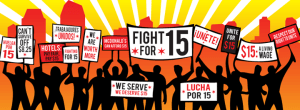 City’s fast food worker minimum will rise to $15 by 2018 and the rest of the state by 2021. The increase in wages is in efforts to improve the lives of chain restaurant employees whose wages can keep them reliant on taxpayer-subsidized welfare programs. This policy will apply to not only company-owned restaurants with thirty or more nationwide locations but to franchise locations as well. As wages increases, labor costs increases resulting in price hikes for consumer goods. In a recent survey of 924 fast food businesses in New York, 70 percent were “very likely” to raise prices in response to the increase in minimum wages, and 83 percent of respondents claimed they were very likely or “somewhat likely” to reduce hours of staffing levels. This increase in higher wages could potentially prompt competitive salary increases throughout the hospitality and retail industries to avoid drama of workers who’ll suddenly find fast food jobs more attractive.
 More than 80,000 food companies coexists and thousands are starting a new food business every year. Lisa Curtis, business and food tech analyst, believes 2015 will be the year that food startups will receive broader recognition. In 2014, there was a record breaking sales of $2.36 billion raised in the food and agriculture industry. The industry continues to grow as it becomes more attractive to entrepreneurs. Food is a commodity that everyone needs and is flexible to adjust towards changing consumers’ demands. The industry also holds potential fortune justified by mergers and acquisitions from major food companies that resulted in billions in sales.
 controversy is genetically modified organisms, GMOs, and whether foods with GMO ingredients should be labeled. However, the House just passed a bill that would prevent states from enacting laws mandating labelings. Many argue that consumers have the right to know what is in their food. Representative Rick Nolan of Minnesota said “The issue isn’t whether GMO foods are healthy or safe, it’s about the right to know what’s in the food we buy for ourselves and our families. This is a serious problem begging for a solution. As yet, we haven’t’ seen a good one.” However, others in the food industry rebutted that individual state standards would lead to confusion and costly compliance, and that labeling suggests that GMOs are not as safe or healthy of an ingredient which has yet to be a proven scientific matter.
 Coffee is a liquid that drives “productivity and civilization” and because of the importance of coffee in generations right now concerns about the Coffee Berry Borer is growing. The Coffee Berry Borer is a beetle that is endemic to Central Africa but can also be found in other countries that produce coffee beans. This beetle can live and withstand a massive amount of caffeine, a usual insecticide. It is estimated to withstand 500 shots of espresso for a 150- pound human. These beetles capability to withstand high caffeine levels and their addiction to coffee beans is potentially cutting crops of coffee beans by 80%.
 Sushi restaurants have lured gourmands by boasting of the freshest fish. But with new regulations, published by the New York City Department of Health and Mental Hygiene, restaurants are required that fish served raw, undercooked or marinated raw are to be frozen first to guard against parasites. This regulations has been approved by the Board of Health and will be set to take effect in August. The Health Department regulation is that fish will be required a minimum freezer storage time of anywhere from 15 hours to a week depending not eh temperatures and storage process.
 of Chicken sandwiches are evident. David Chang,
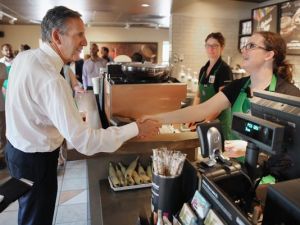 Even as the U.S economy has improved, unemployment among young people particularly African Americans and other minorities remain high. The overall teenage unemployment was 18.1 percent in June and 31.5 percent in African American teens. Many companies including Walmart, Walgreens, Starbucks, Taco Bell, Hilton, J.P Morgan etc. have joined a coalition in opening job opportunities, apprenticeships and internships for teens and young adults who face systemic barriers to jobs and education. Howard Schultz, chairman and CEO of Starbucks, said “By using our scale to create pathways to affordable education and meaningful employment for these young men and women, we’re strengthening both our workforce and our economy.”
 paigepapers.com