Calorie Counts are Coming to Beer Labels

Beer-Calories

The Beer Institute recently announced a new initiative to encourage its member companies to display nutritional information on its products, packaging, and websites.

The new initiate is strictly voluntary, but with beer behemoths like Anheuser-Busch, MillerCoors, and HeinekenUSA have already signing on, the pressure is on small breweries to follow suit. In fact, the brewers involved in the new label disclosure comprise over 81% of the beer market

Consumers are increasingly interested in knowing more about the products they purchase. According to a recent survey conducted by the Harris Poll® on behalf of Nielsen, 72% of beer drinkers think it’s important to read nutritional labels when buying food and beverages.

Consumers should begin to see the impact of the Brewers’ Voluntary Disclosure Initiative immediately across the U.S. market, as many members currently provide some nutritional facts and ingredients information. 

Learn more here
Craft Brewers Go Hi-Tech

craft hop

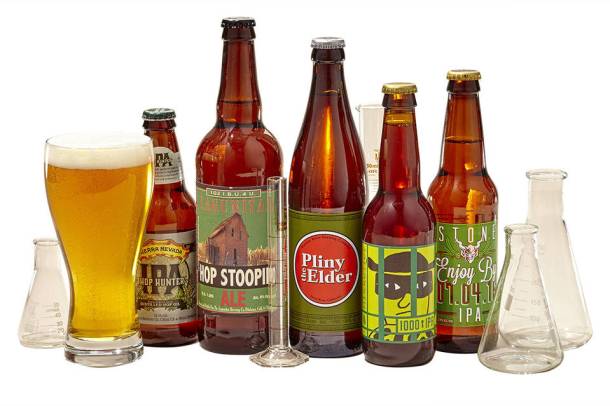
The dirty secret behind today’s IPAs: There’s little dirty about them. Brewers are sourcing their signature bitterness in sterile labs, not muddy hop fields.

The hop plant contains oils and resins that give beer its bite; lab-made extracts of those flavorful and bitter oils and resins were once relegated to Big Beer’s industrial toolbox, while craft brewers stuck to cramming whole cones of the hop vine into the brewing kettle. No more. Not that industrial hop extraction is anything new. In the 1870s, the New York Hop Extract Company supplied brewers with hop resins made by soaking flowers in gasoline. Today, labs use liquid CO2 as a solvent, boiling hops to extract oils and then venting the gas away. The liquid that remains is clean, shelf-stable and concentrated, easy to preserve and to ship. “Extracts have better longevity [than raw hops], particularly in countries with developing logistics or harsher climates,” said Alex Barth, CEO of John I. Haas.

Still, the new wave of extraction is small. Robert Bourne of Extractz makes variety-specific extractions in an Ohio garage. He supplies a few local brewers but admitted he’s on the fringes: “It’s more of a home-brew thing.” Even when they come from a garage, extracts haven’t quite shed their industrial associations. The Hop Stoopid label shows a rustic barn; the fine print proclaims the “mountain of extracts” in the beer. “People read the label and call us up saying they won’t drink it,” says brewmaster Jeremy Marshall . “They think it’s some industrial, nonnatural thing.” Others maintain that whether from a leaf or a vial, flavor trumps all.

Read more here.

Manhattan Food and Bar Leasing Up Double Digits

Across the city, landlords want a seat at the table.  More specifically, they want the seats, and they want the tables inside their buildings.  Fast-casual restaurants, coffee shops, and juice bars are expanding across Manhattan, driven in part by a large millennial workforce and dense, wealthy demographic.

Also, though, as consumers behaviors have changed, opportunity has opened up for foodservice operators.  More and more retail and apparel is being purchased online, which has caused these companies to trim store sizes.  Now, with new inventory available, restaurants are building new locations even faster.  In 2015, the fast-casual segment grew to $44 billion nationwide–an 11.5% increase from 2014, according to Technomic.

Similarly, Manhattan lease transactions in the food and bar category increased 22% in 2015 over 2014, Cushman & Wakefield reports.  Meanwhile, drugstore leases were down 64% and apparel and accessories retails were down 22%.

Where banks and retailers once occupied large-footprint spaces, some landlords are building out food halls or dividing spaces into smaller units.  “You’re getting more [rent] than what a single tenant would pay,” said Brett Herschenfeld, SL Green Managing Director.

To read more, click here.


Meatless Moo-vement; Impossible Foods Readies Burger Launch

Over the past four years, a small, well-funded startup has been developing a new burger just a few miles from Stanford University.  It’s not meat, and it’s not just a veggie burger.  What Impossible Foods is trying to do is create a meat replacement that looks, tastes, feels, and cooks like regular ground beef.

Like most other Silicon Valley startups, Impossible Foods is looking to disrupt an existing industry.  For the founder, Patrick Brown, that is the inefficient, international meat supply, which relies on a huge carbon footprint to maintain.  Industrial animal farming uses a third of the planet’s land, destroys millions of trees per year, and consumes a third of the global water supply.  “We’re getting into this very scarily unstable area where we’ve never gone before in terms of pushing the boundaries of a stable planetary system,” Brown says. “We’re driving toward the cliff with our foot on the accelerator—and nobody was working on this as a solvable problem.”

Brown is working on this problem by approaching the “veggie burger” from a different angle: less quinoa and beets and more “proteins, fats, amino acids and vitamins derived from wheat, the roots of soybean plants, coconuts, potatoes and other plant sources.”

And now the chefs are talking.  Tracy Des Jardin, chef-owner of Jarindiere in San Francisco, will be the first to put the product on her menu, and she’s excited.  “I equate this to when grass-fed beef first hit the market. Initially consumers were skeptical, but now some prefer it.”  Later this summer, select New York restaurants will launch the burger, as well.  We will keep you posted when it comes to town!

To read more, click here.

The Coffee Pendulum Swings Again

Rejoice! Coffee is good for you again; as usual, the tide has shifted and your favorite morning beverage is back on the table.  The World Health Organization has concluded that coffee does not pose a cancer risk, and a regular habit of drinking coffee might even have a positive health effect.

Coffee is no stranger to the spotlight–good or bad.  In 1991, the WHO’s International Agency for Research on Cancer listed coffee as a possible carcinogen based on “limited evidence” that coffee was associated with a higher risk of bladder cancer.  However, the past 25 years have changed the evidence in a new direction.  Researchers reviewed more than 500 studies on over 20 different types of cancer and concluded that coffee might actually help prevent against uterus and liver cancers, and reduce the risk of colorectal cancer.

Consider replacing your pour-over with cold brew, though; research is also turning up some connection between consumption of very hot beverages and the risk of esophageal cancer.

To read more, click here.

The Wizard Retools His Lab

David Bouley dreams of engineering a whole different concept of a restaurant.

The famous chef’s eponymous restaurant opened at 165 Duane Street, Tribeca in 1987.  According to Bouley, the restaurant will be going “on sabbatical” and then reopening in a smaller space (planned for Tribeca) with a mission of healthful eating.  The new space will accommodate only 20-25 seats and open five days a week.  The Bouley that New Yorkers have come to know over the past thirty years will be gone in a few months.

In recent years, Mr. Bouley has become obsessed with health issues.  Towards the end of the year, he will engage in a deep study of the relationship between health and food.  He plans to take nutrition classes at New York University and consult with doctors and experts, internationally.

The new restaurant’s mission will be to optimize health.  Tasting menus will be developed to address a variety of dietary restrictions and medical concerns.  “Food should give you calories that you burn off, not calories that you store,” said Mr. Bouley.

David Bouley plans to rejuvenate his restaurants and projects (Bouley, brushstroke, Bouley Test Kitchen and Bouley Botanical) and himself.  He is quoted as saying “Gastronomy and science, meeting together.  I want to learn how to do that better”.

Please click here to read more…

FDA Issues Salt Guidelines

Last Wednesday, the FDA took another step is pushing back the American diet to its more healthful days; the Administration issued draft guidelines with voluntary targets for salt reduction.  The hope is to reduce salt intake from an average 3,400 milligrams per day to 3,000 milligrams in two years and down to 2,300 milligrams in a decade.

The proposal comes with “overwhelming” scientific evidence and would purportedly saved thousands of lives in the years to come.  “Today’s announcement is about putting power back in the hands of consumers, so that they can better control how much salt is in the food they eat and improve their health,” said Health and Human Services Secretary Sylvia Burwell.  According to the Centers for Disease Control and Prevention, more than 70 percent of the sodium consumed in the country is already in food before it reaches the table.

“The majority of sodium intake comes from processed and prepared foods, not the saltshaker,” noted the F.D.A. statement.

However, some scientists have an opposing opinion: David A. McCarron, a research associate in the Department of Nutrition at the University of California, Davis, said a number of studies had shown risks of too little salt. “Going below 3,000 [mg] is dangerous — that’s what the data has shown,” said Professor McCarron, who has consulted for the food industry.

But F.D.A. scientists said the health advantages of getting down to the recommended 2,300 milligrams a day were beyond dispute. The science has been well vetted,said Susan Mayne, director of the Center for Food Safety and Applied Nutrition at the F.D.A.

To read more, click here and here.

Cocktail Bar Branding Gets Creative


18LOGO2-master768


Signature drinks are what cocktail bars are known for. But some bars have found ways of dropping a signature literally in the drink itself!

The trend includes branded ice cubes, citrus twists, olives, and made to order, fire-scorched wooden coasters.

Read more here


Domino’s Pizza accused of wage theft of $567,000

Three Domino’s Pizza franchises have been accused of owing $567,000 in back wages and underpayments to workers.

Importantly, the lawsuit, filed by New York State attorney general Eric Schneiderman, also lists Domino’s Pizza Inc (the franchisor) as a “joint employer” in the case. “As our suit alleges,” Schneiderman said in a statement “we’ve discovered Domino’s headquarters was intensely involved in store operations, and even caused many of these violations.” Specifically, Schneiderman accused the Domino’s Pizza Inc. of being complicit in the underpayment by urging operators to use the company’s PULSE computer system, even though the company knew the system under-calculated gross wages.

Domino’s has counted these accusations by claiming it is not responsible for the employment practices of its operators.

The most recent lawsuit follows settlements with 12 other franchisees that operate 61 locations and have agreed to pay 1.5 million to date.

To learn more, click here

Quinoa and California; an Unexpected Love Story

Quinoa–you’ve heard it, seen it, tasted it in nearly everything over the past few years.  The ancient grain, indigenous to the Andean regions of Peru, Bolivia, Ecuador, Colombia, and Chili, has grown wildly in popularity due to its complete-protein profile.

However, the seed itself hasn’t grown as wildly.  The pseudocereal is can be difficult to cultivate, and the surge in consumption had recently put a strain on farmers south of the equator.  Between the increasing price of quinoa and the increasing exports, consumers began to express concerns for the origin of their new favorite super food.

Meanwhile, in small, hot, below-sea-level area of the Imperial Valley in California, the Lundberg family has been able to grow the seed with great success.  In 2014, the family farm started with just 40 acres in Northern California.  Now, Lundberg has 800 acres planted and is looking at expanding this dry, forsaken patch in Brawley to 500 acres of what might be the next brown rice.

To read more, click here.