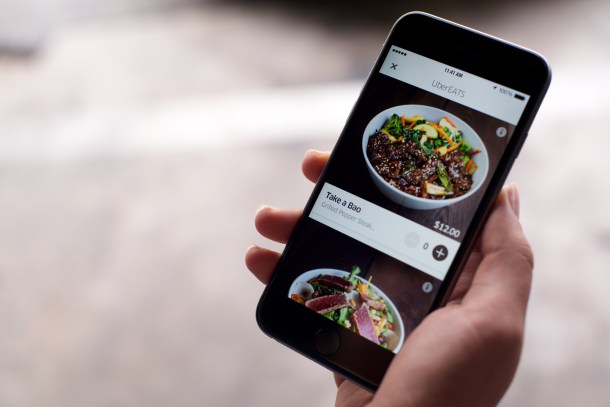
The Persistent Rise Of Restaurant Takeout And Delivery

ubereats

Pizza no longer dominates the delivery and takeout business. Consumers are increasingly ordering their favorite foods to be delivered or to-go, rather than dining in-store. And, in fact, restaurant delivery traffic outside of pizza has risen 33 percent since 2012. This presents a unique opportunity for foodservice and restaurant operators to shift their strategies and operating processes to take advantage of the delivery and takeout trends, rather than have their dine-in numbers and market share cannibalized by competitors who are focused on these services.

According to recent surveys, 51% of Americans use delivery services to purchase meals from casual dining restaurant and 26% order takeout or delivery at least once a week. These behaviors show little sign of slowing: digital ordering and delivery have been growing 300% faster than dine-in traffic since 2014. Third party delivery services, like DoorDash, Caviar and Grubhub are becoming major marketplace competitors, providing speed, ease of use, convenience and customized offerings based on customers’ previous orders. Furthermore, larger players such as uberEats, Amazon Prime and Google, are now entering this space and beginning to pilot their own food delivery programs.

Confidence in the future and growth trajectory of this space is strong. More than half a billion was invested in the food delivery sector in 2014 – almost 13 times the amount in 2013 – with more than a billion dollars invested in 2015. As for restaurants, partnering with third party delivery services is a seductive alternative, with research showing an increase in restaurant sales volume from 10% to 20%.

Read more here.
Bartender, There’s a Logo in My Drink

The goal of bars these days is to make sure that guests recall the name of the place, no matter how strong the drink.  Cocktail napkins, matchbooks and cardboard coasters have been replaced by new, glittery branding techniques.

At Dante, a bar in Greenwich Village, the name of the place is stamped into the ice cubes.  The owners had a copper ice stamp custom made in Hong Kong.  The guests take pictures of the cubes, and one of the owners is quoted “In an age of Instagram, it’s hard to ignore free publicity.”

A bar in Seattle named Canon makes it easy to remember its name by branding citrus peels.  One of the owners says that his team is trying to provide guests with a “Wow” moment, or a sensory experience that takes them out of their day.

The Aviary in Chicago sears its name onto wooden coasters.  When the guests order a rum drink called “Brand New to the Game”, a pine coaster will be branded at their table with the name of the bar.  The fire created by the brand will be used to fill the inside of the glass with smoke before it is filled.  And the guest may take the coaster home.

Bar Leather Apron in Honolulu revived the bar token (special coins that can be exchanged for drinks).  A complimentary cocktail coin was created as a way to promote events or give away to visitors.

The San Francisco gin bar Whitechapel uses picks (perfect for spearing olives) to remind drinkers where they are.

To read more, please click here

For the Forager or Francophile, a Dandelion Salad

Dandelions’ sawtooth leaves bring a pleasant bitterness to the table, and make for a great salad. They’re best picked when tender, before the plant blooms, and they can be served raw or cooked.  Larger leaves may be sautéed, stir-fried or stewed with olive oil.  However, the dandelion is usually overshadowed by spring foods such as green garlic, asparagus, sorrel and rhubarb.

Dandelions grow everywhere so that foragers (searchers for wild food resources) are in luck.  The dandelions should be picked before they begin to flower.  Also, the forager should make sure that the leaves have not been treated with toxic chemicals.

Cultivated and wild, fresh-picked dandelion greens are being sold at farmers’ markets.  A long-leaved variety is also sold at supermarkets; these need to be trimmed as the top eight inches are best for salad.

A dandelion salad takes only 20 minutes to prepare and may include ingredients such as garlic cloves, grated ginger, lime juice, sherry vinegar, Dijon mustard, salt, black pepper, olive oil, beets, baguette slices, goat cheese, dandelion greens and eggs (the beets can be cooked and peeled up to two days ahead).  One version of the salad is modeled after a classic French recipe.

Nutritionists and science have shown that the dandelion is a green that’s good for you, and high in vitamins A and C.  Interestingly, the leaf was well known as a folk medicine cure-all, in the past.  Maybe dandelions could become the new kale?

To read more, please click here

It’s Dinner: But Is It Cooking?

What is a meal kit?  A meal kit includes all of the ingredients and recipes to make delicious meals at home.  More than one hundred companies now offer to do the planning, shopping, and prepping, leaving the joy of cooking, and eating, to you.  The United States meal market could grow by as much as five billion dollars over the next decade.

Meal kits are regarded by some as a positive development in cooking culture.  The kits provide ideas and eliminate the need to decide “what’s for dinner?”.  Feedback from customers, especially millennials, is that these kits are teaching them how to cook, so they can feel involved in the kitchen,

Blue Apron is one of the leaders in this category, and the company offers a subscription service with: original recipes weekly (500-800 calories per serving), fresh ingredients (pre-measured to avoid waste) and convenient delivery across the nation (arriving in a refrigerated box).  As a pricing example, Blue Apron offers a 2-Person Plan including 3 recipes per week for a total of $59.94 ($9.99 per serving) or a Family Plan for 4 including 2 recipes per week for a total of $69.92 ($8.74 per serving).

A price point of $9-$10 per meal is a lot of money for most people.  However, some believe the kits are worth the time saved driving/walking to the store and shopping.

The meal kit market gets very specialized at a point.  Fans of Northern California cuisine and chefs can join Sun Basket, and enthusiasts of Georgia farmers and Southern chefs may subscribe to PeachDish.

Meal kits might help to cut down on food waste through pre-portioned ingredients.  According to an estimate by the U.S. Department of Agriculture, up to thirty-one percent of America’s post-harvest food supply is thrown away.

One complaint about the kits is that too much packaging is used, and besides current recycling methods, there is a hope that one day the insulation will be compostable.

As far as home-cooking trends are concerned, meal kits are at the forefront.  How much staying power will they have?  Time will tell…

To read more, please click here

A Better Chocolate Babka

If you are looking to nosh on something, with your coffee, tea or seltzer, might I suggest a slice of babka?

Babka is a sweet loaf, similar to a light textured coffee cake.  Babka is made from a doubled and twisted length of yeast dough and is typically baked in a high loaf pan.  It starts with a rich, slow-rise dough made with lots of butter, real vanilla, fresh egg yolks, lemon zest, sugar and sea salt.  The dough is rolled around an almond frangipane (made from almonds, almond flour, more vanilla, butter, sugar and eggs), then brushed with dark chocolate and cinnamon sugar.  You can fill a babka with almost anything sweet: chocolate, jam, dulce de leche, homemade ganache, and Nutella to name a few.  The babka is usually scattered with brown sugar streusel.

This pastry is associated with Eastern European Jewish tradition.  The word “babka” is both Polish and Yiddish, deriving from “baba,” meaning grandmother.

Baking a babka requires commitment.  Babkas can take a day or more to make, which includes three and a half hours to bake, and six to twenty-four hours to rise.  Refrigerating the dough in between steps makes it easier to work with, and a longer proofing period gives the loaf a more complex flavor.  Proofing is the final rise of shaped bread dough before baking.

New York bakeries have joined the babka movement.  Bklyn Larder fills its babka with ganache, Sadelle’s creates a chocolate-cookie version and Breads Bakery presents a Nutella loaf.  Baz Bagel even bakes its babka into bread pudding.

Babka freezes very well, making for second servings, and another delicious snack or dessert.

To read more, please click here


Joe’s Crab Shack Defects from Gratuity-Free

Joes-crab-shack.jpg

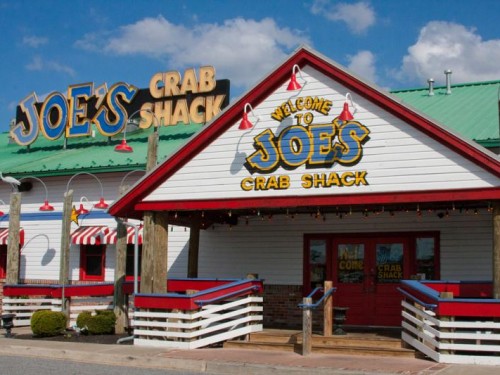
Several months after going the no-tipping route, Joe’s Crab Shack has now rolled back the model from 18 restaurants to just 4. CEO Bob Merritt tells investors that customers simply don’t like it, and foot count is down 8 to 10% on average among the locations.

The chain was originally praised for their efforts, which followed on the heels of higher-end restaurateurs like Danny Meyer, Gabriel Stulman and Andrew Tarlow. Overall they raised server wages to $14 an hour and menu prices by 12 to 15%. “We tried it for quite a while, tried communicating it different ways,” Merritt explained, but a large portion of guests were unswayed. Research indicates that about 60% of guests disliked the model, either because they didn’t trust management to pay the higher wages or they preferred being able to incentivize good service.

Joe’s will revert 14 locations back to their former tipped model, but the remaining 4 have apparently been working much better. Merritt says they plan to treat those stores as a rich source of research, and figure out what distinguishes them from locations where it doesn’t work.

To read more, click here.

Highlights from the North American Restaurant and Foodservice 2016 Outlook

There’s good news to be had in the 2016 restaurant data so far, but there’s also a lot of data to sift through. You can read the full report here, or see some key take-aways below:

  • Employment levels and disposable income are high, riding positive tailwinds from the end of last year. The number of restaurants per-capita has also decreased steadily from a peak in 2013, meaning there is less supply to meet the growing demand.
  • A decline in oil prices is good news for restaurants’ bottom lines, but has affected the industry unevenly, creating more competition for major chains from smaller players.
  • Guest priorities include lower prices, improved healthy menu options, and a focus on food safety.
  • Quick-service-restaurants are focusing more on discounting, but guests are still most likely to use coupons and deals from restaurants they already visit frequently.
  • Most consumers support wage increases throughout the service industry, and would be willing to pay a premium toward such increases.
  • Tipping is still a controversial topic, with 65% of survey respondents saying they do not support replacing gratuity with a service charge.
  • Online and mobile ordering is the most important technological priority to restaurant guests.

Is Canned Cold Brew Coffee’s Fourth Wave?

Stumptown-Nitro-Cold-Brew-Canned-Coffee.jpgAccording to Todd Carmichael, founder of coffee chain and industry leader La Colombe, we’re about to witness the fourth wave of coffee consumption in America – and it will be bigger than any of the waves that came before. What are those waves, exactly, and what could possibly dwarf them?

Think of coffee’s first wave as the everyman brew – the reason people get nostalgic for diner drip and Folgers still has enough momentum to surpass all sales expectations. The second wave coincided with the growing popularity of espresso drinks, and the expansion of Starbucks. The third wave (and, we admit, our favorite so far) represented the growing popularity of small roasters treating coffee beans as real ingredients instead of a commodity. Many of the small roasters that represented this trend, like Intelligentsia and Blue Bottle, have since been bought out by larger players, but there are still newcomers who continue to expand coffee horizons with superior quality and innovative ideas. Enter the fourth wave, as Carmichael calls it – bottled (or canned) cold brew.

If your mind goes immediately to the current industry standard in ready to drink coffee – Starbucks bottled frappuccinos – you’re not alone. But Carmichael believes there is a huge opportunity gap between current levels of consumption and the possible market. “They’ve been working for 20 years to get it to $2 billion. Then you look to Mexico, which isn’t really a coffee-drinking country, and their [ready-to-drink] coffee is at $4.7 billion.” Carmichael is working on bridging that gap, with a variety of flavors introduced through channels ranging from local convenience stores to whole foods. One thing is for sure – he’s excited, and who can blame him? Great coffee in a can sounds like a win-win.

To read more, click here.

Postmates Moves Into Speedy Delivery (Your Move, Uber)

blog_header-pop@2x.jpgOn Monday, Uber announced that it would be canceling Instant Delivery – the lunch-only, 10-minute curbside delivery feature in New York . The tricky logistics of the service had largely been offloaded to featured restaurants, who estimated how many of a given meal would sell each day and sent the prepackaged lunches to Uber’s midtown office to be picked up and driven or biked around the city. Even so, the delivery company admitted they may have overreached a bit, and have cancelled the service to focus on the core of the UberEats business.

Whether by coincidence or an impressively quick strategic move, Postmates has now stepped up to the ultra-fast delivery plate, rolling out their 15-minute delivery service (called Postmates Pop) in NYC at 11 am today. The service has been available for almost a year in San Francisco, and Postmates has said that it will work exactly the same way in New York (although only from 34th Street to Battery Park). To begin, you can order through the service from Fuku, Harry and Ida’s and S’MAC. It’s unclear how they’ll clear the hurdles that brought down Uber Instant, but we’re pretty sure contenders will keep stepping up until at least one nails it.

To read more, click here.

Dishes get Smaller for a Nation of Snackers

stksliderspromo.jpg

Mixed sliders from STK

The dividing line between meals has been getting fuzzy for awhile now, and snacks are the status quo. According to research firm The NPD Group, 18% of all restaurant dining occasions fall into a non-meal (or snacking) day-part: either mid-morning, late afternoon or late night. And that doesn’t include shareable meals that are made up of smaller dishes, like tapas. The cultural shift is partly generational, and part of a larger move toward casualness and flexibility in dining. Not to mention the fact that these smaller items allow the diet-conscious to order what they want without leaving half their plate untouched.

Naturally, restaurants are adapting their menus to fit the trend, with more and more menus including a small plates or bar snacks section. According to a study conducted in February by Penton Food and Restaurant Group, 43 percent of restaurant operators saw an increase in revenue from snacks in the past two years. What does this revenue look like? It can be anything from sliders at the bar to mix-and-match tacos or sushi – any cuisine is snackable.

To read more, click here.