Ravi DeRossi Turns an Empire Vegan

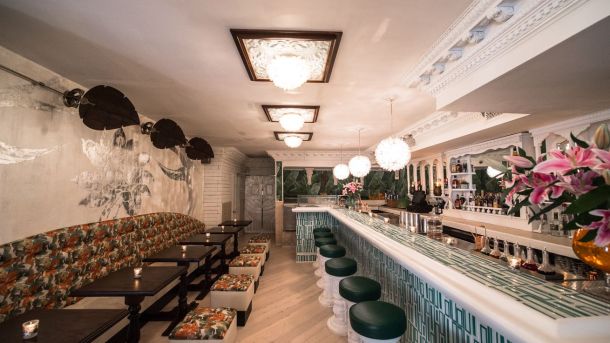
18712231573_877fb3734a_o.0.0.jpgRavi DeRossi, the restaurateur behind Death and Co, Avant Garden, Mother of Pearl and 12 other bars and restaurants around the city, is making a serious push to turn all of his operations fully animal-free. He’ll be starting by expanding the already vegan Avant Garden into multiple spinoff concepts, as well as closing the charcuterie-focused The Bourgeois Pig and reopening it as vegan wine and tapas bar LadyBird. All of his restaurants are in for some sort of shake-up, and it seems his mixologists won’t be safe either, as cocktail and beer lists will be purged of the often ignored animal ingredients that are sometimes used in drinks.

DeRossi himself has a long history with veganism, and feels passionately about the environmental and animal welfare impacts of factory farming. Before becoming involved in the hospitality industry, he spent many years living completely meat-free. As he describes to Eater, “You don’t realize that the average restaurateur does three times more destruction [to the environment] than the average person,” and, “If we’re going to do something to help this planet, it needs to start. It needs to be me not just preaching, but me just doing it. I’m in the position to do it.”

To read more, click here.

Uber Eats has Steep Costs for Restaurants

The food delivery market, once handled primarily by restaurants themselves, has gotten more and more crowded lately as both start-ups and established companies muscle their way into the fray. As the field grows, the importance of differentiating oneself is obvious – whether it’s by offering more options or fewer, a shorter delivery time or a cheaper surcharge. But one factor that’s largely invisible to the end user is the percentage these companies charge to the restaurant themselves.

A typical rate for standbys like GrubHub and Seamless falls in between 10 and 15 percent, while others (like Caviar), charge nothing to the restaurant and make their profit entirely from delivery fees paid by the customer. Uber Eats, on the other hand, will be rolling out services in major cities this month at a 30% rate – even worse than the current high of 25% charged by Amazon.

It’s worth noting that, unlike GrubHub and Seamless (who do not supply their own delivery people), Uber and Amazon offer a more complete service to restaurants. Beyond the interface they offer, the delivery itself is taken care of, not to mention promotional assistance and photographers. To some, these services and the exposure they provide more than justify the cost. But to others – particularly those with lower profit margins per-item to begin with – Uber Eats is simply out of reach.

To read more, click here.

Andrew Tarlow Takes the Lead Against Tipping with a Sticker For Your Window

03-gratuity-free-logo.w901.h901.jpgDanny Meyer may have been the first to really make headlines by eliminating tipping, but Andrew Tarlow has now gone a step further by taking on the anti-tipping movement’s PR as well. Marlow recently pitched a standard sign which he believes all gratuity free restaurants should display in their windows in order to help retrain guests who have spent their whole lives living in a world of tips.
The logo is custom designed by Drew Heffron, a graphic designer Tarlow has used before for the menus at some of his restaurants. The move is clearly well thought out, and even the wording – “Gratuity Free Establishment” rather than “No Tipping Allowed” is design to make guests more comfortable with the change. First restaurants went Smoke Free, now they’re going Gratuity Free.

The logo is already on display at Tarlow’s Roman’s, and will be added to Diner and Marlow & Sons soon. It is also available open source from http://www.gratuityfree.nyc.

To read more, click here

Bark Hot Dogs Closes Up Shop

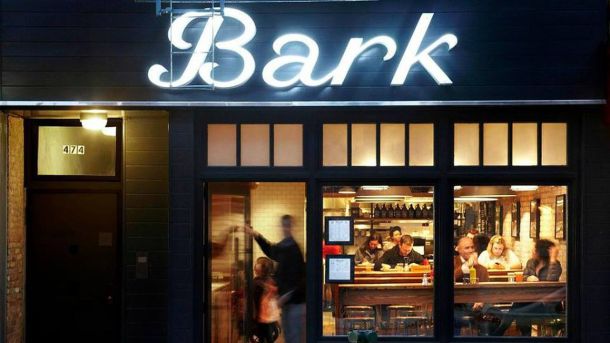
10435790_10152728392254916_3747257176259248714_n.0.0.jpgAfter a brief stint with a second location in Greenwich village last year which closed after six months, the 7 year-old Bark Hot Dogs will officially close up shop completely on February 7th. Bark was a Park Slope standby for many years, and owner Joshua Sharkey had previously talked about plans to open a different Manhattan location in a new neighborhood. That now seems unlikely, although Sharkey has been vague on the exact reasons for closure, stating only that (unlike the Greenwich Village location), rent was not the primary factor.

In honor of their final week, Bark’s popular homemade condiments will be available in bulk for $5 a pound. Stock up now for Superbowl Sunday, and get one last dog before they’re gone.

To read more, click here.

Syndicated Lets You Dine and Drink with Your Favorite Flicks

BN-MB639_NYFEED_G_20160112165325.jpg

The hospitality industry is well known for creative hybrids, and snacks and beverages have a way of popping up everywhere from bookstores to art galleries to flower shops. So the movie theater/restaurant combo should seem only natural – most main stream movie theaters make their profit at the snack counter, and “Dinner & a Movie” is still the most popular date choice. With that in mind, it’s exciting to see this concept done well, with as much attention paid to the food as well as the movies.

Syndicated, a new bar/restaurant/theater in Bushwick, does just that. With a thoroughly curated list of screenings (each night features either one or two flicks, often with a theme connecting them), and an equally thoughtful menu (including house cocktails, local craft beers, and dishes like heritage porchetta), Syndicated is a sure sign that the Bushwick night life is getting even livelier. They have special programming for Oscars week, but more than a few nights in January sold out early, so buy tickets online early

Russ and Daughters at Brooklyn Navy Yard

Gantry_corridor_R_D.0.JPG2016 is already shaping up to be the year of exciting food halls, with The Pennsy opening to fanfare and Brooklyn Navy Yard expected later this year. Now, we have another exciting announcement regarding the latter: the New York icon Russ & Daughters will be opening a location in the 60,000-square-foot Navy Yard space. The team says this location will be focused on fast casual breakfast and lunch, and they plan to increase bakery production with classic New York and Jewish baked goods like bialys, babka, challah and knishes.

The Russ & Daughters company recently turned 100 years old, and they’ve been celebrating by making big moves to expand, from opening the Orchard Street Cafe in 2014 to their planned location in the Jewish Museum to their baked goods facility in Bushwick. With new businesses constantly opening, it’s always nice to see a beloved standby keep things fresh.

To read more, click here.

James Beard Honors More Than Just a Chef With Leah Chase

Leah-Chase2_t750x550.jpg

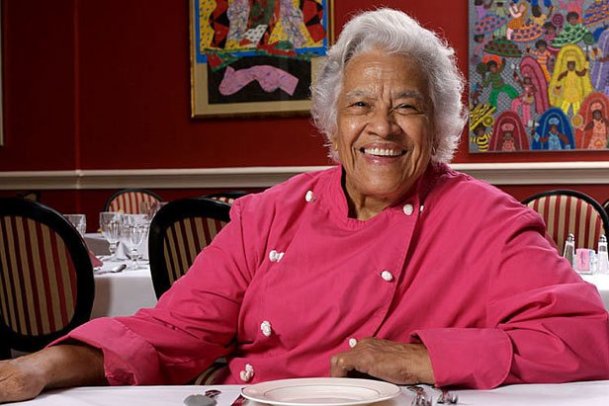
The James Beard Foundation announced on Thursday that Leah Chase would receive their Lifetime achievement award this year, an honor she shares with chefs like Wolfgang Puck and Richard Melman. Chase, now 93, is known as the “queen of Creole cooking,” and has been a mastermind at Dooky Chase’s Restaurant in New Orleans since the 1940s. The restaurant, which she runs with her husband, has transformed over the years from sandwich shop to fine dining to Southern comfort and Creole, and despite massive flooding from Hurricane Katrina which shuttered them temporarily, they reopened and remain a destination for both tourists and locals alike. As recently as 2014, the Times-Picayune named her “damn-near perfect” fried chicken the best in the city.

More than just a chef, Leah Chase has been an advocate for civil rights for decades, flouting segregation laws at her restaurant in the 50s and 60s and hosting NAACP and other activist meetings there “over gumbo and fried chicken.” (Dooky Chase’s Restaurant even gets a mention in Ray Charles’ Early in the Morning.) Chase and her husband also founded the Dooky Chase Foundation to support cultural arts, education, culinary arts and social justice in New Orleans and Louisiana.

While this is not Chase’s first lifetime achievement award (she was previously honored by the Southern Foodways Alliance), it is well deserved and an excellent choice for the James Beard Foundation, which strives to honor not only culinary genius but the integral connections between food and culture, politics, economics and community.

To read more, click here.

Evolution of the Fine-Fast Casual Enterprise

The restaurant industry has gone through a dynamic shift in dining habits.  Guests spend their money differently and seek to be more enagaged in their food experience. This change has incubated a class of restaurants—the fine-fast casual segment—which is, as we all know, fully blossoming.

With this, we are now also starting to see differences in service styles within the segment – We have highlighted 2 standard bearers to this and a new model that we call the Cafe-Table.

1) Assembly Line

Chipotle popularized this and made the envy of every restauranteur.  Guests enter the enterprise, get in line, and are engaged by a string of team members who assemble the order in front of the guest before ending at the cashier.   Countless enterprises have come to market as the “Chipotle of” their category by substituting pizza or Indian cuisine or salad for burritos.  And for good reason: this is the simplest, most efficient, and low-cost model.  Because the majority of the food is prepared ahead and assembled to order, labor is streamlined, and the delivery time is kept low, as guests are spending the majority of their wait in line to begin the process.  

However, the model does have some drawbacks; namely, there is little room for hospitality and it inherently feels more transactional.  Guests feel pressure from the line behind them and are shuffled from one team member to the next, making it nearly impossible to build any rapport.  But for moving people through the enterprise, nothing is faster.

2) Counter Only

Starbucks, Shake Shack, Panera—many of the major players are using this format.  It’s a model almost as old as the restaurant itself: guests place their order at the register, wait for it to be prepared, and are called back to the counter when it’s ready.  

The added benefit here is twofold: a sense of freshness and service.  While guests do notice the increased ticket time more, it also elevates the sense of occasion, which in turn increases average check.  Because the food is prepared to order, though, labor tends to be slightly higher.  

3) Cafe-Table

Lastly, what we are seeing become more and more popular as quick-casual eats up more of the full-service segment is this slight hybrid, counter service with a runner, the Cafe-Table Model.  For decades, cafes have utilized the system wherein guests place their order at the register, take a number, and identify their seat with that number for the service staff to deliver to when the food is prepared.  

As the market has become saturated with the aforementioned models, more and more operators are looking to differentiate and elevate their fine casual enterprise.  This is often how they’re achieving that.  Bringing the food to the table doesn’t add much in labor cost, but the guest experience changes dramatically.  Additionally, with team members in the dining room to run and clear, table turns can actually speed up in comparison to the Counter Only model.  This does require a more skilled team member—someone capable of reading a dining room, clearing tables, and interacting with guests.  

We anticipate this trend increasing as food and labor costs rise.  As third-wave coffee shops, bakery-cafes, and the like cope with the Fight for $15, they will need to either increase check averages or foot traffic.  Elevating the guest experience is a chance to improve from within your four walls.  If you’re considering this service format, do keep in mind that it also requires a compelling menu and strong kitchen to match.  Read about our most recent experience with the format in this month’s Retail Spotlight here.

Fast Casual + Hawaii = Wisefish Poké

wisefish-poke03.w529.h352.jpg

In a true sign of the chain’s enduring influence even in it’s downfall, you can now find a “Chipotle of” nearly every cuisine, from salad to curry to falafel and back again. So the opening of fast casual “Chipotle of Hawaiian” Wisefish Poké yesterday should come as no surprise to anyone, although poké itself might be a dish non-Hawaiians are less familiar with.

Traditional poké is a raw fish salad extremely popular in Hawaii. It’s most commonly made with yellowfin tuna but also available with salmon, octopus or shellfish and dozens of seasoning combinations. At Wisefish you can construct your own bowl from bases of rice, zucchini noodles or mixed greens and toppings like crab salad, wasabi-avocado cream, and citrus-ponzu sauce. The fish is responsibly sourced from vendors like Greenpoint Fish & Lobster Co, and aims to be un-selfconsciously fresh and healthy. All told, this seems like a great moment for a concept like Wisefish: fast casual bowls are as popular as ever, and mainland Americans have already fully embraced raw fish. Poké provides just enough of a twist to get the lunch crowd out of their usual routine.

Check out Wisefish Poké at 263 West 19th St.and read more here.

How Bad was Jonas for New York Restaurants?

Storm-Jonas-deadly-blizzard-snow-storm-403909.jpg

In preparation for the blizzard this weekend, residents up and down the East Coast cleared out grocery stores and prepared to hunker down for the weekend. Many restaurateurs followed Mayor De Blasio’s urging and shut down operations on Saturday, although there were notable exceptions (including Mario Batali and Andrew Carmellini). It’s no surprise that restaurants took a financial hit; according to restaurant reservation app Resy, same-day reservations were down 88% on Saturday and 38% on Sunday, decreasing weekly reservations by 25% from the previous week.

Food delivery also suffered, and GrubHub reported to Bloomberg that they were dealing with a record number of refunds for undelivered orders. They did not offer any exact numbers, but considering they were also offering a 10% discount during the storm, it’s likely the weekend was particularly hard on their bottom line.

New York is cleaning up this week, and most restaurants are open for business once again. If you’ve burned through all the milk and bread you purchased last week, considering heading out and giving your neighborhood spot some love. Just make sure to wear your snow-boots.

To read more, click here.