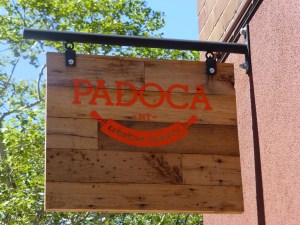
 “It’s not an industry you get into because you want to make a lot of money. It’s really because you love it,” says Marina Halpern, owner of Padoca Bakery. While many other restaurant businesses are struggling to keep their businesses in New York City with its high rent, health department inspections and increased competition, Halperin persisted in opening a bakery-café on the Upper East Side. She believed their location would contribute to the community as a local gathering spot, for both residents and the many hospital workers in the area. Moreover, no one is doing specialty coffee in the neighborhood.
There is a Starbucks a block away from Padoca, but Padoca Bakery successfully differentiates themselves as a specialty café by incorporating Brazilian themes. Padoca’s décor is hip and whimsical. The light fixtures are made from porcelain coffee pots, they have colorful chairs along with their popular swing chair that hangs from the ceiling. Moreover, the wooden tables and ceilings exacerbate the Brazilian vibes. Customers can buy pre-packaged salads and sandwiches, coffee from FAL Coffee, and their popular Brazilian-pastries. A popular choice is a Brazilian pastry called pal de quiet, which is essentially a fluffy cheese bread.
Marina Halpern moved from Saõ Paolo to New York City five years ago. She was involved in the entertainment industry, but in her free time took cake decorating classes at the French Culinary Institute in New York. Halpern says “I fell in love with it.” She then cultivated her skills in the food industry as she continued her studies, earned a professional certificate, interned as a pastry cook at The Dutch restaurant and worked at Tony Jean George’s The Mark. Halpern then finally decided that she wanted to open her own bakery. “When I decided to open he bakery, i realized New York has so much foot traffic and a great mix of cultures that would be perfect for the concept.” Marina’s plan is to grow slowly and steadily by eventually opening a few more stores, adding street kiosks in Carl Schurz Park and with her recent launch of catering services she hopes to achieve even greater success with Padoca.
To read more, click here.
 After three summers filled with hundreds of vendors, and thousands of foodies, Smorgasburg is moving their location from Brooklyn Bridge Park to Prospect Park. While many could have enjoyed the views of Manhattan’s Skyline while eating at their Takumi Taco, now, visitors can enjoy their foods in seated shaded areas. Eric Demby, Brooklyn Flea co-founder, says “We’re sad to leave Brooklyn Bridge Park, but it’s hard to complain when our new home is literally Brooklyn’s backyard.”
 City’s fast food worker minimum will rise to $15 by 2018 and the rest of the state by 2021. The increase in wages is in efforts to improve the lives of chain restaurant employees whose wages can keep them reliant on taxpayer-subsidized welfare programs. This policy will apply to not only company-owned restaurants with thirty or more nationwide locations but to franchise locations as well. As wages increases, labor costs increases resulting in price hikes for consumer goods. In a recent survey of 924 fast food businesses in New York, 70 percent were “very likely” to raise prices in response to the increase in minimum wages, and 83 percent of respondents claimed they were very likely or “somewhat likely” to reduce hours of staffing levels. This increase in higher wages could potentially prompt competitive salary increases throughout the hospitality and retail industries to avoid drama of workers who’ll suddenly find fast food jobs more attractive.
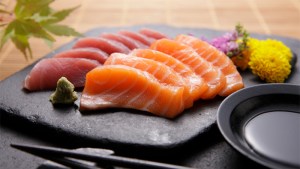 Sushi restaurants have lured gourmands by boasting of the freshest fish. But with new regulations, published by the New York City Department of Health and Mental Hygiene, restaurants are required that fish served raw, undercooked or marinated raw are to be frozen first to guard against parasites. This regulations has been approved by the Board of Health and will be set to take effect in August. The Health Department regulation is that fish will be required a minimum freezer storage time of anywhere from 15 hours to a week depending not eh temperatures and storage process.
 Mayor Bill de Blasio has proposed a bill that would require businesses to separate food waste and regular trash. Hotels, arenas and large-scale restaurants would be required to create systems and comply to this proposal regularly. The regulation applies to restaurants in hotels with more than 150 rooms, vendors in arenas and stadiums with seating capacity of at least 15,000 people, food manufacturers with a floor area of at least 25,000 square feet and wholesalers with at least 20,000 square feet. Mayor de Blasio believes “The commercial establishments in today’s proposal are already recycling plastics and metals, and by additionally recycling organic material, they will significantly contribute to reducing our city’s waste stream.” Exempt from this regulation are other food businesses like grocery stores, caterers, normal-sized restaurants and fast-food establishments. It is deemed that the sanitation department is set to publish this rule over the summer and is subjected to start after a 6-month grace period for businesses. Businesses will be given the option to arrange for collection by a private carter, transport organic waste themselves, or compost on-site, subject to compliance with the city’s sewer system. Business will be entirely liable for all costs and challenges associated with composting- space, price, arrangement.
 notorious for its high prices. While many consumers thought the produce was pricey because it was really healthy or organic, in actuality, after investigation from the Department of Consumer Affairs, it has been noted that Whole Foods is guilty of overpricing their produce. Whole Foods has been charged with over 800 violations during 107 separate inspections since 2010 for inaccurate consumer prices. Recently, inspectors weighed 80 different types of items at eight different locations and found that every label was inaccurate with many overcharging the consumers. Michael Sinatra, Whole Foods Spokesman, notes that the store always refunds any items found to have been incorrectly priced and likewise “never intentionally used deceptive practices to incorrectly charge customers.” Whole Foods employees remarked that corporate is held responsible for these incorrect labels because it is ordered by corporate. While just last summer Whole Foods agreed on a settlement of $800,000 in a California investigation regarding the same problems, Whole Foods, now, is potentially facing fines of more than $58,000 in New York City.
 in marketing, but Jordan Salcito, the Momofuku Wine Director, utilizes Instagram not only as a distribution medium but as a base in creating Momofuku’s wine list. Instagram along with other social media outlets like Twitter is essentially numerous social circles created from following friends and “liking” interesting posts. Salcito theorizes that within social media social circles are aroused through similar interests and style. Similarly winemaker friend groups on social media are indicators of actual wine styles.Through this idea Salcito creates a wine list where every bottle of wine can be suggested through the relationship between its corresponding sommelier.
 oods, it’s trademark is the Kulfi Ice Cream. New Yorkers are no stranger to Kulfi as it has already entered the market in the past through grocery vendors and other traditional Indian restaurants. However, the Kulfi at Babu Ji is unique in that Jessi Singh, the restaurant’s chef and co-owner, invests almost an entire day into making a Kulfi. Continuous stirring of the milk base and adjustments of temperature create a consistency different from an average ice cream. Kulfi has a more chewy texture that is smooth, creamy and dense and in the last bites there is cardamom and pistachio. Babu Ji offers only one flavor right now but Singh intends to bring more flavors with local fruits and in “clove-and-ginger-charged chai.”


 paigepapers.com