FDA Issues Salt Guidelines

Last Wednesday, the FDA took another step is pushing back the American diet to its more healthful days; the Administration issued draft guidelines with voluntary targets for salt reduction.  The hope is to reduce salt intake from an average 3,400 milligrams per day to 3,000 milligrams in two years and down to 2,300 milligrams in a decade.

The proposal comes with “overwhelming” scientific evidence and would purportedly saved thousands of lives in the years to come.  “Today’s announcement is about putting power back in the hands of consumers, so that they can better control how much salt is in the food they eat and improve their health,” said Health and Human Services Secretary Sylvia Burwell.  According to the Centers for Disease Control and Prevention, more than 70 percent of the sodium consumed in the country is already in food before it reaches the table.

“The majority of sodium intake comes from processed and prepared foods, not the saltshaker,” noted the F.D.A. statement.

However, some scientists have an opposing opinion: David A. McCarron, a research associate in the Department of Nutrition at the University of California, Davis, said a number of studies had shown risks of too little salt. “Going below 3,000 [mg] is dangerous — that’s what the data has shown,” said Professor McCarron, who has consulted for the food industry.

But F.D.A. scientists said the health advantages of getting down to the recommended 2,300 milligrams a day were beyond dispute. The science has been well vetted,said Susan Mayne, director of the Center for Food Safety and Applied Nutrition at the F.D.A.
To read more, click here and here.

Starbucks and Anheuser-Busch Team Up

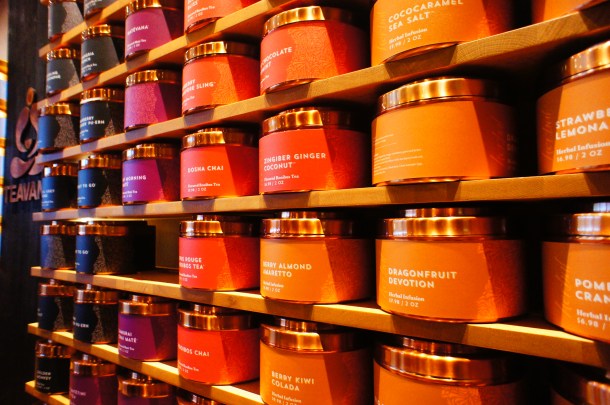
Tea Wall detail.JPGIn the beverage world, there are few names bigger than Starbucks and Anheuser-Busch. The two dominate any discussion of coffee or beer respectively, but they’re now partnering up to help capture the market of a third beverage – tea. Specifically, Starbucks is looking to begin selling their Teavana line of teas as ready-to-drink specialty bottles in grocery stores around the world. They decided to partner with Anheuser Busch to handle the bottling aspect of the operation, and if spokespeople for both companies are to be believed, there is plenty of revenue to go around.
Tea is currently a billion-dollar market in the US, and Teavana was Starbucks’ biggest acquisition ever when they bought it for $630 million in 2012. The original retail strategy for the brand, which involved revamping the Teavana tea bars around the country, didn’t live up to the “$90 billion global market opportunity” that Starbucks CEO Howard Schultz originally predicted.

Starbucks’ new partnership and strategy represent a significant pivot to the ready-to-drink market. They expect to release the new line in over 300,000 US supermarkets and convenience stores by next year. The move is also a possible save for Anheuser-Busch, who have seen sales and production suffer in the wake of the craft beer movement.

To read more, click here.

Friday is National Donut Day 2016!!!

The annual epic donut giveaway is almost here!  National Donut Day, also known as “Free Donut Day”, is celebrated on the first Friday in June.

National Donut Day started in 1938 as a fund raiser for The Salvation Army. Their goal was to help those in need during the Great Depression, and to honor The Salvation Army “Lassies” of World War I, who served donuts to soldiers.

Soon after the U.S. entrance into World War I in 1917, The Salvation Army sent a fact-finding mission to France. The mission concluded that the needs of U.S. enlisted men could be met by “huts” that could serve baked goods, provide writing supplies and stamps, and provide a clothes-mending service. Typically, six staff members per hut would include four female volunteers who could “mother” the boys. These huts were established by The Salvation Army in the United States near army training centers.

About 250 Salvation Army volunteers went to France. Because of the difficulties of providing freshly baked goods from huts established in abandoned buildings near the front lines, the two Salvation Army volunteers (Ensign Margaret Sheldon and Adjutant Helen Purviance) came up with the idea of providing donuts. These are reported to have been an “instant hit”, and “soon many soldiers were visiting The Salvation Army huts”.

National Donut Day is celebrated at participating donut seller locations across the country.  Some of the Donut Day offerings include:

Entenmann’s: A total of more than 150,000 donuts will be given away in more than a dozen cities around the country, including Atlanta, Boston, Chicago, Cleveland, Denver, Louisville, New Haven, New York City, and San Diego

Krispy Kreme: Every customer gets a choice of any free donut on Friday, June 3, no purchase necessary.

Dunkin Donuts: Get one free donut with the purchase of any beverage

Cumberland Farms: Purchase any coffee or fountain drink between 5 a.m. and 10 a.m. on Friday and take your pick of a free donut.


Bartender, There’s a Logo in My Drink

The goal of bars these days is to make sure that guests recall the name of the place, no matter how strong the drink.  Cocktail napkins, matchbooks and cardboard coasters have been replaced by new, glittery branding techniques.

At Dante, a bar in Greenwich Village, the name of the place is stamped into the ice cubes.  The owners had a copper ice stamp custom made in Hong Kong.  The guests take pictures of the cubes, and one of the owners is quoted “In an age of Instagram, it’s hard to ignore free publicity.”

A bar in Seattle named Canon makes it easy to remember its name by branding citrus peels.  One of the owners says that his team is trying to provide guests with a “Wow” moment, or a sensory experience that takes them out of their day.

The Aviary in Chicago sears its name onto wooden coasters.  When the guests order a rum drink called “Brand New to the Game”, a pine coaster will be branded at their table with the name of the bar.  The fire created by the brand will be used to fill the inside of the glass with smoke before it is filled.  And the guest may take the coaster home.

Bar Leather Apron in Honolulu revived the bar token (special coins that can be exchanged for drinks).  A complimentary cocktail coin was created as a way to promote events or give away to visitors.

The San Francisco gin bar Whitechapel uses picks (perfect for spearing olives) to remind drinkers where they are.

To read more, please click here

It’s Dinner: But Is It Cooking?

What is a meal kit?  A meal kit includes all of the ingredients and recipes to make delicious meals at home.  More than one hundred companies now offer to do the planning, shopping, and prepping, leaving the joy of cooking, and eating, to you.  The United States meal market could grow by as much as five billion dollars over the next decade.

Meal kits are regarded by some as a positive development in cooking culture.  The kits provide ideas and eliminate the need to decide “what’s for dinner?”.  Feedback from customers, especially millennials, is that these kits are teaching them how to cook, so they can feel involved in the kitchen,

Blue Apron is one of the leaders in this category, and the company offers a subscription service with: original recipes weekly (500-800 calories per serving), fresh ingredients (pre-measured to avoid waste) and convenient delivery across the nation (arriving in a refrigerated box).  As a pricing example, Blue Apron offers a 2-Person Plan including 3 recipes per week for a total of $59.94 ($9.99 per serving) or a Family Plan for 4 including 2 recipes per week for a total of $69.92 ($8.74 per serving).

A price point of $9-$10 per meal is a lot of money for most people.  However, some believe the kits are worth the time saved driving/walking to the store and shopping.

The meal kit market gets very specialized at a point.  Fans of Northern California cuisine and chefs can join Sun Basket, and enthusiasts of Georgia farmers and Southern chefs may subscribe to PeachDish.

Meal kits might help to cut down on food waste through pre-portioned ingredients.  According to an estimate by the U.S. Department of Agriculture, up to thirty-one percent of America’s post-harvest food supply is thrown away.

One complaint about the kits is that too much packaging is used, and besides current recycling methods, there is a hope that one day the insulation will be compostable.

As far as home-cooking trends are concerned, meal kits are at the forefront.  How much staying power will they have?  Time will tell…

To read more, please click here

Bringing Tradition Back; Bakeries Mill Again

The revolution is fermenting.  Right now, in a handful of bakeries around the country, there is a movement underway–stone mills are turning and fresh flour is turning into sourdough.  For most everyone reading this article, flour has always been ghost-white, shelf stable, and flavorless.  Fortunately for those of us who are gluten-tolerant, change is coming!

From California and Arizona to New York and North Carolina, bakeries are bringing tradition back.  In a time that none of us can remember, bakeries were where people bought their flour–freshly milled, whole grain from bran to germ–and had their loaves baked.  In the last 100 years or so, industrialization took over the process and bestowed upon us the wonderful white flour.  Unfortunately, we didn’t totally understand what was happening when we stripped wheat of its perishable part, the germ, and replaced it with a selection of vitamins to ‘fortify’ the remnants, the starchy endosperm.

Dough heavy weights such as Chad Robertson of Tartine Bakery (San Francisco), Richard Bourdon of Berkshire Mountain Bakery, and Chris Bianco of Pizzeria Bianco are popularizing on-site milling.  By milling the wheat whole, the oils, enzymes, and nutrients remain intact.  “When you compare what’s removed from wheat to make commercial flour, it tracks pretty well with the nutrients that are most deficient in the U.S. population,” says Dr. David Killilea, a nutritional biochemist at the Children’s Hospital of Oakland Research Institute.  In addition to the nutritional benefits, chefs are working directly with farmers and scientists–particularly those at Washington State University’s Bread Lab–to turn out loaves that maximize the flavor and texture profiles of different breeds.

To read more, click here and here.


Nutrition Labels Get FDA-Approved Recipe

Nutrition Facts Label - What

Last week, Michelle Obama made a monumental speech to usher in significant change to the world of packaged foods. The nutrition facts labels are getting a major makeover.  From Oreos to milk, food manufacturers will have two years to comply with the changes.  Here is what to expect:

  • Larger, bolder type for calories and serving size
  • Changes to serving sizes to be more accurate with consumption and packaging
  • Added line to delineate added sugars
  • Additional Nutrients required

While many nutritionists and dietitians see the changes as a great step in the right direction, industry trade groups are speaking up with concerns.  For example, the American Bakers Association is perusing the full 943-page document and has already flagged issues with the timing, definition of dietary fiber, and added sugars.

Additionally, the Grocery Manufacturers Association said the update was due as eating habits have changed.  However, they also have concerns that the new label may cause some confusion and that education will be necessary.

To read more, click here and click here for the FDA’s overview of changes.

Amazon’s Latest Expansion Will be Under the Belt

Amazon’s latest expansion into the food market is the launch of its own private-label product lines. Amazon users and internet-scrollers (so just about everyone) can soon expect to hear a lot more about perishable goods marketed under names like Happy Belly, Wickedly Prime, and Mama Bear. The service, available only to Prime members, is scheduled to roll out as soon as the end of July/early June. Hopefully the e-commerce giant’s partnership will be a boost to local food retailers, providing an opportunity to expand customer base across the country.

While Amazon discreetly rolled out private-label lines under Amazon Basics in 2015, sales before were limited to electronic and tech parts. The latest expansion moves much further. Amazon has recently applied for trademark protection for a variety of foods including potatoes chips, chocolate, pasta, and granola.

The move will unfold just ahead of another Amazon food venture: its delivery service for which it is partnering with Tyson Foods.

So whether you choose to embrace it or curse it, Amazon’s latest expansion will certainly impact local food markets.

Read More


Quinoa and California; an Unexpected Love Story

Quinoa–you’ve heard it, seen it, tasted it in nearly everything over the past few years.  The ancient grain, indigenous to the Andean regions of Peru, Bolivia, Ecuador, Colombia, and Chili, has grown wildly in popularity due to its complete-protein profile.

However, the seed itself hasn’t grown as wildly.  The pseudocereal is can be difficult to cultivate, and the surge in consumption had recently put a strain on farmers south of the equator.  Between the increasing price of quinoa and the increasing exports, consumers began to express concerns for the origin of their new favorite super food.

Meanwhile, in small, hot, below-sea-level area of the Imperial Valley in California, the Lundberg family has been able to grow the seed with great success.  In 2014, the family farm started with just 40 acres in Northern California.  Now, Lundberg has 800 acres planted and is looking at expanding this dry, forsaken patch in Brawley to 500 acres of what might be the next brown rice.

To read more, click here.

Instant Tortillas Are Worth $100,000, According to Kickstarter

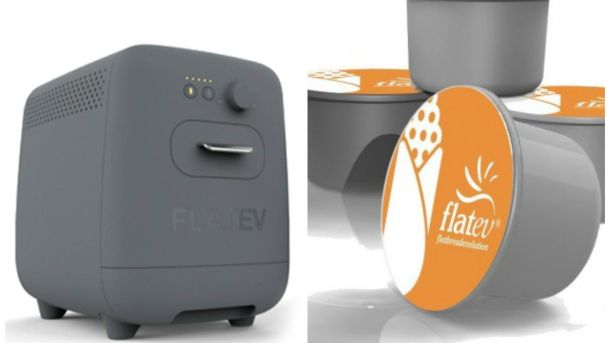
flatev.0.0.jpgDubbed by many as “The Keurig of Tortillas,” the Flatev calls itself an “artisan tortilla maker,” and the people of Kickstarter want in.

The Flatev is a machine that makes one thing and one thing only – fresh corn tortillas from small pods of dough (all in under 90 seconds). It’s not the first oddly specific cooking device, and it definitely won’t be the last, but with Kickstarter funding of more than $100,000, they’ve already surpassed their own goals. As Eater points out, there is a certain precedent for Kickstarter projects like this to go awry, bringing in huge amounts of money without ever delivering. The “Coolest Cooler” was one of the best funded products on the site, but has yet to deliver to any backers. Hopefully fresh tortillas are easier to deliver than a cooler/blender/bluetooth speaker combo.

To read more, click here.