Apres-Ski Themed Bar on Eataly’s Roof

Baita.jpg

Photo via eataly.com

Eataly, the Italian food mecca on 5th avenue, has opened the pop-up Baita bar on their roof with an “Italian Alps” theme. According to their website, they’ve “replaced the stone walls and nearby hills of grazing sheep with a retractable glass roof and views of the neighboring Flatiron building, but the food and drink will make you think you’re in the Italian Alps, right in the middle of Manhattan.”

Holiday shoppers, tourists and Eataly regulars can all enjoy tasty seasonal fare, like polenta and homemade sausage, while sipping on the sort of drinks you might crave after a long day on the slopes. Eataly’s brewery Birreria is running the pop-up, and pints of their cask ales will be available alongside a full wine list and house cocktails. Featured among those are mulled wine and Bombardino – a cream based Italian cocktail reminiscent of eggnog – but if the ski lodge aesthetic isn’t enough to make you forget the unseasonable warm weather we’ve been having, there are plenty of original cold cocktails as well. Other classic Italian goodies like fresh pasta and charcuterie from the market below will also be available.

If you visit and fall in love with the festive atmosphere, Eataly is also renting out Baita for parties of up to 175. But get there soon – the pop-up will only be around through March of 2016.

To read more, click here
.

 

A New Fast Casual from the Eleven Madison Park Team

Daniel Humm and Will Guidara, the current co-owners of Eleven Madison Park, recently announced plans for a new fast casual concept to open next year on West 28th. Made Nice will be a counter-service spot featuring veggie- and grain-heavy meals with seasonal ingredients for the health conscious crowd. They hope to join the current wave of healthier quick service restaurants with a greener tinge popping up all over the city, and provide flavor-forward meals meals running between $10 and $15.

Early hints from the team indicate that the new restaurant will still be strongly design-focused. They are working with the architecture and design firm Stonehill & Taylor on the interior and artist Jono Pandolfi on stoneware, both of whom worked with the team previously on NoMad.

The EMP team also has other plans in the works, including a new NoMad in Los Angeles due in fall of 2017, and a mysterious fine-dining project on Park avenue described as a “Four Seasons on steroids for the 21st Century.”

To read more, click here.

Another Chipotle Connects to E.Coli

Chipotle has been under a lot of fire these past few months because of its connection to multiple E.Coli outbreaks. This past week a number of Boston College athletes were reported sick with the norovirus after eating at Chipotle. The BC students were brought to the university’s health services because of their “gastrointestinal symptoms.”

Boston College emailed a public health warning to the whole student body that called the Chipotle near campus “the common denominator of all affected students.” The men’s basketball team is among the 30 sick students.

Chipotle spokesman Chris Arnold said “We do not have any evidence to suggest that this incident is related to the previous E.coli incident.” The Department of Public Health is working to determine if the students have E.coli.

To read more, click here.

Keurig sold for $14 Billion

keurig-logoKeurig Green Mountain has shown recent decrease in their sales, because of consumer demands of variety in the K-Cups, their high prices, and their lack of adaptability for other branded K-Cups. Their Kold soda-maker had disappointing results despite long term investment. However, the maker of single-serving coffee pod machines has been sold to an investment group for $13.9 billion.

The purchasing group, led by private-equity firm JAB Holdings, also owns Oreo-maker Mondelez. The sale of Keurig has shot up stocks 76 percent. The deal has become a crucial step for the group’s “global coffee platform.”

To read more, click here.

Tipping is Going Extinct

Over the past week weeks, a storm of debate has surged over the news that Danny Meyer has opted to eliminate tipping in his fine dining restaurants over the course of the next year. It’s a monumental decision and the change has its advocates and skeptics. In this month’s Enterprise Insight, we’re cutting through the opinion to talk specifically about the benefits and challenges of implementing such a system.

Specifically, we will review what operators need to consider when thinking about this: why, how, and the possible pitfalls.

Why Would You Eliminate Tipping

With our clients, we’ve discussed three key reasons for implementing a more-European system: pay disparity, retention, and rising wages.

The back of house has always been under-compensated in comparison to the dining room. Due to the legal classifications of wages, back of house employees cannot be tipped. Under a tip-included system, the real cost of the meal—menu price plus tip—is built into a single number, and the revenue from that number is accessible to the owner to distribute as he or she sees fit.

This, in turn, can help with retention. Low-wage jobs are historically high-turnover jobs. However, with access to the tip ‘revenue,’ an owner can increase wages accordingly to alleviate this issue.

Lastly, rising wages are driving up labor costs and in some instances, driving away skilled labor. With the minimum wage in New York changing on a industry-by-industry basis, it will only become more difficult to find and retain great team members. Again, a tip-included system allows the operator to offer competitive wage rates.

Additionally, in the front of house, the tipped-minimum is also going up. Come January 1, NYC restaurateurs will be required to pay their servers $7.50 per hour–a 50% increase. However, if the restaurant eliminates tipping, then the team can be paid a salary, or a greater hourly wage plus a bonus drawn from the ‘tipped revenue’, thus alleviating this jump in labor costs.

How Would You Eliminate Tipping

Currently, there are only two viable options: increase prices, or apply an “administrative fee.” Be mindful with an applied “fee:” if you charge a “Service Fee” rather than “administrative,” you cannot disburse that revenue to any one not in a service position.

Neither feels good right now, but we believe that price increases will become the new normal. Here’s why: with an “administrative fee,” tipping isn’t eliminated, it’s removed from the diner’s control. With price increases, it’s truly taken off the table. The diner does not know and cannot argue with the prices because they give no allusion to the portion going to the team.

Pitfalls

Increasing pricing will always cause a certain degree of pushback from guests. Until they’re fully on board with tip-included system, the sticker shock will cause a reaction. However, as more and more of NYC s fine-dining enterprises move to this style, the less resistance operators will face. Whether your establishment plans on keeping or eliminating tipping, it’s important to understand the mechanics, because “tip-included” is bound to become the new normal for a significant portion of the dining scene.

Blu on Park Opens in New York City

blu-on-park09.w600.h400Blu on Park is New York’s newest luxury steakhouse. It is located on Park, 116 East 60th St. Blu on Park is uptown, housed on the first three floors of a renovated 1920s residential brownstone. The restaurant seats 132, and NH Designs has included opulent details like gold-tinted exposed brick, abstract landscape paintings, and antique mirrors. The first floor is devoted to the bar and the lounge. The mezzanine and third floors are large-scale dining rooms.

Blu on Park’s Chef Russell Rosenberg created a more traditional steakhouse menu. They offer seven different types of steaks ranging from $42 to $120. There are lobster and shrimp cocktails, jumbo crab cake, sautéed black sea bass, and sour-cream cheesecake for dessert. The more affordable bar menu includes truffled arancini, caviar with roasted marble potatoes and creme fraiche, and veal meatballs.

To read more, click here.

Retail Spotlight: The Little Beet

THE-LITTLE-BEET-01.jpgTheir Success…Trends usually only last a limited time, until a new trend surfaces. While juiceries were once a major trend around the world, slowly a decrease in performance sales are hitting the market, with numerous juicing locations closing. The Little Beet, however, bets that healthy organic eating will be a long-lasting trend for New Yorkers. The organic market is still growing, and organic eating has become more of a lifestyle then just a trend for New Yorkers. The Little Beet recognizes this new lifestyle choice that New Yorkers are developing and successfully aligns its concept to it. From their menu to their interior design, the brand embodies their organic ideals “Fast, Farm, Fresh.”
All of the ingredients on their menu are sourced from farmers and local purveyors. The Little Beet’s menu items are all 100% gluten-free, and promotes that customers will feel “guiltin’ free,” and have wholesome food after eating their products. Customers can “create their own plate” and order their choice of proteins, sides, or salads. To the customer’s content, they can choose to have a serving of protein and up to 3 sides, just sides, salad and protein, soup and sides, or beet roll and sides. The sides range from roasted sweet potatoes to quinoa, and there are a variety of proteins to choose-from chicken to salmon.

Not only is their menu “wholesome and organic,” but their interior design accentuates organic ideals. The store’s color-scheme is brown, green, deep red, and other complementary “natural” tones. Large stalks of plants are aligned against the seating area of the ground floor, next to the entrance. The chairs, lighting fixtures, and stools are all in a “deep red” color. While the tables, walls, and ceiling on the ground floor are wood. The yellow lighting creates a softer atmosphere, and keeps the store being “hipster” and doesn’t give off industrial, or chain-like vibes.

Take Aways…The Little Beet attracts many customers because of their transparency, their atmosphere, and their theme. The menu items are all gluten-free, which opens their target market to include customers who cannot consume gluten, and consumers who align with healthy eating. However, more than just using organic ingredients, the transparency in preparing each meal is what potentially attracts consumers to eat at The Little Beet. After ordering your plate, consumers wait as they watch employees cooking the proteins, the sides or tossing salads. The display and dish that employees place each individual side creates an idea that consumers are eating “home-cooked meals.” The clear casing between the consumers and the food allows consumers to watch the process of their food. Moreover, while waiting for their choice of plate, consumers are easily seen making additional orders of sides after seeing, smelling the other choices of food. There is another cash register at the end of the line, where consumers are encouraged to make additional order of food, cold-press, and coffee. The placement of two cash registers before and after the display case potentially creates more orders.

The Little Beets’ overall ambiance, and its theme attract a variety of customers, leaning specifically toward women. There is a distinct difference in ratio of women and men in the restaurant. Women are more easily seen enjoying their plate, with friends and then sipping on coffee, after, while talking to their girlfriends. The portion size, the menu items, and the soft casual vibes of the restaurant are the primary factors that potentially attract female consumers more than male.

Franny’s Retracts Surcharge

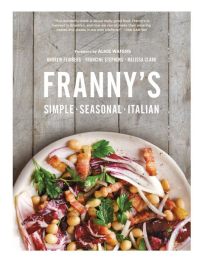
070813-258348-cook-the-book-frannys-cover-1With increasing labor costs around New York City, many restaurants have implemented new strategies to cover rising expenses. Yesterday we wrote about Franny’s announcement that they would include an “Obamacare surcharge” on all bills to cover increased labor costs for their employees. Francine Stephens and Andrew Feinberg, co-owners of Franny’s, have now retracted their statement.

Stephens and Feinberg were originally planning to add a 3 percent surcharge to all checks to cover the cost of providing health insurance to employees, as required by the Affordable Care Act. After releasing statements regarding the surcharge, many guests questioned Franny’s decision as being anti-Obamacare. Stephens and Feinberg have since retracted the surcharge and are instead increasing menu prices accordingly.

To read more, click here.

José Andrés to Open in Hudson Yards

hudson-yards_650The Hudson Yards is the largest private real estate development project in America. It is expected open in 2018 with dozens of restaurants curated by Thomas Keller.

Thomas Keller recently announced that he has come to an agreement with José Andrés and Costas Spiliadis to open Spanish and Greek-seafood concepts in the Hudson Yards, respectively. Both restaurants will be inside the 1 million square foot Shops & Restaurants at Hudson yards complex.

The Hudson Yards complex will be Andrés’ second New York project. This summer he is opening the Bazaar in the SLS New York at 444 Park Avenue South.

To read more, click here.

Brooklyn Pizzeria adds 3 Percent Obamacare Surcharge to All Checks

8420596411_84dabd79fe_cUnder the Obama administration’s Affordable Care Act, all companies incur an added cost of giving employees health coverage. The Affordable Care Act requires all companies with 50 or more full-time employees to provide their staff with fairly priced health insurance. To cover the extra costs incurred, Franny’s, a famous Brooklyn Pizzeria, will add a 3 percent surcharge to all of its checks in order to “cover the affordable care act for all Franny’s employees.”

Franny’s is not only adding a new surcharge but will also hike prices to increase employee wages and keep up with the rising minimum wage across fast-food restaurants. Franny’s co-owner Francine Stephens admits that the higher prices are a concern and will likely affect how often some guests are able to come in for dinner.

With new regulations increasing mandatory minimum wages and employee benefits, restauranteurs are coping with the higher costs in a variety of ways. Notably, Danny Meyers has taken an all-inclusive approach to pricing by eliminating tipping and absorbing costs into menu prices. Stephens says she wants to be transparent with prices but is also tracking Meyer’s move.

To read more, click here