Students Will Receive Big Payout in Lawsuit Against Le Cordon Bleu

564009859.jpg.0.jpg

The former students of a now-defunct Le Cordon Bleu culinary school in Portland, Oregon, could have a big check coming their way. A class-action lawsuit filed on behalf of 2,200 students at the for-profit cooking school is on its way to settlement, with Le Cordon Bleu agreeing to pay back 44 percent of its students’ tuition or loan amounts, KGW reports.

The settlement will end a decade-long legal battle against the school and its parent company Career Education Corporation. Students at Le Cordon Bleu and Western Culinary Institute claimed the school advertised itself as highly selective and prestigious, but in reality offered low-quality materials and provided training that only qualified graduates for entry-level, low-paid positions. The lawsuit further alleges that Career Education Corporation encouraged students to take out predatory loans because it had a secret deal with loan company Sallie Mae to overcharge students by 44 percent.

Read the full article here

Danny Meyer talks tipping, leadership and trust

Link - GlobalBPC_DannyMeyer.jpg

Danny Meyer, founder and CEO of Union Square Hospitality Group, said the restaurant industry is in a good position to help civilize the conversation on a number of issues.

The restaurateur and author of the popular book, “Setting the Table: The Transforming Power of Hospitality in Business,” shared his views as he accepted the Workplace Legacy Award at the recent TDn2K Global Best Practices Conference in Plano, Texas.

“The Workplace Legacy Award is all about figuring out how to balance this people, profits and planet,” said Joni Doolin, founder and CEO of TDn2K, when introducing Meyer. “You are a poster person for it.”

The award recognizes a restaurant industry leader who demonstrates success in people practices and operations, in addition to benefiting employees, organizations and communities.

Read the full article here

Free For All? Not So Fast: Comping in the Restaurant Business

accounting-sheets-calculator_0.jpg

The diner on table 8 is a frequent regular, who always brings in new guests when she dines. So, you comp their desserts—Friends and Family discount. The couple at table 17 has an allium allergy, but the chef forgot about the chives in the potatoes; free entrée—Apology Comp. The owner’s sister-in-law is dining with her daughters–100% Owner’s Comp. And there goes $400 from that evening’s revenue.


That $400 can very quickly become five, six, or seven percent of sales that you’re letting go. Of course, there is reason—value, even—to discounting guests’ meals. But there needs to be control and accountability. Otherwise, your 10% EBITDA can quickly drop to only 4% or 5%. In this month’s Enterprise Insight, we will discuss three key steps in controlling discounts: first, defining comps vs. voids; second, budgeting for comps; and third, reporting and reviewing with management.


Comps versus Voids

This first tenet is simple: a void removes the item from gross sales, and a discounted item is shown positively in gross sales and then negatively in discounts. These different impacts call for different functions: if something was entered in error, or was ordered but never delivered, then this is a void. Anytime food or drinks hits the table but shouldn’t be billed to the guest should be comped, or discounted, from the bill. The primary reason being what we reviewed above: the impact on gross sales. If gross sales do not accurately reflect in totality what is actually served, then food and labor costs percentages will be inaccurate.


Budgeting for Comps

A key component to managing the amount you discount—ie, the difference between gross and net sales—is having a budget. Try to keep comps below 3% of gross sales. There are additional considerations, though: for example, if you have a marketing budget predicated on comping certain guests—writers, bloggers, industry—then include that, as well. So, if you want comps at 3%, but anticipate using freebies for marketing costs worth 2% of sales, then total comps should be 5%. This is particularly common when a restaurant first opens, and operators need to build buzz.


Reporting and Reviewing

As we just mentioned above, comps are often used for distinct purposes. This is why reporting and reviewing these figures with management is so important. If, as in the prior example, 40% of comps are meant for marketing purposed, but no one is watching, an operator won’t ever know that the bartender is just too generous, or the kitchen is making too many mistakes.


Thus, we recommend reviewing weekly, as we do with our clients: comps by type, comps by menu category, and if possible, where the comp types are used by category. For example, if you’re trying to build up your bar business, you need to review the current distribution of comps with management and then push them to using more Friends and Family discounts on drinks. If you notice too many Apology comps in the Food category, audit the kitchen operations, because something is not right. We recommend using at least the following types for reporting: Friends and Family, Apology, Owner’s, Marketing, Employee Meal, and Manager Meal. One for every reason. Then train the team accordingly.


To review: discounts have real value—both in functionality and cost to your business. Thus, it is important to establish the right parameters and protocol for usage, and then report and review the comps frequently. Otherwise, you can easily see a gap between gross and net sales that represents a gap in understanding your operations.

Andre Surmain, Who Fed the Elite in Luxe Style at Lutèce, Dies at 97

02surmain-obit1-master768.jpg

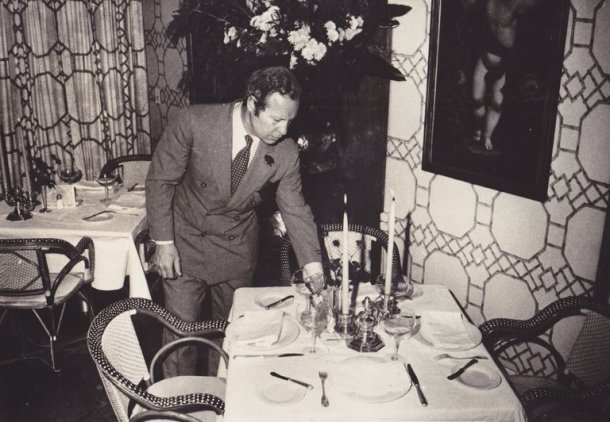
Andre Surmain, who transformed his cooking school’s Manhattan townhouse into Lutèce, an epicurean mecca defined by haute cuisine, even higher prices and a high-and-mighty clientele, died on Wednesday at his home in St. Paul en Foret, in the South of France. He was 97.

His death was confirmed by his nephew Peter Hurwitz.

A month after Lutèce opened in 1961, Craig Claiborne, the restaurant critic for The New York Times, described it as “impressively elegant and conspicuously expensive.” (His dinner for two was $52.30, or about $435 in today’s money.) The food, however, “could not be called great cuisine,” he wrote.

Read the full article here

The Lunch Rush of the Future

amazon_go_shelves1.0.jpeg

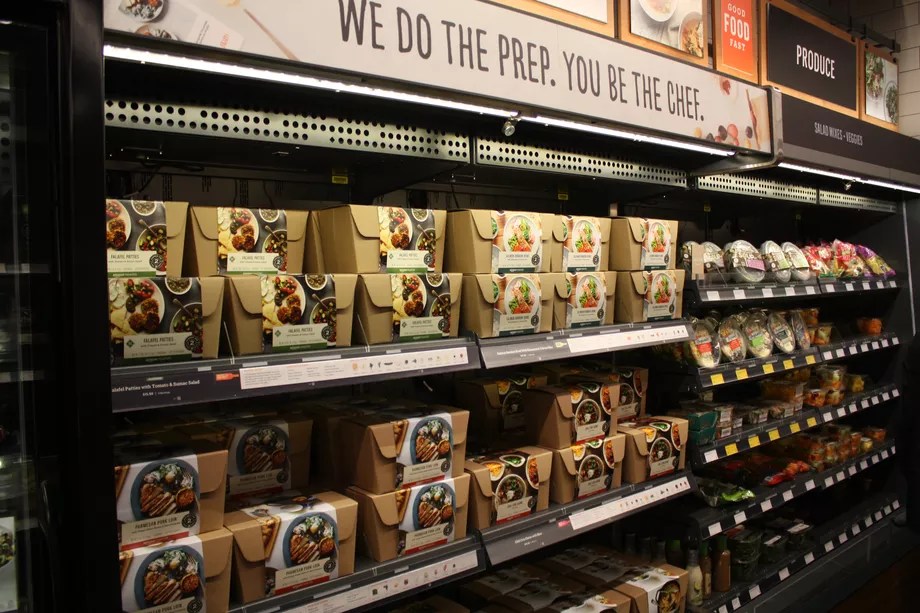
Customers hesitate when passing through the turnstiles at Seattle’s new Amazon Go store, as if they’re about to be transported into another dimension. They hesitate even more when leaving.

One can hardly blame them. In what’s being billed as a fully automated, cashier-free shop, Amazon hopes to create the most convenient of convenience stores, a place for anyone who wants to feel like they’re shoplifting, but without all that law-breaking nonsense. The concept seems inherently designed for lunch-goers looking for something with a little more variety and cultural cache than the office cafeteria, minus the minutiae of debit transactions and customization. Those are precious seconds that could be spent taking a selfie at Amazon Go.

Read the full article here

Can Restaurants Stop Harassment Before It Starts?

Restaurant_Managers_Final_edit.0.jpg

In October 2017, the Times-Picayune gave voice to the women who worked at John Besh’s New Orleans restaurants, where “male co-workers and bosses touched female employees without consent, made suggestive comments about their appearance and — in a few cases — tried to leverage positions of authority for sex.” In December, Eater NY broke the news that Mario Batali regularly groped employees and infused workplace conversation with sexual innuendo. A day later the New York Times detailed the many accusations against Ken Friedman of the Spotted Pig, with the impossible-to-forget recollections of what happened on the third floor of that restaurant in a space some employees referred to as “the rape room.”

Read the full article here

What’s Next for Restaurant Tip-Pooling Laws?

tip_pooling_trump_dol_regulation.0.jpg

We’re about to reach a tipping point on tipping: In December, the Trump administration’s Department of Labor announced it would roll back regulations that prohibited tip-pooling, or the distribution of tips to anyone other than the front-of-house staff who earned them. (These regulations were enacted under the Obama administration in 2011).

Under proposed — and currently pending — new regulations, employers that pay all of their employees the full minimum wage (not the tipped minimum) would be considered “owners” of any tips made by their staff. They could then: Share or redistribute tips between servers and back-of-house employees like cooks and dishwashers; keep the tips for themselves; distribute among management; or keep for their business.

Read the full article here

Whole Foods Unleashes Its Cheaper Concept in Fort Greene Today


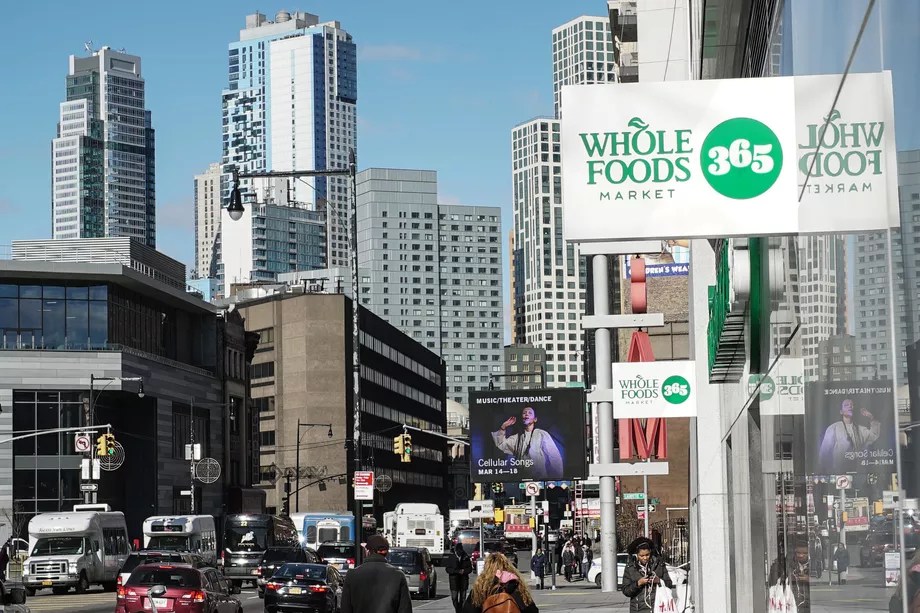
365_FTG_Exterior.0.jpgWhole Foods Market 365, an offshoot of Whole Foods that offers lower prices, makes its East Coast debut today with the grand opening of its new location in Fort Greene. The 30,000-square-foot space is located at 292 Ashland Pl. at Lafayette Avenue, and not only has cheaper prices but also has a cafe level with four restaurant concepts, including a popular West Coast vegan burger chain and a homegrown bakery.

Read the full article here

Five Reasons McDonald’s Is Back on Top

672997120.jpg.0.jpg

After years of declining sales, McDonald’s has seemingly righted its ship: Since CEO Steve Easterbrook took over in 2015, changes such as the launch of all-day breakfast have helped propel the fast-food titan out of its sales slump. It’s managed to maintain its upward trajectory over the past year, with its stock price rising by more than 40 percent in 2017.

The chain just reported its best sales growth in six years, with domestic same-store sales up 4.5 percent, and it’s seen an increase in foot traffic to its restaurants for the first time in four years. “We’ve successfully completed the transition from turnaround to growth,” Easterbrook told investors on the company’s quarterly earnings call.

Read the full article here

Popular Taiwanese Dessert Chain Takes on NYC

meet_fresh.0.jpg

Popular Taiwanese dessert chain Meet Fresh has opened its first New York City location, offering taro balls, shaved ice, tofu pudding, and more at 35 Cooper Square at East 6th Street.

The East Village store opened to long lines this weekend, EV Grieve reports, for the treats made in Taiwan and imported here. Started by siblings in Taichung, Taiwan, the chain now has more than 100 stores in Taiwan, plus a few sprinkled across the U.S., Asia, and Australia. The extensive menu, below, offers many variations of its signature items with over 100 dishes on the menu, such as mango shaved ice, boba tofu pudding, green tea with whipped cream, and hot almond soup.

Read the full article here