Want Tastier Coffee? Freeze Beans Before Grinding

Coffee freeze

Percolator, French press, AeroPress, espresso, pour over, vacuum pot, automatic brew, tin can: People go to great lengths for a good cup of coffee. But to achieve consistent flavor you may just need to chill your beans before grinding them. Colder beans produce smaller, more consistently sized particles when ground, yielding more flavor from less coffee, according to a study published in Scientific Reports.

In busy cafes, temperature matters. As room temperatures vary and grinders heat up with use, the consistency of the resulting grind changes. That’s a problem, because water extracts flavor from smaller coffee grounds faster than bigger ones. An inconsistent grind means sour taste from the small grains, and a bitter one from the big, all at the same time. For a more flavor-driven, sour and sweet cup, baristas adjust grinder settings for finer particles throughout the day.

But Colonna and Smalls, a specialty coffee shop in Britain, used science instead. They got together with chemists at nearby University of Bath to see how temperature affected how coffee beans break. They started at room temperature and went down to that of liquid nitrogen (-321 degrees Fahrenheit). It turned out, the colder the bean, the more uniform particles it produced, and the more even the flavor.

Read more here.
Meatless Moo-vement; Impossible Foods Readies Burger Launch

Over the past four years, a small, well-funded startup has been developing a new burger just a few miles from Stanford University.  It’s not meat, and it’s not just a veggie burger.  What Impossible Foods is trying to do is create a meat replacement that looks, tastes, feels, and cooks like regular ground beef.

Like most other Silicon Valley startups, Impossible Foods is looking to disrupt an existing industry.  For the founder, Patrick Brown, that is the inefficient, international meat supply, which relies on a huge carbon footprint to maintain.  Industrial animal farming uses a third of the planet’s land, destroys millions of trees per year, and consumes a third of the global water supply.  “We’re getting into this very scarily unstable area where we’ve never gone before in terms of pushing the boundaries of a stable planetary system,” Brown says. “We’re driving toward the cliff with our foot on the accelerator—and nobody was working on this as a solvable problem.”

Brown is working on this problem by approaching the “veggie burger” from a different angle: less quinoa and beets and more “proteins, fats, amino acids and vitamins derived from wheat, the roots of soybean plants, coconuts, potatoes and other plant sources.”

And now the chefs are talking.  Tracy Des Jardin, chef-owner of Jarindiere in San Francisco, will be the first to put the product on her menu, and she’s excited.  “I equate this to when grass-fed beef first hit the market. Initially consumers were skeptical, but now some prefer it.”  Later this summer, select New York restaurants will launch the burger, as well.  We will keep you posted when it comes to town!

To read more, click here.

The Coffee Pendulum Swings Again

Rejoice! Coffee is good for you again; as usual, the tide has shifted and your favorite morning beverage is back on the table.  The World Health Organization has concluded that coffee does not pose a cancer risk, and a regular habit of drinking coffee might even have a positive health effect.

Coffee is no stranger to the spotlight–good or bad.  In 1991, the WHO’s International Agency for Research on Cancer listed coffee as a possible carcinogen based on “limited evidence” that coffee was associated with a higher risk of bladder cancer.  However, the past 25 years have changed the evidence in a new direction.  Researchers reviewed more than 500 studies on over 20 different types of cancer and concluded that coffee might actually help prevent against uterus and liver cancers, and reduce the risk of colorectal cancer.

Consider replacing your pour-over with cold brew, though; research is also turning up some connection between consumption of very hot beverages and the risk of esophageal cancer.

To read more, click here.

Le Coucou Opens Today

16-le-coucou-007.w600.h400.jpg

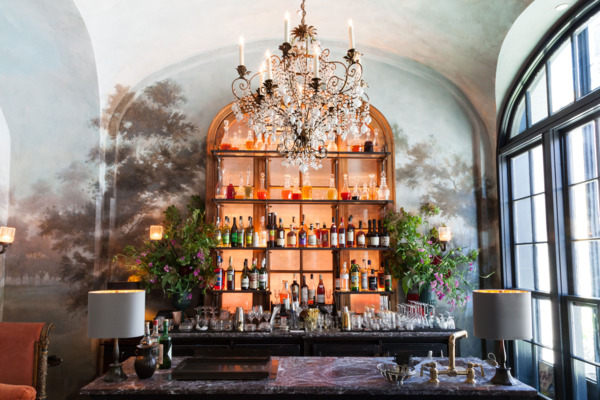
Le Coucou, the first American restaurant from Chicago-born chef Daniel Rose, will open tonight for dinner service. Rose currently has two restaurants in Paris, and has made a name for himself with classic French dishes. The new restaurant promises to offer similar cuisine, but Rose has said that he is looking for American-made products that remind him of France.  On the menu are items like pigs’ feet with caviar, pike quenelles, veal tongue, fish stew bourride and poached chicken for two or four.

Le Coucou is the result of a partnership between Rose and Restaurateur Stephen Starr, with Daniel Skurnick as head pastry chef. So far, the restaurant has earned as much press for its interior design as for the menu. Design firm Roman and Williams is responsible for the beautiful buildout, including chandeliers, velvet banquettes, and a gorgeous mural behind the bar.

To read more, click here.


Brooklyn Winery Team Opens New Crown Heights Restaurant

brooklyn-made-wines-01.w600.h400.jpgCrown Heights now has another new restaurant to add to its list – this time, it comes from the team behind Williamsburg’s Brooklyn Winery. Owners Brian Leventhal and John Stires will open the doors to BKW on Tuesday at 747 Franklin Avenue. They’ve brought on chef Michael Gordon, formerly of Bouley, to design the pared-down menu. Some highlights include konbu-cured mackerel with whipped feta and roasted grapes, root beer glazed pork ribs, and homemade donuts with butterscotch and lavender. The wine list will of course be well curated, with flights offered for those who are feeling indecisive and full bottles available to take home.

To read more, click here.


A Pioneering Global Standard to Reduce Food Waste

Pilot-scheme-shows-promise-in-repurposing-commercial-food-wastes.jpgThe issue of food waste is something of a hot topic these days, from proposed regulations overseas  to the ugly-food movement and the startups it has already spawned. This attention is well deserved. Besides the tragedy of waste in a world where 800 million still go hungry, wasted food also produces 8% of global greenhouse gas emissions and costs $940 billion worldwide every year.
The micro-movements that have sprung up on this front are important, but they face some major hurdles, even as more governments and large organizations commit to joining the cause. Most notably, food waste is extremely difficult to track and report on. Since it occurs all along the supply chain, and often across borders, the costs associated with this waste are typically baked into other operational costs and nearly impossible to quantify. Until now, there has been no consistent reporting standard on the issue.

To address this, a partnership of international organizations convened  at the Global Green Growth Forum (3GF) 2016 Summit in Copenhagen to come up with the first-ever set of global definitions and reporting requirements for companies, countries and others to consistently measure and report their food waste. Such standards will be crucial to measure the success of all these organizations as they make commitments to improve. Many major international organizations, including the UN, Consumer Goods Forum, and World Business Council for Sustainable Development, are already behind the coalition’s Food Loss and Waste Accounting and Reporting Standard (FLW Standard). 

The new standard will have the greatest impact on large corporations and governments, but food waste is a costly issue for all retail and restaurant businesses as well. We recommend following the lead set at the 3GF Summit, and making a commitment to tackle waste on a small scale as well.

To read more, click here.

New Lawsuit Against Chipotle Execs

With sales and stocks still reeling, a small group of Chipotle shareholders have now filed an additional lawsuit against the company’s executives, claiming that they “abused their control of the Company, and dealt themselves excessive compensation worth hundreds of millions of dollars through a corrupt stock incentive plan.”

The suit explicitly names Co-CEOs Steve Ells and Montgomery Moran, and CFO Jack Hartung, among others. It claims that these executives, using insider knowledge about the food safety protocols that would cause Chipotle’s well-reported downfall in 2015, dumped their stocks at an artificially inflated price and raked in millions before the food poisoning scandals began. Supposedly Ells made $78 million by selling 119,057 shares, Moran raked in $107 million, and Hurtung $28 million.

Chipotle has not admitted any wrong doing, and both this suit and one from January are still pending.

To read more, click here.

The Persistent Rise Of Restaurant Takeout And Delivery

ubereats

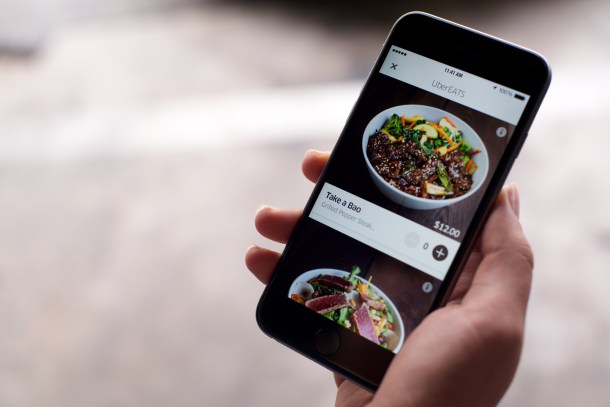
Pizza no longer dominates the delivery and takeout business. Consumers are increasingly ordering their favorite foods to be delivered or to-go, rather than dining in-store. And, in fact, restaurant delivery traffic outside of pizza has risen 33 percent since 2012. This presents a unique opportunity for foodservice and restaurant operators to shift their strategies and operating processes to take advantage of the delivery and takeout trends, rather than have their dine-in numbers and market share cannibalized by competitors who are focused on these services.

According to recent surveys, 51% of Americans use delivery services to purchase meals from casual dining restaurant and 26% order takeout or delivery at least once a week. These behaviors show little sign of slowing: digital ordering and delivery have been growing 300% faster than dine-in traffic since 2014. Third party delivery services, like DoorDash, Caviar and Grubhub are becoming major marketplace competitors, providing speed, ease of use, convenience and customized offerings based on customers’ previous orders. Furthermore, larger players such as uberEats, Amazon Prime and Google, are now entering this space and beginning to pilot their own food delivery programs.

Confidence in the future and growth trajectory of this space is strong. More than half a billion was invested in the food delivery sector in 2014 – almost 13 times the amount in 2013 – with more than a billion dollars invested in 2015. As for restaurants, partnering with third party delivery services is a seductive alternative, with research showing an increase in restaurant sales volume from 10% to 20%.

Read more here.

New Co-Working Start Up Is Partnering With Restaurants

space

New coworking start-up Spacious launched earlier this month by using DBGB Kitchen and Bar as a meeting and office space. They are now also adding L’Equipe in East Village and Public in Soho to their public work space portfolio. According to founder Preston Pesek, they plan to announce partnerships with restaurants in Williamsburg, Chelsea, Tribeca, Upper West Side, and even San Francisco and Los Angeles soon, but Pesek says they’re not targeting just any restaurant. It must be beautiful, and even though they won’t be serving food immediately, the menu must be delicious, he says. A good restaurant, he says, works perfectly as a good meeting space.

Besides being dinner-only restaurants, the restaurants involved with Spacious also need to be near public transit, be well-designed, and be big. DBGB has about 180 seats, and L’Apicio offers about 190. All of the eventual participants will have a minimum of 60 to 100 seats. Spacious members pay $95 per month to work in the spaces during the day, and restaurants are part of a profit-sharing partnership with the start-up.

Eventually, Spacious users will be able to order limited small plates at some of the restaurants through an app on their phone and pick it up themselves so as to avoid table service. “Most of the kitchens open early for prep work anyway, and it would be a way to showcase what they’re working on”, Pesek added.

Read more here.

Philly Paves the Way For Diet-Soda Taxes

In less than a week, Philadelphia will vote on a new tax on sodas which they are all but certain to pass. The tax will add 1.5 cents to every ounce of soda sold – an amount which adds up quickly on larger bottles and value-packs. The measure will make Philly the first large city to tax soda (Berkeley being the only other city in the U.S. to pass a similar law), as well as the first city to extend taxes to diet sodas. While the original proposal taxed only drinks with added sugar at 3 cents an ounce, critics argued this was too steep and disproportionately affected those with lower-incomes. The city council then amended the measure to tax all sodas at a lower rate, since upper- and middle-income consumers are more likely to reach for the diet soda.

Big Soda is already suffering from tanking sales and bad PR, so this move has understandably put them on the defensive. In the weeks leading up to the vote, soda companies have poured millions into ad campaigns against the tax, and the city has responded with some of their own. The council can also expect some litigation once they vote, since the industry is not likely to go down without a fight.

To read more, click here.