B&K French Cuisine Brings Paris to Harlem

The distance from Paris to Harlem is 5,823 km or 3,618 miles.  Benjamin Baccari Kebe, a Frenchman of Malian descent, is trying to bridge that gap at a tiny Harlem counter with a few metal stools.

Mr. Kebe trained at culinary school and at Paris restaurants.  His uncle convinced him in 2009 that Americans loved French food, and that the United States presented plenty of opportunity.  Mr. Kebe moved to New York and worked at Harlem neighborhood bistros.  Then last December he opened B&K French Cuisine with plans to make crepes, bake his own focaccia and serve classics like chicken forestiere.  His attention to detail may be found in the fact that he hand-cuts potatoes for French fries every morning.

The food is simple.  The menu is written on chalkboards hung from the wall, with sketches of the Eiffel Tower and a map of France.  Bissap can be found on the menu – an item from Mr. Kebe’s Malian heritage.  It is a mix between juice and tea, made of dried hibiscus soaked in boiling water, with a crush of mint.

The desserts are rich as they should be, including chocolate mousse, Nutella tiramisu and mascarpone in whipped cream.

Recommended dishes are chicken pesto panini, Dijon braised beef panini, and Londonian fish and chips.  Prices range up to $16.

B&K French Cuisine is located at 2167 Adam Clayton Powell Jr. Boulevard in Harlem.  The restaurant is open from Tuesday to Sunday for late breakfast, lunch and dinner. Reservations are not accepted.

To read more, please click here
Elon Musk’s Brother Has a Plan to Sell Organic Fast Food for Under $5

KM

Kimbal Musk, Elon’s less famous brother who made scads of money himself in Silicon Valley before leaving for culinary school, is getting ready to open the first of (what he hopes will be) many locations of a new organic fast-food chain. He tells Tech Insider that in addition to the Kitchen and Next Door, currently the two halves of his restaurant mini-empire, he’s about to launch a new concept called the Kitchenette, where everything will be fast, healthy, and organic but cost under $5. The first location is set to debut in Memphis this August.

With this venture, Musk enters a field that’s really heating up. The idea of bringing tasty and healthy affordable food to the masses has been the culinary world’s holy grail for a while. Musk is packaging the idea as sort of a Pret A Manger–style grab-and-go spot. He says the space will be like a coffee shop, with a counter, indoor seating, and a big patio out front, and the menu will mostly consist of sandwiches, soups, and salads, all made using ingredients sourced from nearby farms. The locavore bent will ensure ingredients stay seasonal, but Musk says there’s another benefit, too:

While the Kitchenette’s pricing sounds too good to be true, Musk says he will make it work with a little help from local farmers. The same farms distribute meat and produce to all three of restaurant concepts, and knock down the price based on what’s in-season.

Read more here.

Restaurants Are Googling You!

Service

Before you go to a restaurant, you probably look it up online for some reason or another. Maybe you’re making a reservation through the website or maybe you’re checking the menu. You might look at photos to see how fancy the place is or maybe you just need to look up the address. What if a restaurant were doing this to you?

Restaurants google the names of patrons who’ve made reservations more often than you might think. In 2010 the subject surfaced to the surprise, amusement and horror of restaurant goers and chefs alike. People were understandably alarmed, but most people didn’t seem to care. In a poll conducted by CNN, almost 40 percent of people were okay with restaurants googling them if it meant special treatment, and about 4 percent hoped restaurants would research them. Sixteen percent thought it was a little strange but could live with it, and 15 percent thought it was creepy. Four years later, the practice has grown further in the name of  offering bespoke and differentiated services. Justin Roller, the maître d’ at New York restaurant Eleven Madison Park googles every single patron that visits Eleven Madison Park. He looks for anything that can help make a customer feel special and at home. “If I find out a guest is from Montana, and I know we have a server from there, we’ll put them together,” Roller told Grubstreet. He doesn’t stop at cursory information either. “If, for example, Roller discovers it’s a couple’s anniversary, he’ll then try to figure out which anniversary,” Grubstreet reports.

Restaurants also take notes on customers after they’ve dined, to track preferences and habits, like if someone is a good or bad tipper. According to the New York Times, hundreds of restaurants record traits and preferences about their customers, like allergies, favorite foods and even if a customer likes to linger at the table.

Read more here.

The Persistent Rise Of Restaurant Takeout And Delivery

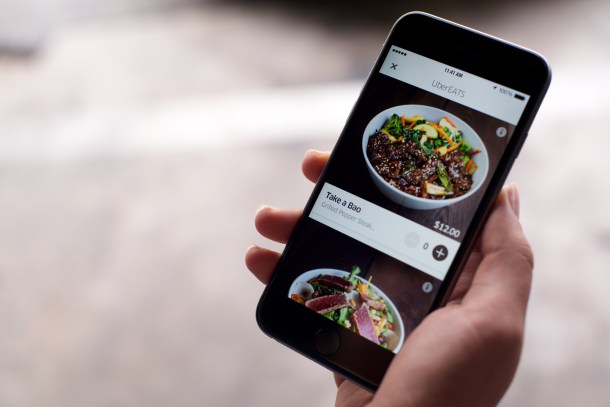
ubereats

Pizza no longer dominates the delivery and takeout business. Consumers are increasingly ordering their favorite foods to be delivered or to-go, rather than dining in-store. And, in fact, restaurant delivery traffic outside of pizza has risen 33 percent since 2012. This presents a unique opportunity for foodservice and restaurant operators to shift their strategies and operating processes to take advantage of the delivery and takeout trends, rather than have their dine-in numbers and market share cannibalized by competitors who are focused on these services.

According to recent surveys, 51% of Americans use delivery services to purchase meals from casual dining restaurant and 26% order takeout or delivery at least once a week. These behaviors show little sign of slowing: digital ordering and delivery have been growing 300% faster than dine-in traffic since 2014. Third party delivery services, like DoorDash, Caviar and Grubhub are becoming major marketplace competitors, providing speed, ease of use, convenience and customized offerings based on customers’ previous orders. Furthermore, larger players such as uberEats, Amazon Prime and Google, are now entering this space and beginning to pilot their own food delivery programs.

Confidence in the future and growth trajectory of this space is strong. More than half a billion was invested in the food delivery sector in 2014 – almost 13 times the amount in 2013 – with more than a billion dollars invested in 2015. As for restaurants, partnering with third party delivery services is a seductive alternative, with research showing an increase in restaurant sales volume from 10% to 20%.

Read more here.

New Co-Working Start Up Is Partnering With Restaurants

space

New coworking start-up Spacious launched earlier this month by using DBGB Kitchen and Bar as a meeting and office space. They are now also adding L’Equipe in East Village and Public in Soho to their public work space portfolio. According to founder Preston Pesek, they plan to announce partnerships with restaurants in Williamsburg, Chelsea, Tribeca, Upper West Side, and even San Francisco and Los Angeles soon, but Pesek says they’re not targeting just any restaurant. It must be beautiful, and even though they won’t be serving food immediately, the menu must be delicious, he says. A good restaurant, he says, works perfectly as a good meeting space.

Besides being dinner-only restaurants, the restaurants involved with Spacious also need to be near public transit, be well-designed, and be big. DBGB has about 180 seats, and L’Apicio offers about 190. All of the eventual participants will have a minimum of 60 to 100 seats. Spacious members pay $95 per month to work in the spaces during the day, and restaurants are part of a profit-sharing partnership with the start-up.

Eventually, Spacious users will be able to order limited small plates at some of the restaurants through an app on their phone and pick it up themselves so as to avoid table service. “Most of the kitchens open early for prep work anyway, and it would be a way to showcase what they’re working on”, Pesek added.

Read more here.

Dig Inn CEO Takes Disruption To New Heights

Dig Inn CEO

For Adam Eskin, CEO of Dig Inn, being disruptive meant severing ties with standard supply chains and developing relationships with local farmers in order to source ingredients for his New York City-based concept. The company has even helped farmers buy land and equipment and is now looking into buying farmland.

“Broken,” is how Eskin described today’s food system, which was set up decades ago to deliver food to masses of people as quickly as possible. That goal has led to obesity and a failing agriculture system, which inspired him to launch Dig Inn, a concept serving only from-scratch and seasonal food. Menu items include: flame-grilled wild salmon, Sicilian cauliflower, roasted kale, five-spice meatballs made with chicken or pork and free-range roasted turkey from Koch’s Turkey Farm in Tamaqua, Pennslyvania.

Dig Inn’s seasonal and innovative menu means talented chefs must always be in the kitchen, and Eskin admitted that finding NYC chefs who want to work in a fast casual setting can be challenging. Eskin found a solution by developing his own in-house culinary school, where he transforms employees into chefs. In an effort to inspire and help his chefs grow, Eskin partners with some of New York’s high-end restaurants, including Danielle, to provide them with the opportunities to work in their kitchens. It’s a win, win; young chefs study under pros and then put new skills to use at Dig Inn.

Read more here.


The Wizard Retools His Lab

David Bouley dreams of engineering a whole different concept of a restaurant.

The famous chef’s eponymous restaurant opened at 165 Duane Street, Tribeca in 1987.  According to Bouley, the restaurant will be going “on sabbatical” and then reopening in a smaller space (planned for Tribeca) with a mission of healthful eating.  The new space will accommodate only 20-25 seats and open five days a week.  The Bouley that New Yorkers have come to know over the past thirty years will be gone in a few months.

In recent years, Mr. Bouley has become obsessed with health issues.  Towards the end of the year, he will engage in a deep study of the relationship between health and food.  He plans to take nutrition classes at New York University and consult with doctors and experts, internationally.

The new restaurant’s mission will be to optimize health.  Tasting menus will be developed to address a variety of dietary restrictions and medical concerns.  “Food should give you calories that you burn off, not calories that you store,” said Mr. Bouley.

David Bouley plans to rejuvenate his restaurants and projects (Bouley, brushstroke, Bouley Test Kitchen and Bouley Botanical) and himself.  He is quoted as saying “Gastronomy and science, meeting together.  I want to learn how to do that better”.

Please click here to read more…

A Return Trip to the Caribbean

Guyana, a country on South America’s North Atlantic coast, is defined by its dense rainforest. The country is English-speaking, with strong traditions of cricket and calypso music, and culturally it’s connected to the Caribbean region.  Angela Pellew-Whyte is a native of Guyana and the chef at Angela’s in Bedford –Stuyvesant, Brooklyn.

Interestingly, Ms. Pellew-White ran the original Angela’s on the same corner from 1997 to 2004, and after training in the culinary program at the Art Institute of New York City, she returned to the same space to pick up where she had left off.  Ms. Pellew-White draws inspiration from growing up in a household of nine children, where her father prepared feasts for a large, extended family.  While her sisters played with dolls, she cooked.

Caribbean food has been described as bold, full-flavored, aromatic and textured food.  Caribbean food is a fusion of influences that may include plantains, okra and rice from African slaves, stir-fries and soy sauce from Chinese migrant workers, pork in all forms from Spanish colonists, puff pastry from the French and curries delivered with indentured servants from India.

One of Chef Pellew-White’s featured dishes is Guyanese saltfish and bake.  Bake is a type of fried bread that can be eaten with almost anything: jams, jellies, corned beef/mutton, saltfish, even vegetable dishes such as sautéed okra or tomato choka.  Recommended dishes includes codfish sliders, oxtail (the meat is braised and complemented by gravy), curry goat (with scents of cumin and curry), jerk chicken (in a strong marinade), okra (beautifully tender), plantains (soft and warm), rice and peas, and corn with house dressing.  Pricing is moderate.

Angela’s can be found on the corner of Nostrand and Jefferson Avenues, and serves moderately-priced, pan-Caribbean dishes.

To read more, click here:


One Sommelier’s Streamlined Vision

Only the well-financed restaurants have the resources to present the best wines.  Most wine-conscious restaurants narrow their visions and choose a style or region in which to concentrate.  The selection complements the cooking and conveys something about the restaurant’s identity.

Freek’s Mill is a new casual restaurant in Gowanus, Brooklyn, and features one of the most narrowly concentrated selections of wine.  However, if you want Beaujolais or a chenin blanc, this restaurant is the place to be; these wines make up about 70% of the bottle inventory.  The wine list was constructed by Alex Alan, the sommelier and a partner in the restaurant.  Mr. Alan said his choices grew out of a draft of the restaurant’s opening menu, which emphasized seasonal vegetables, small plates and a wood-burning oven.

Beaujolais is a French wine generally made of the Gamay grape which has a thin skin and is low in tannins.  Beaujolais tends to be a very light-bodied red wine, with relatively high amounts of acidity.  The wine takes its name from the historical Province of Beaujolais, a wine producing region.  Chenin blanc is a white wine grape variety from the Loire valley of France. Its high acidity means it can be used to make everything from sparkling wines to well-balanced dessert wines,

Mr. Alan is quoted, “In a perfect world, I want to give customers what they want.  But I also want to teach them something without it feeling like I’m teaching them something.” The author of this article, Eric Asimov, applauds Mr. Alan for choosing wonderful wines that will reward customers who put themselves in his hands.

Here lies the age-old debate: Is a restaurant obligated to give customers what they want by offering something for everybody?  Or can it stay true to a vision?

To read more, click here:


The Pre-Shift Meal May be Your Best Tool For Team Building

Many full service restaurants already incorporate a staff meal as part of their operations, but for some that meal may not seem worth the expense or planning required. If you fall into the latter category, we invite you to reconsider some of the added benefits of bringing the team together over a staff meal. Studies done in firehouses show that firefighters who share meals are more cooperative and perform better as a team. And while the stresses of putting out a burning building may not be exactly the same as those of serving a full dining room, there are some basic skills in common. And teammates who are able to relax together and connect when they’re not on the clock are more likely to communicate well when they are. Organizing a shared meal is also a good way for managers to take on joint responsibility and foster teamwork between front of house and back of house.

If organizing a full pre-shift sit-down is impossible at your establishment because of the time required or the nature of the business, we still recommend doing a lineup to go over the latest menu changes and any information that can be shared with guests. For more ideas about adding this simple but powerful step to your daily operations, click here.