After 5 Months of Gratuity-Free, Nishi Changes Tact

20160227-Momofuku_Nishi_interior_2.0.jpgWhen David Chang opened Momofuku Nishi in Chelsea 5 months ago, the chef generated the usual buzz for a new Momofuku concept. But Nishi was also earning press as the latest addition to the gratuity-free movement, so far spearheaded by other big names like Meyer and Tarlow. Chang even gave an interview in his magazine Lucky Peach on the decision, citing their desire to pay kitchen workers a living wage.

This week, Nishi will be changing course and adding a tip line to the bottom of all checks. Prices will also lower somewhat, but wages for kitchen should stay the same. The team explained the decision in a Tumblr post, saying “This is by no means the end of the no-tipping discussion at Momofuku. But at this moment, we think a tipping model will benefit our guests and staff.”

Nishi also added brunch this week, which included a number of smaller, more affordable portions of items on the dinner menu. Hopefully the changes will satisfy early critics, who had praise for some dishes but considered them too pricey.

To read more, click here.
It’s Dinner: But Is It Cooking?

What is a meal kit?  A meal kit includes all of the ingredients and recipes to make delicious meals at home.  More than one hundred companies now offer to do the planning, shopping, and prepping, leaving the joy of cooking, and eating, to you.  The United States meal market could grow by as much as five billion dollars over the next decade.

Meal kits are regarded by some as a positive development in cooking culture.  The kits provide ideas and eliminate the need to decide “what’s for dinner?”.  Feedback from customers, especially millennials, is that these kits are teaching them how to cook, so they can feel involved in the kitchen,

Blue Apron is one of the leaders in this category, and the company offers a subscription service with: original recipes weekly (500-800 calories per serving), fresh ingredients (pre-measured to avoid waste) and convenient delivery across the nation (arriving in a refrigerated box).  As a pricing example, Blue Apron offers a 2-Person Plan including 3 recipes per week for a total of $59.94 ($9.99 per serving) or a Family Plan for 4 including 2 recipes per week for a total of $69.92 ($8.74 per serving).

A price point of $9-$10 per meal is a lot of money for most people.  However, some believe the kits are worth the time saved driving/walking to the store and shopping.

The meal kit market gets very specialized at a point.  Fans of Northern California cuisine and chefs can join Sun Basket, and enthusiasts of Georgia farmers and Southern chefs may subscribe to PeachDish.

Meal kits might help to cut down on food waste through pre-portioned ingredients.  According to an estimate by the U.S. Department of Agriculture, up to thirty-one percent of America’s post-harvest food supply is thrown away.

One complaint about the kits is that too much packaging is used, and besides current recycling methods, there is a hope that one day the insulation will be compostable.

As far as home-cooking trends are concerned, meal kits are at the forefront.  How much staying power will they have?  Time will tell…

To read more, please click here

The Pre-Shift Meal May be Your Best Tool For Team Building

Many full service restaurants already incorporate a staff meal as part of their operations, but for some that meal may not seem worth the expense or planning required. If you fall into the latter category, we invite you to reconsider some of the added benefits of bringing the team together over a staff meal. Studies done in firehouses show that firefighters who share meals are more cooperative and perform better as a team. And while the stresses of putting out a burning building may not be exactly the same as those of serving a full dining room, there are some basic skills in common. And teammates who are able to relax together and connect when they’re not on the clock are more likely to communicate well when they are. Organizing a shared meal is also a good way for managers to take on joint responsibility and foster teamwork between front of house and back of house.

If organizing a full pre-shift sit-down is impossible at your establishment because of the time required or the nature of the business, we still recommend doing a lineup to go over the latest menu changes and any information that can be shared with guests. For more ideas about adding this simple but powerful step to your daily operations, click here.

What’s Next for Retail?

Retail Customer Experience, the online publisher of current retail news and research, just released their latest Whitepaper on what’s next for retail (and how to navigate your business there). It includes research and advice on mobile POS, inventory management, and omnichannel brand representation, including warnings about some of the pitfalls retailers face navigating new technologies.

To download a copy, click here.

Reserve Goes after Instant Reservations

We’ve written a lot recently about the delivery wars currently being waged between competitors like Grubhub, Uber and Amazon, but less has been said about the battle to become the go-to reservation system. Current heavy hitters OpenTable and Yelp’s SeatMe have enjoyed a relatively open playing field for awhile, allowing each of them to acquire thousands of restaurant partners.

Reserve has been in the game since 2014, but has marketed its app as a restaurant “concierge” rather than a traditional reservation system. They partner with a much smaller list of restaurants (currently around 350), and users of the app provide a time window and a number of guests rather than making a reservation on the spot. Restaurants then confirm the time and Reserve alerts the user. Evidently with their eyes on a bigger prize, Reserve has now rolled out instant reservations at a subset of it’s current restaurant list. That subset may be small, but it includes impressive names like Russ & Daughter’s, Blue Hill at Stone Barns, and Mission Chinese. Reserve’s Head of Restaurant Product, Peter Esmond, says that their focus is largely on creating a product that works better for restaurants by offering more flexibility and greater customer support.

While Yelp and OpenTable continue to go head to head, Reserve may quietly sneak up on them through the high-end market. Or they may just add a delivery feature and take on the world.

To read more, click here.

Café Henrie Launches Dinner

cafe-henrie-04.w600.h400.jpg

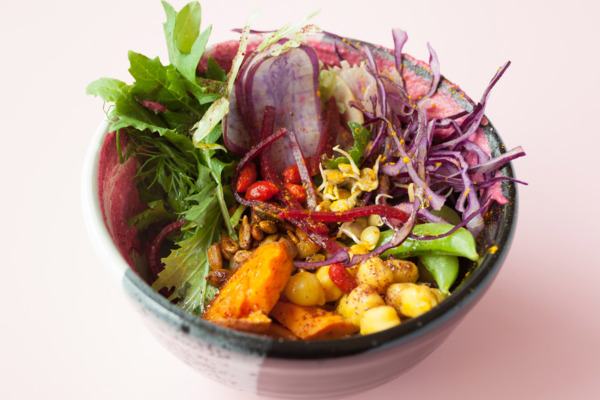
LES lunchtime favorite Cafe Henrie launched dinner service this week, with a beautiful menu of brightly colored, vegetable-heavy dishes like the Gypsy Salad (vegetables, chickpeas and beet tahini) and the tiger bowl (tuna, avocado and black sesame). The new menu is by Camille Becerra (formerly of Navy). Cafe Henrie is riding the wave of the (highly photographable) healthy-food-that-isn’t-health-food trend, as seen in spots like Dimes and El Rey. Their lunchtime success has allowed them to expand service to dinner.

To read more, click here.

The Unexpected Problem With Tablet Ordering

Okay, we admit it, this may not seem like a problem to guests ordering food at a fast casual chain; but to restaurant owners who are considering switching from human servers to tablet ordering (that is, placing tablets at tables or the front of the dining area where guests can click through their order rather than speaking to a server), there’s new evidence to consider. According to a paper published in the Journal of Consumer Research, guests are actually less likely to indulge in decadent food and treats when they order from a tablet instead of a person. And while this could be good news for restaurants gearing toward the health conscious (like Sweetgreen, which already handles the majority of it’s ordering through a mobile app rather than face-to-face sales), it bodes less well for establishments like bakeries, pizza places or fast food chains.

The findings are interesting because they contradict an assumption many have, that guests are more likely to indulge if they don’t feel they can be judged by a server. Instead, the research suggests guests don’t feel judged at all – they feel encouraged to treat themselves, and are less likely to control ordering impulses when speaking than clicking a button.

There are certainly other reasons to shy away from tablet ordering, especially when hospitality is the backbone of your business. But for those considering the benefits, this research is one more factor to weigh in.

To read more, click here.

Seamless Now Has Its Own Delivery Drivers in NYC

GettyImages-464182497.0.jpgSince 2014, Seamless has been quietly testing its “turnkey delivery service” – drivers and bikers whom restaurants without their own in-house delivery team can use to deliver food through the app. We say “quietly” because it’s impossible to tell through the Grubhub/Seamless interface which restaurants are using these delivery people, and which are using their own, and the company has declined to say just how many restaurants are using the service.

In the last few months, they’ve rolled out the delivery service in Brooklyn and Queens, mentioning popular spots like Mighty Quinn’ and No. 7 North as early adopters. It’s an attempt to compete in a crowded marketplace with companies like UberEats, Postmates and DoorDash, while still giving flexibility to restaurants that would like to continue using their own delivery teams. The pricing structure is similarly flexible – delivery is an added service, with an added commission charge of about 14%. Add that to their flat commission fee of around 15%, and the margins shrink fairly rapidly – although other delivery services top out at 30% already.

To read more, click here.

Waitlisting App Nowait Introduces Bill Pay Feature

The App Nowait, which allows guests to add their name to digital waitlists at restaurants that do not take traditional reservations, is now leveraging those partnerships to introduce a mobile payment option as well. Nowait has been steadily growing for the past few years to incorporate a suite of software for restaurants and guests, including tools to manage seating and server rotation as well as reservations and waitlists. They already have  close to 4,000 restaurants on the platform, running the gamut from Chili’s to the Clinton St. Baking Company here in New York. Nowait has been downloaded by diners over 3 million times.

With the new mobile payment option (currently being tested in the company’s hometown of Pittsburg), guests can quickly pay their check at the end of the meal without flagging down a server. The app works with three of the largest POS systems (Micros, NCR, POSitouch), which covers around 85% of their targeted fast-casual market. Nowait claims that there are benefits all around – restaurants are seeing faster turnaround, and servers have seen higher tips. The latter may be due to the apps customizable suggested tip amount, which is now standard in POS systems like Square.

As more aspects of the dining experience go digital (and mobile), this market will get more crowded. Nowait has partnerships on it’s side, but they’ll have to make the experience seamless as well.

To read more, click here.

New York Approves $15 Minimum Wage

New York Governor Andrew Cuomo followed closely on the heels of California yesterday, announcing an agreement with Albany lawmakers to raise the NY State minimum wage to $15 per hour over the next few years. The increase will begin with for workers in New York City employed by large businesses (those with at least 11 employees), who will have a minimum wage of $11 at the end of 2016, and an additional $2 each year after, reaching $15 on 12/31/2018.

The national labor rights movement has been fighting for $15 since 2012, and roughly half of the 50 states have increased their minimums somewhat (although the Federal minimum is still set at $7.25 due to congressional opposition). The final legislation in NY has not been approved, so it’s unclear how it will affect tipped workers. The tipped minimum in New York increased recently to $7.50, precipitating some of the gratuity-free movement. Additional increases would almost certainly prompt more NYC restaurants to raise prices and eliminate tipping altogether.

To read more, click here.