Jobless Claims at Their Lowest in 42 Years

In a bright sign for all industries, jobless claims in the U.S. declined unexpectedly last week to hit 253,000, the lowest since November of 1973. Jobless claims are a measure of the number of Americans filing for unemployment, and their decrease indicates employers that are upbeat about the economy, increasing hiring and expanding employee headcount.

The number of continuing claims from those already receiving unemployment benefits also fell, and for 58 consecutive weeks claims have been below the 300,000 level that economists say is typically consistent with an improving job market. Data from the labor department also indicates more employees voluntarily leaving their jobs, indicating confidence that they will be able to find another.

Besides the economic growth that brings revenue to small businesses, a decrease in claims also means lower rates of unemployment insurance – good news all around for the hospitality industry.

To read more, click here.

New York Approves $15 Minimum Wage

New York Governor Andrew Cuomo followed closely on the heels of California yesterday, announcing an agreement with Albany lawmakers to raise the NY State minimum wage to $15 per hour over the next few years. The increase will begin with for workers in New York City employed by large businesses (those with at least 11 employees), who will have a minimum wage of $11 at the end of 2016, and an additional $2 each year after, reaching $15 on 12/31/2018.

The national labor rights movement has been fighting for $15 since 2012, and roughly half of the 50 states have increased their minimums somewhat (although the Federal minimum is still set at $7.25 due to congressional opposition). The final legislation in NY has not been approved, so it’s unclear how it will affect tipped workers. The tipped minimum in New York increased recently to $7.50, precipitating some of the gratuity-free movement. Additional increases would almost certainly prompt more NYC restaurants to raise prices and eliminate tipping altogether.

To read more, click here.

Free Burritos Can’t Help Chipotle Recover before 2018, But Maybe Burgers Can?

burrito burger 009.JPG

Chipotle’s next move?

After their colossal – and well publicized – downfall, Chipotle has been doing everything possible to get back in customer’s good graces. That includes giving away about 9 million free burritos earlier this month, according to the chain (that’s $62 million worth, if anyone’s counting). They plan to send another 21 million free food coupons in the mail this month. But analysts from Wedbush Securities point out that, while sales may be returning slowly, the coupon strategy isn’t a sustainable one. Eventually, guests have to forget the reason they stopped coming in the first place.

The investment firm downgraded Chipotle’s shares and cut their target stock price from $450 to $400, saying that “current valuation reflects an overly optimistic outlook regarding Chipotle’s path to recovery.” They do not expect Chipotle to recover the sales lost from the salmonella, norovirus and E. Coli outbreaks until at least 2018.

One curveball to these predictions may be the news that Chipotle has applied for a trademark on the name “Better Burger,” indicating they have plans to recoup the losses in another way. It’s a strange move considering the number of existing burger chains, and there’s no word yet from Chipotle on how they plan to market themselves in this arena.

To read more, click here and here.

The Vanilla Shortage on the Horizon

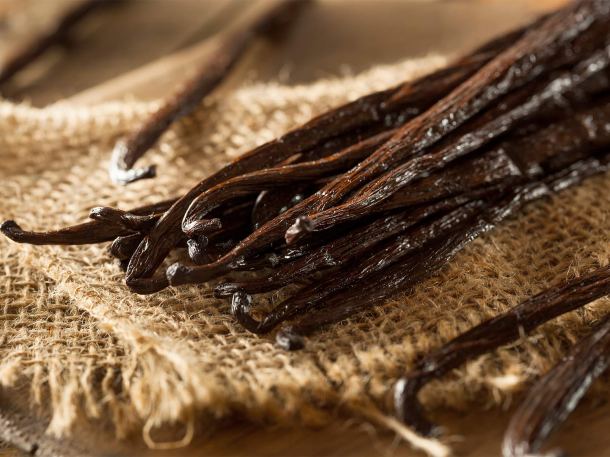
vanilla-shutterstock_281680811.jpgVanilla often gets a bad rap as the most boring flavor, but ice cream connoisseurs know that it’s still an irreplaceable necessity in the vast majority of varieties. This makes the news even more troubling that a vanilla shortage is driving supply down and prices up just in time for the warm weather.

The shortage has been caused by a particularly bad harvest months ago in Madagascar, the world’s largest producer of the beans. Since harvesting and curing vanilla pods is a process that takes several months, this shortage has been on the horizon for awhile, and prices have been climbing steadily. They’re now at near-record highs of $205 per kilogram, up from $85 last year and $20 in 2011. Apparently the process has become circular, with farmers picking beans earlier and lowering the overall quality of the supply.

These price fluctuations in crops are not new, and so far the 2016 crop looks to be doing better (so it’s unlikely we’ll have to hunker down for several vanilla-free years). The larger long term problems may be in coffee and cocoa, which are so far affected more negatively by climate change. The vanilla shortage of 2015 will hopefully just serve as an important reminder that ice cream’s most-maligned flavor is also one of the most important.

In France, the Magic Word Could Get You a Cheaper Coffee

While we all know that “please” is helpful for getting mom to pass the spaghetti at family dinner, the magic word (or it’s French equivalent) now has an added power – it can lower the price of your coffee. French cafes are increasingly turning on to the trend of charging their rude guests more. In many cafes, this practice is kept discrete, although at least two spots have become open about the tiered pricing. At L’Hamburgé in Grenoble, France, coffees range from €1.50 for the most demanding guests, down to €1 for those who ask nicely. At La Petite Syrah in Nice, the divide is even more extreme: a full “Hello, coffee please” costs only €1.40, but saying only “Coffee” is a full €7. There is a middle tier of €4.25 for adding a s’il vous plaît but no bonjour. It’s also unclear if tourists who are still struggling to be polite in a new language get any special dispensation – or added penalty.

While it would be nice if we could all be a little kinder to each other before the morning coffee, we don’t think a trend like this would (or should) catch on here. Hospitality and human connection are the x-factor you just can’t put a price on. Even if a guest forgets the magic word, chances are they won’t forget your great service; next time, just hope they come in with mom to remind them.

To read more, click here.

Brazilian Chain Fogo de Chão Finds U.S. Success in 2015

fogo-de-chaojpg-152fc25e6d984682.jpg

Meat cooking at Fogo de Chao

The Brazilian steakhouse Fogo de Chão, known for it’s all you can eat buffet of meat, carved table side for guests, had a very good year in the U.S. Same-store sales rose 3.5% in the fourth quarter, and 6 more U.S. locations were opened (plus one unit in Mexico), leading to a 12.8% increase in revenue from the previous year. Net income increased even more, up 58.7% to $27.9 million, or $1.06 per share.

CEO Larry Johnson attributed their success to “initiatives we implemented to drive trial and frequency while at the same time growing our average check.” He specifically mentions the group dining platform, which markets the restaurant to large corporate gatherings, wedding parties and other celebrations. Johnson also calls out their expansion to other dayparts, including lunch and brunch.

The Brazilian branch of the chain did not meet the same success last year, due to the continuing Brazilian recession. Same store sales in Brazil fell 8.8% after a successful 2014, in which the world cup brought new guests from around the globe.

To read more, click here.

Grubhub Hopes a Greater Delivery Focus Will Keep Copycats at Bay

443145850_1280-e1393607221897.jpgThe food delivery market is a crowded one, with new competitors emerging every day. Grubhub, which owns Seamless, may control a large portion of that market, but all that competition took a toll last year. In 2015, the company’s growth slowed significantly and their stock value followed suit. In response, Grubhub declared that they would move from handling logistics only to actually delivering the food.

Currently, Grubhub handles the physical delivery of about 8% of their orders. The other 92% are delivered by the restaurants themselves, which use the Grubhub equipment and software to take the orders. Taking over delivery gives the company greater control, and may make them more appealing to the restaurants themselves – but the strategy is not without its pitfalls. Hiring contracted companies to handle the food can be very expensive, and consumers are reticent to pay much for the convenience. In the fourth quarter of 2015, Grubhub lost $5.5 Million on delivery.

CFO Adam DeWitt claims that that loss was still a significant improvement over the third Quarter, so the momentum may be in Grubhub’s favor. That’s good news, since Uber and Amazon are no insignificant threat. Whatever their strategy this year, Grubhub’s biggest advantage may be simply that they got there first.

To read more, click here.

The Financial Toll of Chipotle’s Troubles

Now that the saga of Chipotle’s food safety issues, stock market tumbles, and attempts to win back loyalty are finally dying down (or so it seems), it’s reasonable to ask: what exactly was the cost of that widely publicized downfall? When a company sees a 25% drop in shares, and a 14% decrease in sales in one quarter, what does it actually cost the executives behind the brand?

In Chipotle’s case, it meant about a 50% decrease in profits for the two CEOs, Steve Ells and Monty Moran – or 15 million dollars each. While that is a steep hit, it’s worth keeping in mind that the two are among the highest paid executives in America, each reportedly earning more than the heads of McDonalds, Starbucks and Panera combined prior to 2015. So it stands to reason that Ells and Moran will weather the storm – even if the company’s struggles continue.

To read more, click here.

Italy Cracks Down on Olive Oil Fraud

We wrote recently about the upward trend of California-grown olive oil, which still represents a small portion of US sales but has been given a boost by great reviews and press reports exposing the fraud that mars the Italian market. Fraud includes misuse of “virgin” and “extra-virgin” labels, as well as misrepresentation of olive origin.

In an effort to save the reputation of Italian-made oils, Italian lawmakers have now voted to tighten regulations around such fraud, and increase penalties for mislabeling. In the past, regulations have imposed fines of up to 9,500 euros on producers for violating these decrees, but proponents of the new harsher version point out that fraud represents a multi-million euro industry, and the low fines are unlikely to be an effective deterrent. As one Italian lawmaker, Colomba Mongiello, described it to the NY Times, “it is not the moment to lower our guard on fraud and counterfeiting. It is important to punish anyone who damages the image of Italy abroad.”

To read more, click here.

The New Meal-Kit on the Block Raises $3.7 Million

hungryroot-variety-pack.jpgIt is now nearly impossible to ignore meal-kit companies like Blue Apron and Hello Fresh, which continue to plaster subway cars with advertisements and encourage huge investments to start-up competitors. The latest is Hungryroot, a meal-kit delivery company that wants to fill several niches at once: healthy, vegetarian, and quick.

Hungryroot has raised $3.7 million in funding from Lightspeed Venture Partners, Crosslink Capital and others, justified by the success of their predecessors and their own rapid growth. Unlike Blue Apron, Hungryroot’s business model does not involve subscriptions; one-off meals are available to order on Amazon and the company plans to expand to Whole Foods soon. While some have questioned whether the meal-kit trend is a bubble waiting to burst, the success of any business is directly tied to its ability to stand out. In this sense, Hungryroot’s biggest selling point is its innovative recipes: brownies made from black beans which somehow taste like the real thing, and noodles made from sweet potato with a  “Creamy Cashew Alfredo” sauce.

While there’s no replacement for good old fashioned comfort food, there’s definitely a market for substitutes like this – especially if they’re easy to prepare. Look out for Hungryroot in your neighborhood Whole Foods soon.

To read more, click here.