Ikea Gets into the Hyper-Local Game

635925890195816807-242942337_Header.jpgAt first glance, it might seem like an affordable furniture company has very little to do with the farm-to-table movement. But where others might see apples and oranges (or apples and bookshelves, as the case may be), Ikea sees opportunity.

The brand recently partnered with Space 10, a “future-living lab” and exhibition space in Copenhagen, to produce an environmentally sustainable hydroponic gardening system (called “The Farm”) made primarily using Ikea products like LED lights, shelving, and plastic bins. All told, 80% of the materials in The Farm come from Ikea’s product lines.

Ikea plans to roll out the new hydroponic system in their in-store cafes. Those cafes have historically been known more for Swedish meatballs, lingonberry jam and baked goods than for fresh produce, but that may change in the near future. Although food sales represent a very small portion of Ikea’s overall revenue, they ultimately plan to market The Farm to restaurants and home gardening enthusiasts interested in producing more of their own vegetables. If the hyper-local movement is any indication, this market will continue to grow in the coming months – and Ikea may just be on to something.

To read more, click here.

A Pioneering Global Standard to Reduce Food Waste

Pilot-scheme-shows-promise-in-repurposing-commercial-food-wastes.jpgThe issue of food waste is something of a hot topic these days, from proposed regulations overseas  to the ugly-food movement and the startups it has already spawned. This attention is well deserved. Besides the tragedy of waste in a world where 800 million still go hungry, wasted food also produces 8% of global greenhouse gas emissions and costs $940 billion worldwide every year.
The micro-movements that have sprung up on this front are important, but they face some major hurdles, even as more governments and large organizations commit to joining the cause. Most notably, food waste is extremely difficult to track and report on. Since it occurs all along the supply chain, and often across borders, the costs associated with this waste are typically baked into other operational costs and nearly impossible to quantify. Until now, there has been no consistent reporting standard on the issue.

To address this, a partnership of international organizations convened  at the Global Green Growth Forum (3GF) 2016 Summit in Copenhagen to come up with the first-ever set of global definitions and reporting requirements for companies, countries and others to consistently measure and report their food waste. Such standards will be crucial to measure the success of all these organizations as they make commitments to improve. Many major international organizations, including the UN, Consumer Goods Forum, and World Business Council for Sustainable Development, are already behind the coalition’s Food Loss and Waste Accounting and Reporting Standard (FLW Standard). 

The new standard will have the greatest impact on large corporations and governments, but food waste is a costly issue for all retail and restaurant businesses as well. We recommend following the lead set at the 3GF Summit, and making a commitment to tackle waste on a small scale as well.

To read more, click here.

New Lawsuit Against Chipotle Execs

With sales and stocks still reeling, a small group of Chipotle shareholders have now filed an additional lawsuit against the company’s executives, claiming that they “abused their control of the Company, and dealt themselves excessive compensation worth hundreds of millions of dollars through a corrupt stock incentive plan.”

The suit explicitly names Co-CEOs Steve Ells and Montgomery Moran, and CFO Jack Hartung, among others. It claims that these executives, using insider knowledge about the food safety protocols that would cause Chipotle’s well-reported downfall in 2015, dumped their stocks at an artificially inflated price and raked in millions before the food poisoning scandals began. Supposedly Ells made $78 million by selling 119,057 shares, Moran raked in $107 million, and Hurtung $28 million.

Chipotle has not admitted any wrong doing, and both this suit and one from January are still pending.

To read more, click here.

Philly Paves the Way For Diet-Soda Taxes

In less than a week, Philadelphia will vote on a new tax on sodas which they are all but certain to pass. The tax will add 1.5 cents to every ounce of soda sold – an amount which adds up quickly on larger bottles and value-packs. The measure will make Philly the first large city to tax soda (Berkeley being the only other city in the U.S. to pass a similar law), as well as the first city to extend taxes to diet sodas. While the original proposal taxed only drinks with added sugar at 3 cents an ounce, critics argued this was too steep and disproportionately affected those with lower-incomes. The city council then amended the measure to tax all sodas at a lower rate, since upper- and middle-income consumers are more likely to reach for the diet soda.

Big Soda is already suffering from tanking sales and bad PR, so this move has understandably put them on the defensive. In the weeks leading up to the vote, soda companies have poured millions into ad campaigns against the tax, and the city has responded with some of their own. The council can also expect some litigation once they vote, since the industry is not likely to go down without a fight.

To read more, click here.

Starbucks and Anheuser-Busch Team Up

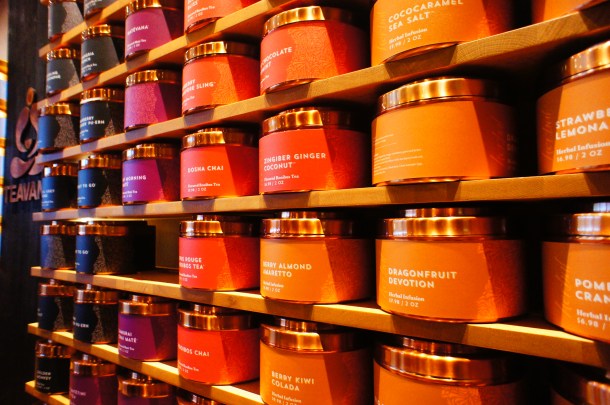
Tea Wall detail.JPGIn the beverage world, there are few names bigger than Starbucks and Anheuser-Busch. The two dominate any discussion of coffee or beer respectively, but they’re now partnering up to help capture the market of a third beverage – tea. Specifically, Starbucks is looking to begin selling their Teavana line of teas as ready-to-drink specialty bottles in grocery stores around the world. They decided to partner with Anheuser Busch to handle the bottling aspect of the operation, and if spokespeople for both companies are to be believed, there is plenty of revenue to go around.
Tea is currently a billion-dollar market in the US, and Teavana was Starbucks’ biggest acquisition ever when they bought it for $630 million in 2012. The original retail strategy for the brand, which involved revamping the Teavana tea bars around the country, didn’t live up to the “$90 billion global market opportunity” that Starbucks CEO Howard Schultz originally predicted.

Starbucks’ new partnership and strategy represent a significant pivot to the ready-to-drink market. They expect to release the new line in over 300,000 US supermarkets and convenience stores by next year. The move is also a possible save for Anheuser-Busch, who have seen sales and production suffer in the wake of the craft beer movement.

To read more, click here.

Bartender, There’s a Logo in My Drink

The goal of bars these days is to make sure that guests recall the name of the place, no matter how strong the drink.  Cocktail napkins, matchbooks and cardboard coasters have been replaced by new, glittery branding techniques.

At Dante, a bar in Greenwich Village, the name of the place is stamped into the ice cubes.  The owners had a copper ice stamp custom made in Hong Kong.  The guests take pictures of the cubes, and one of the owners is quoted “In an age of Instagram, it’s hard to ignore free publicity.”

A bar in Seattle named Canon makes it easy to remember its name by branding citrus peels.  One of the owners says that his team is trying to provide guests with a “Wow” moment, or a sensory experience that takes them out of their day.

The Aviary in Chicago sears its name onto wooden coasters.  When the guests order a rum drink called “Brand New to the Game”, a pine coaster will be branded at their table with the name of the bar.  The fire created by the brand will be used to fill the inside of the glass with smoke before it is filled.  And the guest may take the coaster home.

Bar Leather Apron in Honolulu revived the bar token (special coins that can be exchanged for drinks).  A complimentary cocktail coin was created as a way to promote events or give away to visitors.

The San Francisco gin bar Whitechapel uses picks (perfect for spearing olives) to remind drinkers where they are.

To read more, please click here

Instant Tortillas Are Worth $100,000, According to Kickstarter

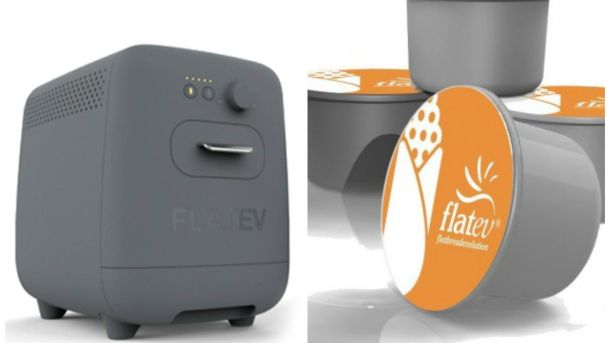
flatev.0.0.jpgDubbed by many as “The Keurig of Tortillas,” the Flatev calls itself an “artisan tortilla maker,” and the people of Kickstarter want in.
The Flatev is a machine that makes one thing and one thing only – fresh corn tortillas from small pods of dough (all in under 90 seconds). It’s not the first oddly specific cooking device, and it definitely won’t be the last, but with Kickstarter funding of more than $100,000, they’ve already surpassed their own goals. As Eater points out, there is a certain precedent for Kickstarter projects like this to go awry, bringing in huge amounts of money without ever delivering. The “Coolest Cooler” was one of the best funded products on the site, but has yet to deliver to any backers. Hopefully fresh tortillas are easier to deliver than a cooler/blender/bluetooth speaker combo.

To read more, click here.

Reserve Goes after Instant Reservations

We’ve written a lot recently about the delivery wars currently being waged between competitors like Grubhub, Uber and Amazon, but less has been said about the battle to become the go-to reservation system. Current heavy hitters OpenTable and Yelp’s SeatMe have enjoyed a relatively open playing field for awhile, allowing each of them to acquire thousands of restaurant partners.

Reserve has been in the game since 2014, but has marketed its app as a restaurant “concierge” rather than a traditional reservation system. They partner with a much smaller list of restaurants (currently around 350), and users of the app provide a time window and a number of guests rather than making a reservation on the spot. Restaurants then confirm the time and Reserve alerts the user. Evidently with their eyes on a bigger prize, Reserve has now rolled out instant reservations at a subset of it’s current restaurant list. That subset may be small, but it includes impressive names like Russ & Daughter’s, Blue Hill at Stone Barns, and Mission Chinese. Reserve’s Head of Restaurant Product, Peter Esmond, says that their focus is largely on creating a product that works better for restaurants by offering more flexibility and greater customer support.

While Yelp and OpenTable continue to go head to head, Reserve may quietly sneak up on them through the high-end market. Or they may just add a delivery feature and take on the world.

To read more, click here.

Behind Chick-fil-A’s Success

cow-8.png

Political controversy aside, Chick-fil-A’s success is undeniable. In 2015, they averaged $3.2 million in per-store sales, which is 25% higher than McDonald’s, and double Burger King or Wendy’s. In 2014 they overtook KFC as America’s biggest Chicken chain. Analysts now predict that they are on track to become the 4th largest chain in America in terms of revenue by 2020, calling them the largest and least appreciated threat to McDonald’s. And if you think that this is largely irrelevant in New York, where Bill De Blasio has come out officially against the company for the CEO’s homophobic remarks, you might want to think again. 8 blocks from their first NYC location in midtown they are currently construction a second, and there are additional plans in the works to open a dozen more around the outer boroughs – bringing them close to the number of Panera breads in the city.

Needless to say, controversy does not seem to be slowing them down too much. Analysts credit their tight operations, and perhaps a certain amount of exclusivity: apparently only 0.7% of the 20,000 applicants who applied for franchises last year were given a spot – an acceptance rate lower than Harvard.

To read more, click here.

Chobani CEO Offers Full Time Employees an Unprecedented Bonus

On Tuesday Morning, 2,000 full time Chobani employees received the surprise of a lifetime: shares worth 10% of the company, a bonus which could mean up to a million dollars for some employees when the company is sold or goes public. According to CEO Hamdi Ulukaya, the Turkish immigrant who founded Chobani in 2005, the goal is to pass along the wealth he could not have accumulated without the help of his employees.

The distribution of shares was based on tenure, with the employees who had been with Chobani longest receiving the largest distribution. Since Chobani’s current valuation, as estimated by TPG capital, is $3 – $5 billion, the average value of each employee’s distribution is $150,000. The shares come directly from Mr. Ulukaya, who is still the majority stakeholder. If employees leave or retire before Chobani is bought or goes public, they can hold onto the shares or sell them back to the company.

The move has obviously already generated a lot of press, particularly as it touches on the hot button topic of the wealth gap in America, much discussed this election cycle. Mr. Ulukaya himself has not made the connection explicit – focusing instead on his appreciation for his employees, and their crucial role in bringing the company where it is today.

To read more, click here.