Whole Foods Denied “World’s Healthiest” Moniker

whole-foods1.jpgIn 2010, Whole Foods successfully took on the name “America’s Healthiest Grocery Store,” trademarking the slogan on the basis of existing consumer sentiment. But they recently submitted an application with the U.S. Patent and Trademark Office to call themselves  “The World’s Healthiest Grocery Store” – a significant jump in status which could indicate plans for more aggressive expansion overseas.

Unfortunately the Patent office rejected the application, on the basis that such a slogan makes a “laudatory” and unverifiable claim. Papa John’s slogan “Better Ingredients, Better Pizza” was originally denied for the same reason. One reason the switch from “America’s” to “The World’s” might have struck officials as puffery is that Whole Foods currently has a presence in only Canada, Britain and the U.S. – hardly the whole world. They’ve also struggled historically to push into these overseas markets, where existing chains often have a hold on loyal clientele.

Whole Foods now has 6 months to update and refile the case for reconsideration.

To read more, click here.

Elon Musk’s Brother Has a Plan to Sell Organic Fast Food for Under $5

KM

Kimbal Musk, Elon’s less famous brother who made scads of money himself in Silicon Valley before leaving for culinary school, is getting ready to open the first of (what he hopes will be) many locations of a new organic fast-food chain. He tells Tech Insider that in addition to the Kitchen and Next Door, currently the two halves of his restaurant mini-empire, he’s about to launch a new concept called the Kitchenette, where everything will be fast, healthy, and organic but cost under $5. The first location is set to debut in Memphis this August.

With this venture, Musk enters a field that’s really heating up. The idea of bringing tasty and healthy affordable food to the masses has been the culinary world’s holy grail for a while. Musk is packaging the idea as sort of a Pret A Manger–style grab-and-go spot. He says the space will be like a coffee shop, with a counter, indoor seating, and a big patio out front, and the menu will mostly consist of sandwiches, soups, and salads, all made using ingredients sourced from nearby farms. The locavore bent will ensure ingredients stay seasonal, but Musk says there’s another benefit, too:

While the Kitchenette’s pricing sounds too good to be true, Musk says he will make it work with a little help from local farmers. The same farms distribute meat and produce to all three of restaurant concepts, and knock down the price based on what’s in-season.

Read more here.

A Pioneering Global Standard to Reduce Food Waste

Pilot-scheme-shows-promise-in-repurposing-commercial-food-wastes.jpgThe issue of food waste is something of a hot topic these days, from proposed regulations overseas  to the ugly-food movement and the startups it has already spawned. This attention is well deserved. Besides the tragedy of waste in a world where 800 million still go hungry, wasted food also produces 8% of global greenhouse gas emissions and costs $940 billion worldwide every year.

The micro-movements that have sprung up on this front are important, but they face some major hurdles, even as more governments and large organizations commit to joining the cause. Most notably, food waste is extremely difficult to track and report on. Since it occurs all along the supply chain, and often across borders, the costs associated with this waste are typically baked into other operational costs and nearly impossible to quantify. Until now, there has been no consistent reporting standard on the issue.

To address this, a partnership of international organizations convened  at the Global Green Growth Forum (3GF) 2016 Summit in Copenhagen to come up with the first-ever set of global definitions and reporting requirements for companies, countries and others to consistently measure and report their food waste. Such standards will be crucial to measure the success of all these organizations as they make commitments to improve. Many major international organizations, including the UN, Consumer Goods Forum, and World Business Council for Sustainable Development, are already behind the coalition’s Food Loss and Waste Accounting and Reporting Standard (FLW Standard). 

The new standard will have the greatest impact on large corporations and governments, but food waste is a costly issue for all retail and restaurant businesses as well. We recommend following the lead set at the 3GF Summit, and making a commitment to tackle waste on a small scale as well.

To read more, click here.

Start-Up Spacious has a Vision for New York Restaurants

As more and more businesses (particularly in the tech start-up sphere) forego traditional offices, the demand for alternative working spaces will continue to increase. The new start-up Spacious seeks to capitalize on that, by turning dinner-only restaurants into co-working space during the day. Spacious owner Preston Pesek sees it as a way to “reclaim the city for creative professionals.”

A Spacious membership costs $95 per month, and includes unlimited access to their available workspaces, as well as WiFi, coffee, water, and conference rooms. Currently their only actual space is Daniel Boulud’s DBGB Kitchen and Bar, so Spacious is offering a 20% sign-on discount for members who join now. Eventually they hope to add more options throughout the city, and possibly include lunch in the offer as well.

The benefit to the restaurant (besides exposure) is a profit-sharing agreement, but in some cases the exposure might be enough to justify the risk. According to a  DBGB manager, the partnership has already brought more dinner traffic to the restaurant from Spacious members who see the space during the day and invite back larger crowds at night.

To read more, click here.

Piping Hot or Chilled, Carrot Soup with Spice

Carrots are a kitchen workhorse. They’re second only to onions as one of the most common ingredients in our savory, and occasionally sweet, recipes.  They go in our salads, stews and soups. We eat them raw with dip, roast them, or quickly sauté them for dinner.

Spiced Carrot Soup with Lime is a recipe that moves away from the traditional, one-dimensional, sweet, thick carrot soup.  Using a technique known as tarka in Indian cuisine, cumin and mustard seeds are sizzled in coconut oil, adding extra flavor.  Ingredients needed for this creation include coconut oil, medium onions, chopped ginger, minced garlic, turmeric, coriander, cayenne, salt, young carrots, daikon radish, mustard seeds, cumin seeds, serrano pepper, cilantro leaves and lime wedges.

This soup may be served hot from the pot for dinner, or it may be served chilled during the day.  It is best with young, long and slender carrots, which are considered fresher and tastier than the carrots from jumbo bags.

Carrots are a vegetable with many health benefits, including the improvement of vision.  Carrots are rich in beta-carotene, which is converted into vitamin A in the liver.  Vitamin A is transformed in the retina, to rhodopsin, a purple pigment necessary for night vision.  Beta-carotene has also been shown to protect against macular degeneration and senile cataracts.  Carrots also help prevent cancer, slow down aging, promote healthier skin, and help prevent infection.

Now is a good time of year to enjoy just-harvested new-crop carrots.  So let’s get cooking!

Please click here to read more…

After 5 Months of Gratuity-Free, Nishi Changes Tact

20160227-Momofuku_Nishi_interior_2.0.jpgWhen David Chang opened Momofuku Nishi in Chelsea 5 months ago, the chef generated the usual buzz for a new Momofuku concept. But Nishi was also earning press as the latest addition to the gratuity-free movement, so far spearheaded by other big names like Meyer and Tarlow. Chang even gave an interview in his magazine Lucky Peach on the decision, citing their desire to pay kitchen workers a living wage.
This week, Nishi will be changing course and adding a tip line to the bottom of all checks. Prices will also lower somewhat, but wages for kitchen should stay the same. The team explained the decision in a Tumblr post, saying “This is by no means the end of the no-tipping discussion at Momofuku. But at this moment, we think a tipping model will benefit our guests and staff.”

Nishi also added brunch this week, which included a number of smaller, more affordable portions of items on the dinner menu. Hopefully the changes will satisfy early critics, who had praise for some dishes but considered them too pricey.

To read more, click here.

The Pre-Shift Meal May be Your Best Tool For Team Building

Many full service restaurants already incorporate a staff meal as part of their operations, but for some that meal may not seem worth the expense or planning required. If you fall into the latter category, we invite you to reconsider some of the added benefits of bringing the team together over a staff meal. Studies done in firehouses show that firefighters who share meals are more cooperative and perform better as a team. And while the stresses of putting out a burning building may not be exactly the same as those of serving a full dining room, there are some basic skills in common. And teammates who are able to relax together and connect when they’re not on the clock are more likely to communicate well when they are. Organizing a shared meal is also a good way for managers to take on joint responsibility and foster teamwork between front of house and back of house.

If organizing a full pre-shift sit-down is impossible at your establishment because of the time required or the nature of the business, we still recommend doing a lineup to go over the latest menu changes and any information that can be shared with guests. For more ideas about adding this simple but powerful step to your daily operations, click here.

What’s Next for Retail?

Retail Customer Experience, the online publisher of current retail news and research, just released their latest Whitepaper on what’s next for retail (and how to navigate your business there). It includes research and advice on mobile POS, inventory management, and omnichannel brand representation, including warnings about some of the pitfalls retailers face navigating new technologies.

To download a copy, click here.

Reserve Goes after Instant Reservations

We’ve written a lot recently about the delivery wars currently being waged between competitors like Grubhub, Uber and Amazon, but less has been said about the battle to become the go-to reservation system. Current heavy hitters OpenTable and Yelp’s SeatMe have enjoyed a relatively open playing field for awhile, allowing each of them to acquire thousands of restaurant partners.

Reserve has been in the game since 2014, but has marketed its app as a restaurant “concierge” rather than a traditional reservation system. They partner with a much smaller list of restaurants (currently around 350), and users of the app provide a time window and a number of guests rather than making a reservation on the spot. Restaurants then confirm the time and Reserve alerts the user. Evidently with their eyes on a bigger prize, Reserve has now rolled out instant reservations at a subset of it’s current restaurant list. That subset may be small, but it includes impressive names like Russ & Daughter’s, Blue Hill at Stone Barns, and Mission Chinese. Reserve’s Head of Restaurant Product, Peter Esmond, says that their focus is largely on creating a product that works better for restaurants by offering more flexibility and greater customer support.

While Yelp and OpenTable continue to go head to head, Reserve may quietly sneak up on them through the high-end market. Or they may just add a delivery feature and take on the world.

To read more, click here.

Café Henrie Launches Dinner

cafe-henrie-04.w600.h400.jpg

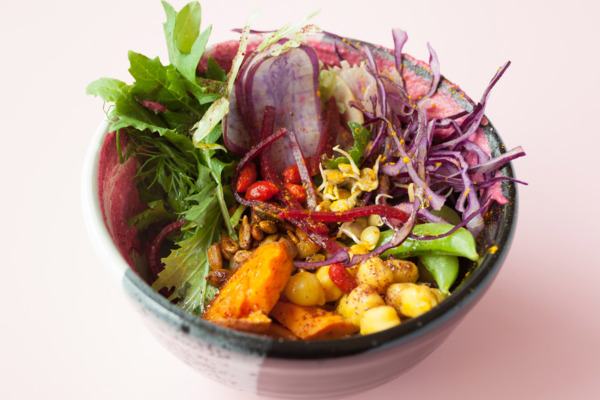
LES lunchtime favorite Cafe Henrie launched dinner service this week, with a beautiful menu of brightly colored, vegetable-heavy dishes like the Gypsy Salad (vegetables, chickpeas and beet tahini) and the tiger bowl (tuna, avocado and black sesame). The new menu is by Camille Becerra (formerly of Navy). Cafe Henrie is riding the wave of the (highly photographable) healthy-food-that-isn’t-health-food trend, as seen in spots like Dimes and El Rey. Their lunchtime success has allowed them to expand service to dinner.

To read more, click here.