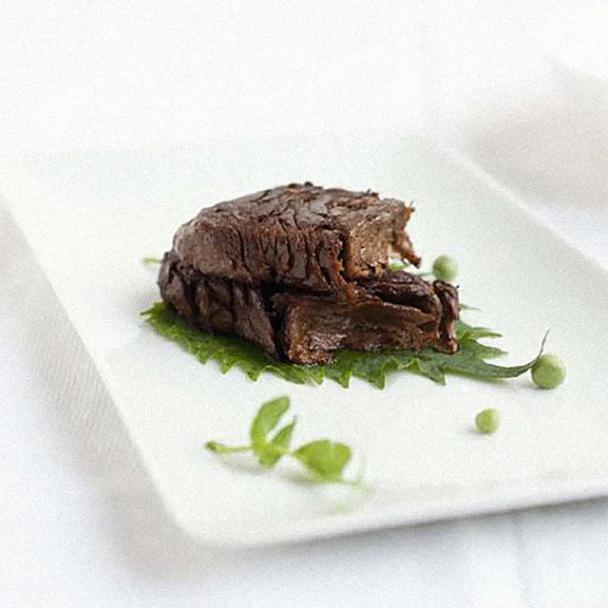
Dutch Start-up Wants to Bring You a Better Vegan Steak

3054886-inline-i-1-vegan-steak.jpg

Photo via Fast Company

Demand for meat substitutes has been growing steadily in the U.S. as more consumers become aware of the environmental and animal welfare impacts of farmed meat, and the recent report from the World Health Organization labeling processed meat as carcinogenic will likely drive that trend faster. Although there are still very few true vegetarians in the United States – only 2 to 5% of adults in the states currently eat no meat, and many of those will return to their carnivorous lifestyle at some point in the future – many more people are now making attempts to eat more meatless meals.

But although the demand for plant proteins is there, the supply still has a long way to go. Because of processing costs, meat substitutes still run about as much per pound as organic meat, and taste and texture turn off many would-be herbivores. In the Netherlands, where a small landmass and substantial environmental awareness makes the push toward vegetarianism even stronger, companies are using engineering to solve this problem. Most notably is Vegetarian Butcher, a Dutch company which has developed “the world’s first vegan steak.” The machine responsible for this steak is called the Couette shear cell device, and it uses rotating cylinders and temperature variation to spin liquid soy protein into a slab with the texture of steak. Besides better mimicking the taste and mouthfeel of a  good tenderloin, this process is much cheaper than current vegan meat production.

Although it’s still impossible to get this faux steak in the States, Vegetarian Butcher is currently expanding and hope to be available here soon. Although they’ll have some competition from companies cropping up here, they hope to work more in partnership than opposition. As costs come down and demand goes up, there may just be enough room in the market to me that happen.

To read more, click here.

Producers Pay Billions to Prevent Chocolate Shortage

Patchi_Chocolate_Pieces.jpgControversy over $10 remelted chocolate bars aside, the real price of chocolate increased by leaps and bounds in 2015, due in part to El Niño-related droughts, ebola outbreaks in exporting countries, and other supply chain issues. Some chocolate companies weathered the increase by upping prices or using less chocolate in their products, but industry leaders think this is only a stop-gap measure. With ever-growing demand for chocolate in China and India, there’s simply no price increase now that could prevent a shortage in the near future. As the chief sustainability officer at Mars explains, there are “still one to two billion consumers around the world that don’t eat chocolate today, and we think they will.”
With this fear looming, some chocolate companies (including Mars) have already invested billions to increase chocolate supplies, doing everything from paying agronomists in Indonesia to experiment with plant grafting, to sending instructors out into the fields to teach better agricultural practices. These measures have already caused some tensions between multinational chocolate corporations and the governments in these regions, who see the “help” as mostly interference. All something to keep in mind as you estimate the price of your chocolate addiction – and maybe buy Valentine’s gifts early.

To read more, click here

Papa John’s Goes “All Natural” With Ingredients

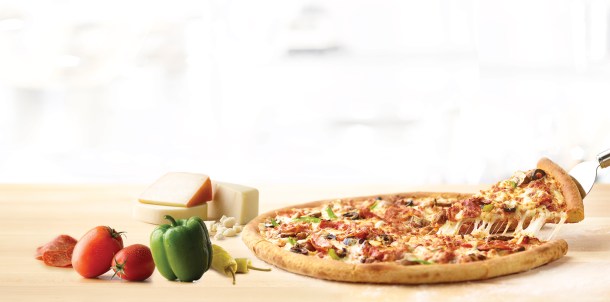
works-ingredients.jpgPapa John’s, whose motto of “Better Ingredients, Better Pizza” you likely know even if you’ve never touched a slice, is making moves to uphold that promise by removing a host of artificial ingredients from its pizzas. “We closed out 2015 announcing our commitment to serve chicken raised without antibiotics and are ringing in the New Year artificial-flavor and synthetic-color free,” said Sean Muldoon, Papa John’s Senior Vice President of Research and Development. This might lead one to wonder what made the ingredients “better” before the change, but to its credit Papa John’s is the first national pizza chain to make a move like this.
It’s unclear whether going all-natural will help Papa John’s recover from a season of poor sales and falling stocks, but it seems like management is banking on the consumer demand for transparency (or at least the appearance of transparency) in ingredients that once helped Chipotle rocket to the top. Hopefully they can do so on a national scale without the same food safety issues that plagued the Mexican chain.

To read more, click here.

Starbucks to Donate Millions to Help Employees in China Pay Rent

3020859-slide-s-1-how-chinas-one-child-policy-forced-starbucks-to-rethink-its-beijing.jpg

Photo via fastcompany.com

Starbucks recently made two big announcements about their presence in China, a country where economic troubles have been causing global shockwaves for months and other American chains (including KFC and Pizza Hut) are struggling. The first announcement is that they plan to open 500 more locations in China this year alone, and create 10,000 new jobs in the country every year through 2019. The second announcement is that all those new employees may get handed a very big perk with their green aprons – the coffee giant will soon begin offering vouchers to full time baristas and managers to help them pay their rent. They predict that 7,000 Chinese workers will be eligible for the vouchers immediately, and another 3,000 will be in the near future. Although Starbucks hasn’t given an exact number for the total cost of this program, they say it is a “multimillion dollar” investment and that they expect to pay around 50% of the rent for qualifying workers.

In China, the practice of offering subsidized living to employees is more common, although these living situations usually amount to crowded dorms. With rents rising across the country, it is unsurprising that workers have been requesting a subsidy from Starbucks for awhile.

To read more, click here.


‘Shark Tank’ Throws Its Weight Behind Ugly Food

sharktank_wide-0b24a0142869dfb629141dd024d95289b32c473f-s800-c85.jpg

Photo via NPR.org

We wrote recently about the movement, now gaining traction around the world, to reduce food waste by selling and promoting ugly produce – the kind of fruits and vegetables that are still perfectly edible, but because of minor blemishes or abnormalities will often bypass the grocery store and head straight for the landfill. Besides the troubling statistics on food waste in a country where 48 million Americans struggle to get enough to eat, this discarded produce is also a major source of methane, a potent greenhouse gas.

The ugly food movement is the sort of appealing initiative that can combat social ills (like hunger and climate change) while still providing a clear path to profitability. Both those factors seem to be paying off with some major momentum: on Friday night’s episode of the reality show Shark Tank (the ABC hit that has entrepreneurs pitch their start-ups to a ruthless panel of investors), investor Robert Herjavec plunked down $100,000 for a 10% stake in Hungry Harvest, an ugly food delivery service. This number was twice what CEO Evan Lutz had originally asked for.

Hungry Harvest operates by “rescuing” food which would otherwise be discarded from farmers and grocery stores, and selling it at a 20 to 30% discount. For each bag of produce delivered, the company also donates a meal to the hungry. As of the show’s taping, Lutz said Hungry Harvest had 600 subscribers, but expected that number to double from Shark Tank publicity alone. The investment and press combined put Lutz in a good position to expand quickly and become a household name, but expect competitors to crop up as well. Whichever company ultimately takes the lion’s share of the market, ugly food is good news for everyone.

To read more, click here.

Restaurant Stocks Have a Rough New Year, and Chipotle Leads the Plunge

It’s no surprise that Chipotle Mexican Grill is having a rough few months, after a string of high-profile food borne illness outbreaks, a CDC investigation, and multiple lawsuits. Stocks in the company, which had been growing steadily since 2013, hit a new 52-week low last week. This means that in three rough months, Chipotle has lost three years of gains.

Although Chipotle’s losses were predictable based on recent bad press, they come with some other context as well: 2015 was a bad year for restaurant stocks across the board, and 2016 isn’t starting out any better. Many large, publicly traded chains were down 2 to 6% last week, and some hit 52-week lows, including the Cheesecake Factory, Papa John’s, and Dunkin’ Brands. As 2016 continues, this is likely to mean far fewer new concepts will go public, even as they continue to expand, and larger corporations may focus more on acquisitions. Chipotle may be the poster child for this rough year, but they should also serve as a reminder that the restaurant market has not been friendly to anyone.

To read more, click here.

The Government Wants You to Have Your Coffee and Drink it Too

The federal government just released their dietary guidelines for 2015-2019, and most of them should come as no surprise. The guidelines are updated every five years to reflect current research and recommendations in the interest of promoting public health. For the most part, they tend to remain much the same: eat more vegetables and whole grains, avoid sugars and trans fats. The updates this year include changes to the recommended sugar intake (which should now be only 10% of daily calorie intake),  increases in allowable salt intake for certain demographic groups (now up to 2,300 mg a day), and the removal of a daily cholesterol recommendation. There was no recommendation to avoid red meat, despite the studies from the World Health Organization earlier this year indicating that it has carcinogenic properties on par with tobacco. All this is great news for anyone looking to replace their sugary pancakes and waffles with an extra helping of sausage and eggs.

Even better is the news that the department of health has finally gotten on board with “moderate” (up to 5 cups a day) coffee consumption. Citing a growing body of research indicating that coffee can help prevent everything from diabetes to cancer, the new guidelines say that coffee can be part of a “healthy lifestyle.” Although research indicates that, unsurprisingly, genetics play a strong role in the effects of coffee on the body, the report still acknowledges the many benefits available from your morning cup of joe. Just remember to hold the sugar with that.

To read more, click here.

Starbucks Passport App is the Untappd of Coffee

Starbucks_Digital_Coffee_Passport_.JPG

Photo via starbucks.com

Coffee connoisseurship has almost certainly gone mainstream, and the latest indication is the release of Starbuck’s “Coffee Passport” app to the general public. The app allows users to collect digital stickers in their coffee passport each time they try a new coffee (or a single-origin coffee from a new country), while recording tasting-notes and comments about the experience. The app also includes plenty of study materials to shrink the gap between coffee shop guest and trained barista, including a glossary, primer on cuppings, and tips on various brew methods.

Starbucks baristas have had a paper version of this idea since the mid 90s, and the app was pre-released to Starbucks staff a month ago. The idea of ‘collecting’ rare beverages on your phone pokemon-style has precedent with apps like Untappd (for craft beer) and Delectable (for wine). In general, these apps encourage users to expand their selection and provide an incentive to go for the “new” over the “tried-and-true.” This could ultimately hurt Starbucks, who have had a hard time breaking in to the niche coffee market, although they’ve indicated a plan to focus even more on rare, high end coffee in the future.

To read more, click here.

France Is Getting Aggressive with Food Waste

We wrote recently about tackling food waste, a major contributor to climate change causing emissions, by embracing ugly food. Although the ugly food movement has footholds worldwide, some of it’s strongest proponents are in France, including Nicholas Chabanne of Gueules Cassées. But as wonderful as the idea is to get “imperfect” produce out of landfills and onto our plates, it requires reversing a lot of momentum and decades of habits for both consumers and suppliers. Since the French government has stated that they intend to cut food waste in half by 2025, they are pulling out all the stops necessary to do so.

In May, the French National Assembly passed legislation requiring grocery stores to have formal contracts with food banks and implementing hefty fines for throwing out food or deliberately spoiling it (an apparently common practice to prevent dumpster diving). Now the French government has made it illegal for large restaurants (generally those seating over 150) not to offer doggy bags to all guests. Since the French do not have a native word for the concept, it could be slow to catch on, but every bit counts in a nation where restaurants are such a vital part of the national economy.

To read more, click here.

Farm-to-Table, Even in Alaska

OLYMPUS DIGITAL CAMERA

Photo via verticalharvesthydroponics.com

The expression “farm-to-table” (and it’s variants in the retail world like “bean-to-bar,” which recently got the Mast Brothers in hot water) has been around for some time; with sustainability and health on everyone’s minds in 2016, it shows no signs of going away. Even in Alaska, a state where chefs of all kinds lament the flavorlessness and cost of produce picked before its time and shipped thousands of miles, a farm-fresh movement is starting to take root.

Two new startups, Alaska Natural Organics and Vertical Harvest Hydroponics, are attempting to bring sustainable farming closer to the residents of Alaska using (relatively) new agricultural technology. The two companies rely on different solutions to the problem of climate – the former operates a small farm out of an old warehouse in downtown Anchorage, with LED lights set up to allow hydroponic vegetables to grow year round, and the latter makes portable growing pods out of repurposed cargo containers. These containers are designed to be climate-proof and easily installed as close to the consumer as possible – in the basement of restaurants or grocery stores, for example.

If successful, more start-ups could follow suit in Alaska and other harsh climates. The benefits are easy to see, as produce grown nearby saves on shipping costs, reduces emissions, keeps money in the local economy, and can be picked when ripe for better taste and nutrition.

To read more, click here.